Tajikistan: The Ultimate Travel Guide 2026
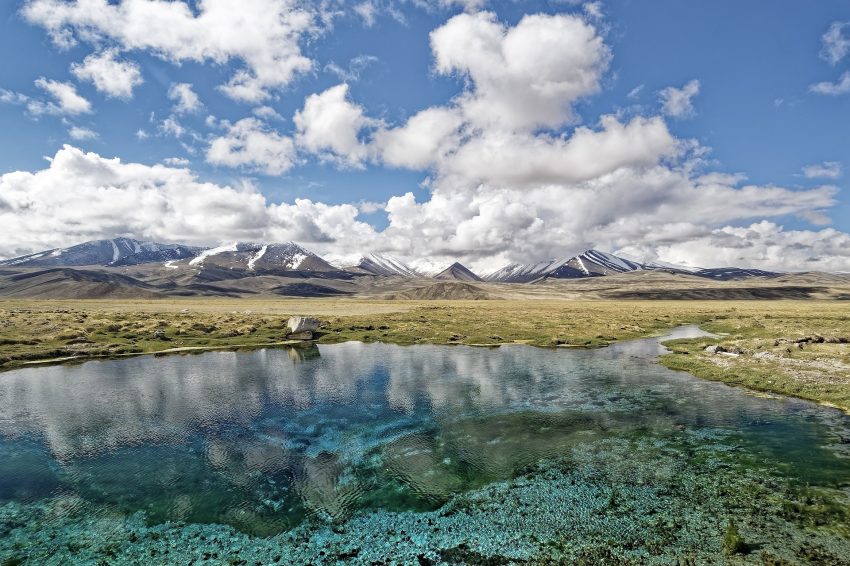
Tajikistan is a mountainous country in Central Asia known for dramatic landscapes, high-altitude valleys, and a strong Persian-speaking cultural identity. Bordering Afghanistan, Uzbekistan, Kyrgyzstan, and China, it sits at a crossroads of regions while remaining defined by its rugged terrain-much of the country is covered by the Pamir and Alay ranges. Its capital, Dushanbe, is the main hub for government, education, and business, and serves as a starting point for exploring the rest of the country.
Nature is one of Tajikistan’s biggest draws. The Pamir Highway is among the world’s most famous mountain routes, passing through remote plateaus, glacial rivers, and small settlements where daily life is closely tied to the seasons. Trekking, climbing, and cultural travel are popular, with highlights including alpine lakes, deep gorges, and wide river valleys. Outside the mountains, fertile areas like the Fergana Valley and the Vakhsh Valley support agriculture and many of the country’s towns.
Tajikistan’s culture reflects a blend of Central Asian traditions and Persian heritage, expressed through language, music, poetry, and hospitality. Tajik (a variety of Persian) is the state language, and Russian is also widely used in cities and in professional settings. Visitors often notice the importance of family and community, lively bazaars, and a cuisine centered on bread, rice dishes, soups, and tea. While infrastructure can be uneven in remote areas, the country offers a distinctive mix of scenery and culture for travelers willing to venture beyond the usual routes.
Table of Contents
- History of Tajikistan
- Antiquity to the early Middle Ages
- Islamic conquest and the Persianate renaissance
- Turkic migrations and shifting khanates
- The 19th century: Emirate of Bukhara and Russian expansion
- Revolution, Soviet rule, and the creation of Tajikistan
- Late Soviet period
- Independence and civil war
- Postwar consolidation and contemporary Tajikistan
- Best Time to Visit Tajikistan
- Food and Drink from Tajikistan
History of Tajikistan
Tajikistan’s history is shaped by its position at the crossroads of Iranian, Turkic, and steppe worlds, and by the mountain geography that fostered both cultural continuity and political fragmentation.
Antiquity to the early Middle Ages (to 8th century)
The territory of modern Tajikistan lay within ancient cultural regions such as Sogdiana and Bactria, whose Iranian-speaking populations were deeply involved in long-distance trade across Central Asia. Cities and oases in the Zeravshan and Vakhsh valleys became nodes on the Silk Road, while mountain communities maintained distinct local identities.
In the 4th century BCE, Alexander the Great’s campaigns brought the region into the Hellenistic sphere, followed by successor states and shifting local powers. Over subsequent centuries, the area experienced repeated contestation among regional empires and confederations, including the Kushans and later the Hephthalites, alongside strong local urban and mercantile traditions—especially among Sogdian traders.
Islamic conquest and the Persianate renaissance (8th–10th centuries)
Arab-Muslim expansion reached Transoxiana in the 8th century, gradually integrating the region into the Islamic world. Islam spread unevenly at first, but over time became dominant, reshaping political legitimacy, law, and culture.
A major turning point came with the Samanid dynasty (9th–10th centuries), centered in Bukhara and Samarkand but closely tied to the lands and Persian-speaking populations associated with today’s Tajikistan. The Samanid era is often remembered as a high point of Persianate statecraft and culture in Central Asia, with Persian (New Persian) flourishing in administration and literature and with urban life and scholarship expanding.
Turkic migrations and shifting khanates (11th–18th centuries)
From the 11th century onward, Turkic dynasties and confederations increasingly dominated political power across Central Asia, even as Persian language and culture remained influential in cities and among settled populations. Control shifted among various rulers and khanates, and the region’s mountainous terrain contributed to a patchwork of local authorities.
The Mongol conquests in the 13th century brought profound disruption and reorganization. Later, Timur (Tamerlane) and Timurid successors built a powerful empire centered further west, influencing the region’s political and cultural life. Over time, authority in much of the area that includes modern Tajikistan was contested among successor states and regional khanates, with local principalities and mountain communities often retaining substantial autonomy.
The 19th century: Emirate of Bukhara and Russian expansion
By the 19th century, much of the settled lowland territory associated with Tajik populations was linked to the Emirate of Bukhara, while other areas fell under neighboring Central Asian polities. The Russian Empire’s expansion into Central Asia transformed the regional balance of power. Through military campaigns and treaties, Russia established dominance, turning Bukhara into a protectorate and bringing surrounding territories under imperial influence.
This period also intensified administrative reorganization, new economic patterns, and increased integration into wider imperial markets. At the same time, local identities—linguistic, religious, and regional—remained strong, particularly in mountainous districts.
Revolution, Soviet rule, and the creation of Tajikistan (1917–1940s)
After the Russian Revolution, Central Asia experienced upheaval, including anti-Bolshevik resistance movements and competing visions of governance. The Soviet state ultimately consolidated control and undertook national delimitation—drawing new republic borders intended to reflect (and manage) ethnic and linguistic categories.
Tajikistan first emerged as an autonomous entity within Soviet Uzbekistan in 1924, then became the Tajik Soviet Socialist Republic in 1929. This institutionalized a Tajik national framework, though many Persian-speaking communities remained outside the republic’s borders. Soviet policies brought mass literacy campaigns, industrial and agricultural restructuring, and strong state control over religion and public life. Collectivization and political repression caused significant suffering, while modernization projects reshaped society and the economy.
Late Soviet period (1950s–1991)
Postwar decades saw continued development of infrastructure, education, and urbanization, alongside deepening dependence on Soviet economic planning. Cotton cultivation expanded, tying the republic to broader Soviet priorities and creating environmental and social strains. Political life was tightly managed by the Communist Party, with regional networks playing an important role in governance.
As the Soviet Union weakened in the late 1980s, Tajikistan—like other republics—experienced rising political contestation, economic uncertainty, and sharper debates over identity, language, and the role of Islam in public life.
Independence and civil war (1991–1997)
Tajikistan declared independence in 1991 amid the Soviet collapse. The early independence period quickly descended into a devastating civil war (1992–1997), driven by a complex mix of regional rivalries, political factions, ideological currents, and competition for state power. The conflict caused large-scale displacement, heavy casualties, and severe economic damage.
A peace agreement in 1997 ended major fighting and incorporated opposition elements into a power-sharing framework, though the balance of power increasingly consolidated around the central government.
Postwar consolidation and contemporary Tajikistan (late 1990s–present)
In the decades after the war, the state rebuilt institutions and infrastructure while tightening political control. The economy became heavily reliant on labor migration and remittances, alongside sectors such as agriculture and hydropower development. Security concerns—linked to borders, trafficking routes, and instability in neighboring Afghanistan—remained central to state policy.
Tajikistan’s modern history continues to be shaped by the legacies of Soviet-era borders and development models, the trauma of civil war, and the challenges of governing a mountainous country with strong regional identities and limited economic diversification.
Best Time to Visit Tajikistan
Visiting Tajikistan in Spring (Best)
Spring (March–May) is one of the best times to visit Tajikistan for comfortable temperatures, green valleys, and dramatic mountain scenery as snow begins to melt. It’s ideal for sightseeing in Dushanbe and day trips to nearby areas before higher-altitude routes fully open.
Festival highlight: Nowruz (around March 21) is a major cultural celebration across Tajikistan, with public festivities, traditional music and dance, and seasonal foods—especially lively in cities and larger towns.
Visiting Tajikistan in Summer
Summer (June–August) is the prime season for high-altitude travel in Tajikistan, especially in the Pamirs and along the Pamir Highway, when mountain passes are most accessible. Expect hot temperatures in lowland areas (including Dushanbe), while higher elevations remain cooler and more comfortable.
Festival highlight: Rooftop of the World Festival (typically in summer, often in Khorog) can be a standout if your timing aligns, showcasing Pamiri culture, crafts, music, and regional traditions.
Visiting Tajikistan in Autumn
Autumn (September–November) brings crisp, stable weather and excellent visibility, making it a strong choice for hiking, road trips, and photography in Tajikistan. Early autumn is especially good for mountain travel before colder conditions return to higher passes.
Seasonal highlight: Harvest season can add color and local market abundance, particularly in valleys and towns where fresh fruit and nuts are at their peak.
Visiting Tajikistan in Winter
Winter (December–February) is best for travelers who prefer fewer crowds and a quieter atmosphere in Tajikistan’s cities and valleys. Expect cold temperatures, snow in many regions, and more limited access to remote mountain routes—though the scenery can be striking and accommodations may be easier to book.
Seasonal highlight: Winter landscapes in the mountains and a more local, everyday feel in Dushanbe and other towns can be rewarding if you’re comfortable with cold-weather travel.
Food and Drink from Tajikistan
Tajikistan’s food reflects its mountainous landscape, Persianate heritage, and Central Asian trade routes, resulting in hearty, warming dishes built around grains, dairy, and meat. Meals often center on bread, tea, and shared platters, with hospitality playing a major role in how food is served. Seasonal produce—apricots, grapes, melons, and herbs—adds brightness to otherwise robust staples, while preserved foods help communities through long winters in higher regions.
One of the most iconic dishes is osh (also called plov), a celebratory rice pilaf cooked with carrots, onions, and chunks of lamb or beef, sometimes enriched with chickpeas, raisins, or quince depending on the region and occasion. Soups and stews are also common, such as shurbo, a broth with meat and vegetables, and various noodle dishes that can be simple weekday fare or more elaborate for guests. Dumplings and filled pastries appear in many homes, offering convenient, filling options that pair well with tea.
Bread holds special importance, especially the round, stamped non (naan), often baked in a tandoor-style oven and treated with respect at the table. Dairy foods feature prominently too, including yogurt and fermented milk drinks, along with fresh and dried cheeses in some areas. Salads and side plates of tomatoes, cucumbers, onions, and herbs frequently accompany meals, balancing richer dishes with crisp, fresh flavors.
Tea is the everyday drink of choice, commonly served green or black and offered repeatedly to visitors as a sign of welcome. In colder months, people may prefer stronger black tea, sometimes with sugar, sweets, or dried fruit on the side. Non-alcoholic drinks such as compotes made from simmered fruits are popular, and in many households, homemade preserves and syrups capture summer fruit for year-round use. Overall, Tajik food and drink emphasize warmth, generosity, and simple ingredients prepared with care.