Sri Lanka: The Ultimate Travel Guide 2026
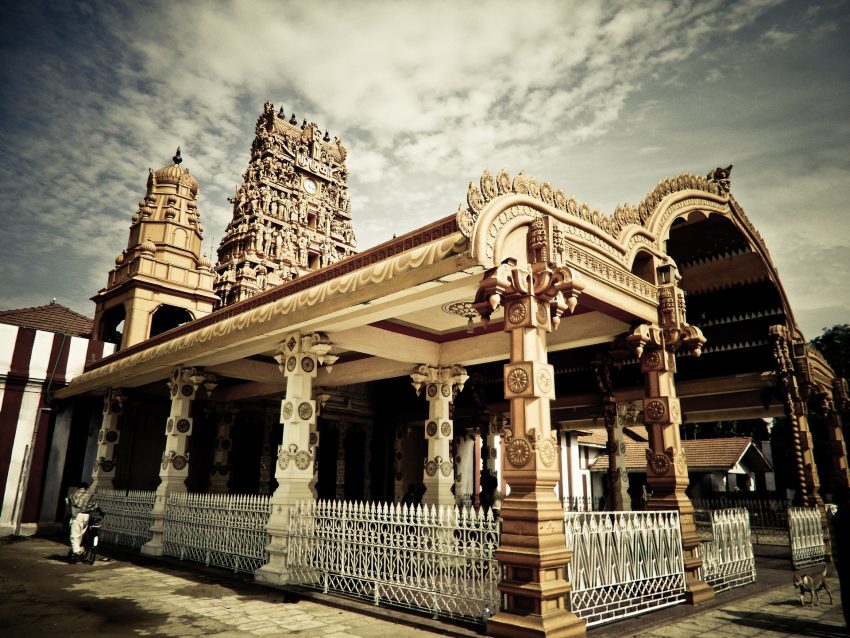
Sri Lanka is a tropical island nation in the Indian Ocean, just off the southern tip of India, known for its compact size and striking variety of landscapes. Within a few hours’ drive you can move from palm-fringed beaches to misty hill country, tea-covered slopes, and wildlife-rich national parks. Its warm climate and year-round greenery make it an appealing destination for both relaxation and outdoor adventure.
The country’s culture is shaped by a mix of communities, languages, and traditions, with Sinhala and Tamil widely spoken and English commonly used in cities and tourist areas. Daily life is closely tied to food, family, and festivals, and visitors often notice the easy rhythm of local towns alongside the energy of Colombo, the commercial capital. Sri Lankan cuisine is a highlight in itself, ranging from fragrant rice and curry to fresh seafood, tropical fruits, and street snacks.
Nature is one of Sri Lanka’s biggest draws, with opportunities to spot elephants, leopards, and a wide range of birdlife, as well as to explore waterfalls, hiking trails, and scenic train routes through the central highlands. Along the coast, surfing, snorkeling, and whale watching are popular depending on the season. Whether you’re looking for beaches, wildlife, or mountain views, Sri Lanka offers a lot of variety in a relatively small, welcoming setting.
Table of Contents
- History of Sri Lanka
- Prehistory and early settlement
- Early historic period and the rise of Anuradhapura
- Polonnaruwa and shifting centers of power
- Regional kingdoms: Kotte, Sitawaka, Jaffna, and Kandy
- Portuguese arrival and coastal control
- Dutch period
- British rule and the making of a unified colony
- Independence and early postcolonial politics
- Escalation to civil war
- Civil war era and Indian intervention
- Postwar Sri Lanka
- Best Time to Visit Sri Lanka
- Food and Drink from Sri Lanka
History of Sri Lanka
Sri Lanka’s history spans prehistoric settlement, powerful ancient kingdoms, long-distance Indian Ocean trade, periods of South Indian influence, European colonial rule, and a modern era shaped by independence, civil war, and postwar politics.
Prehistory and early settlement (before 500 BCE)
Archaeological evidence shows human presence on the island dating back tens of thousands of years, including communities associated with “Balangoda Man.” Over time, hunting-and-gathering lifeways mixed with early agriculture and village settlement. The island’s position along Indian Ocean routes later made it a natural hub for exchange.
Early historic period and the rise of Anuradhapura (c. 500 BCE–1017 CE)
A major turning point was the emergence of organized kingship in the north-central dry zone, with Anuradhapura becoming a durable political and religious center. Irrigation-based agriculture expanded through tanks and canals, enabling large populations and state formation.
Buddhism became central to the island’s culture and governance after its introduction from the Indian subcontinent in the 3rd century BCE, traditionally associated with the mission of Mahinda during the reign of King Devanampiya Tissa. Monastic institutions grew in influence, and the island developed a strong tradition of Buddhist scholarship and chronicles.
Sri Lanka also became known in wider Afro-Eurasian trade networks for commodities such as gems, pearls, spices, and high-quality cinnamon. Political life included periodic conflict and diplomacy with South Indian polities, alongside internal dynastic struggles.
Polonnaruwa and shifting centers of power (1017–c. 1300)
In the early 11th century, South Indian Chola forces captured Anuradhapura, contributing to a major political shift. A later revival under rulers such as Vijayabahu I restored local sovereignty, and Polonnaruwa rose as the new capital.
This era saw further development of irrigation works, monumental architecture, and religious patronage. Yet pressures from South Indian interventions, internal succession disputes, and changing ecological and economic conditions contributed to the decline of the dry-zone capitals. Power gradually fragmented and moved toward the southwest and central highlands.
Regional kingdoms: Kotte, Sitawaka, Jaffna, and Kandy (c. 1300–1505)
After the decline of Polonnaruwa, multiple centers competed. The Kingdom of Kotte became influential in the southwest; Sitawaka rose briefly as a rival; the Jaffna Kingdom consolidated power in the north; and the Kandyan Kingdom developed in the central highlands with strong defensive advantages.
Trade remained vital, and cultural life reflected a mix of Sinhala and Tamil traditions, with Hindu and Buddhist institutions both playing major roles in society.
Portuguese arrival and coastal control (1505–1658)
The Portuguese arrived in the early 16th century, drawn by Indian Ocean commerce and the cinnamon trade. They established forts and gradually extended control over coastal areas, often through alliances and interventions in local succession disputes.
Their rule brought new military technologies, missionary activity, and administrative changes along the coast. Inland, especially in Kandy, resistance persisted, and the island became a contested space shaped by shifting alliances.
Dutch period (1658–1796)
The Dutch East India Company displaced the Portuguese and took over much of the coastal belt. The Dutch focused on trade monopolies—especially cinnamon—and built a more systematized colonial administration in their territories.
Relations with the Kandyan Kingdom were complex: cooperation against common enemies alternated with conflict over borders, trade, and sovereignty. Legal and land practices in coastal regions were reshaped, leaving institutional legacies that persisted beyond Dutch rule.
British rule and the making of a unified colony (1796–1948)
Britain took control of Dutch possessions during the Napoleonic era and later annexed the Kandyan Kingdom in 1815, bringing the whole island under one colonial administration for the first time in centuries.
The 19th century transformed the economy through plantation agriculture. Coffee boomed and then collapsed due to disease, after which tea became dominant, alongside rubber and coconut. Large-scale plantation labor needs led to the migration of Tamil workers from South India, adding a major demographic and political dimension to modern Sri Lanka.
Colonial governance expanded infrastructure—roads, railways, ports—and introduced new education and legal systems, while also generating social stratification and nationalist responses. By the early 20th century, constitutional reforms gradually increased local representation, and independence movements gained momentum.
Independence and early postcolonial politics (1948–1971)
Sri Lanka (then Ceylon) gained independence in 1948. Early politics were shaped by debates over national identity, language, religion, and citizenship. Policies that elevated Sinhala as the primary official language and strengthened majoritarian nationalism contributed to alienation among many Tamils and intensified ethnic tensions.
Economic and social policy oscillated between welfare-oriented programs and state-led development. Political competition became increasingly polarized, and episodes of unrest signaled deeper structural conflicts.
Escalation to civil war (1970s–1983)
By the 1970s, Tamil political demands for autonomy and equal rights faced hardening resistance, while militant groups emerged. The 1972 constitution and subsequent political developments were seen by many Tamils as further centralizing power.
In 1983, anti-Tamil violence became a watershed moment, accelerating recruitment to militant movements and marking the beginning of a prolonged civil war between the state and the Liberation Tigers of Tamil Eelam (LTTE).
Civil war era and Indian intervention (1983–2009)
The conflict unfolded in phases of intense fighting, failed peace efforts, and shifting territorial control. India became directly involved in the late 1980s through the Indo–Sri Lanka Accord and the deployment of the Indian Peace Keeping Force, which later withdrew amid escalating conflict.
The war had severe human costs, including displacement, assassinations, and attacks on civilians. Multiple attempts at negotiation occurred, including a ceasefire in the early 2000s, but fighting resumed. The war ended in 2009 with the military defeat of the LTTE, amid significant controversy and enduring debates over accountability and reconciliation.
Postwar Sri Lanka (2009–present)
After 2009, the country focused on reconstruction and economic development, while grappling with unresolved questions of political settlement, minority rights, land, memorialization, and justice.
Politics in the 2010s and 2020s included major shifts in governance and public protest. In 2019, terrorist attacks targeted churches and hotels, reshaping security policy and public life. In 2022, Sri Lanka experienced a severe economic crisis marked by shortages, inflation, and mass demonstrations, leading to leadership change and ongoing efforts at stabilization and reform.
Sri Lanka today remains a diverse society with deep cultural traditions and a strategic location in the Indian Ocean, still negotiating the legacies of colonialism, conflict, and economic vulnerability while seeking a durable political and social settlement.
Best Time to Visit Sri Lanka
Visiting Sri Lanka in Winter (December–February) (Best)
Winter is one of the most popular times to visit Sri Lanka thanks to generally drier, sunnier weather in many key areas. It’s ideal for beach time and sightseeing, especially along the south and west coasts, and for exploring the Cultural Triangle with comfortable daytime temperatures.
Festival highlights:
- Duruthu Perahera (January, Colombo/Kelaniya): A vibrant procession season with drumming, dancers, and decorated elephants.
- Thai Pongal (January, celebrated by Tamil communities, especially in the North and East): A major harvest festival with cultural events and traditional food.
Visiting Sri Lanka in Spring (March–May)
Spring is a great shoulder season with plenty of warm, beach-friendly days and fewer crowds than peak winter. It’s a strong choice if you want a mix of coast, wildlife, and hill country, though humidity begins to rise as you move toward May.
Festival highlights:
- Sinhala and Tamil New Year (April): One of the biggest cultural celebrations nationwide, with games, rituals, and special sweets.
- Vesak (May, dates vary): A major Buddhist festival marked by lanterns, illuminated displays, and food stalls—especially striking in Colombo and Kandy.
Visiting Sri Lanka in Summer (June–August)
Summer is a smart time to focus on the east coast, which tends to be at its best for beach weather and swimming. It’s also a popular period for cultural travel and events, with lively local energy and peak holiday atmosphere in some regions.
Festival highlights:
- Esala Perahera (July/August, Kandy): Sri Lanka’s most famous festival, featuring grand nightly processions, dancers, drummers, and ceremonial elephants.
- Kataragama Festival (July/August, Kataragama): A major multi-faith pilgrimage with rituals and processions.
Visiting Sri Lanka in Autumn (September–November)
Autumn is a quieter, value-friendly time to visit, often with fewer tourists and lush landscapes. Weather can be more changeable, but it’s rewarding for travelers who prioritize greenery, culture, and a slower pace.
Festival highlights:
- Deepavali/Diwali (October/November, dates vary): Celebrated by Tamil communities with lights, sweets, and family gatherings.
- Il Full Moon Poya (October, Anuradhapura): A significant Buddhist observance linked to historic events, drawing pilgrims and ceremonies.
Food and Drink from Sri Lanka
Sri Lankan food is built around rice, coconut, and a lively mix of spices, shaped by the island’s geography and its long history of trade. A typical meal often centers on rice served with several small dishes, creating a balance of heat, sourness, and richness in one plate. Coconut appears in many forms—grated, milked, toasted, or pressed into oil—adding sweetness and body to curries and sambols. Spices such as cinnamon, cardamom, cloves, pepper, curry leaves, and pandan give Sri Lankan cooking its distinctive aroma, while regional differences influence how fiery or mild dishes become.
Curries are the heart of everyday eating, ranging from vegetable and lentil curries to fish, chicken, and mutton. Dhal curry is a common staple, creamy with coconut milk and gently spiced, while jackfruit, beetroot, okra, and pumpkin often feature in home cooking. Seafood is especially important along the coasts, where fish curry may be cooked with goraka (a souring fruit) for a deep, tangy flavor. Condiments and sides—like pol sambol (coconut with chili and lime), seeni sambol (sweet onion relish), and various pickles—add punch and contrast to the meal.
Street food and snacks are a big part of Sri Lankan food culture, offering quick, flavorful bites throughout the day. Hoppers (bowl-shaped fermented rice-flour pancakes) are popular at breakfast or dinner, sometimes served with an egg in the center, while string hoppers are delicate rice-noodle nests eaten with curry and coconut sambol. Kottu roti, made by chopping flatbread with vegetables, eggs, and meat on a hot griddle, is a famous late-night favorite. Short eats—such as fish buns, cutlets, and pastries—are commonly sold at bakeries and tea shops, reflecting a blend of local tastes and colonial-era influences.
Sri Lankan drinks range from everyday tea to tropical refreshments and celebratory beverages. Ceylon tea is central to daily life, often taken strong and sweet, and enjoyed alongside snacks or breakfast. King coconut water is a widely loved natural drink, especially in hot weather, and fresh fruit juices and faluda-style sweet drinks are also common. For something traditional, there’s thambili (king coconut), herbal infusions, and drinks made with spices like ginger. Alcoholic options include arrack, a spirit distilled from coconut flower sap, as well as local beers and cocktails that highlight citrus, spice, and tropical fruit flavors.