South Africa: The Ultimate Travel Guide 2026
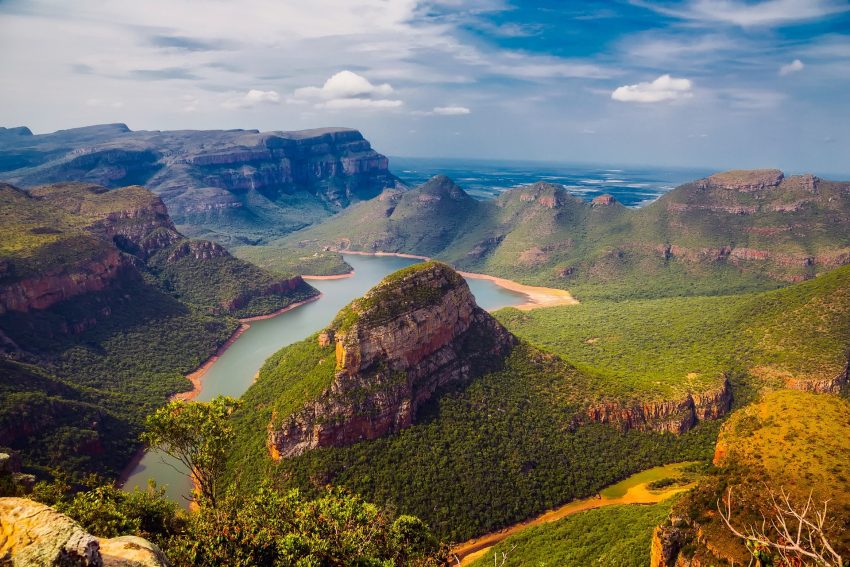
South Africa is a diverse country at the southern tip of the African continent, known for its striking landscapes, vibrant cities, and rich mix of cultures and languages. It has three capital cities-Pretoria (executive), Cape Town (legislative), and Bloemfontein (judicial)-and a population that reflects a wide range of traditions, communities, and ways of life. From bustling urban centers to quiet rural regions, South Africa offers a dynamic blend of modern development and deep-rooted cultural identity.
The country’s natural scenery is one of its defining features, ranging from dramatic coastlines along the Atlantic and Indian Oceans to mountains, grasslands, and semi-desert areas inland. South Africa is home to world-famous wildlife reserves, including Kruger National Park, where visitors can see iconic animals such as lions, elephants, and rhinos. Its varied climate and geography support everything from vineyards and forests to coral reefs and wide-open savannas.
South Africa’s economy is one of the largest in Africa, with strengths in mining, agriculture, manufacturing, finance, and tourism. Its food, music, art, and festivals reflect the country’s multicultural character, with influences that can be seen in everyday life across its provinces. Whether you’re drawn by nature, city life, or cultural experiences, South Africa is a place of contrast and energy, offering many different ways to explore and connect.
Table of Contents
- History of South Africa
- Before 1652: Indigenous societies and early states
- 1652–1795: Dutch settlement and the Cape colony
- 1795–1910: British rule, frontier wars, and the rise of Boer republics
- 1910–1948: Union, segregation, and the foundations of apartheid
- 1948–1994: Apartheid and resistance
- 1994–2008: Democratic transition and nation-building
- 2008–present: Contemporary South Africa—progress and persistent challenges
- Best Time to Visit South Africa
- Food and Drink from South Africa
History of South Africa
South Africa’s history is shaped by deep Indigenous roots, centuries of migration and trade, European colonization, mineral-driven industrialization, racial segregation and apartheid, and a hard-won transition to democracy—followed by ongoing struggles over inequality, governance, and identity.
Before 1652: Indigenous societies and early states
Long before European settlement, southern Africa was home to diverse communities. The Khoekhoe (pastoralists) and San (hunter-gatherers) lived across much of the region, with complex social systems and deep environmental knowledge. From around the first millennium CE, Bantu-speaking farmers expanded southward, bringing ironworking, settled agriculture, and new political formations. Over time, powerful chiefdoms and kingdoms emerged, linked to regional trade networks that connected the interior to the Indian Ocean world.
1652–1795: Dutch settlement and the Cape colony
In 1652 the Dutch East India Company established a refreshment station at the Cape to supply ships traveling to Asia. The settlement expanded into a colony as land was taken from Indigenous communities and a frontier society developed. Enslaved people were brought from other parts of Africa and the Indian Ocean world, forming a coerced labor system that shaped the Cape’s economy and culture. Conflict and dispossession intensified as settlers pushed outward, and a distinct settler population (later known as Afrikaners) developed.
1795–1910: British rule, frontier wars, and the rise of Boer republics
Britain took control of the Cape (with interruptions) and gradually consolidated authority. British policies—such as changes to labor relations and the abolition of slavery—reshaped the colony and contributed to tensions with many Dutch-speaking settlers. In the 1830s and 1840s, some settlers moved inland in the “Great Trek,” establishing Boer republics such as the South African Republic (Transvaal) and the Orange Free State.
The 19th century also saw major upheavals among African polities, including the rise of the Zulu kingdom under Shaka and subsequent conflicts and realignments across the region. A series of frontier wars and colonial campaigns expanded British influence, culminating in the Anglo-Zulu War (1879) and other conflicts that eroded African sovereignty.
The discovery of diamonds (1867) and gold (1886) transformed the economy, accelerating industrialization, urbanization, and migrant labor systems. These mineral revolutions intensified imperial competition and helped trigger the South African War (Anglo-Boer War, 1899–1902), after which Britain defeated the Boer republics and incorporated them into a new political order.
1910–1948: Union, segregation, and the foundations of apartheid
In 1910, the Union of South Africa was formed as a self-governing dominion within the British Empire, uniting the Cape, Natal, Transvaal, and Orange Free State. Political power was largely reserved for whites, with limited and shrinking rights for nonwhite populations. Segregationist laws entrenched racial hierarchy in land, labor, and movement. A pivotal measure was the 1913 Natives Land Act, which severely restricted Black land ownership and laid a cornerstone for later apartheid.
African political organization grew in response. The South African Native National Congress—later the African National Congress (ANC)—was founded in 1912 to advocate for rights and representation. Over the following decades, labor struggles, community resistance, and political mobilization expanded despite repression.
1948–1994: Apartheid and resistance
In 1948, the National Party came to power and formalized apartheid: a comprehensive system of racial classification, forced separation, and political disenfranchisement. Laws controlled where people could live, work, and travel; interracial relationships were criminalized; and education and public services were structured to enforce inequality. “Homelands” (Bantustans) were created to strip Black South Africans of citizenship and confine political rights to fragmented territories, often through forced removals.
Resistance took many forms: mass protests, strikes, civic organization, and later armed struggle. Key moments included the Sharpeville massacre (1960), after which the state banned major liberation movements and intensified security measures; the Rivonia Trial (1963–64), which led to long prison sentences for leaders including Nelson Mandela; and the Soweto uprising (1976), which galvanized a new generation of activists.
International pressure grew through sanctions, divestment campaigns, and diplomatic isolation, while internal resistance expanded in the 1980s through unions, community organizations, and broad coalitions. By the late 1980s and early 1990s, economic strain, political unrest, and shifting global dynamics pushed the government toward negotiation.
1994–2008: Democratic transition and nation-building
Negotiations led to the unbanning of liberation movements, the release of political prisoners, and the first inclusive democratic elections in 1994. Nelson Mandela became president, symbolizing a new constitutional order. The Truth and Reconciliation Commission sought to address political violence and human rights abuses through testimony and conditional amnesty, aiming to balance accountability with national healing.
The post-apartheid state expanded access to housing, electricity, water, and social grants, and built new democratic institutions. Yet structural inequality persisted, shaped by apartheid’s legacy and the challenges of rapid social and economic transformation.
2008–present: Contemporary South Africa—progress and persistent challenges
South Africa remains a constitutional democracy with regular elections and a vibrant civil society. It has made significant gains in formal rights and public service access, but faces enduring problems: high unemployment, deep inequality, crime, and uneven education and healthcare outcomes. Governance challenges—especially corruption and institutional weakening—have periodically undermined public trust and economic performance.
Political competition has intensified, with shifting coalitions in local and national politics and growing demands for accountability and reform. Social movements have highlighted issues such as student fees, service delivery, gender-based violence, and land and economic justice. South Africa’s ongoing story is one of democratic resilience alongside difficult debates over how to translate political freedom into broadly shared prosperity.
Best Time to Visit South Africa
Visiting South Africa in Summer (December–February)
Summer is hot and lively, especially in Cape Town, the Garden Route, and along the KwaZulu-Natal coast. It’s a great time for beaches, road trips, and long daylight hours, but expect higher prices and bigger crowds around Christmas and New Year. Inland areas (like Kruger and the Highveld) can be very hot with afternoon thunderstorms.
Festival highlights:
- Cape Town Minstrel Carnival (Kaapse Klopse) (early January, Cape Town)
- Kirstenbosch Summer Sunset Concerts (summer season, Cape Town)
Visiting South Africa in Autumn (March–May) (Best)
Autumn is one of the most comfortable times to travel: warm days, cooler nights, and generally fewer crowds than peak summer. It’s ideal for city breaks, the Winelands, the Garden Route, and hiking, with more stable weather in many regions. It’s also a strong shoulder season for value—often better availability and pricing without sacrificing conditions.
Festival highlights:
- Cape Town International Jazz Festival (typically March/April, Cape Town)
- Klein Karoo National Arts Festival (late March/April, Oudtshoorn)
Visiting South Africa in Winter (June–August)
Winter is cooler and drier in much of the country, which can be excellent for wildlife viewing—especially in Kruger National Park—because vegetation is thinner and animals gather around water sources. Cape Town and the Western Cape tend to be wetter and cooler, while the interior can have crisp, sunny days and cold nights. It’s also prime time for whale watching along the coast.
Festival highlights:
- National Arts Festival (June/July, Makhanda/Grahamstown)
- Whale season peaks (June–November), with popular viewing in Hermanus
Visiting South Africa in Spring (September–November)
Spring brings warming temperatures, blooming landscapes, and a fresh, energetic feel across the country. It’s a top choice for outdoor activities, from hiking and wine tasting to coastal drives. The West Coast wildflowers can be a major draw in early spring, and whale watching continues into November in many areas.
Festival highlights:
- Cape Town International Kite Festival (October, Cape Town)
- Wildflower season (August–September), especially along the West Coast and Namaqualand
Food and Drink from South Africa
South Africa’s food and drink reflect a mix of Indigenous African traditions and influences from Dutch, Malay, Indian, and British communities, shaped by regional climates and local produce. Meals often balance hearty starches with meat and vegetables, and cooking methods like braai (barbecue) are central to social life. Across the country you’ll find everyday staples alongside celebratory dishes, with flavors ranging from mild and comforting to boldly spiced.
Braai culture is one of the most recognizable parts of South African cuisine, bringing people together around open flames for grilled meats such as boerewors (spiced sausage), lamb chops, and chicken. Side dishes commonly include pap (a maize porridge served soft or firm), chakalaka (a spicy vegetable relish), and salads like tomato-and-onion sambal. Another much-loved comfort food is biltong, air-dried, seasoned meat that’s eaten as a snack and often paired with cold drinks at gatherings.
Cape Malay cooking, rooted in the Cape’s history, adds fragrant spices and sweet-savory combinations to the national table. Dishes like bobotie (spiced minced meat baked with an egg-based topping) and bredie (slow-cooked stews) are popular, as are pickled fish and curries that show Indian Ocean connections. In coastal areas, seafood features strongly—think snoek, hake, and shellfish—often simply prepared to highlight freshness, while inland regions lean more heavily on game and slow-cooked stews.
South African drinks are equally varied, from world-renowned wines produced in the Western Cape to everyday favorites like rooibos tea, a naturally caffeine-free herbal infusion. Beer is widely enjoyed, and traditional beverages such as umqombothi (a fermented maize-based beer) remain important in many communities. For something distinctly local, many people reach for amarula, a creamy liqueur made from marula fruit, or a strong cup of coffee served alongside a koeksister or melktert for a sweet finish.