Serbia: The Ultimate Travel Guide 2026
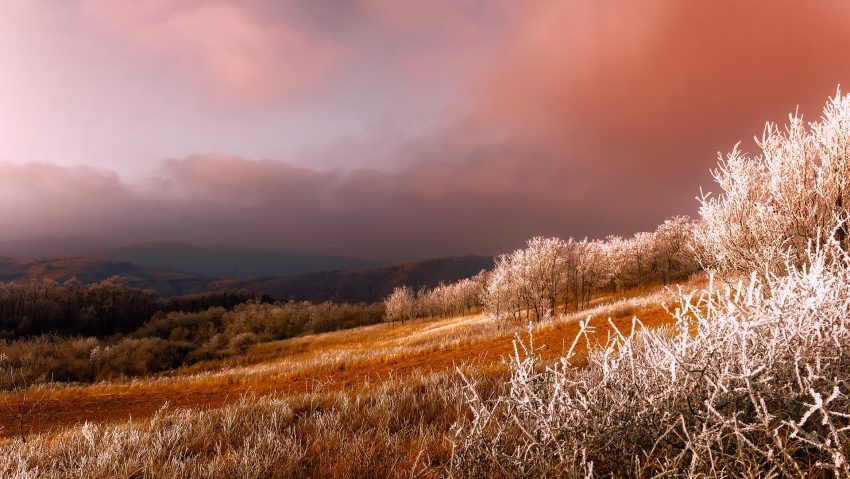
Serbia is a landlocked country in Southeast Europe, set at the crossroads of Central and the Balkans. Its capital, Belgrade, sits where the Danube and Sava rivers meet, giving the city a lively, riverfront energy and making it a natural hub for travel, culture, and nightlife. Beyond the capital, Serbia’s landscape shifts from the broad plains of Vojvodina in the north to rolling hills, forests, and mountains in the south and east.
The country is known for its warm hospitality and a strong café culture, where lingering over coffee is part of daily life. Serbian cuisine is hearty and flavorful, with grilled meats, fresh breads, seasonal produce, and regional specialties that vary from one area to the next. Music and festivals are a big part of the social scene, and you’ll find everything from traditional folk influences to modern clubs and major summer events.
For visitors, Serbia offers a mix of urban buzz and easy escapes into nature. You can explore fortresses and riverside promenades, relax in spa towns, hike in national parks, or sample local wines and rakija in rural areas. Whether you’re passing through the Balkans or planning a dedicated trip, Serbia feels approachable, authentic, and full of everyday moments that make travel memorable.
Table of Contents
- History of Serbia
- Early settlement and the medieval Serbian states
- The Nemanjić dynasty and the medieval peak
- Ottoman conquest and frontier life
- National revival and the Serbian Revolution
- Independence, expansion, and the road to World War I
- Yugoslavia and interwar challenges
- World War II in Serbia and Yugoslavia
- Socialist Yugoslavia and Serbia’s role
- Crisis, nationalism, and the breakup of Yugoslavia
- Democratic change and state redefinition
- Contemporary Serbia
- Best Time to Visit Serbia
- Food and Drink from Serbia
History of Serbia
Serbia’s history spans early Slavic settlement, medieval statehood and empire, centuries of Ottoman-Habsburg rivalry, modern nation-building, two Yugoslav eras, and the post-1990s redefinition of statehood and identity in the Balkans.
Early settlement and the medieval Serbian states (6th–12th centuries)
Slavic groups settled the central Balkans in the early Middle Ages, forming local polities that interacted with the Byzantine Empire and neighboring powers. Over time, Serbian principalities consolidated, adopting Christianity and developing institutions tied to both Eastern Orthodox tradition and regional political realities.
The Nemanjić dynasty and the medieval peak (12th–14th centuries)
A major turning point came with the rise of the Nemanjić dynasty. Under rulers such as Stefan Nemanja and his successors, Serbia expanded and strengthened its state structures. The Serbian Orthodox Church gained autocephaly in the early 13th century, becoming a central pillar of cultural and political life.
In the 14th century, Serbia reached its greatest medieval territorial extent under Stefan Dušan, who proclaimed an empire and issued a legal code that influenced governance and society. After Dušan’s death, internal fragmentation and external pressure weakened the realm.
Ottoman conquest and frontier life (14th–18th centuries)
Serbia became a key battleground during the Ottoman advance into Southeast Europe. The 1389 Battle of Kosovo acquired lasting symbolic significance, though Ottoman consolidation unfolded over decades. By the mid-15th century, most Serbian lands were under Ottoman rule.
Life under the Ottomans varied by region and period, shaped by taxation, local autonomy arrangements, and the role of religious communities. Many Serbs also lived under Habsburg rule along shifting frontiers, serving in military border zones and participating in periodic uprisings and migrations. These centuries forged a frontier society influenced by both Ottoman and Central European political cultures.
National revival and the Serbian Revolution (1804–1835)
Modern Serbian statehood emerged through uprisings against Ottoman authority. The First Serbian Uprising (1804) created a revolutionary administration but was eventually suppressed. The Second Serbian Uprising (1815) led to a more durable settlement, gradually securing autonomy.
Over the following decades, Serbia developed institutions of a modern principality, including a bureaucracy, courts, and an evolving constitutional order. Autonomy expanded step by step, laying the groundwork for full independence.
Independence, expansion, and the road to World War I (1878–1914)
Serbia’s independence was internationally recognized in 1878, and it soon became a kingdom. The late 19th and early 20th centuries were marked by dynastic rivalry, parliamentary politics, and competing orientations toward Austria-Hungary and Russia.
The Balkan Wars (1912–1913) brought major territorial gains and heightened tensions with Austria-Hungary. In 1914, the assassination of Archduke Franz Ferdinand in Sarajevo by a Bosnian Serb nationalist triggered a chain of events that led to World War I. Serbia suffered enormous losses but emerged on the victorious side.
Yugoslavia and interwar challenges (1918–1941)
After World War I, Serbia became the core of the new Kingdom of Serbs, Croats and Slovenes (later Yugoslavia). The interwar state struggled with centralization versus federal demands, ethnic and political divisions, and periodic authoritarian rule. These tensions shaped political life up to the Axis invasion in 1941.
World War II in Serbia and Yugoslavia (1941–1945)
World War II brought occupation, collaborationist administrations, and brutal repression. Resistance movements—most notably the communist Partisans and the royalist Chetniks—fought both occupiers and each other, turning the conflict into a complex civil and ideological struggle. By 1945, the Partisans prevailed, and a socialist Yugoslavia was established.
Socialist Yugoslavia and Serbia’s role (1945–1980)
In the postwar period, Serbia became one of the republics within a federal socialist Yugoslavia led by Josip Broz Tito. The state pursued rapid industrialization, a distinctive form of socialist self-management, and a non-aligned foreign policy. Within Serbia, the autonomous provinces of Vojvodina and Kosovo held significant constitutional status, especially after reforms that increased decentralization.
Crisis, nationalism, and the breakup of Yugoslavia (1980–1999)
After Tito’s death in 1980, economic strain and political fragmentation intensified. In the late 1980s and 1990s, Serbian politics—under Slobodan Milošević—pushed for recentralization and greater Serbian influence within Yugoslavia, while other republics moved toward independence.
The 1990s saw wars in Croatia and Bosnia, international sanctions, and deep economic hardship. The Kosovo conflict escalated in the late 1990s, culminating in NATO’s 1999 bombing campaign against the Federal Republic of Yugoslavia (Serbia and Montenegro). The war and its aftermath reshaped regional politics and Serbia’s international position.
Democratic change and state redefinition (2000–2006)
Mass protests in 2000 led to Milošević’s removal from power and a shift toward democratic governance and international reintegration. Political reforms proceeded unevenly amid economic transition and debates over cooperation with international justice mechanisms.
In 2003, the Federal Republic of Yugoslavia was reconstituted as the State Union of Serbia and Montenegro. In 2006, Montenegro voted for independence, and Serbia became an independent state as the legal successor within the union’s framework.
Contemporary Serbia (2006–present)
Since independence, Serbia has balanced EU-oriented reforms with close ties to multiple global partners. A central issue has been Kosovo’s status: Kosovo declared independence in 2008, which Serbia does not recognize, and negotiations have continued intermittently under international mediation.
Domestically, Serbia has experienced political consolidation, periodic protests, and ongoing debates about media freedom, rule of law, corruption, and economic development. Regionally, it has pursued cooperation while navigating unresolved historical disputes and the legacy of the 1990s.
Best Time to Visit Serbia
Visiting Serbia in Spring
Spring (March–May) is a great time to visit Serbia for mild temperatures, blooming parks, and comfortable sightseeing in cities like Belgrade and Novi Sad. It’s ideal for walking tours, café culture, and day trips before peak summer crowds arrive. Festival highlight: Belgrade Dance Festival (typically in March/April) is a major cultural draw for performing arts lovers.
Visiting Serbia in Summer (Best)
Summer (June–August) is the liveliest season in Serbia, with long days, warm weather, and a packed events calendar. It’s perfect for nightlife in Belgrade, river splavs (floating clubs), and outdoor dining, as well as exploring national parks and lakes. Festival highlights: EXIT Festival in Novi Sad (usually July) is Serbia’s biggest international music event, and the Guča Trumpet Festival (often August) is a standout for traditional brass music and high-energy celebrations.
Visiting Serbia in Autumn
Autumn (September–November) brings cooler temperatures, fewer tourists, and beautiful colors in parks and mountain areas. It’s a comfortable season for city breaks, wine regions, and hiking without summer heat. Festival highlight: Belgrade Beer Fest (often late August/September) can be a fun reason to plan an early autumn trip, combining concerts with local and regional brews.
Visiting Serbia in Winter
Winter (December–February) is best for a cozy, festive atmosphere in cities and for skiing in mountain resorts. Belgrade and other cities often have seasonal markets, lights, and hearty winter food, while places like Kopaonik are popular for snow sports. Festival highlight: New Year celebrations in Belgrade are a major winter attraction, with a strong party scene and events throughout late December and early January.
Food and Drink from Serbia
Serbian food reflects a crossroads of Balkan, Central European, and Ottoman influences, built around hearty, home-style cooking and strong hospitality. Meals often begin with small bites and spreads, and they commonly feature grilled meats, slow-cooked stews, seasonal vegetables, and fresh bread. Dairy plays a major role, especially in the form of kajmak (a rich, creamy dairy spread) and a variety of white cheeses. Paprika, garlic, and herbs add warmth and depth, while pickled and preserved foods—like ajvar (roasted red pepper relish) and winter stores of cabbage—show the importance of seasonal cooking.
Grilling is central to Serbian cuisine, with roštilj (barbecue) found everywhere from family gatherings to roadside stops. Popular dishes include ćevapi (small grilled minced-meat sausages), pljeskavica (a spiced meat patty), and ražnjići (skewers), typically served with chopped onions, lepinja or somun bread, and creamy kajmak. Another beloved comfort food is sarma, cabbage leaves stuffed with minced meat and rice, simmered until tender and often enjoyed in colder months. Burek, a flaky pastry filled with meat, cheese, or spinach, is a common breakfast or snack, especially from bakeries that open early and sell it by weight.
Vegetables and legumes are just as important as meat, particularly in soups, stews, and side dishes. Prebranac (baked beans with onions and paprika) and pasulj (bean soup) are staples, while musaka—often made with potatoes and minced meat in Serbia—appears on many home menus. Fresh salads like šopska (tomato, cucumber, onion, and grated white cheese) balance richer mains, and fermented or pickled accompaniments add tang. Desserts range from simple, home-baked cakes to syrupy sweets influenced by Ottoman traditions, alongside strudels and pastries more typical of the north.
Serbia’s drinks are as distinctive as its food. Strong Turkish-style coffee is widely enjoyed, and kafana culture emphasizes lingering conversations over coffee, spirits, and small plates. Rakija, a fruit brandy most commonly made from plums (šljivovica), is the iconic national spirit and often served as a welcome drink at celebrations. Wine production is growing in prominence, with local varieties and regional wineries gaining attention, while beer is also popular in everyday settings. Whether at a family table or a lively restaurant, Serbian dining tends to be generous, social, and centered on sharing.