Republic of the Congo: The Ultimate Travel Guide 2026
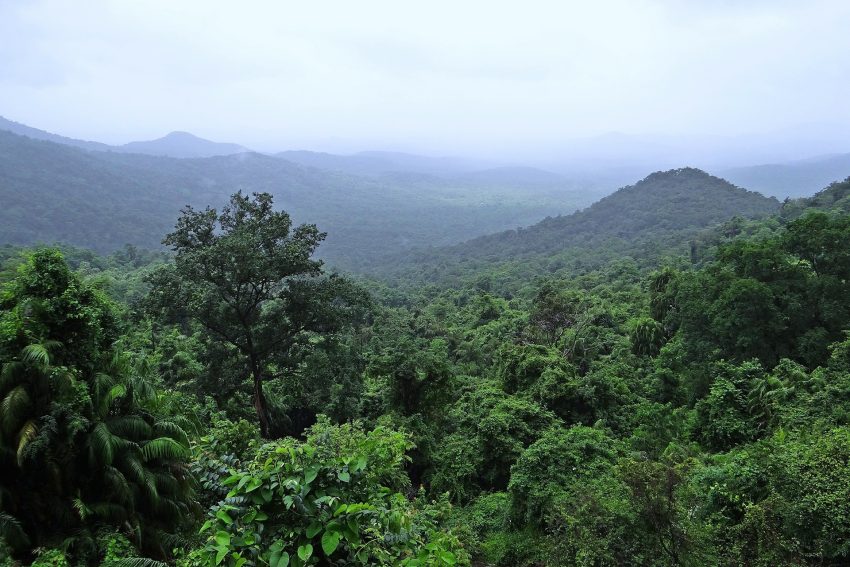
The Republic of the Congo is a Central African country on the Atlantic coast, known for its mix of vibrant cities, dense rainforests, and wide river landscapes. Its capital, Brazzaville, sits on the Congo River directly across from Kinshasa in the Democratic Republic of the Congo, creating one of the world’s closest capital-city pairings. Beyond the urban centers, much of the country is defined by tropical ecosystems and waterways that shape daily life, travel, and trade.
Congo’s geography ranges from coastal plains and lagoons to forested plateaus and the vast Congo Basin, with large protected areas that shelter rich biodiversity. National parks and reserves provide habitat for forest elephants, gorillas, and countless bird species, while the Congo River and its tributaries remain essential routes for transport and fishing. The climate is largely equatorial, bringing warm temperatures and seasonal rains that support lush vegetation across much of the country.
Culturally, the Republic of the Congo is home to diverse communities and languages, with French as the official language and Lingala and Kituba widely spoken. Music, dance, and storytelling play an important role in social life, and Congolese cuisine often features staples like cassava, plantains, fish, and stews flavored with local greens and spices. The economy is shaped by natural resources and services, while everyday life reflects a blend of modern urban rhythms and strong ties to the land and rivers.
Table of Contents
- History of Republic of the Congo
- Before Europeans
- Atlantic contact and the slave trade
- French penetration and colonial construction
- Concessionary rule and forced labor
- World War II and Brazzaville’s political role
- Toward independence
- Early independence and the turn to socialism
- Oil, debt, and political transition
- Civil conflict and regime change
- Consolidation under Sassou Nguesso and contemporary politics
- Best Time to Visit Republic of the Congo
- Food and Drink from Republic of the Congo
History of Republic of the Congo
The Republic of the Congo (often called Congo-Brazzaville) sits on the north bank of the Congo River, across from Kinshasa in the Democratic Republic of the Congo. Its history has been shaped by early Central African kingdoms, the Atlantic slave trade, French colonial rule, decolonization, repeated political upheavals, civil conflict, and an oil-centered economy.
Before Europeans (to the late 1400s)
Long before European contact, the region was home to diverse societies and trade networks linking the forest, savanna, and river corridors. Over time, larger political formations emerged, including the Kingdom of Kongo to the south (whose influence extended into parts of today’s Congo) and other regional polities and chieftaincies along the coast and inland waterways. The Congo River and its tributaries served as major arteries for commerce, migration, and cultural exchange.
Atlantic contact and the slave trade (late 1400s–1800s)
Portuguese sailors reached the Congo coast in the late 15th century, opening an era of sustained Atlantic contact. Trade expanded in ivory and other goods, but the most consequential development was the growth of the transatlantic slave trade. Coastal and riverine routes were drawn into slave-raiding and slave-trading systems that destabilized communities and intensified conflict in many areas. Over the 19th century, the Atlantic slave trade declined, but coercive labor and extraction persisted through other forms of commerce and conquest.
French penetration and colonial construction (1880s–1910s)
In the late 19th century, France moved to secure territory in the Congo Basin. A key moment came with agreements negotiated by French agent Pierre Savorgnan de Brazza with local leaders, which France used to claim authority and establish a colonial foothold. Brazzaville became a central administrative post. The broader “Scramble for Africa” and the Berlin Conference era formalized European claims, and French Equatorial Africa (Afrique Équatoriale Française, AEF) took shape, grouping several colonies under French administration with Brazzaville as the federal capital.
Concessionary rule and forced labor (1890s–1930s)
French colonial governance relied heavily on concessionary companies and coercive labor systems to extract rubber, timber, and other resources. Forced labor, taxation, and punitive expeditions caused severe suffering and demographic disruption in many areas. One of the most notorious projects was the Congo–Ocean Railway (linking Brazzaville to Pointe-Noire), built largely with forced African labor; the construction period brought extremely high mortality and became a lasting symbol of colonial brutality.
World War II and Brazzaville’s political role (1940s)
During World War II, French Equatorial Africa rallied to Free France, and Brazzaville became a major political and military center for the Free French cause in Africa. In 1944, the Brazzaville Conference outlined reforms for the French empire—promising changes such as improved political representation and labor reforms—while stopping short of endorsing independence. The postwar period nonetheless accelerated African political mobilization and demands for self-rule.
Toward independence (1950s–1960)
After the war, political parties and trade unions expanded, and constitutional reforms increased local participation. The territory became the Republic of the Congo within the French Community in 1958, gaining internal autonomy. Full independence followed on 15 August 1960, with Fulbert Youlou as the first president.
Early independence and the turn to socialism (1960s–1970s)
The early post-independence years were turbulent. In 1963, mass protests and political conflict led to Youlou’s removal. A series of governments followed, and by the late 1960s the country adopted a Marxist-Leninist orientation. Under leaders including Marien Ngouabi, the state was reorganized as the People’s Republic of the Congo (from 1969), with a single ruling party and close ties to the Soviet bloc and other socialist-aligned states. Political violence and coups marked the period, including Ngouabi’s assassination in 1977 and further instability afterward.
Oil, debt, and political transition (1970s–1992)
Offshore oil became increasingly central to the economy, bringing revenue but also deepening dependence on a single commodity and fueling patronage politics. By the late 1980s and early 1990s, economic strain, debt pressures, and the end of the Cold War weakened one-party rule. A national conference process opened the political system, and multiparty elections were held in 1992. Pascal Lissouba won the presidency, but political competition became increasingly militarized.
Civil conflict and regime change (1993–2002)
Armed clashes between rival political-militia networks erupted in the 1990s, culminating in a major civil war in 1997. Denis Sassou Nguesso—who had previously ruled during the one-party era—returned to power after fighting that involved significant external involvement and heavy destruction, particularly in Brazzaville. Further conflict continued into the late 1990s and early 2000s, especially in the Pool region, before ceasefires and agreements gradually reduced large-scale fighting.
Consolidation under Sassou Nguesso and contemporary politics (2000s–present)
Since the early 2000s, the country has experienced relative stability compared with the civil-war years, alongside persistent political tensions. Oil has remained the backbone of the economy, shaping public finances and development priorities while leaving the country vulnerable to price shocks. Elections have been held periodically, but the political environment has been dominated by Sassou Nguesso and his allies. Constitutional changes in the mid-2010s enabled him to extend his time in office, prompting domestic controversy. In recent years, the Republic of the Congo has continued to balance infrastructure and development ambitions with challenges including inequality, governance concerns, and economic dependence on hydrocarbons.
Best Time to Visit Republic of the Congo
Visiting Republic of the Congo in Spring
Spring (roughly March to May) is a strong choice if you want greener landscapes, fewer crowds, and good wildlife viewing in forested areas as conditions shift between wetter and drier spells. Expect warm, humid weather and occasional heavy showers—pack light rain gear and plan some flexibility for travel on rural roads.
Visiting Republic of the Congo in Summer (Best)
Summer (roughly June to August) is often the most comfortable time to visit, with comparatively cooler temperatures and generally drier conditions. This is a great season for exploring Brazzaville and Pointe-Noire, taking river excursions, and planning trips to national parks where access can be easier and hiking more pleasant. If you’re prioritizing smoother logistics and outdoor time, this is typically the best window.
Visiting Republic of the Congo in Autumn
Autumn (roughly September to November) brings a return of wetter weather, with rising humidity and more frequent rainfall. It can still be rewarding if you prefer lush scenery and don’t mind showers, but transport can be slower in remote regions. This season can suit travelers focused on city culture, food, and flexible day trips rather than tight multi-stop itineraries.
Visiting Republic of the Congo in Winter
Winter (roughly December to February) is generally hot and humid, with rainfall varying by region and month. It can still be a good time for beaches around Pointe-Noire and for cultural travel in Brazzaville, but plan for heat and the possibility of downpours. If festivals are a priority, check the calendar for major cultural events in Brazzaville and Pointe-Noire, as schedules can vary year to year.
Food and Drink from Republic of the Congo
Food and drink in the Republic of the Congo reflect its river-and-forest landscape, with meals built around starchy staples and flavorful sauces. Cassava is central: the leaves are cooked into rich stews, while the root is processed into fufu (a smooth, elastic dough) or chikwangue, a fermented cassava paste steamed in leaves and served in firm portions. Plantains, yams, and rice also appear often, providing the base for dishes that are meant to be eaten with a sauce or broth.
Sauces and stews commonly feature palm oil, groundnuts (peanuts), tomatoes, onions, and local greens, creating deep, savory flavors. Cassava leaf stew is a signature preparation, sometimes enriched with fish or meat and served with fufu or chikwangue. Okra and eggplant may be used to add body, while hot peppers and aromatic seasonings bring heat and fragrance. Meals are typically communal, with a shared pot of stew and individual portions of starch for dipping and scooping.
Protein choices vary by region and access, with fish playing a major role along the Congo River and the Atlantic coast. Smoked, dried, or fresh fish is used in soups and sauces, and grilling is common for both fish and meat. Chicken, goat, and beef are eaten when available, while forest regions may include wild game in traditional cooking. Street foods and casual meals often include grilled skewers, fried plantains, and simple rice dishes paired with spicy condiments.
Drinks range from everyday refreshments to traditional ferments. Water, sweetened teas, and soft drinks are common in towns, while fresh juices may be made from fruits such as pineapple, mango, or citrus when in season. Traditional alcoholic beverages include palm wine, tapped from palm trees and enjoyed fresh, as well as locally brewed beers and spirits found in markets and bars. Whether at home or in a lively neighborhood spot, food and drink in the Republic of the Congo emphasize hearty staples, bold sauces, and the social pleasure of eating together.