Pitcairn Islands: The Ultimate Travel Guide 2026
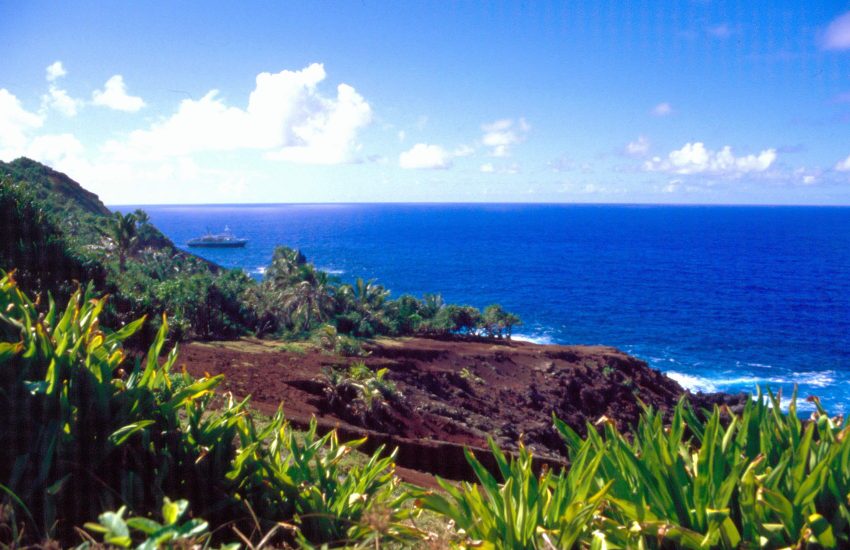
Visiting the Pitcairn Islands is less a conventional holiday and more a deliberate journey to one of the world’s most remote communities. Pitcairn is best known as the refuge of the Bounty mutineers, and the island’s story still feels close at hand in its family names, oral history, and the quiet gravitas of Adamstown, the only settlement. The scenery is striking in an unshowy way: steep volcanic slopes, dense greenery, and clear Pacific water, with an atmosphere that shifts quickly from sunlit calm to dramatic squalls. If you like places that feel truly “off the map,” Pitcairn delivers that rarity, along with a sense of privilege at being welcomed into a tiny, tight-knit society.
The main practical reality is access. There is no airport, so most visitors arrive by sea, typically via a connection through French Polynesia and onward transport to the island on limited, schedule-dependent vessels. Plans need flexibility: weather, sea conditions, and infrequent services can all affect arrival and departure, and you should expect higher costs than a typical Pacific island trip because almost everything is imported and logistics are complex. Accommodation is small-scale and personal rather than resort-style, and you will want to confirm entry requirements, any necessary permissions, and medical contingencies well in advance. Packing matters too: sturdy footwear for steep terrain, reef-safe sun protection, a basic first-aid kit, and enough personal essentials to avoid relying on last-minute availability.
What makes Pitcairn rewarding is the mix of human history and rugged nature. Guided walks often focus on Bounty heritage sites, viewpoints, and the island’s everyday life, and conversations can be as memorable as the landscapes because you are meeting people for whom this isolation is normal. Snorkelling and swimming can be excellent when conditions are right, while hikes deliver big views for relatively short distances, albeit on demanding gradients. The pace is slow, nights are dark and quiet, and the experience tends to suit travellers who value authenticity over convenience: the payoff is a deep sense of place, and a trip that feels distinctly earned rather than consumed.
Table of Contents
- History of Pitcairn Islands
- Pitcairn Islands: Early Polynesian Settlement
- Pitcairn Islands: European “Discovery” and Mapping
- Pitcairn Islands: The Bounty Mutiny and Founding Community
- Pitcairn Islands: John Adams and the Rebuilding of Society
- Pitcairn Islands: British Administration and Formal Governance
- Pitcairn Islands: Relocation, Return, and a Split Community
- Pitcairn Islands: 20th-Century Modernisation and Changing Institutions
- Pitcairn Islands: Legal Reform, Scrutiny, and Contemporary Governance
- Best Time to Visit Pitcairn Islands
- Food and Drink from Pitcairn Islands
- 1. Pitcairn Islands: Orchard Fruits and Garden Harvests
- 2. Pitcairn Islands: Homemade Preserves, Jams, and Bakes
- 3. Pitcairn Islands: Line-Caught Seafood and Simple Sea-to-Table Cooking
- 4. Pitcairn Islands: Root Crops and Coconut-Forward Staples
- 5. Pitcairn Islands: Fruit Cordials, Juices, and “Make-Do” Refreshers
- 6. Pitcairn Islands: Celebratory Drinks and Infusions
History of Pitcairn Islands
Pitcairn Islands: Early Polynesian Settlement (c. 1000–1500)
The earliest known inhabitants of the Pitcairn Islands were Polynesian settlers who developed small, self-sustaining communities supported by fishing, horticulture, and the careful use of limited natural resources. Archaeological evidence indicates organised settlement patterns and material culture consistent with wider Polynesian voyaging networks, suggesting the islands were not an isolated outpost but part of a broader sphere of movement and exchange. Over time, environmental constraints, resource pressures, and shifting inter-island connections appear to have contributed to decline, and by the time Europeans began recording the islands, this earlier settlement phase had ended.
Pitcairn Islands: European “Discovery” and Mapping (1767–1789)
European awareness of the Pitcairn Islands begins in the late 18th century, when a British expedition recorded the islands and added them to nautical charts. Early European contact in this period was brief and largely observational, focused on navigation and imperial-era mapping rather than sustained settlement. Even so, the appearance of the Pitcairn Islands on European charts created the conditions for what followed: the islands became a known refuge that could be deliberately sought out by people trying to disappear from official reach.
Pitcairn Islands: The Bounty Mutiny and Founding Community (1789–1793)
The defining turning point in the history of the Pitcairn Islands came after the mutiny aboard HMS Bounty in 1789. A group of mutineers, together with Polynesian men and women, established a new settlement and attempted to secure anonymity by severing obvious links to the outside world. The early community was shaped by cultural mixing as well as deep instability: competing expectations, unequal power dynamics, and conflict over labour and authority created a fragile social order. This initial period culminated in violence and population loss, leaving the settlement dramatically reduced and forcing survivors to build new norms of governance and cooperation.
Pitcairn Islands: John Adams and the Rebuilding of Society (1793–1820s)
After the collapse of the first settlement’s cohesion, one of the mutineers, John Adams, emerged as a central figure in guiding the remaining community. Under his influence, the settlement reorganised around stricter social rules and a strong religious framework, which helped stabilise daily life and reduce internal conflict. This era shaped key elements that persisted for generations: a small-community political culture, a distinct local identity tied to the Bounty legacy, and a moral order reinforced through shared institutions. As children grew into adulthood, the community transitioned from a crisis-driven survival group into a more continuous society with routines, leadership expectations, and inherited family lines.
Pitcairn Islands: British Administration and Formal Governance (1830s–1850s)
As external interest increased, the Pitcairn Islands moved toward more formal governance, with written rules and clearer administrative structures. British oversight developed gradually, and the community’s leadership and legal norms became more explicitly documented, including systems for local decision-making. In this period, the Pitcairn Islands were increasingly described in official terms as a recognised polity under British influence, rather than merely an isolated settlement. The push for formalisation reflected both practical needs—managing disputes, property, and communal responsibilities—and the reality that complete isolation was no longer feasible.
Pitcairn Islands: Relocation, Return, and a Split Community (1856–Late 1800s)
By the mid-19th century, population growth and resource limits prompted a dramatic decision: much of the community relocated to Norfolk Island. The move did not permanently resolve the Pitcairn Islands’ story, however, because some settlers later returned, re-establishing a smaller population and creating a split community with shared ancestry and cultural ties. This era introduced a recurring theme in Pitcairn history: demographic fragility. With small numbers, the islands’ social resilience depended heavily on a few families, and migration could rapidly change governance capacity, labour availability, and the viability of services.
Pitcairn Islands: 20th-Century Modernisation and Changing Institutions (1900s–1990s)
Across the 20th century, the Pitcairn Islands experienced gradual modernisation that altered daily life more than any single political event. Improved communications, expanded links with external authorities, and the introduction of newer administrative practices shifted the balance between local autonomy and external governance. Education, healthcare access, and the management of supplies became increasingly structured, while traditional small-community dynamics—close kinship networks and informal social regulation—continued to shape decision-making. The long-term pattern during this period was steady population decline, as younger residents often left for broader opportunities and fewer newcomers arrived to replace them.
Pitcairn Islands: Legal Reform, Scrutiny, and Contemporary Governance (2000s–Present)
In the early 21st century, the Pitcairn Islands entered a period of intense legal and institutional scrutiny that resulted in significant reforms in policing, justice processes, and administrative oversight. These developments reshaped how law and safeguarding were implemented, strengthening formal mechanisms in a society where informal relationships had historically carried substantial weight. Contemporary Pitcairn governance is characterised by the challenge of maintaining robust institutions with a very small population: sustaining public services, supporting economic activity, and preserving community life while meeting modern legal and administrative standards. The result is a history that remains unusually “alive,” where demographic scale and governance capacity are not abstract concepts but daily realities that continue to influence the islands’ trajectory.
Best Time to Visit Pitcairn Islands
Pitcairn Islands: Summer (December–February)
This is the warmest, most “summer-like” period, and it can feel notably drier and dustier on the ground. The tourism office specifically flags higher fire risk in dry weather, so this is the season to be disciplined about anything involving open flames or discarded smoking materials, and to expect dry, dusty roads and paths on some days. If you want a cultural anchor for timing, Bounty Day on 23 January is the standout annual commemoration and can be a meaningful moment to visit if you value community events.
Pitcairn Islands: Autumn (March–May) (Best)
For many travellers, late March through April is the most balanced compromise: it is still comfortably warm, but tends to avoid the extremes that can show up in peak summer (heat, dust, elevated fire risk) and later winter (persistent mud on steep routes). It can also align well with the main cruise-ship window (typically starting around October/November and running through April), which may improve the chances of timing your trip alongside visiting vessels and organised activity. If you are interested in night-sky-focused programming, the islands have marked International Dark Sky Week in early April (for example, April 2–8 in 2024).
Pitcairn Islands: Winter (June–August)
Winter is cooler, and it is the season most associated with muddy, slippery walkways and rougher underfoot conditions, which matters if hiking is central to your plan. (On the calendar side, this is the period for the King’s Birthday (second Saturday in June) and Pitcairn Day (2 July), both of which can add a sense of occasion if you want your visit to coincide with local public holidays.
Pitcairn Islands: Spring (September–November)
Spring is a shoulder season that can suit travellers who want moderate temperatures and a bit more breathing room before the busiest stretch of visiting vessels gathers pace. The cruise season is commonly described as beginning around October/November, so timing your arrival in September or early October can be a pragmatic way to balance conditions with the likelihood of scheduled maritime activity. From a risk-management perspective, it is also worth noting that the broader tropical-cyclone window is generally discussed as November to April (even if impacts are considered infrequent), so late spring into early summer is when weather-contingency planning becomes more important.
Food and Drink from Pitcairn Islands
Local food and drink in the Pitcairn Islands is defined by two forces: what can be grown in household gardens and orchards, and what can be caught from the sea. Because supply is limited and seasonal, “unique” here often means small-batch, homemade, and tied to whatever is thriving at the time rather than a fixed menu you can expect year-round.
1. Pitcairn Islands: Orchard Fruits and Garden Harvests
You will typically see a strong emphasis on fresh tropical and subtropical produce, often picked close to when it is eaten. Common themes include bananas and plantains, citrus, and other seasonal fruits, alongside garden vegetables and herbs. The appeal is less about novelty ingredients and more about immediacy and quality: fruit that is genuinely tree-ripened, salads and sides built around what is ready that week, and simple preparations that let the produce carry the flavour.
2. Pitcairn Islands: Homemade Preserves, Jams, and Bakes
A distinctive part of island food culture is preserving the harvest to stretch seasons and reduce reliance on imports. Expect fruit jams, marmalades, jellies, and chutneys, plus pickles and relishes when vegetables are abundant. Baking is often practical and hearty rather than elaborate, with home-style loaves and cakes that make good use of ripe fruit (banana-based bakes are a typical example), and slices or puddings that suit sharing.
3. Pitcairn Islands: Line-Caught Seafood and Simple Sea-to-Table Cooking
Seafood is a defining local protein, usually prepared with minimal fuss: grilled, pan-fried, or baked, sometimes with citrus, herbs, and straightforward marinades. The “uniqueness” is in freshness and species availability on the day rather than in complex recipes. You may come across substantial pelagic fish (when conditions and catches allow) and reef-associated fish, served with garden sides and simple starches.
4. Pitcairn Islands: Root Crops and Coconut-Forward Staples
Island plates often lean on filling, reliable staples such as sweet potato and other root vegetables, which pair well with fish and garden greens. Coconut commonly shows up as a flavour and texture contributor in cooking and baking, whether as coconut milk in stews and desserts or as grated coconut in sweet dishes. Meals tend to be balanced for practicality: energy-dense starch, a fresh element, and whatever protein is available.
5. Pitcairn Islands: Fruit Cordials, Juices, and “Make-Do” Refreshers
Non-alcoholic drinks often reflect the same seasonal logic as food. Fresh juices and simple fruit-based drinks are common when fruit is plentiful, alongside homemade cordials diluted with water. You should also expect the everyday realities of a small community: tea, instant coffee, and imported soft drinks may be present, but the most distinctive options are usually the homemade fruit drinks when they are in season.
6. Pitcairn Islands: Celebratory Drinks and Infusions
Alcohol is typically more constrained by supply logistics than by local production, so “unique” offerings are often created by infusing imported spirits with local fruit, citrus peel, or herbs, especially around communal gatherings. If you are offered something homemade, it is usually in the spirit of hospitality and sharing rather than commercial craft production, and it will vary substantially depending on the household and the season.