Philippines: The Ultimate Travel Guide 2026
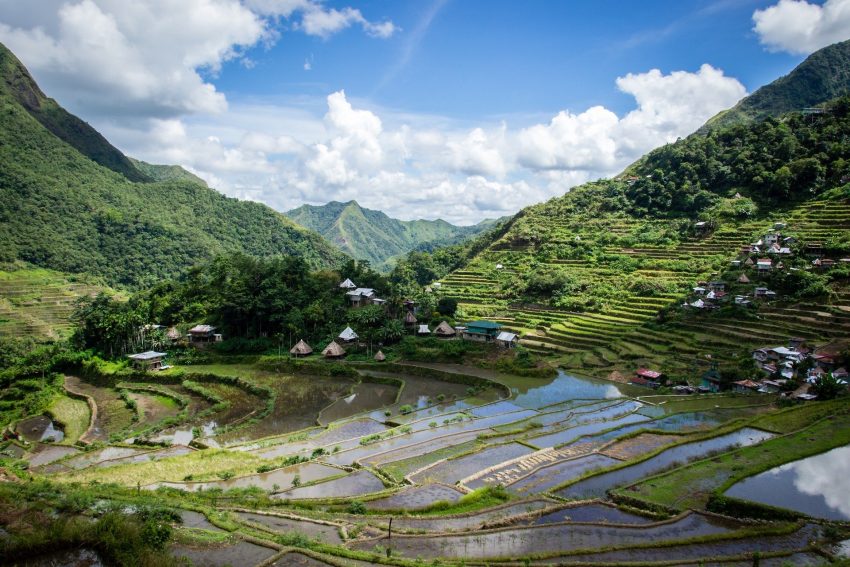
The Philippines is an archipelago in Southeast Asia made up of more than 7,000 islands, known for its striking coastlines, tropical landscapes, and rich marine life. From white-sand beaches and coral reefs to mountain ranges and rice terraces, the country offers a wide range of natural scenery shaped by its island geography and warm climate.
Its culture is a vibrant blend of regional traditions, languages, and everyday customs, with strong community ties and a deep appreciation for family, celebration, and hospitality. Filipino cuisine reflects this diversity, featuring comforting staples like rice and seafood alongside bold flavors that vary from one province to the next, often shared in gatherings that bring people together.
Modern Philippine life balances fast-growing cities with laid-back island towns and rural communities, creating a dynamic mix of experiences for visitors and locals alike. Whether you’re exploring bustling markets, enjoying local festivals, or simply watching the sunset by the sea, the Philippines feels lively, welcoming, and full of character.
Table of Contents
- History of Philippines
- Before 1521: Indigenous polities and regional trade
- 1521–1565: First Spanish contact and early encounters
- 1565–1821: Spanish colonial rule and the Manila galleon era
- 1821–1896: Reform, nationalism, and the rise of a Filipino public
- 1896–1902: Revolution, independence declaration, and a new colonizer
- 1902–1941: American colonial period and the Commonwealth
- 1941–1945: Japanese occupation and World War II
- 1946–1965: Independence and early republic challenges
- 1965–1986: Marcos era, martial law, and opposition
- 1986–2000: Democratic restoration and recurring instability
- 2001–2016: Governance reforms, growth, and continuing social strains
- 2016–present: Shifting politics and contemporary challenges
- Best Time to Visit Philippines
- Food and Drink from Philippines
History of Philippines
The Philippines’ history spans Indigenous societies, centuries of colonial rule, revolution, war, and the building of a modern republic shaped by regional diversity and global currents.
Before 1521: Indigenous polities and regional trade
Long before European contact, the archipelago was home to many ethnolinguistic groups with distinct cultures and political structures. Communities ranged from small kin-based settlements to larger coastal polities often called barangays, led by chiefs (datus) and supported by complex social hierarchies. Trade linked the islands to wider Asian networks: Chinese, Malay, Arab, and other merchants exchanged ceramics, textiles, metals, and luxury goods for local products such as gold, forest goods, and marine resources. Islam spread in parts of Mindanao and the Sulu Archipelago from the 14th–15th centuries, contributing to the rise of sultanates and stronger regional states in the south.
1521–1565: First Spanish contact and early encounters
In 1521, Ferdinand Magellan’s expedition reached the islands, marking the beginning of sustained European interest. Magellan was killed in Mactan during conflict with local forces led by Lapulapu. Subsequent Spanish expeditions returned intermittently, seeking a foothold for trade, conversion, and imperial expansion.
1565–1821: Spanish colonial rule and the Manila galleon era
Spain established a permanent colony beginning in 1565, and Manila became the colonial capital in 1571. The Philippines was governed as part of the Spanish Empire, administered for much of this period through the Viceroyalty of New Spain (Mexico). Catholicism spread widely, reshaping local life through missions, parishes, education, and new town centers. Colonial rule also brought forced labor systems, tribute, and periodic uprisings. Manila became a hub of the Manila–Acapulco galleon trade, linking Asia and the Americas for over two centuries. This trade enriched a small elite and integrated the colony into global commerce, while also exposing it to piracy, foreign attacks, and economic dependency on a narrow trade route.
1821–1896: Reform, nationalism, and the rise of a Filipino public
After Mexico’s independence, the Philippines was governed directly from Spain. The 19th century saw major changes: ports opened more broadly to world trade, cash-crop agriculture expanded, and a more educated class emerged. Filipino reformists—often called the ilustrados—pushed for representation, secularization of parishes, and equal rights within the Spanish system. The execution of three Filipino priests (GomBurZa) in 1872 became a powerful symbol for reform and later nationalist movements. José Rizal’s writings helped crystallize a national consciousness, while organizations advocating reform and, eventually, independence gained momentum.
1896–1902: Revolution, independence declaration, and a new colonizer
The Philippine Revolution began in 1896 against Spain. In 1898, amid the Spanish–American War, Filipino leaders declared independence and established a revolutionary government. Spain ceded the Philippines to the United States, leading to the Philippine–American War. The conflict was brutal and complex, involving conventional battles and guerrilla warfare, and it ended with U.S. control consolidated in the early 1900s, though resistance persisted in various forms.
1902–1941: American colonial period and the Commonwealth
Under U.S. rule, the Philippines saw major institutional changes: a public school system with English instruction, expanded civil bureaucracy, infrastructure projects, and new political structures. Filipino political participation increased over time, though sovereignty remained limited. The Commonwealth of the Philippines was established in 1935 as a transitional government toward independence, with Manila preparing for self-rule while still under U.S. oversight.
1941–1945: Japanese occupation and World War II
Japan invaded in 1941–1942, and the Philippines endured occupation marked by hardship, repression, and widespread suffering. Filipino and allied forces fought in major campaigns, including the defense of Bataan and Corregidor, and later the liberation battles. The war devastated cities and communities; Manila suffered catastrophic destruction in 1945. The period also intensified political and social divisions that carried into the postwar era.
1946–1965: Independence and early republic challenges
The Philippines gained formal independence on July 4, 1946. The new republic faced postwar reconstruction, economic dependency, land inequality, and insurgencies such as the Huk movement. Politics were dominated by elite competition, patronage networks, and debates over national development, while the country navigated Cold War alliances and internal security concerns.
1965–1986: Marcos era, martial law, and opposition
Ferdinand Marcos became president in 1965 and declared martial law in 1972, citing disorder and insurgency. His rule centralized power, curtailed press freedom, and involved widespread human rights abuses, while also pursuing infrastructure and state-led development. Corruption, cronyism, debt, and economic crises intensified over time. The assassination of opposition leader Benigno “Ninoy” Aquino Jr. in 1983 galvanized resistance. In 1986, the People Power Revolution led to Marcos’s ouster and the restoration of democratic institutions under Corazon Aquino.
1986–2000: Democratic restoration and recurring instability
Post-1986 governments worked to rebuild democratic governance, draft a new constitution, and address coup attempts, insurgencies, and economic reform. Persistent issues included poverty, unequal development, and political violence in some regions. Peace efforts with Muslim separatist groups advanced unevenly, reflecting the long history of conflict and autonomy movements in Mindanao.
2001–2016: Governance reforms, growth, and continuing social strains
The early 21st century brought cycles of political crisis and reform efforts, alongside periods of economic growth driven by services, remittances from overseas Filipino workers, and expanding urban economies. At the same time, corruption scandals, natural disasters, and persistent inequality shaped public debate. Peace negotiations in Mindanao made significant progress, laying groundwork for new autonomous arrangements.
2016–present: Shifting politics and contemporary challenges
Recent years have featured strong debates over public order, human rights, foreign policy balancing, and institutional accountability. The COVID-19 pandemic tested public health systems and the economy. In Mindanao, the establishment of a new autonomous political entity represented a major milestone in a long peace process, while national politics continued to evolve amid changing alliances, economic priorities, and regional security concerns.
Across these eras, Philippine history has been shaped by its archipelagic geography, deep cultural diversity, and the interplay between local agency and global forces—trade, empire, war, migration, and the ongoing project of democratic and inclusive nation-building.
Best Time to Visit Philippines
Visiting Philippines in Winter (Best)
December to February is one of the most comfortable times to visit the Philippines, with generally cooler temperatures and lower humidity—ideal for beaches, island-hopping, and city sightseeing. It’s also a peak travel period, so expect higher prices and fuller flights/hotels, especially around Christmas, New Year, and Chinese New Year.
Festival highlights:
- Sinulog Festival (Cebu, January)
- Ati-Atihan Festival (Kalibo, Aklan, January)
- Dinagyang Festival (Iloilo, January)
Visiting Philippines in Spring
March to May is hot and increasingly dry, making it a great season for swimming, diving, and coastal trips—especially if you want clear water and lots of sunshine. April and May can be very warm, so plan outdoor activities early in the day and consider higher-elevation escapes for cooler evenings.
Festival highlights:
- Panagbenga (Baguio, typically February to early March)
- Moriones Festival (Marinduque, Holy Week—March/April)
- Pahiyas Festival (Lucban, Quezon, May)
Visiting Philippines in Summer
June to August is the start of the wetter season in many parts of the Philippines, with more frequent rain and a higher chance of tropical storms. It can still be a good time to visit if you’re flexible with itineraries, prefer fewer crowds, and focus on areas that tend to have better weather during these months.
Festival highlights:
- Sandugo Festival (Bohol, July)
- Kadayawan Festival (Davao, August)
Visiting Philippines in Autumn
September to November is a shoulder season where conditions often begin to improve toward the end of the year. Early autumn can still be rainy, but late October and November can be a sweet spot for better weather, fewer crowds than winter peak, and good-value deals.
Festival highlights:
- MassKara Festival (Bacolod, October)
- Higantes Festival (Angono, Rizal, November)
Food and Drink from Philippines
Philippine food and drink reflect a blend of indigenous traditions and centuries of outside influence, especially from Malay, Chinese, Spanish, and American cultures. Meals often balance salty, sour, sweet, and savory flavors, with rice as the everyday staple and seafood, pork, and chicken appearing frequently. Cooking methods range from grilling and stewing to frying and slow braising, and many dishes are designed for sharing, highlighting the country’s strong communal dining culture.
Among the best-known dishes is adobo, typically made with chicken or pork simmered in vinegar, soy sauce, garlic, bay leaves, and peppercorns, resulting in a tangy, deeply savory stew. Sinigang is another favorite, a sour soup commonly flavored with tamarind and filled with vegetables and meat or seafood. Other popular staples include lechon (roast pig) served at celebrations, kare-kare (a rich peanut-based stew often paired with fermented shrimp paste), and pancit noodles, which are closely associated with birthdays and long life.
Street food and snacks are a big part of daily life, offering quick, flavorful bites from markets and roadside stalls. You’ll find skewered grilled meats, fish balls and squid balls served with dipping sauces, and crispy lumpia (spring rolls). Merienda, the afternoon snack break, is widely observed and can include savory items like empanada as well as sweet treats such as bibingka and puto, often made from rice flour and enjoyed with coffee or hot chocolate.
Philippine drinks range from refreshing tropical options to distinctive local brews. Fresh coconut water and fruit shakes made with mango, calamansi, or pineapple are common, while sago’t gulaman (a sweet drink with tapioca pearls and jelly) is popular in warm weather. Coffee culture is strong in many regions, and traditional hot chocolate—thickened and made from tablea cacao tablets—remains a comfort drink. For alcoholic beverages, San Miguel beer is widely recognized, and local spirits include lambanog (coconut liquor) and various regional rice wines, often shared during gatherings and festivities.