Pakistan: The Ultimate Travel Guide 2026
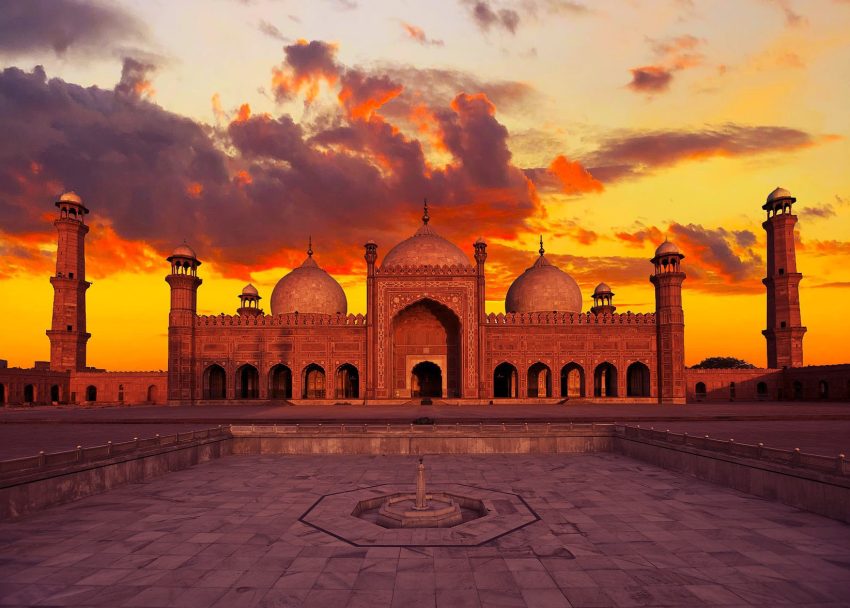
Pakistan is a diverse and dynamic country in South Asia, known for its striking landscapes, rich cultural traditions, and vibrant cities. It stretches from the Arabian Sea coastline in the south to some of the world’s highest mountain ranges in the north, offering everything from beaches and deserts to fertile plains and alpine valleys. This geographic variety shapes daily life, local cuisines, and the many regional identities found across the country.
Home to a large and youthful population, Pakistan is linguistically and culturally varied, with Urdu serving as the national language alongside widely spoken regional languages such as Punjabi, Sindhi, Pashto, Balochi, and others. Family and community ties play a central role in social life, and hospitality is a widely valued norm. Festivals, music, poetry, crafts, and sports-especially cricket-are important parts of popular culture, reflecting both tradition and modern influences.
Pakistan’s major urban centers, including Islamabad, Lahore, Karachi, and Peshawar, each have distinct character, architecture, and food scenes. The country’s economy spans agriculture, textiles, services, and a growing tech and startup ecosystem, while its cuisine is celebrated for bold flavors, breads, grilled meats, and regional specialties. Whether experienced through its bustling bazaars, scenic northern routes, or everyday street life, Pakistan offers a blend of heritage and contemporary energy that continues to evolve.
Table of Contents
- History of Pakistan
- Ancient and early medieval roots
- Islamic conquests and regional sultanates
- Mughal era and regional powers
- British rule and the making of modern politics
- Partition and early nationhood
- Military rule and the 1960s
- Bhutto, constitutional change, and Islamization
- Democratic turbulence and economic pressures
- Musharraf era and the post-9/11 state
- Civilian governments, security campaigns, and polarization
- Recent years
- Best Time to Visit Pakistan
- Food and Drink from Pakistan
History of Pakistan
Pakistan’s history spans ancient civilizations, successive empires and sultanates, British colonial rule, a mass anticolonial movement, and the creation and evolution of a modern state shaped by regional conflict, military and civilian rule, and shifting social and economic priorities.
Ancient and early medieval roots (c. 2600 BCE–1200 CE)
The territory that is now Pakistan contains some of South Asia’s earliest urban centers. The Indus Valley Civilization flourished along the Indus and its tributaries, with major sites such as Mohenjo-daro and Harappa, marked by planned cities, trade networks, and sophisticated water management. After its decline, the region saw waves of cultural and political change, including Indo-Aryan migrations and the development of Vedic and later classical traditions.
From the 6th century BCE onward, parts of present-day Pakistan were incorporated into large imperial systems. The Achaemenid Persians controlled areas in the northwest; later, Alexander’s campaigns reached the Indus. The Mauryan Empire extended influence into the region, and Buddhism spread widely, especially in Gandhara (around Peshawar and the Swat valley), which became renowned for its distinctive Greco-Buddhist art. Subsequent centuries brought rule by Indo-Greek, Scythian, Parthian, and Kushan dynasties, followed by the Hindu Shahi in parts of the northwest.
Islamic conquests and regional sultanates (c. 700–1526)
Arab forces entered Sindh in the early 8th century, introducing Islam and linking the region more directly to West and Central Asian political and commercial networks. Over time, Turkic and Afghan dynasties expanded into the subcontinent through the northwest. The Ghaznavids and later the Ghurids helped establish enduring Muslim political power in northern India, contributing to the rise of the Delhi Sultanate.
In the areas that now form Pakistan, political authority often shifted among regional rulers, tribal confederations, and sultanates, while Sufi orders played a major role in the spread and localization of Islam. Cities such as Lahore, Multan, and Thatta became important cultural and economic centers.
Mughal era and regional powers (1526–1849)
The Mughal Empire brought long periods of imperial administration, agrarian expansion, and monumental architecture, with Lahore serving at times as a major Mughal city. Over the 18th century, Mughal authority weakened, and regional powers expanded. In the northwest and Punjab, the rise of Sikh power culminated in the Sikh Empire under Maharaja Ranjit Singh, which controlled much of Punjab and extended influence into Khyber and Kashmir. In Sindh and Balochistan, local dynasties and tribal structures remained significant, with varying degrees of autonomy and external influence.
British rule and the making of modern politics (1849–1947)
The British annexed Punjab in 1849 and gradually consolidated control across the region through direct rule and princely arrangements. Colonial governance reshaped landholding, taxation, irrigation, railways, and urban administration, while also entrenching new social hierarchies and economic dependencies. Political consciousness grew through reform movements, religious revival and modernization efforts, and the spread of print culture and education.
By the early 20th century, Muslim political organization coalesced around the All-India Muslim League, which increasingly argued that Muslims constituted a distinct political community requiring safeguards. As constitutional negotiations and communal tensions intensified, the demand for a separate homeland gained momentum under Muhammad Ali Jinnah’s leadership. World War II accelerated the end of British rule, and in 1947 the subcontinent was partitioned into India and Pakistan.
Partition and early nationhood (1947–1958)
Pakistan emerged as two wings—West Pakistan and East Pakistan—separated by over a thousand miles of Indian territory. Partition triggered massive population transfers and widespread violence; millions of refugees (muhajirs) moved into Pakistan, while many Hindus and Sikhs left. The new state faced immediate challenges: integrating diverse regions, building institutions, managing refugee resettlement, and defining the role of Islam in governance.
Jinnah, Pakistan’s founding leader, died in 1948, and early politics were marked by instability. Disputes over Kashmir led to the first Indo-Pak war (1947–48) and set the pattern for enduring rivalry. Pakistan adopted its first constitution in 1956, declaring itself an Islamic republic, but civilian governments remained fragile.
Military rule and the 1960s (1958–1971)
In 1958, General Ayub Khan seized power, inaugurating a long pattern of military dominance in politics. His era emphasized centralized governance and economic development, with industrial growth and infrastructure expansion, but also rising inequality and political repression. Pakistan fought a second war with India in 1965, which ended without a decisive outcome but had major political consequences.
Tensions between East and West Pakistan deepened over representation, language, and economic distribution. In 1970, Pakistan held its first general elections; the Awami League won a majority based in East Pakistan. Political deadlock and a military crackdown in the east led to civil war and Indian intervention. In 1971, East Pakistan became independent as Bangladesh, a defining trauma for Pakistan’s national identity and civil-military relations.
Bhutto, constitutional change, and Islamization (1971–1988)
Zulfikar Ali Bhutto rose to power, first as president and then as prime minister. Pakistan adopted the 1973 constitution, which remains the country’s foundational legal framework. Bhutto pursued nationalization and populist reforms, but faced growing opposition. In 1977, General Zia-ul-Haq overthrew Bhutto in a coup; Bhutto was later executed, a deeply polarizing episode.
Zia’s rule intensified Islamization in law and public life and strengthened the military’s role. The Soviet invasion of Afghanistan in 1979 transformed Pakistan’s strategic position; Pakistan became a key partner in supporting Afghan resistance, bringing large refugee flows, militarization, and long-term security challenges. Zia died in a plane crash in 1988, opening a return to electoral politics.
Democratic turbulence and economic pressures (1988–1999)
Civilian rule alternated mainly between Benazir Bhutto and Nawaz Sharif, but governments were repeatedly dismissed amid allegations of corruption, institutional conflict, and economic strain. Pakistan’s politics remained heavily influenced by the military and intelligence services. Sectarian violence and insurgent dynamics in the region intensified during the 1990s.
In 1998, Pakistan conducted nuclear tests in response to India’s tests, formalizing its status as a nuclear-armed state and triggering sanctions. In 1999, after the Kargil conflict with India and escalating civil-military tensions, General Pervez Musharraf took power in a coup.
Musharraf era and the post-9/11 state (1999–2008)
Musharraf promoted a mix of economic liberalization and controlled political reforms, while maintaining strong military influence. After the attacks of September 11, 2001, Pakistan became a frontline state in the U.S.-led war in Afghanistan, a shift that brought aid and diplomatic leverage but also severe internal blowback. Militancy expanded, and Pakistan faced waves of terrorist attacks and insurgency, particularly in the northwest.
Political opposition grew, especially after Musharraf’s confrontation with the judiciary and the 2007 emergency. Benazir Bhutto was assassinated in 2007 during the election campaign, a national shock. Musharraf resigned in 2008.
Civilian governments, security campaigns, and polarization (2008–2018)
The Pakistan Peoples Party led a coalition government from 2008 to 2013, overseeing a major constitutional reform that strengthened parliament and devolved powers to provinces. Pakistan’s military conducted large-scale operations against militant groups, while the country also faced energy shortages, economic constraints, and natural disasters, including devastating floods.
From 2013 to 2018, Nawaz Sharif returned to power, focusing on infrastructure and energy projects, including major investments linked to the China–Pakistan Economic Corridor (CPEC). Civil-military tensions persisted, and Sharif was disqualified from office by the Supreme Court in 2017, reflecting the continuing fragility of civilian authority.
Recent years (2018–present)
Imran Khan’s Pakistan Tehreek-e-Insaf (PTI) formed a government in 2018 amid promises of anti-corruption reforms and a welfare-oriented state. His tenure saw economic volatility, negotiations with international lenders, and continued political confrontation. In 2022, Khan was removed through a parliamentary vote of no confidence, followed by intense polarization, protests, and legal battles.
Pakistan has continued to grapple with inflation, debt pressures, climate-related disasters (including catastrophic flooding), and complex security challenges involving militant violence and regional instability. Throughout its history, Pakistan’s trajectory has been shaped by the interplay of civilian politics and military power, its strategic geography, and ongoing debates over identity, federalism, and the role of religion in public life.
Best Time to Visit Pakistan
Visiting Pakistan in Spring
Spring (roughly March to May) is one of the best times to visit Pakistan for comfortable temperatures, clear days, and blooming landscapes—especially in the north and hill stations. It’s ideal for city sightseeing in Lahore and Islamabad, as well as for heading to places like Hunza and Swat before peak summer crowds arrive. Festival highlights can include Pakistan Day celebrations (March 23) and, depending on the lunar calendar, Ramadan and Eid festivities that bring special night markets and food scenes.
Visiting Pakistan in Summer
Summer (roughly June to August) is hot in much of the country, making it better for higher-altitude travel. This is a prime window for Pakistan’s northern areas—Hunza, Skardu, Fairy Meadows (seasonal access), and parts of the Karakoram—where trekking and mountain scenery are at their best. Festival highlights may include Eid (dates vary by lunar calendar), and in some regions you may catch local cultural events and polo matches in the north during the warmer months.
Visiting Pakistan in Autumn (Best)
Autumn (roughly September to November) is often the most balanced season to visit Pakistan, with pleasant temperatures, lower humidity, and excellent visibility for mountain views. It’s a strong choice for combining northern areas (early autumn is especially good) with cultural cities like Lahore, Karachi, and Multan. Festival highlights can include Eid (depending on the year) and major cultural events such as Lahore’s literary and arts programming that often ramps up in the cooler months.
Visiting Pakistan in Winter
Winter (roughly December to February) is best for travelers who prefer cooler weather in the plains and want to experience Pakistan’s winter scenery in the mountains. Northern areas can be snowy and some routes may be limited, but it’s a great time for winter sports in places like Malam Jabba and for enjoying quieter city travel in Lahore and Islamabad. Festival highlights can include seasonal cultural festivals and, in some years, major events like the Lahore Literary Festival (timing can vary), plus lively celebrations around Eid if it falls in winter.
Food and Drink from Pakistan
Pakistan’s food reflects its diverse regions, climates, and cultures, blending South Asian, Central Asian, and Middle Eastern influences. Everyday meals often center on wheat-based breads like roti and naan, paired with lentils, seasonal vegetables, and meat curries. Spices are used for depth rather than sheer heat, with common flavors coming from cumin, coriander, turmeric, chili, ginger, and garlic. Rice also plays a major role, especially in celebratory dishes, and meals are frequently shared family-style, emphasizing hospitality.
Meat dishes are especially prominent, with chicken, beef, mutton, and fish varying by region and availability. Biryani is one of the most famous dishes, combining fragrant rice with spiced meat and often potatoes, while pulao offers a milder, aromatic alternative. Karahi—cooked in a wok-like pan with tomatoes, green chilies, and ginger—is a staple in restaurants and homes alike. Barbecue and grilled foods are also beloved, including seekh kebabs, chapli kebabs, and tikka, often served with naan, salad, and tangy chutneys.
Each province contributes distinctive specialties. Punjab is known for rich, hearty fare such as nihari, paya, and buttery lentils, while Sindh is associated with spicier curries and Sindhi biryani. Khyber Pakhtunkhwa highlights simpler, meat-forward dishes like chapli kebab and lamb karahi, and Balochistan is famous for slow-roasted meats such as sajji. In the north, including Gilgit-Baltistan, cuisine can be lighter and shaped by local produce, featuring dishes like chapshuro and hearty soups suited to colder weather.
Pakistan’s drinks and sweets are an essential part of its food culture. Chai is the everyday favorite, from strong doodh patti to spiced versions, while lassi—sweet or salted—offers a cooling companion to spicy meals. Sugarcane juice, sherbets, and Rooh Afza-based drinks are popular in summer, and in some areas green tea is served with meals. Desserts range from gulab jamun, jalebi, and kheer to regional treats, often enjoyed during festivals and gatherings, rounding out a cuisine known for warmth, variety, and bold flavor.