Nepal: The Ultimate Travel Guide 2026
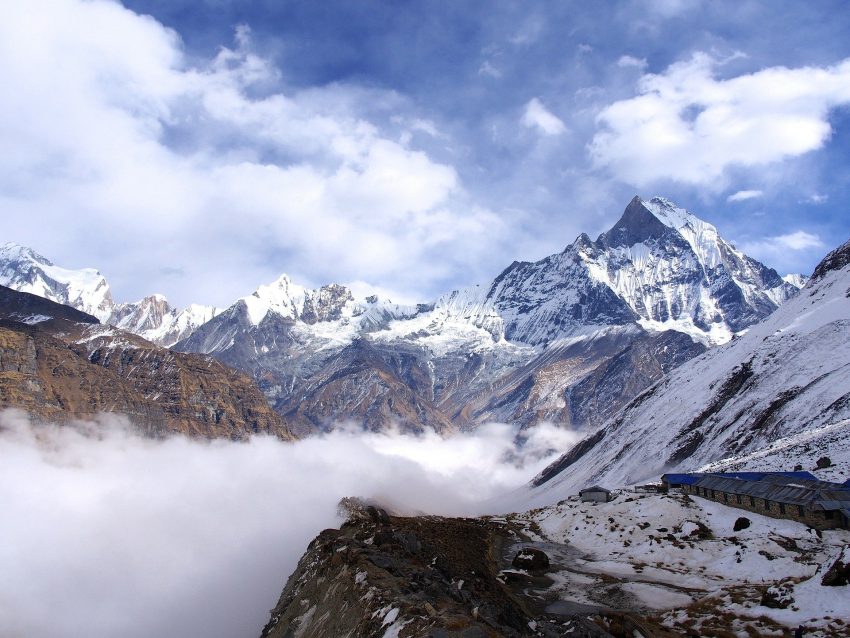
Nepal is a landlocked country in South Asia, nestled between India and China, and best known for its dramatic landscapes that rise from subtropical plains to the world’s highest peaks. Home to eight of the fourteen mountains over 8,000 meters-including Mount Everest-Nepal offers an extraordinary range of scenery within a relatively small area, from terraced hillsides and river valleys to alpine forests and snow-covered ridgelines.
Beyond its geography, Nepal is richly diverse in culture, language, and everyday traditions. Dozens of ethnic communities contribute to a vibrant mix of festivals, music, art, and cuisine, with Hinduism and Buddhism shaping many of the country’s sacred sites and rituals. In cities like Kathmandu, Patan, and Bhaktapur, temples and courtyards sit alongside lively markets and modern neighborhoods, creating a distinctive blend of old and new.
For travelers and nature lovers, Nepal is widely associated with trekking, wildlife, and spiritual retreats. Popular routes such as the Everest and Annapurna regions draw hikers from around the world, while national parks in the lowlands protect species like the one-horned rhinoceros and Bengal tiger. Whether you’re seeking mountain adventures, cultural experiences, or quiet time in scenic villages, Nepal offers a welcoming atmosphere and a strong sense of place.
Table of Contents
- History of Nepal
- Early settlement and the Kirat era
- Licchavi Nepal
- Transitional centuries and the rise of the Mallas
- Malla period and the city-states
- Unification under the Shahs
- Expansion, wars, and the Sugauli settlement
- Rana rule: hereditary prime ministers
- End of Rana rule and the search for democracy
- Panchayat era: partyless monarchy
- Multiparty democracy and civil conflict
- Peace process and the end of the monarchy
- Federal republic and contemporary Nepal
- Best Time to Visit Nepal
- Food and Drink from Nepal
History of Nepal
Nepal’s history is shaped by its position between the Tibetan plateau and the Indo-Gangetic plains, its Himalayan geography, and a long interplay of local kingdoms, trans-Himalayan trade, Hindu-Buddhist traditions, and modern state-building.
Early settlement and the Kirat era (prehistory–c. 4th century CE)
Archaeological evidence suggests human activity in the Kathmandu Valley and surrounding hills from very early periods, with communities linked to wider South Asian cultural and trade networks. Later traditions describe early rulers known as the Kirats, associated with eastern Himalayan peoples and early forms of state organization in the valley and hill regions. While details are partly legendary, the Kirat memory reflects Nepal’s deep pre-Licchavi political roots.
Licchavi Nepal (c. 4th–9th centuries)
The first clearly documented historical period begins with the Licchavis, known through inscriptions and material culture. The Kathmandu Valley became a center of administration, urban life, and religious patronage. Hindu and Buddhist institutions both flourished, and the valley’s art and architecture developed distinctive styles. Nepal’s rulers maintained ties with North India and Tibet, benefiting from trade routes that crossed the Himalaya.
Transitional centuries and the rise of the Mallas (c. 9th–12th centuries)
After the Licchavi period, political authority fragmented and reconfigured. New dynasties and local powers emerged, and the valley’s city life continued to grow. Over time, the Mallas rose to prominence, setting the stage for a long era of cultural flowering.
Malla period and the city-states (c. 12th–18th centuries)
Under the Mallas, the Kathmandu Valley became renowned for its dense urban culture, festivals, temples, palaces, and refined craftsmanship. Eventually, the valley split into competing city-states—most famously Kathmandu, Patan, and Bhaktapur—whose rivalry spurred artistic patronage but weakened unified defense. The valley remained a key node in trade between India and Tibet, and Newar culture reached a high point in architecture, sculpture, and ritual life.
Unification under the Shahs (mid-18th century)
In the mid-1700s, Prithvi Narayan Shah, ruler of the small hill kingdom of Gorkha, began a campaign to unify surrounding principalities. He conquered the Kathmandu Valley in 1768–69 and laid the foundation of a centralized Nepali state. Unification expanded west and east, bringing many diverse groups under one monarchy and establishing Kathmandu as the political center.
Expansion, wars, and the Sugauli settlement (late 18th–early 19th centuries)
Nepal expanded rapidly, at times reaching far into the western Himalaya and the plains. This brought conflict with neighboring powers, culminating in the Anglo-Nepalese War (1814–1816) against the British East India Company. The war ended with the Treaty of Sugauli, which reduced Nepal’s territory and defined boundaries closer to those of modern Nepal. Despite losses, Nepal retained sovereignty, unlike much of South Asia.
Rana rule: hereditary prime ministers (1846–1951)
A palace massacre and political upheaval in 1846 ushered in Rana dominance. The Rana prime ministers ruled as hereditary autocrats while the Shah kings became figureheads. Nepal remained internationally independent but politically closed, with limited modernization concentrated among elites. The state maintained a cautious relationship with British India, including military cooperation through recruitment of Nepali soldiers.
End of Rana rule and the search for democracy (1951–1960)
In 1951, a movement combining political parties, popular pressure, and royal support ended Rana rule and restored the king’s authority. Nepal entered a turbulent period of experiments with constitutional governance, party politics, and state reform, alongside efforts to expand education, infrastructure, and administration.
Panchayat era: partyless monarchy (1960–1990)
In 1960, King Mahendra dissolved parliament and introduced the Panchayat system, a partyless political order centered on the monarchy. The state pursued nation-building, administrative expansion, and development projects, but political freedoms were restricted. Over time, opposition movements grew, demanding multiparty democracy.
Multiparty democracy and civil conflict (1990–2006)
A popular movement in 1990 forced constitutional changes and restored multiparty democracy under a constitutional monarchy. The 1990s saw political competition and frequent government changes. In 1996, a Maoist insurgency began, driven by grievances over inequality, exclusion, and governance. The conflict intensified in the early 2000s, alongside a major royal tragedy in 2001 and subsequent instability.
Peace process and the end of the monarchy (2006–2008)
In 2006, mass protests and a political agreement between mainstream parties and the Maoists led to a peace process. The monarchy’s political role ended, and Nepal moved toward a new constitutional order. In 2008, Nepal was declared a federal democratic republic, formally abolishing the monarchy.
Federal republic and contemporary Nepal (2008–present)
Nepal’s post-monarchy era has focused on writing and implementing a new constitution, restructuring the state into a federal system, and addressing long-standing demands for inclusion and representation. The 2015 constitution established a federal framework, followed by debates over provincial boundaries, citizenship, identity, and power-sharing. Nepal has also faced major challenges from natural disasters—most notably the 2015 earthquakes—along with ongoing economic pressures, migration, and the complexities of balancing relations with its large neighbors, India and China, while pursuing development and political stability.
Across these eras, Nepal’s history shows continuity in cultural richness and religious pluralism, alongside repeated shifts in political authority—from valley city-states to a unified kingdom, from hereditary oligarchy to monarchy-led systems, and finally to a federal republic.
Best Time to Visit Nepal
Visiting Nepal in Spring
Spring (March to May) is one of the most popular times to visit Nepal, with clear mornings, warming temperatures, and colorful rhododendron blooms on many hill and mountain trails. It’s a strong season for trekking (including Everest and Annapurna regions), wildlife viewing in the lowlands before peak heat, and comfortable city sightseeing in Kathmandu Valley and Pokhara. Festival highlight: Holi (March) brings lively color celebrations in many towns and cities, and Nepali New Year (mid-April) is marked with local events and gatherings.
Visiting Nepal in Summer (Monsoon)
Summer (June to August) overlaps with the monsoon, bringing frequent rain, lush landscapes, and fewer crowds. Visibility in the mountains can be limited, and some trekking routes are muddier with leeches in lower elevations, but it’s a great time for green scenery, cultural travel, and exploring rain-shadow areas that stay relatively drier (such as Upper Mustang and parts of Dolpo). Festival highlight: Janai Purnima (usually August) is significant for Hindu and Buddhist communities, and Gai Jatra (often August) is a distinctive Kathmandu Valley festival with processions and cultural performances.
Visiting Nepal in Autumn (Best)
Autumn (September to November) is widely considered the best time to visit Nepal thanks to stable weather, crisp air, and excellent mountain visibility. It’s peak season for trekking and mountain flights, with comfortable temperatures for both high-altitude routes and lower-elevation travel. Expect the busiest trails and higher demand for accommodations, especially in October. Festival highlight: Dashain (September/October) is Nepal’s biggest festival, and Tihar (October/November) follows with lights, decorations, and celebrations honoring animals and Lakshmi.
Visiting Nepal in Winter
Winter (December to February) is a good choice if you prefer fewer tourists, clear skies, and lower prices in many areas. Days can be pleasant for sightseeing in Kathmandu, Bhaktapur, Patan, and Pokhara, while nights are cold—especially in the mountains. High-altitude trekking is more challenging due to snow and colder conditions, but lower and mid-hill treks can be excellent. Festival highlight: Maghe Sankranti (January) is celebrated across Nepal with traditional foods and rituals, and Losar (date varies by community, often Jan/Feb) marks the Tibetan and Himalayan New Year in mountain regions.
Food and Drink from Nepal
Nepal’s food reflects its geography and diversity, blending influences from the Himalayas, the mid-hills, and the southern plains, as well as neighboring India and Tibet. The everyday staple for many households is dal bhat tarkari: steamed rice (bhat) served with lentil soup (dal) and seasonal vegetable curries (tarkari), often accompanied by achar (pickle) and sometimes meat. It’s valued for being filling, balanced, and adaptable, with flavors ranging from mild to boldly spiced depending on region and family tradition.
In the hills and cities, momo are among the most loved foods—dumplings filled with minced meat or vegetables, steamed or fried, and served with a tangy, spicy dipping sauce. Other popular snacks and street foods include chatamari (a rice-flour crepe often topped with egg or minced meat), samosa, and various forms of chow mein adapted to local tastes. Newar cuisine from the Kathmandu Valley is especially celebrated, featuring dishes like bara (lentil patties), choila (spiced grilled meat), and a wide array of festive foods served during cultural celebrations.
Regional variation is strong. In the mountainous north, diets traditionally lean toward hearty, warming foods such as thukpa (noodle soup), tsampa (roasted barley flour), and butter tea, reflecting Tibetan influence and the need for high-energy meals in cold climates. In the Terai plains, meals often resemble those of northern India, with more wheat-based breads, richer gravies, and greater use of spices, alongside freshwater fish and seasonal produce. Across the country, fermented and preserved foods—like gundruk (fermented leafy greens) and sinki—add distinctive sour notes and help bridge lean seasons.
Nepal’s drinks range from everyday tea to traditional homemade beverages. Milk tea and black tea are common, and in many places tea is served sweet and spiced. Traditional alcoholic drinks include raksi (a distilled spirit) and tongba (a warm millet-based fermented drink sipped through a straw), often associated with specific ethnic communities and social gatherings. Whether shared at home, enjoyed from a street stall, or served during festivals, Nepali food and drink emphasize comfort, hospitality, and a close connection to local ingredients and seasons.