Namibia: The Ultimate Travel Guide 2026
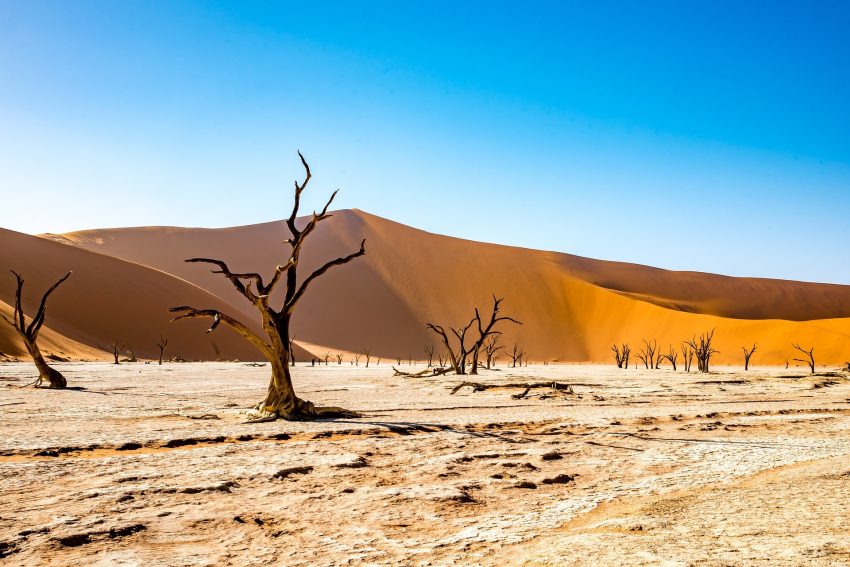
Namibia is a strikingly beautiful country in southwestern Africa, known for its wide-open spaces, dramatic landscapes, and strong sense of place. Bordered by the Atlantic Ocean to the west, it offers everything from towering sand dunes and desert plains to rugged mountains and broad savannas. With a relatively small population spread across a large territory, Namibia often feels spacious and unhurried, making it ideal for travelers who love nature and big skies.
One of Namibia’s defining features is its extraordinary variety of environments. The Namib Desert stretches along the coast, creating iconic scenes like the red dunes of Sossusvlei and the misty shoreline around Swakopmund and Walvis Bay. Inland, Etosha National Park is a highlight for wildlife viewing, where visitors can spot elephants, lions, rhinos, and many other species around seasonal waterholes. From the fish river canyons in the south to the wild, remote regions in the north, the country rewards exploration.
Namibia is also shaped by a rich mix of cultures and languages, reflected in its food, music, crafts, and everyday life. Windhoek, the capital, blends modern city comforts with a relaxed pace and serves as a gateway to the rest of the country. Whether you’re drawn by safari adventures, desert scenery, coastal escapes, or stargazing in some of the world’s darkest skies, Namibia offers a memorable experience rooted in nature, space, and quiet grandeur.
Table of Contents
- History of Namibia
- Early peoples and ancient settlement
- Migrations, kingdoms, and regional trade
- European contact and early colonial pressures
- German South West Africa
- South African conquest and League of Nations mandate
- Apartheid era and international dispute
- Nationalism and armed struggle
- Transition to independence
- Independent Namibia
- Best Time to Visit Namibia
- Food and Drink from Namibia
History of Namibia
Namibia’s history spans ancient human settlement, powerful precolonial societies, German colonization and genocide, South African rule and apartheid, and a long liberation struggle culminating in independence in 1990.
Early peoples and ancient settlement
Archaeological evidence shows some of the world’s earliest modern human activity in southern Africa, and the region that is now Namibia has long been home to hunter-gatherer communities often associated with San groups. Over time, diverse communities developed distinct languages, lifeways, and trade networks adapted to deserts, savannas, and river corridors.
Migrations, kingdoms, and regional trade (c. 1000–1800s)
From roughly the first millennium onward, agro-pastoralist migrations brought Bantu-speaking communities into northern and northeastern areas, where farming and cattle-keeping expanded. In the far north, the Ovambo kingdoms (including Ondonga and others) grew in influence, linked to regional trade routes reaching into the interior and toward the Atlantic. In central and southern areas, Nama and Oorlam groups (some shaped by earlier movements and conflicts in the Cape region) became significant political and military actors, while Herero pastoralists expanded across parts of the central plateau. Competition over grazing, water, and trade intensified in the 18th and 19th centuries, alongside the arrival of firearms and new trading relationships.
European contact and early colonial pressures (1480s–1880s)
Portuguese navigators reached the coast in the late 15th century, but the arid shoreline and the Namib Desert limited early settlement. In the 19th century, missionaries, traders, and whalers increased European presence, and local politics were reshaped by commerce, Christianity, and shifting alliances. The port of Walvis Bay became strategically important and was claimed by Britain (later administered through the Cape Colony), foreshadowing competing imperial interests.
German South West Africa (1884–1915)
In 1884, Germany proclaimed a protectorate over much of the territory, naming it German South West Africa. Colonial rule involved land expropriation, forced labor, and the imposition of treaties that undermined local sovereignty. Tensions culminated in major uprisings by the Herero (1904) and Nama (from 1904 onward). Germany responded with extreme violence, including mass killings, forced displacement into the desert, concentration camps, and systematic destruction of communities. These events are widely recognized as genocide against the Herero and Nama peoples. After the uprisings, colonial control tightened, African land ownership was drastically reduced, and racial segregation deepened.
South African conquest and League of Nations mandate (1915–1945)
During World War I, South African forces occupied the territory (1915). After the war, South Africa administered it under a League of Nations mandate, effectively extending South African political and economic influence. Policies favored white settlement and commercial farming, while African communities faced restricted movement, labor controls, and limited political rights. The mandate system was supposed to prepare the territory for self-governance, but South Africa increasingly treated it as a de facto fifth province.
Apartheid era and international dispute (1945–1960s)
After World War II, South Africa sought formal annexation, but international opposition grew. The United Nations challenged South Africa’s continued rule, and legal and diplomatic battles intensified. Inside the territory, apartheid-style laws and “homeland” concepts were applied, entrenching racial hierarchy and economic inequality. Urbanization and contract labor systems expanded, especially tied to mining and commercial agriculture.
Nationalism and armed struggle (1960s–1980s)
Namibian nationalism consolidated in the mid-20th century, most prominently through the South West Africa People’s Organization (SWAPO), which became the leading liberation movement. In 1966, SWAPO’s armed wing began guerrilla operations, marking the start of a long conflict that unfolded alongside broader regional struggles in Angola and southern Africa. The UN increasingly recognized Namibians’ right to self-determination and moved toward supporting a transition, while South Africa maintained control through security measures, political repression, and attempts to create internal administrations.
The conflict became deeply entangled with Cold War dynamics and neighboring wars, particularly after Angola’s independence in 1975, which altered regional military and political balances. By the late 1980s, negotiations gained momentum, driven by battlefield stalemates, international pressure, and shifting geopolitics.
Transition to independence (1988–1990)
A set of regional agreements in 1988 paved the way for implementing a UN-supervised plan for Namibian independence. The United Nations Transition Assistance Group (UNTAG) oversaw elections and aspects of demobilization and repatriation. In 1989, elections for a Constituent Assembly were held, leading to the drafting of a constitution emphasizing multiparty democracy, the rule of law, and fundamental rights. Namibia became independent on 21 March 1990, with SWAPO forming the first government and Sam Nujoma as the first president.
Independent Namibia (1990–present)
Since independence, Namibia has maintained relative political stability and regular elections, with SWAPO remaining the dominant party for most of the period. The country has pursued reconciliation while also confronting the legacies of colonialism and apartheid, including land inequality and economic concentration. Mining (notably diamonds and uranium), fishing, agriculture, and tourism have been central to the economy, alongside efforts to expand infrastructure and social services.
Key ongoing themes include land reform debates, inequality, unemployment, and public health challenges, as well as continued engagement with the historical trauma of German colonial-era atrocities and their modern implications. Namibia’s foreign policy has generally emphasized regional cooperation, multilateralism, and post-liberation solidarity, while domestically it has worked to balance development goals with constitutional governance and social inclusion.
Best Time to Visit Namibia
Visiting Namibia in Summer (December–February)
Summer is Namibia’s rainy season, bringing warmer temperatures and occasional afternoon storms—especially in the north and northeast. This is a good time if you want greener landscapes, dramatic skies for photography, and fewer crowds in some areas. Wildlife viewing can be a bit more dispersed because water is more widely available, but birding is excellent with migratory species present.
Festival highlight: The festive period in December can bring a livelier atmosphere in towns, with local celebrations and events around the holidays.
Visiting Namibia in Autumn (March–May) (Best)
Autumn is one of the most comfortable and rewarding times to travel in Namibia. The rains taper off, days stay pleasantly warm, and nights begin to cool—making it ideal for road trips, desert excursions, and longer days outdoors. Vegetation may still be relatively green after the rains, and wildlife viewing improves as conditions gradually dry and animals concentrate more around reliable water sources.
Festival highlight: Easter period events and community celebrations can be a draw in some towns, and it’s also a pleasant season for cultural visits without peak-season crowds.
Visiting Namibia in Winter (June–August)
Winter is the dry season and a classic time for safaris and wildlife viewing, particularly in Etosha and other key parks, as animals gather around waterholes. Days are typically sunny and mild, while nights (and early mornings) can be cold—especially in desert areas and at higher elevations. It’s a strong choice for clear skies, comfortable daytime temperatures, and excellent visibility for stargazing.
Festival highlight: The winter months often feature agricultural shows and local fairs in different regions, which can be a fun way to experience Namibian food, crafts, and community life.
Visiting Namibia in Spring (September–November)
Spring warms up quickly and remains mostly dry, with rising temperatures as the country moves toward summer. This is a great season for wildlife viewing before the rains arrive, and it’s also a popular time for combining safari destinations with the coast and desert regions. Expect hotter conditions later in the season (especially October and November), which can make early starts and shaded breaks important.
Festival highlight: Independence celebrations in September can be a notable cultural highlight, with events and gatherings that showcase national pride, music, and community activities.
Food and Drink from Namibia
Namibian food reflects a blend of Indigenous traditions and influences from German, South African, and broader Southern African cuisines, shaped by a landscape that ranges from desert to savanna and a long Atlantic coastline. Meals often center on hearty staples such as maize meal (pap), millet-based porridges like mahangu, and rice or bread, paired with stews, grilled meats, and seasonal vegetables. In many households and local eateries, simple, filling dishes are valued, with flavors built from slow-cooked onions, tomatoes, chilies, and aromatic spices rather than heavy sauces.
Meat plays a prominent role in Namibian cuisine, especially through braai (barbecue) culture, where families and friends gather to grill beef, lamb, and boerewors (a spiced sausage). Game meats such as kudu, oryx, springbok, and warthog are also widely enjoyed, often served as steaks, biltong (air-dried cured meat), or in rich stews. Alongside meat, you’ll commonly find sides like pap, chakalaka-style relishes, salads, and roasted vegetables, creating a meal that is both communal and substantial.
On the coast, seafood is a highlight, particularly around towns like Swakopmund and Walvis Bay. Fresh oysters are a celebrated delicacy, and menus often feature hake, kingklip, snoek, and other local fish prepared grilled, fried, or in curries and stews. The cool Benguela Current supports abundant marine life, and coastal cooking tends to be lighter, with lemon, herbs, and simple seasonings that let the freshness of the catch stand out.
Namibia’s drinks range from everyday staples to distinctive local favorites. Traditional beverages include oshikundu, a mildly fermented drink made from mahangu, and other homemade brews served at community gatherings. Modern options are easy to find too, including widely enjoyed lagers and craft beers, a legacy of German influence, as well as South African-style ciders and soft drinks. Tea and coffee are common across the country, and in markets and roadside stops you’ll often see people pairing a hot drink with baked goods, vetkoek, or other quick snacks.