Mozambique: The Ultimate Travel Guide 2026
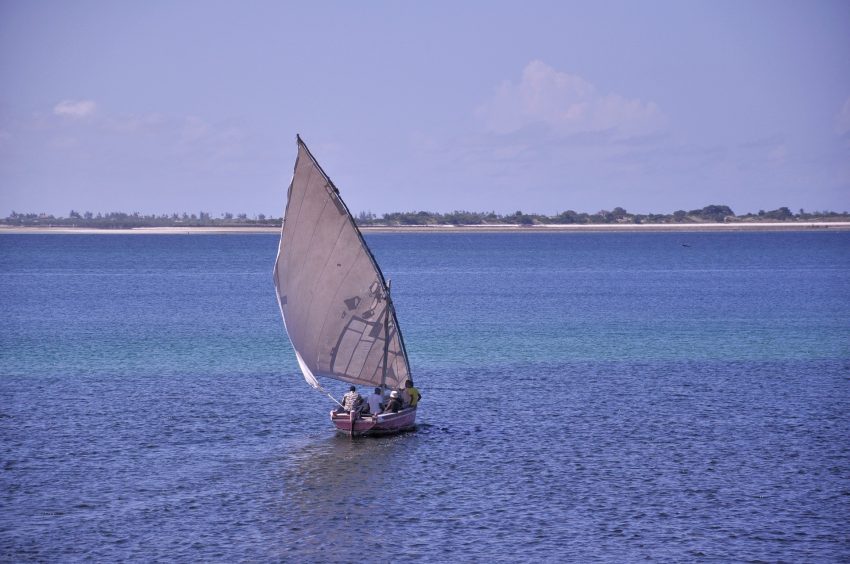
Mozambique is a vibrant country on the southeastern coast of Africa, bordered by the Indian Ocean and known for its long shoreline, warm climate, and striking natural variety. From palm-fringed beaches and coral reefs to broad savannas, rivers, and inland lakes, its landscapes support rich wildlife and a strong connection to the sea. The capital, Maputo, is the country’s largest city and a lively gateway to Mozambique’s culture, food, and coastal energy.
Mozambique’s identity is shaped by a mix of languages, traditions, and everyday rhythms that vary from region to region. Portuguese is the official language, while many communities also speak local languages such as Emakhuwa, Xichangana, and Elomwe. Music and dance are central to social life, and local markets, crafts, and street food offer a window into the country’s creativity and hospitality.
Travelers are drawn to Mozambique for its island archipelagos, clear waters, and world-class marine life, especially in places like the Bazaruto and Quirimbas regions. Beyond the coast, national parks and reserves provide opportunities to experience diverse ecosystems and scenic drives. Whether you’re interested in beach time, cultural encounters, or nature-focused adventures, Mozambique offers a relaxed pace and a strong sense of place.
Table of Contents
- History of Mozambique
- Early societies and Indian Ocean trade
- Portuguese arrival and coastal control
- Prazo system, slavery, and shifting power
- “Effective occupation” and late colonial rule
- Nationalism and the liberation struggle
- Independence and revolutionary state-building
- Civil war: RENAMO vs FRELIMO
- Multiparty era and reconstruction
- Resource boom, debt scandal, and renewed tensions
- Insurgency in Cabo Delgado and recent developments
- Best Time to Visit Mozambique
- Food and Drink from Mozambique
History of Mozambique
Mozambique’s history is shaped by long-standing Indian Ocean trade, centuries of Portuguese colonial rule, a hard-fought independence struggle, a devastating civil war, and a postwar era marked by political dominance of the liberation movement, periodic conflict, and rapid but uneven economic change.
Early societies and Indian Ocean trade (before 1500)
Long before Europeans arrived, the region that is now Mozambique was home to diverse communities, including hunter-gatherer groups and later Bantu-speaking agricultural and ironworking societies. From roughly the first millennium CE, coastal towns and islands became part of the wider Swahili cultural and commercial world. Trade linked the Mozambican coast to East Africa, the Arabian Peninsula, Persia, India, and beyond, exchanging gold, ivory, iron goods, and later enslaved people for textiles, beads, ceramics, and other imports. Inland, powerful polities such as Great Zimbabwe and related states influenced trade routes that connected the interior to the coast.
Portuguese arrival and coastal control (1500s–1700s)
The Portuguese reached the Mozambican coast at the end of the 15th century and gradually established a chain of forts and trading posts to support their Indian Ocean route. They sought to control maritime commerce and access inland gold and ivory. Their presence was strongest along the coast and key river corridors, while much of the interior remained under African political authority. Over time, Portuguese influence expanded through alliances, warfare, and the granting of land and trading rights.
Prazo system, slavery, and shifting power (1700s–1800s)
In parts of the Zambezi valley, a distinctive system of landholding and semi-autonomous estates developed, often referred to as prazos. Estate holders and local strongmen built private armies and extracted labor and tribute, blurring lines between colonial and African authority. During the 18th and 19th centuries, the trade in enslaved people intensified, supplying markets across the Indian Ocean and, later, plantations and colonies elsewhere. The 19th century also brought new pressures: regional conflicts, the rise of militarized states in southern Africa, and growing European competition for territory.
“Effective occupation” and late colonial rule (1890s–1960s)
By the late 19th century, European powers demanded more direct control over African territories. Portugal expanded administrative reach inland through military campaigns and concessionary companies, while imposing forced labor and harsh taxation. Colonial economic policy prioritized extraction and settler interests, with many Mozambicans pushed into migrant labor—especially to South African mines—and into compulsory work on plantations and public projects. Education and political rights for Africans were severely restricted, and racial hierarchies were entrenched. By the mid-20th century, nationalist ideas and anti-colonial movements were spreading, including among Mozambicans working abroad and in neighboring territories.
Nationalism and the liberation struggle (1960s–1974)
Mozambican nationalism coalesced in the early 1960s, most prominently through the formation of FRELIMO (Frente de Libertação de Moçambique). In 1964, FRELIMO launched an armed struggle against Portuguese rule, operating mainly from bases in neighboring countries and expanding guerrilla activity in northern and central regions. The conflict became part of a broader wave of anti-colonial wars in Portuguese Africa. Portugal’s authoritarian government resisted decolonization until a military coup in Lisbon in 1974 (the Carnation Revolution) transformed Portuguese politics and opened the way to negotiations.
Independence and revolutionary state-building (1975–1976)
Mozambique became independent on 25 June 1975, with FRELIMO forming the new government. The state adopted a socialist-oriented program, nationalizing key sectors and attempting to rapidly expand education, health services, and rural development. Independence also triggered major social and economic disruption, including the departure of many Portuguese settlers and administrators, leaving gaps in skills and management. Regional dynamics quickly turned hostile as minority-rule regimes and anti-communist actors sought to destabilize the new government.
Civil war: RENAMO vs FRELIMO (1976–1992)
A brutal civil war erupted between the FRELIMO government and RENAMO (Resistência Nacional Moçambicana), an insurgent movement initially supported by Rhodesia and later by apartheid South Africa. The war devastated infrastructure, displaced millions, and contributed to famine and economic collapse. Both sides committed serious abuses, and the conflict became intertwined with Cold War rivalries and regional security politics. Over time, Mozambique shifted toward economic liberalization and sought diplomatic solutions. In 1992, the Rome General Peace Accords ended the war and laid the groundwork for multiparty elections and demobilization.
Multiparty era and reconstruction (1990s–2000s)
Mozambique held its first multiparty elections in 1994. FRELIMO remained dominant in national politics, while RENAMO became the main opposition. The country undertook market reforms and attracted donor support and investment. Reconstruction brought improvements in roads, schools, and health services, and growth accelerated in the late 1990s and 2000s. However, poverty reduction was uneven, and the economy remained vulnerable to external shocks and natural disasters, including major floods in 2000.
Resource boom, debt scandal, and renewed tensions (2010s)
Large discoveries of coal and offshore natural gas raised expectations of transformative wealth, while also intensifying debates over governance, inequality, and who would benefit. Political tensions resurfaced, including episodes of armed confrontation involving RENAMO and state forces. A major turning point came with revelations of hidden state-linked borrowing in the mid-2010s, which triggered a financial crisis, damaged trust with donors, and increased public debt burdens. Despite these challenges, Mozambique continued to pursue peace initiatives, including steps toward decentralization and the demilitarization of remaining armed elements.
Insurgency in Cabo Delgado and recent developments (late 2010s–present)
From 2017, an Islamist-linked insurgency in Cabo Delgado province in the north caused mass displacement and severe insecurity, affecting communities and major gas projects. Mozambican forces, alongside regional and international partners, pushed back insurgents in key areas, though violence and instability have persisted in parts of the province. The country continues to balance security needs, political reconciliation, and economic development, with the promise of natural gas revenues alongside ongoing concerns about governance, regional inequality, and resilience to climate shocks such as cyclones and droughts.
Mozambique today is a state built out of anti-colonial struggle and postwar reconstruction, still negotiating the legacies of colonial extraction, civil conflict, and uneven development while facing new security and economic pressures.
Best Time to Visit Mozambique
Visiting Mozambique in Summer (December–February)
Summer is hot and humid, with the highest chance of heavy rain and occasional cyclones along the coast. It’s a good time to visit Mozambique if you want lush landscapes, fewer crowds, and don’t mind weather-related disruptions. Beach time is still possible, but visibility for diving can be reduced and some roads (especially in rural areas) may be harder to navigate after downpours.
Visiting Mozambique in Autumn (March–May) (Best)
Autumn is one of the best times to visit Mozambique: the rains ease off, humidity drops, and the countryside stays green from the wet season. Sea conditions often improve, making it a strong season for snorkeling and diving (especially around the Bazaruto Archipelago and Tofo). It’s also a great window for combining beach time with wildlife and inland travel, with generally comfortable temperatures and good road conditions.
Visiting Mozambique in Winter (June–August)
Winter is cooler, drier, and very popular—ideal for beach holidays, island hopping, and diving with clearer water and calmer conditions in many coastal areas. It’s also a prime season for whale watching in parts of the coast (commonly peaking mid-year). Because it’s a peak travel period, it’s smart to book accommodation and flights earlier, especially for well-known beach destinations.
Visiting Mozambique in Spring (September–November)
Spring warms up quickly while staying relatively dry, making it another excellent time to visit Mozambique for beaches and marine activities before the heavier summer rains return. It’s a good shoulder season for travelers who want pleasant weather with slightly fewer crowds than mid-winter. If festivals are a priority, this is often a lively period in major cities, with cultural events and music celebrations more likely to appear on the calendar.
Food and Drink from Mozambique
Mozambican food reflects a meeting of the Indian Ocean coast and the country’s inland farming traditions, shaped by centuries of trade and Portuguese influence. Along the shoreline, seafood is central, while inland meals lean on staples like cassava, maize, beans, and leafy greens. Many dishes balance heat, acidity, and richness, often using citrus, tomatoes, onions, garlic, and chilies. Meals are commonly shared, with sauces and stews served alongside a filling starch.
Seafood is one of Mozambique’s signatures, especially prawns, crab, lobster, and a wide range of fish grilled over charcoal. A hallmark flavor is piri-piri, a chili-based seasoning used as a marinade or sauce, often mixed with garlic, lemon, and oil to coat chicken or seafood before grilling. Coconut milk is also widely used in coastal cooking, giving curries and stews a fragrant, creamy base. Simple preparations—fresh catch grilled with salt, lime, and chili—are just as common as more elaborate sauced dishes.
Staple foods anchor everyday eating, with xima (a firm maize porridge) frequently served as the main accompaniment to stews and vegetable relishes. Cassava appears boiled, mashed, or as flour, and sweet potatoes, peanuts, and pumpkin are common in home cooking. Greens such as cassava leaves are cooked down into hearty dishes, sometimes enriched with ground peanuts or coconut for depth. Street foods and snacks include fried pastries and breads, as well as skewers and grilled meats sold in markets and at roadside stalls.
Mozambique’s drinks range from everyday refreshments to traditional and modern beverages. Tea is widely enjoyed, and tropical juices made from fruits like mango, pineapple, and passion fruit are popular in the heat. Local beers are common in social settings, and in some areas traditional drinks made from fermented grains or fruits are still prepared for gatherings. Whether at a seaside restaurant or a family home, Mozambican food and drink tend to emphasize bold seasoning, fresh ingredients, and a relaxed, communal way of eating.