Mongolia: The Ultimate Travel Guide 2026
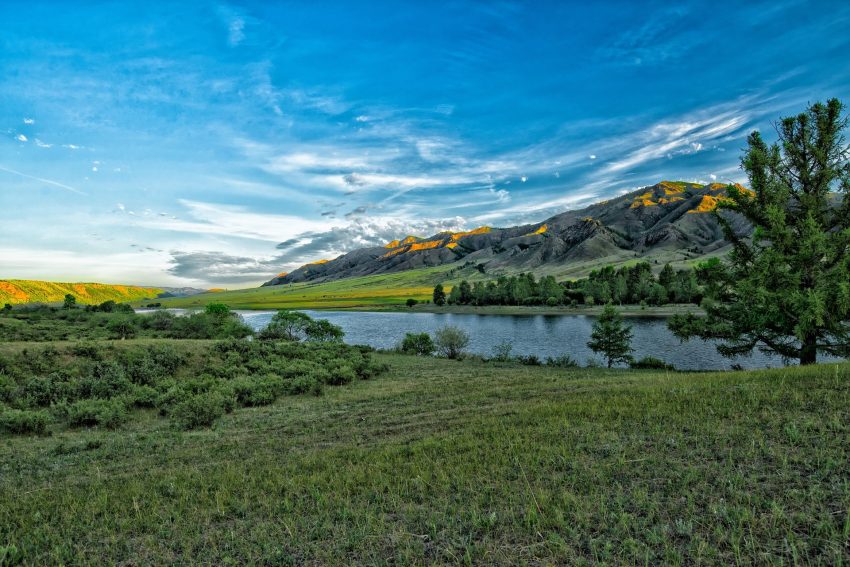
Mongolia is a vast, landlocked country in East and Central Asia, bordered by Russia to the north and China to the south. Known for its wide-open landscapes and big skies, it stretches from the Altai Mountains in the west to the grassy steppe and semi-desert regions in the east and south. With a relatively small population spread across a large territory, Mongolia feels spacious and remote, offering a strong sense of nature and distance.
The country’s capital, Ulaanbaatar, is the cultural and economic hub, where modern city life sits alongside traditional influences. Beyond the city, many communities maintain a close connection to the land, and you’ll still find the iconic ger (yurt) used as a practical home well-suited to Mongolia’s climate. Daily life often reflects a balance between contemporary development and long-standing customs shaped by the environment.
Mongolia’s seasons are dramatic, with warm summers, long cold winters, and a dry climate that varies by region. Travelers are drawn to its national parks, wildlife, and outdoor experiences such as hiking, horseback riding, and camping under clear night skies. Whether you’re interested in nature, culture, or simply the quiet of open spaces, Mongolia offers a distinctive atmosphere that’s hard to find elsewhere.
Table of Contents
- History of Mongolia
- Early steppe societies
- Xiongnu and early confederations
- Turkic and Uighur periods
- Khitan and regional powers
- Chinggis Khan and the Mongol unification
- The Mongol Empire and world conquest
- Yuan dynasty and the split of the empire
- Northern Yuan and steppe resurgence
- Qing rule and the reshaping of Mongolia
- Independence efforts and revolutionary era
- Socialist Mongolia
- Democratic transition and contemporary Mongolia
- Best Time to Visit Mongolia
- Food and Drink from Mongolia
History of Mongolia
Mongolia’s history is shaped by steppe pastoralism, powerful nomadic confederations, the rise of the Mongol Empire, long periods of rule from neighboring empires, and a modern national revival that culminated in a democratic state.
Early steppe societies (prehistory–6th century)
Humans lived on the Mongolian Plateau from deep prehistory, leaving rich archaeological traces in stone tools, deer stones, and khirigsuur burial mounds. Over time, mobile pastoralism—herding horses, sheep, goats, cattle, and camels—became the dominant way of life, enabling wide-ranging political coalitions across the grasslands. Early cultures interacted with China, Central Asia, and Siberia through trade, warfare, and migration.
Xiongnu and early confederations (3rd century BCE–3rd century CE)
One of the first large steppe empires was the Xiongnu confederation, which unified many tribes north of China and became a major rival to the Han dynasty. Their power rested on cavalry, tribute relationships, and control of steppe routes. After internal divisions and external pressure, the Xiongnu fragmented, and successor groups rose and fell across the plateau.
Turkic and Uighur periods (6th–9th centuries)
From the 6th century, Turkic khaganates dominated much of the steppe, spreading political institutions and runic writing traditions. Later, the Uighur Khaganate became influential, linking the steppe to Silk Road commerce and religious currents. These polities helped shape the political vocabulary of later Mongol statecraft—khans, councils, and confederation-building.
Khitan and regional powers (10th–12th centuries)
The Khitan Liao dynasty, founded by a steppe people, ruled parts of northern China and influenced the Mongolian Plateau. After the Liao’s decline, various Mongol and neighboring tribes competed for pasturelands and trade access. This era saw shifting alliances among groups such as the Khamag Mongol and others, setting the stage for unification under a single leader.
Chinggis Khan and the Mongol unification (late 12th–early 13th centuries)
Temüjin (later Chinggis Khan) rose from a precarious youth amid tribal conflict to unify the Mongol tribes through military success, strategic alliances, and institutional reforms. In 1206 he was proclaimed Chinggis Khan, marking the creation of a unified Mongol state. He reorganized society and the army, promoted merit-based command, and established a disciplined system that could project power far beyond the steppe.
The Mongol Empire and world conquest (13th century)
Under Chinggis Khan and his successors, Mongol armies conquered vast territories across Eurasia, creating the largest contiguous land empire in history. The empire facilitated long-distance trade and communication, protected caravan routes in many regions, and moved people, technologies, and ideas across continents—often violently, sometimes with administrative pragmatism. After Chinggis Khan’s death, the empire expanded further under Ögedei, Möngke, and others, while internal rivalries grew.
Yuan dynasty and the split of the empire (13th–14th centuries)
Khubilai Khan established the Yuan dynasty in China, ruling from Beijing and adopting many Chinese imperial institutions while maintaining Mongol elite privileges. Over time, the broader Mongol Empire fractured into major khanates, each pursuing its own interests. The Yuan fell in 1368, driven out by the Ming, and Mongol power retreated to the steppe.
Northern Yuan and steppe resurgence (14th–17th centuries)
After the Yuan’s fall, Mongol rulers continued as the Northern Yuan, competing among themselves and confronting Ming military pressure and diplomacy. The steppe saw cycles of unification and fragmentation, with prominent leaders periodically restoring influence. Buddhism—especially Tibetan Buddhism—spread widely and became a central pillar of Mongolian culture and politics, helping to unify communities and legitimize rulers.
Qing rule and the reshaping of Mongolia (17th–early 20th centuries)
By the 17th century, the Manchu-led Qing dynasty incorporated Mongol territories through alliances, conquest, and administrative reorganization. Mongolia was divided into leagues and banners, with restrictions on movement and inter-banner relations that limited large-scale reunification. Tibetan Buddhism remained influential, and monasteries became major economic and cultural centers. Over time, economic pressures, debt, and demographic changes affected Mongolian society, while the Qing maintained frontier security and imperial control.
Independence efforts and revolutionary era (1911–1924)
The Qing collapse in 1911 opened a path for Outer Mongolia to declare independence under the Bogd Khan (theocratic monarchy). However, the region became a battleground for competing forces: Chinese republican authorities sought control, Russian influence grew, and during the Russian Civil War, White and Red forces intervened. In 1921, Mongolian revolutionaries, backed by Soviet power, expelled opposing forces and established a new political order. In 1924, after the Bogd Khan’s death, Mongolia became the Mongolian People’s Republic.
Socialist Mongolia (1924–1990)
Mongolia aligned closely with the Soviet Union, adopting a one-party socialist system. The state pursued modernization—literacy campaigns, infrastructure, public health—while also enforcing collectivization and political repression, including severe purges in the 1930s that devastated the monastic community and broader society. During World War II, Mongolia supported the Soviet war effort, and in 1939 Soviet-Mongolian forces fought Japan at Khalkhin Gol, a decisive conflict that shaped regional security. After the war, Mongolia’s international status strengthened, and it joined the United Nations in 1961. Urbanization and industrial projects expanded, though the economy remained heavily dependent on Soviet aid and trade.
Democratic transition and contemporary Mongolia (1990–present)
As Soviet influence waned, mass protests in 1990 led to a peaceful transition to multiparty politics. A new constitution in 1992 established a democratic system and a market economy. The shift brought political freedoms but also economic hardship during the early transition years. In the 2000s and 2010s, large-scale mining and foreign investment became central to growth, alongside debates over inequality, corruption, environmental impacts, and national control of resources. Modern Mongolia balances relations with its two powerful neighbors—Russia and China—while pursuing broader international partnerships and maintaining a strong cultural identity rooted in steppe heritage, Buddhism, and the legacy of the Mongol Empire.
Best Time to Visit Mongolia
Visiting Mongolia in Spring
Spring (March–May) is a quieter time to visit Mongolia, with fewer crowds and a sense of the country “waking up” after winter. Expect variable weather—cold snaps, wind, and occasional dust storms—especially in March and April. By May, conditions are generally milder and greener in the north, making it a good shoulder-season option if you’re flexible and want better value on tours and accommodation.
Festival highlight: Tsagaan Sar (Lunar New Year) often falls in late January or February, but when it lands near early spring it can be a major cultural draw—family gatherings, traditional foods, and customs—though travel logistics can be more limited around the holiday.
Visiting Mongolia in Summer (Best)
Summer (June–August) is the most popular—and often the easiest—time to visit Mongolia. Days are long, temperatures are generally warm, and roads and remote areas are more accessible. It’s ideal for classic experiences like staying in a ger camp, exploring the Gobi Desert, hiking in the north, and attending local events. Expect more visitors and higher prices, especially in July.
Festival highlight: Naadam (usually July 11–13) is the signature event of the year, featuring wrestling, horse racing, and archery, with the biggest celebrations in Ulaanbaatar and vibrant regional Naadam festivals across the country.
Visiting Mongolia in Autumn
Autumn (September–November) brings crisp air, clear skies, and striking landscapes—golden steppe, colorful forests in the north, and excellent visibility for photography. September is especially comfortable for travel, with fewer tourists than summer while many camps and services are still operating. By late October and November, temperatures drop quickly and some tourist infrastructure begins to close for the season.
Festival highlight: Local harvest-related celebrations and regional cultural events can be a bonus in early autumn, depending on where you travel.
Visiting Mongolia in Winter
Winter (December–February) is for travelers who want a stark, adventurous Mongolia—snowy steppe, dramatic light, and deep cultural immersion with far fewer tourists. It’s extremely cold (often well below freezing), and travel can be challenging, but it can be rewarding for those prepared with proper gear and a flexible itinerary.
Festival highlight: The Ice Festival at Khövsgöl Lake (typically late winter) is a standout, with ice activities and winter traditions in a spectacular setting.
Food and Drink from Mongolia
Mongolian food is shaped by the country’s vast grasslands, harsh winters, and nomadic herding traditions. Meals are built around what can be raised and preserved on the steppe: meat, milk, and flour, with vegetables used more sparingly than in many other cuisines. Dishes are designed to be filling and warming, often featuring simple seasonings that let the natural flavor of the ingredients stand out. Hospitality is central to Mongolian life, and sharing food and drink with guests is an important social custom.
Meat is the backbone of many Mongolian meals, especially mutton and goat, with beef and horse also eaten in some regions. Popular everyday foods include dumplings such as buuz (steamed) and bansh (boiled), typically stuffed with minced meat and onion. Khuushuur, a fried meat pastry, is common at festivals and roadside stalls. Another well-known dish is tsuivan, a hearty stir-fry of hand-cut noodles with meat and sometimes cabbage or carrots, while khorkhog and boodog are celebratory preparations that cook meat with hot stones to create a rich, smoky flavor.
Dairy plays an equally important role, reflecting the importance of livestock like sheep, goats, yaks, cows, and horses. Milk is turned into a wide range of products, including yogurt-like tarag, dried curds known as aaruul, and various fresh and aged cheeses. Cream and butter are used to enrich foods, and milk tea—suutei tsai—is a daily staple, often made with salt and sometimes mixed with rice or small dumplings. These dairy foods are valued not only for taste but also for their ability to store well and provide energy in a demanding climate.
Mongolian drinks range from comforting hot teas to traditional fermented beverages. Airag, made from fermented mare’s milk, is one of the most distinctive, lightly alcoholic and tangy, and commonly offered in summer. In urban areas, people also enjoy black tea, herbal infusions, and modern soft drinks, while vodka has a visible presence at celebrations and formal gatherings. Whether in a ger on the steppe or a café in Ulaanbaatar, Mongolian food and drink reflect practicality, seasonality, and a strong culture of welcoming others to the table.