Mauritania: The Ultimate Travel Guide 2026
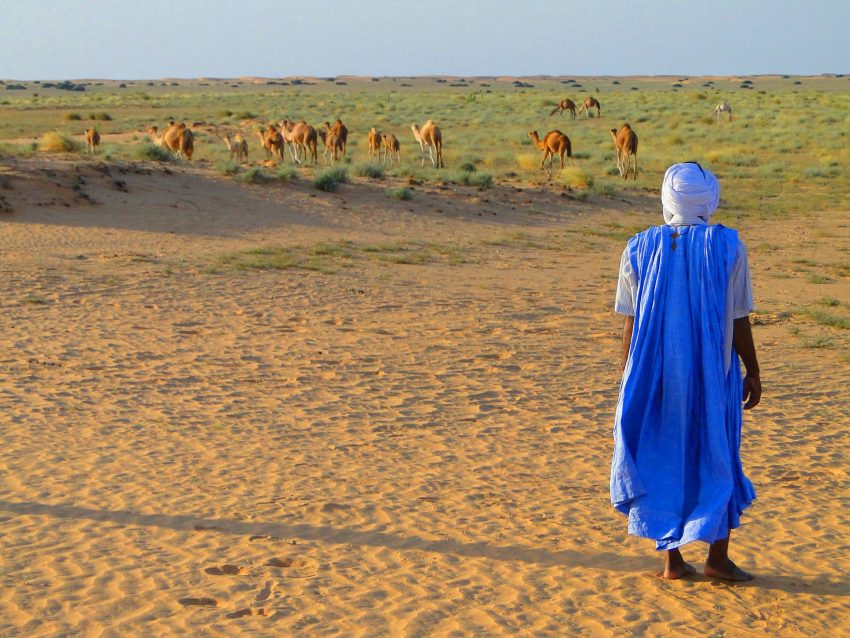
Mauritania is a vast country in northwest Africa where the Sahara Desert meets the Atlantic Ocean. Much of its landscape is defined by sweeping dunes, rocky plateaus, and wide open plains, with settlements and towns often clustered around scarce water sources. Its coastline brings a different character-windswept beaches and rich fishing waters that play an important role in daily life and the economy.
The capital, Nouakchott, is the country’s largest city and a hub for government, business, and culture, while other key centers include Nouadhibou on the coast and several inland towns that serve as regional crossroads. Mauritania’s population is shaped by a mix of Arab-Berber and sub-Saharan African communities, reflected in its languages, music, clothing, and food traditions. Arabic is the official language, and French is also widely used in administration and education.
Life in Mauritania is closely tied to the environment, from pastoral herding and oasis agriculture to coastal fishing and trade. Visitors often notice the contrast between modern urban growth and the quiet rhythms of desert regions, where travel distances are long and the night skies are strikingly clear. With its distinctive geography and cultural blend, Mauritania offers a sense of space and atmosphere that feels both remote and deeply rooted in the Sahel and Sahara.
Table of Contents
- History of Mauritania
- Early societies and trans-Saharan worlds
- Ghana and the rise of desert-edge states
- Almoravids, Islam, and shifting power
- Mali, trade, and southern river societies
- Arab migrations and the formation of Moorish society
- Emirate politics and caravan economy
- French conquest and colonial rule
- Independence and early state-building
- Western Sahara and the era of coups
- Political liberalization, contested elections, and persistent military influence
- Recent decades: security, reform, and continuity
- Best Time to Visit Mauritania
- Food and Drink from Mauritania
History of Mauritania
Mauritania’s history is shaped by the Sahara and Sahel, by long-distance trade routes linking North and West Africa, and by layered identities—Amazigh (Berber), Arab, and sub-Saharan African—formed through migration, commerce, religion, and conquest.
Early societies and trans-Saharan worlds (prehistory–8th century)
Archaeological evidence shows human presence in what is now Mauritania from deep prehistory, including periods when the Sahara was wetter and supported more settled life. As the climate dried, populations concentrated along more viable zones—oases, seasonal valleys, and especially the Senegal River corridor in the south. Over time, pastoralism and caravan movement became central to life in the north and center, while agriculture and riverine trade anchored communities in the south.
Ghana and the rise of desert-edge states (8th–11th centuries)
By the early medieval period, the region lay within the orbit of the Ghana Empire (often associated with the Soninke), which controlled parts of the trans-Saharan gold and salt trade. Towns and market centers along desert-edge routes benefited from caravan commerce, and Islam began to spread through merchants and scholars, initially among elites and trading communities.
Almoravids, Islam, and shifting power (11th–13th centuries)
In the 11th century, a reformist movement among Sanhaja Berber groups—associated with the Almoravids—emerged from the western Sahara. The Almoravids helped intensify Islamization and linked the region more tightly to North African religious and political currents. Even after Almoravid political power waned, Islam continued to deepen through scholarship, Sufi networks, and the authority of learned lineages.
Mali, trade, and southern river societies (13th–15th centuries)
As Mali rose, influence shifted again across the western Sahel. Mauritania’s southern zones and trade corridors interacted with Mali’s commercial and scholarly networks. The Senegal River valley remained a key interface between Saharan caravan economies and Sahelian agrarian states, with communities such as the Soninke, Fulani (Pulaar), and Wolof playing important roles in farming, herding, and trade.
Arab migrations and the formation of Moorish society (15th–18th centuries)
From roughly the 15th century onward, Arab tribal migrations—especially those associated with the Beni Hassan—reshaped the social and linguistic landscape. Over time, Hassaniya Arabic became dominant across much of the territory, and a stratified “Moorish” society took form, combining Arab and Amazigh elements. Social hierarchies hardened, including groups of religious specialists (zawaya), warrior lineages, artisan groups, and enslaved or formerly enslaved communities (often referred to as Haratin). Enslavement and dependency relationships became deeply embedded in parts of society, with long-lasting consequences.
Emirate politics and caravan economy (18th–19th centuries)
Several emirates consolidated authority in different regions, balancing raiding, taxation, and protection of trade routes. The caravan economy—salt, gum arabic, livestock, and other goods—remained vital. At the same time, pressures increased from changing Atlantic and Saharan trade patterns, internal rivalries, and the growing reach of European powers along the West African coast and river systems.
French conquest and colonial rule (late 19th century–1960)
France expanded from Senegal northward, using a mix of military campaigns, treaties, and administrative reorganization. By the early 20th century, Mauritania was incorporated into French West Africa. Colonial rule sought to pacify nomadic confederations, control trade, and impose new administrative boundaries. It also altered patterns of authority by empowering certain intermediaries and weakening others, while maintaining many social hierarchies. Economic development was limited and uneven, with the south and a few administrative centers receiving more sustained attention than vast interior areas.
Independence and early state-building (1960–1978)
Mauritania gained independence in 1960 under President Moktar Ould Daddah. The new state faced the challenge of forging national cohesion across linguistic and cultural lines and managing tensions between Arabophone northern/central populations and the largely sub-Saharan African communities of the south. The government pursued nation-building policies and closer alignment with Arab institutions over time, while also trying to balance relations with neighboring Senegal and Mali.
Western Sahara and the era of coups (1975–1990s)
In the mid-1970s, Mauritania became involved in the Western Sahara conflict, claiming part of the territory after Spain’s withdrawal. The war strained the economy and the military, contributing to a 1978 coup that ended Ould Daddah’s rule. Mauritania later renounced its claim and withdrew, but the period ushered in prolonged political instability marked by repeated coups and military-led governments.
During the late 1980s and early 1990s, ethnic and political tensions intensified. A particularly traumatic episode occurred along the Senegal River valley, including expulsions and violence affecting Black Mauritanians and cross-border relations with Senegal. These events left deep scars and remain central to debates about citizenship, land, and national identity.
Political liberalization, contested elections, and persistent military influence (1990s–2000s)
Mauritania introduced multiparty politics in the early 1990s, but power remained concentrated and elections were frequently contested. In 2005 a coup removed President Maaouya Ould Sid’Ahmed Taya, followed by a transition that led to elections. Another coup in 2008 again demonstrated the continued political weight of the military.
Recent decades: security, reform, and continuity (2010s–present)
In the 2010s, Mauritania emphasized internal security and border control amid regional instability in the Sahel. The country also faced ongoing challenges: economic dependence on extractive industries (notably iron ore and, more recently, offshore gas prospects), uneven development, and enduring social inequalities. Slavery was formally abolished earlier, but its legacies persist; the state has adopted additional legal measures against slavery and related practices, while activists argue enforcement and broader social change remain insufficient.
Politically, Mauritania has combined electoral processes with strong executive power and the continued prominence of military and security institutions. A notable development was the 2019 presidential transition that, while still contested by some, marked a rare handover between elected leaders in the country’s post-independence history. The central themes of modern Mauritanian history—identity, inclusion, governance, and the balance between desert and riverine worlds—continue to shape its trajectory.
Best Time to Visit Mauritania
Visiting Mauritania in Winter (Best)
Winter (roughly December to February) is the most comfortable time to visit Mauritania, with cooler days and much lower humidity—ideal for desert travel and longer days outdoors. It’s a great season for exploring Nouakchott and Nouadhibou, heading into the Adrar region (including Atar and Chinguetti), and enjoying activities like camel treks and dune excursions without extreme heat.
Visiting Mauritania in Spring
Spring (roughly March to May) is a good shoulder season if you want fewer visitors and still-manageable temperatures, especially earlier in the season. By late spring, heat builds quickly inland, so it’s best to plan desert and hiking activities for mornings and late afternoons. This can be a pleasant time for cultural visits and road trips if you’re prepared for warmer conditions.
Visiting Mauritania in Summer
Summer (roughly June to August) is the toughest season for most travelers due to intense heat, particularly away from the coast. If you visit in summer, consider focusing on coastal areas like Nouakchott and Nouadhibou, where conditions can be comparatively more tolerable, though still warm. It’s generally not the best time for deep-desert touring unless you’re experienced with extreme-heat travel and have strong logistical support.
Visiting Mauritania in Autumn
Autumn (roughly September to November) is another strong time to visit, especially from October onward as temperatures begin to drop. Early autumn can still be hot, but conditions improve steadily, making it a good lead-in to peak season. Depending on the year and local scheduling, you may also find cultural events and festivals more likely to be enjoyable in this cooler, post-summer period.
Food and Drink from Mauritania
Mauritanian food reflects a blend of Saharan desert life and Sahelian farming traditions, shaped by nomadic heritage, coastal fishing, and trade routes that brought Arab, Berber, and West African influences. Meals often center on hearty staples that travel well and satisfy in a hot, dry climate, with grains, legumes, and meat featuring prominently. Hospitality is a key part of eating culture, and sharing from common dishes is common in family settings. Spices are used with a measured hand, letting the natural flavors of meat, grains, and dairy come through.
A cornerstone of Mauritanian cuisine is grains, especially millet and sorghum, prepared as porridges, couscous-like dishes, or dense breads. Rice is also widely eaten, particularly in the south along the Senegal River valley, where agriculture is stronger. Sauces and stews made with onions, tomatoes, okra, or leafy greens may accompany grains, while dates and other dried foods provide energy and sweetness. In many homes, meals are built around what is available locally, with seasonal variation playing a big role.
Meat and fish are important proteins, with camel, goat, sheep, and beef appearing in stews, grills, and celebratory dishes. Along the Atlantic coast, fish and seafood are central, often simply seasoned and grilled or cooked into flavorful broths. Dishes may be enriched with clarified butter or oils, and in pastoral areas, milk—fresh, fermented, or soured—remains a valued everyday food. Street foods and small snacks can include fried doughs, sandwiches, and grilled meats, especially in towns and cities.
Tea culture is one of the most distinctive elements of Mauritanian drink. Strong green tea is prepared with generous sugar and poured repeatedly from height to create foam, served in small glasses over several rounds that can stretch long into conversation. This tea ritual is both social and ceremonial, offered to guests and shared among friends as a sign of welcome and respect. Alongside tea, people drink water, milk, and sweetened beverages, with choices often shaped by climate, availability, and the rhythms of daily life.