Maldives: The Ultimate Travel Guide 2026
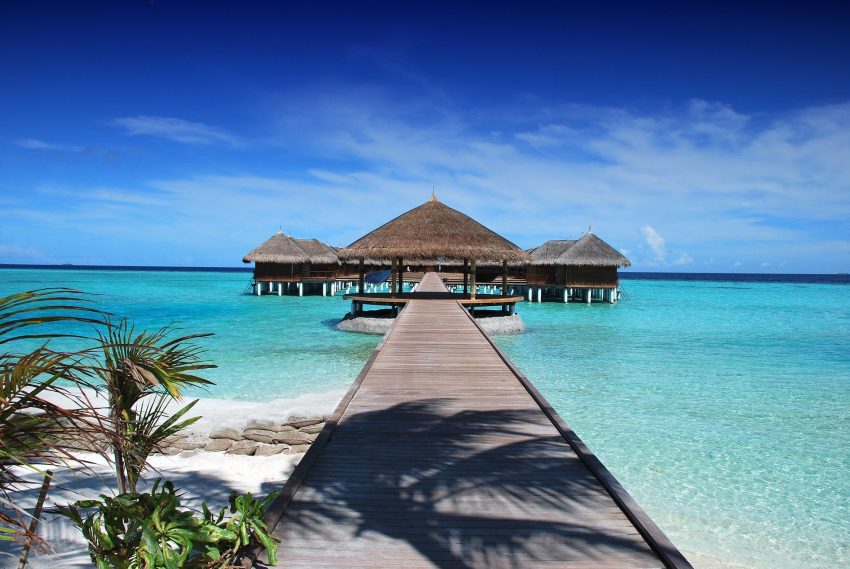
The Maldives is a tropical island nation in the Indian Ocean, known for its clear turquoise waters, soft white-sand beaches, and vibrant coral reefs. Made up of many small islands and atolls, it offers a laid-back atmosphere where the ocean is never far away and nature feels close at every turn.
Visitors often come for the water: snorkeling and diving among colorful marine life, lagoon cruises, and days spent swimming in calm, warm seas. Whether you choose a private resort island or a local inhabited island, the Maldives is shaped by a relaxed pace, stunning seascapes, and a strong connection to life on the water.
Beyond the postcard views, the Maldives also offers a chance to enjoy fresh seafood, beautiful sunsets, and simple moments of calm. It’s a destination that suits many styles of travel-romantic getaways, family trips, and adventure-focused escapes-while still feeling peaceful and unspoiled.
Table of Contents
- History of Maldives
- Early settlement and Indian Ocean networks
- Conversion to Islam and the rise of the sultanate
- European contact and regional rivalry
- British protectorate era
- End of the sultanate and early republic experiments
- Independence and the Second Republic
- Modern state-building and tourism-led transformation
- Political liberalization and contemporary challenges
- Best Time to Visit Maldives
- Food and Drink from Maldives
History of Maldives
The Maldives’ history is shaped by its position on Indian Ocean trade routes, its conversion to Islam, long periods of sultanate rule, and later colonial-era protectorate status before independence and a modern republic.
Early settlement and Indian Ocean networks (prehistory–1100s)
People likely settled the atolls from nearby regions of South Asia and the wider Indian Ocean over many centuries, forming small island communities connected by seafaring. The Maldives became part of maritime exchange networks linking India, Sri Lanka, Arabia, and Southeast Asia. Buddhism took root early and remained influential for centuries, reflected in archaeological remains and later traditions.
Conversion to Islam and the rise of the sultanate (1100s–1500s)
In the 12th century, the Maldives converted to Islam, a turning point that reshaped law, governance, and cultural identity. A sultanate emerged, with rulers drawing legitimacy from Islamic authority and control over trade and tribute across the atolls. The islands’ strategic location made them important to merchants and regional powers, even though their small land area limited large-scale agriculture or armies.
European contact and regional rivalry (1500s–1700s)
From the 16th century, European expansion into the Indian Ocean brought new pressures. The Portuguese attempted to impose control, prompting resistance and eventual expulsion. Over time, the Maldives navigated shifting regional dynamics involving South Indian powers and later the Dutch presence in nearby Sri Lanka, maintaining internal rule while adapting to external threats and trade disruptions.
British protectorate era (1800s–1965)
By the 19th century, British influence in the region grew, and the Maldives became a British protectorate. The sultanate continued to govern internal affairs, while Britain handled external relations and defense. This period saw gradual administrative changes and increasing engagement with global systems, alongside the realities of a dispersed island geography that made centralized control and development challenging.
End of the sultanate and early republic experiments (1950s–1960s)
Political reform pressures intensified after World War II. A short-lived First Republic was declared in the 1950s, but the sultanate was restored soon after. In the late 1950s and early 1960s, tensions also emerged around local autonomy and the presence of foreign military interests, reflecting broader decolonization-era politics.
Independence and the Second Republic (1965–1970s)
The Maldives gained independence in 1965. In 1968, a referendum led to the abolition of the sultanate, and the country became a republic again, with a president as head of state. The new republic focused on consolidating national institutions across widely scattered atolls.
Modern state-building and tourism-led transformation (1970s–2000s)
From the 1970s onward, tourism expanded rapidly and became the backbone of the economy, transforming infrastructure, employment, and international visibility. This growth brought higher incomes and modernization but also increased vulnerability to external shocks and intensified environmental pressures on low-lying islands. Political life during much of this era was dominated by strong centralized leadership.
Political liberalization and contemporary challenges (2000s–present)
In the 2000s, the Maldives moved toward multiparty politics and constitutional reform, with competitive elections becoming a defining feature of public life. The country has since experienced periods of political contestation and institutional change. Alongside governance debates, the Maldives faces major long-term challenges: climate change and sea-level rise, environmental protection of reefs and lagoons, and balancing tourism development with social and ecological sustainability.
Best Time to Visit Maldives
Visiting Maldives in Winter (Best)
Winter (December to February) is the most popular time to visit the Maldives, thanks to consistently sunny days, low humidity, and calm seas—ideal for beach time, snorkeling, diving, and lagoon activities. Visibility underwater is often excellent, and rainfall is typically at its lowest, making it a great choice if you want the most reliable weather (though prices and demand are usually highest).
Visiting Maldives in Spring
Spring (March to May) is a strong shoulder season with plenty of sunshine and warm water, often with slightly fewer crowds than winter. As the season progresses, humidity and the chance of short showers can increase, but you’ll still get many clear days—great for diving, sandbank trips, and resort hopping, often with better-value deals than peak winter.
Visiting Maldives in Summer
Summer (June to August) falls during the southwest monsoon, bringing higher humidity, more frequent rain, and occasional rougher seas. It can still be a rewarding time to visit if you’re flexible—there are often good discounts, and marine life encounters can be excellent. Festivals can be a highlight depending on the year, especially Eid celebrations (Eid al-Adha may fall in summer in some years), with local islands hosting prayers, gatherings, and festive meals.
Visiting Maldives in Autumn
Autumn (September to November) is a transition period where weather can be mixed—some days are bright and calm, while others bring heavier showers. It’s a good time for travelers who want fewer crowds and better rates while still having a decent chance of sunshine, especially later in the season as conditions begin to improve. If Ramadan occurs during this period (dates vary each year), it can be culturally interesting on local islands, with a quieter daytime atmosphere and lively evenings around iftar.
Food and Drink from Maldives
Maldivian food is shaped by the islands’ geography: a warm ocean, limited farmland, and a long history of seafaring trade. As a result, the cuisine leans heavily on what is abundant and reliable—fish from the surrounding waters, coconuts from local palms, and starches like rice and flatbreads. Meals are often simple but boldly flavored, with a balance of heat, tang, and richness that reflects South Asian influences while remaining distinctly Maldivian.
Tuna is the centerpiece of everyday cooking, appearing fresh, dried, smoked, or canned, and worked into everything from curries to snacks. A classic preparation is mas riha, a fragrant fish curry simmered with spices and coconut, typically served with rice. Another staple is mas huni, a breakfast dish of finely flaked tuna mixed with grated coconut, onion, and chili, eaten with roshi (a soft flatbread). These dishes highlight the Maldivian knack for turning a few core ingredients into meals that feel both hearty and bright.
Coconut is the cuisine’s other defining element, used as grated flesh, coconut milk, or oil to add sweetness and body. Many curries and stews start with aromatics and spices before being mellowed by coconut milk, creating a creamy base that carries chili and citrus notes well. Alongside fish, you’ll find side dishes and condiments—often spicy relishes and pickles—that add crunch and sharpness, making even a simple plate of rice and curry feel layered and satisfying.
Drinks in the Maldives range from everyday refreshments to offerings shaped by resort culture. Locally, tea is widely enjoyed, and fresh juices and coconut water are common ways to cool down in the tropical heat. In many places, especially on resort islands, international beverages are readily available, including mocktails and cocktails crafted with tropical fruits. Whether paired with a spicy tuna curry or sipped on a hot afternoon, Maldivian food and drink tend to emphasize freshness, warmth, and the unmistakable taste of the sea and coconut.