Malaysia: The Ultimate Travel Guide 2026
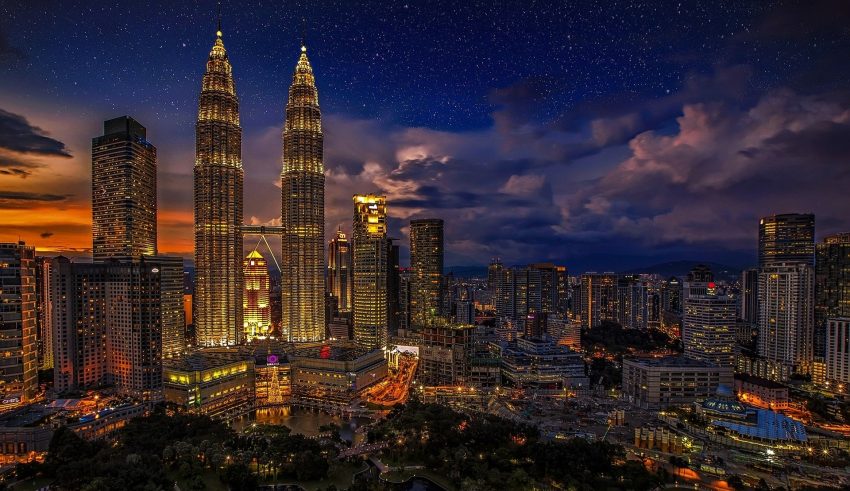
Malaysia is a vibrant Southeast Asian country known for its rich cultural diversity, modern cities, and lush natural landscapes. Split into two main regions-Peninsular Malaysia and Malaysian Borneo-it offers a fascinating mix of experiences, from bustling urban life to quiet coastal towns and rainforest interiors. This blend of geography and cultures gives Malaysia a distinctive character that feels both familiar and uniquely its own.
In the capital, Kuala Lumpur, sleek skyscrapers and busy shopping districts sit alongside traditional markets, temples, and mosques, reflecting the country’s multicultural identity. Malay, Chinese, Indian, and Indigenous communities contribute to a dynamic everyday life seen in festivals, languages, architecture, and especially food. Whether it’s street stalls, hawker centres, or upscale restaurants, Malaysia’s cuisine is one of the easiest ways to experience its diversity.
Beyond the cities, Malaysia is celebrated for its natural beauty and outdoor adventures. Tropical islands with clear waters, highland retreats with cooler air, and national parks filled with wildlife make it a popular destination for nature lovers. From beach escapes to rainforest treks, Malaysia offers a wide range of travel experiences in a welcoming and easy-to-explore setting.
Table of Contents
- History of Malaysia
- Early societies and Indian Ocean trade
- The rise of Melaka and the spread of Islam
- Portuguese and Dutch competition
- British expansion and the Straits Settlements
- Borneo under the Brookes and chartered rule
- Japanese occupation and wartime upheaval
- Postwar politics, Emergency, and the road to independence
- Formation of Malaysia and separation of Singapore
- Nation-building and the New Economic Policy
- Contemporary Malaysia
- Best Time to Visit Malaysia
- Food and Drink from Malaysia
History of Malaysia
Malaysia’s history is shaped by its position on major sea routes, long-standing Malay polities, centuries of trade and migration, European colonial competition, and a complex path to independence and nation-building that joined the Malay Peninsula with parts of Borneo.
Early societies and Indian Ocean trade (before 1400)
Archaeological evidence shows human presence in the Malay Peninsula and Borneo from deep prehistory, with diverse Indigenous communities developing distinct languages and cultures. By the first millennium CE, coastal settlements were integrated into Indian Ocean trade networks linking China, India, the Middle East, and Southeast Asia. Indian cultural and religious influences (Hindu-Buddhist ideas, court traditions, and Sanskrit-derived terms) spread through commerce and diplomacy rather than mass conquest.
From roughly the 7th to 13th centuries, the Srivijaya maritime sphere—centered in Sumatra—exerted strong influence over parts of the peninsula and the Straits of Malacca, helping make the region a key transit point for spices, forest products, and luxury goods.
The rise of Melaka and the spread of Islam (1400s)
Around the early 15th century, the Melaka (Malacca) Sultanate emerged as a major port-polity on the Straits of Malacca. Its success rested on strategic geography, effective port administration, and the ability to attract merchants from across Asia. Islam spread and became closely tied to Malay court culture and identity, while Melaka’s legal and administrative traditions influenced later Malay states.
Portuguese and Dutch competition (1511–late 1700s)
In 1511, the Portuguese captured Melaka, aiming to control the lucrative straits trade. The fall of Melaka reshaped regional politics: Malay elites and traders shifted to other ports, and successor sultanates—especially Johor—continued Malay political traditions while contesting European power.
In 1641, the Dutch, allied with Johor, took Melaka from the Portuguese. Dutch priorities focused on trade and limiting rivals rather than extensive territorial rule on the peninsula, but European competition increasingly affected local economies and diplomacy.
British expansion and the Straits Settlements (late 1700s–1800s)
British involvement grew from the late 18th century, driven by strategic concerns and trade. Penang was established as a British base in 1786, Singapore in 1819, and Melaka came under British control in the early 19th century. These territories were later organized as the Straits Settlements, becoming key nodes in global commerce.
On the peninsula, British influence expanded through treaties and “advisers” in Malay states, especially where tin mining and later rubber plantations became central to the economy. This era brought major demographic change: large-scale migration from China and India supplied labor for mines, plantations, and urban commerce, creating a more plural society with distinct communities and economic roles.
Borneo under the Brookes and chartered rule (1800s–1940s)
In northern Borneo, political development followed different paths. Sarawak came under the rule of the Brooke family (“White Rajahs”) from the mid-19th century, while Sabah (then North Borneo) was administered by a chartered company. Brunei, once a powerful sultanate, contracted territorially but remained under British protection. Indigenous peoples across Borneo experienced shifting authority, new economic pressures, and changing borders.
Japanese occupation and wartime upheaval (1941–1945)
During World War II, Japan occupied Malaya, Singapore, and much of Borneo. The occupation was marked by hardship, violence, and severe economic disruption. It also weakened European colonial prestige and accelerated political mobilization. Different communities experienced the occupation in sharply different ways, deepening some social tensions while also fostering new anti-colonial sentiment.
Postwar politics, Emergency, and the road to independence (1945–1957)
After the war, Britain attempted to reorganize the peninsula through the Malayan Union, but strong Malay opposition—centered on sovereignty, the role of Malay rulers, and citizenship arrangements—led to its replacement by the Federation of Malaya in 1948.
That same year began the Malayan Emergency, a long conflict between colonial/federal forces and a communist-led insurgency. The Emergency shaped security institutions, rural policy, and political alignments, and it influenced the pace and structure of constitutional change.
In 1957, the Federation of Malaya achieved independence, establishing a parliamentary system with a constitutional monarchy and a federal structure, while managing the realities of a multiethnic population and an economy still tied to commodities.
Formation of Malaysia and separation of Singapore (1963–1965)
In 1963, Malaysia was formed by joining the Federation of Malaya with Sabah, Sarawak, and Singapore (Brunei did not join). The new federation faced immediate challenges, including regional opposition and armed confrontation with Indonesia (Konfrontasi). Internal political and economic disagreements between federal leaders and Singapore’s leadership culminated in Singapore’s separation from Malaysia in 1965.
Nation-building and the New Economic Policy (late 1960s–1990s)
Ethnic tensions and political competition intensified in the 1960s, culminating in major violence in 1969. In the aftermath, the government introduced far-reaching policies aimed at restructuring society and reducing poverty, most notably the New Economic Policy (NEP). The NEP sought to raise living standards and expand opportunities, particularly for Bumiputera communities, while also reshaping ownership patterns and education and employment pathways. These policies became central to Malaysian politics and debates about equity, identity, and merit.
From the 1980s onward, Malaysia pursued rapid industrialization, export-oriented growth, and large infrastructure projects. Urbanization accelerated, manufacturing expanded, and the country became more integrated into global supply chains, while political power remained relatively centralized.
Contemporary Malaysia (late 1990s–present)
The Asian Financial Crisis of 1997–1998 tested Malaysia’s economic model and politics, prompting major policy responses and sharpening public debate about governance and reform. Over subsequent decades, Malaysia experienced continued development alongside recurring controversies over corruption, civil liberties, religion, and federal–state relations.
In the 2010s and beyond, electoral politics became more competitive, with changes in governing coalitions and shifting voter alignments. Malaysia today remains a diverse federation spanning the peninsula and northern Borneo, balancing economic ambitions with complex questions of identity, regional autonomy, and political reform.
Best Time to Visit Malaysia
Visiting Malaysia in Spring
March to May is a strong all-round time to visit Malaysia, especially if you want a balance of city time, beaches, and nature. It’s typically hot and humid, with intermittent showers that can be refreshing rather than trip-disrupting in many areas. This season suits island-hopping on the west coast (like Langkawi and Penang) and exploring Kuala Lumpur’s attractions with fewer weather extremes than later in the year.
Festival highlight: Hari Raya Aidilfitri (Eid) often falls around this period (date varies yearly) and brings a festive atmosphere, open houses, and special food—particularly memorable in Kuala Lumpur, Melaka, and Penang.
Visiting Malaysia in Summer (Best)
June to August is often the best time to visit Malaysia for classic beach and island plans, particularly on the east coast of Peninsular Malaysia (such as Perhentian Islands, Redang, and Tioman), where sea conditions are generally at their most inviting. It’s also a great season for hiking and rainforest trips when you want more reliable conditions for outdoor activities.
Festival highlight: George Town Festival (typically mid-year in Penang) is a major arts and culture event with performances, exhibitions, and street programming that can be a trip centerpiece.
Visiting Malaysia in Autumn
September to November can be a good time to visit Malaysia if you’re prioritizing cities, food, culture, and highland escapes, and you don’t mind a higher chance of rain. Conditions can vary by region, so it’s a flexible season for building an itinerary that mixes Kuala Lumpur, Penang, Ipoh, and the Cameron Highlands, with beach time chosen carefully by coast.
Festival highlight: Deepavali (Diwali) usually falls in October or November (date varies yearly) and is especially vibrant in areas like Brickfields (Kuala Lumpur) and parts of Penang, with lights, sweets, and cultural celebrations.
Visiting Malaysia in Winter
December to February is a popular period thanks to holiday travel and generally pleasant sightseeing conditions in many urban and inland areas. While weather patterns differ across Malaysia, this season is often ideal for exploring Kuala Lumpur, heritage towns, and cooler highlands, and for planning island time on coasts that are calmer during these months.
Festival highlight: Chinese New Year (January or February, date varies yearly) is one of Malaysia’s biggest celebrations, with lion dances, lanterns, family feasts, and lively events—especially in Kuala Lumpur, Penang, and Johor Bahru.
Food and Drink from Malaysia
Malaysia’s food and drink reflect its multicultural makeup, shaped by Malay, Chinese, Indian, and Indigenous traditions, as well as centuries of trade across the region. Meals often balance spicy, sour, sweet, and salty notes, with rice and noodles as everyday staples. Coconut milk, lemongrass, galangal, turmeric, belacan (shrimp paste), and a wide range of chilies are common building blocks, creating dishes that are fragrant and layered rather than simply hot. Eating is a social pastime, and it’s normal to see families and friends sharing multiple plates at once.
Malay cuisine is known for rich gravies, grilled meats, and coconut-based dishes. Nasi lemak—coconut rice served with sambal, anchovies, peanuts, cucumber, and egg—is widely considered a national favorite, eaten from breakfast to late night. Other classics include rendang, a slow-cooked spiced meat dish with deep caramelized flavors, and satay, skewered meat grilled over charcoal and served with peanut sauce. Many Malay dishes are halal, and festive foods like ketupat (compressed rice cakes) and various kuih (sweet and savory snacks) are especially prominent during celebrations.
Chinese Malaysian cooking ranges from hawker-style noodles to banquet dishes, often adapted with local ingredients and bolder seasoning. Char kway teow (stir-fried flat rice noodles), Hokkien mee, and wonton noodles are popular, while dishes like bak kut teh (herbal pork soup) are closely associated with certain communities and regions. Indian Malaysian food brings an equally strong presence, from banana-leaf rice meals with multiple vegetable sides to roti canai served with dhal or curry. Mamak eateries—casual Indian Muslim restaurants—are a defining part of daily life, known for teh tarik sessions and late-night suppers.
Street food culture ties everything together, especially at night markets and hawker centers where regional specialties shine. Penang is famous for dishes like assam laksa and cendol, while Melaka is known for Peranakan (Nyonya) cooking that blends Chinese techniques with Malay spices, producing favorites like laksa lemak and ayam pongteh. Drinks are just as distinctive: teh tarik (pulled milk tea), kopi with condensed milk, fresh sugarcane juice, and cooling options like bandung (rose syrup milk) or barley water are common. Whether in a roadside stall or a modern café, Malaysian food and drink are defined by variety, generosity, and bold, comforting flavors.