Laos: The Ultimate Travel Guide 2026
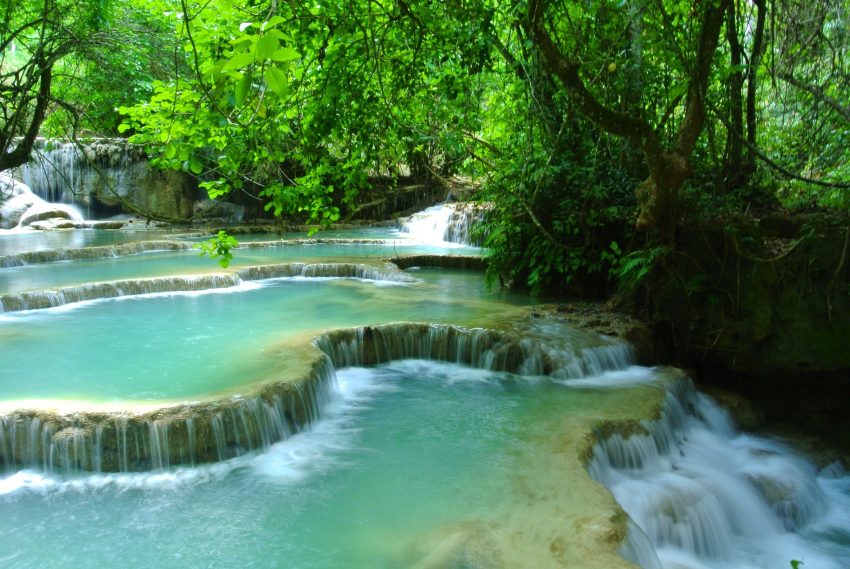
Laos is a landlocked country in Southeast Asia known for its lush landscapes, slow-paced river life, and strong sense of tradition. Bordered by Thailand, Vietnam, Cambodia, China, and Myanmar, it sits at the heart of the region, with the Mekong River shaping daily life, travel, and agriculture. From misty mountains in the north to fertile plains in the south, Laos offers a striking mix of scenery that feels both expansive and intimate.
The country’s cultural character is deeply influenced by Buddhism, which you’ll see in golden temples, morning alms-giving rituals, and the calm rhythm of many towns. Lao food is fresh and herb-forward, often featuring sticky rice, grilled meats, river fish, and bright, spicy dips. Markets, festivals, and village crafts-like weaving and woodwork-add to the sense of a place where community and tradition remain central.
For travelers, Laos is often defined by its relaxed atmosphere and natural beauty. Luang Prabang blends temple-lined streets with cafés and night markets, while Vientiane offers a quieter capital-city feel along the Mekong. Beyond the cities, waterfalls, caves, and scenic motorbike routes invite exploration, making Laos an appealing destination for those who enjoy nature, culture, and unhurried journeys.
Table of Contents
- History of Laos
- Early settlement and early states
- Lan Xang, the “Kingdom of a Million Elephants”
- Fragmentation and Siamese dominance
- French colonial Laos
- World War II and the struggle for independence
- Civil war and the Cold War battleground
- The Lao PDR and socialist consolidation
- Market reforms and regional integration
- Contemporary Laos
- Best Time to Visit Laos
- Food and Drink from Laos
History of Laos
Laos’s history is shaped by its position at the crossroads of mainland Southeast Asia, the rise and fall of regional kingdoms, long periods of tributary diplomacy with powerful neighbors, French colonial rule, Cold War conflict, and the establishment of a one-party socialist state.
Early settlement and early states (prehistory–1200s)
Archaeological evidence indicates very early human presence in what is now Laos, including the famous megalithic “Plain of Jars” in Xieng Khouang, associated with Iron Age communities and long-distance exchange networks. Over centuries, the region saw a mix of Austroasiatic-speaking groups and later Tai-speaking migrations. Political authority tended to be organized around river valleys and upland polities, influenced by larger Indianized states in the Mekong basin and beyond, and by shifting trade routes linking the Mekong to the South China Sea and mainland corridors.
Lan Xang, the “Kingdom of a Million Elephants” (1353–1707)
A decisive turning point came with the founding of Lan Xang in 1353 by Fa Ngum, who consolidated territories along the Mekong and established a royal center at Luang Prabang. Theravada Buddhism became central to state legitimacy and culture, reinforced by monastic institutions, temple building, and court patronage. Over time, the political center shifted southward; Vientiane grew in importance, reflecting the kingdom’s need to manage trade, tribute relations, and security along the Mekong.
Lan Xang reached periods of strength under several rulers, notably in the 16th century, when the kingdom navigated pressures from Burma, Siam, and Vietnam. Yet like many Southeast Asian mandala-style states, its cohesion depended heavily on personal rule, alliances, and the balance of regional elites.
Fragmentation and Siamese dominance (1707–late 1800s)
In 1707 Lan Xang split into rival kingdoms—Luang Prabang, Vientiane, and Champasak—each maneuvering among stronger neighbors. Siam (centered on Ayutthaya and later Bangkok) increasingly asserted control through tributary demands, military intervention, and population transfers. The destruction of Vientiane in the late 18th and early 19th centuries and the suppression of rebellions accelerated depopulation and displacement in parts of the Lao territories, while Siam tightened its grip over the Mekong’s west and exerted strong influence east of it as well.
During the 19th century, the region also faced Vietnamese influence in the east and the growing presence of European powers. These pressures set the stage for colonial boundary-making that would eventually define “Laos” as a distinct territorial unit.
French colonial Laos (1893–1945)
France established a protectorate over Laos in 1893, incorporating it into French Indochina. Colonial rule fixed borders, expanded administrative structures, and promoted Vientiane as a key administrative center. Compared with Vietnam, Laos saw limited colonial investment and a smaller French settler presence, but the period still brought significant changes: new taxation systems, infrastructure projects, and a reorientation of political authority toward colonial institutions.
French rule also encouraged a modern conception of Lao identity tied to territory and monarchy, even as the population remained ethnically diverse and many upland communities retained considerable autonomy. Buddhism continued to be a major cultural force, while new educational and bureaucratic pathways slowly emerged.
World War II and the struggle for independence (1945–1954)
Japan’s wartime presence weakened French control, and in 1945 Lao nationalists declared independence, associated with the Lao Issara (Free Laos) movement. France soon returned, but the postwar era became a contest between colonial restoration and rising nationalist and revolutionary currents across Indochina.
Laos moved toward greater autonomy within the French Union, and full independence followed in the early 1950s amid the broader First Indochina War. The 1954 Geneva framework recognized Laos’s sovereignty but left unresolved the internal political struggle between royalists, neutralists, and the communist Pathet Lao.
Civil war and the Cold War battleground (1954–1975)
From the mid-1950s, Laos became deeply entangled in Cold War rivalries. Power-sharing efforts repeatedly broke down, and the country slid into a prolonged civil conflict involving the Royal Lao Government, the Pathet Lao, and various regional and ethnic forces. Laos also became strategically crucial because of supply routes linked to the war in Vietnam.
The conflict brought extensive foreign intervention and one of the heaviest bombing campaigns in history, especially in eastern and northeastern Laos. The war caused massive displacement, long-term contamination from unexploded ordnance, and deep social disruption.
In 1975, following the collapse of South Vietnam and shifts in regional power, the Pathet Lao took control, the monarchy was abolished, and the Lao People’s Democratic Republic (Lao PDR) was proclaimed.
The Lao PDR and socialist consolidation (1975–late 1980s)
The new state aligned closely with Vietnam and the Soviet bloc, nationalized key sectors, and reorganized political life under a one-party system led by the Lao People’s Revolutionary Party. The late 1970s and early 1980s were marked by economic hardship, outmigration, and continued security challenges, including insurgency in some areas and tensions tied to regional conflicts.
Market reforms and regional integration (late 1980s–2000s)
Facing economic difficulties, Laos introduced market-oriented reforms in the late 1980s, gradually liberalizing trade, encouraging private enterprise, and seeking foreign investment while maintaining one-party rule. The country expanded ties with neighbors and joined regional institutions, including ASEAN in 1997, signaling a stronger commitment to regional economic integration.
Hydropower, mining, and large infrastructure projects became central to development strategy, bringing revenue and connectivity but also raising issues around land, resettlement, environmental impacts, and unequal distribution of benefits.
Contemporary Laos (2010s–present)
In recent years Laos has pursued ambitious infrastructure and energy projects, including major transport links that strengthen north–south connectivity and deepen economic ties with surrounding countries. Economic growth has been accompanied by rising debt pressures, inflationary episodes, and ongoing debates about sustainable development.
Politically, Laos remains a one-party state with tight controls on dissent and civil society. Socially and culturally, the country continues to balance a strong lowland Lao Buddhist heritage with the diversity of its many ethnic communities, while grappling with the enduring legacies of war—especially unexploded ordnance—and the challenges of modernization in a landlocked, strategically situated nation.
Best Time to Visit Laos
Visiting Laos in Winter (Best)
November to February is the most comfortable time to visit Laos, with cooler temperatures, low humidity, and minimal rainfall. It’s ideal for exploring Luang Prabang, Vientiane, and the limestone landscapes around Vang Vieng, as well as trekking in the north where heat can otherwise be intense.
Festival highlights:
- That Luang Festival (Vientiane, usually November): One of Laos’ most important Buddhist festivals, with processions, temple ceremonies, and lively markets.
- Hmong New Year (often December–January, dates vary by community): Cultural celebrations in northern areas with traditional dress, music, and gatherings.
Visiting Laos in Spring
March to May is the hottest period in Laos, especially in the lowlands, but it can still be a great time if you plan around the heat (early starts, midday breaks, and water-based activities). It’s also a standout season for cultural travel thanks to the country’s biggest celebrations.
Festival highlights:
- Lao New Year / Pi Mai (mid-April): The most festive time of year, especially in Luang Prabang and Vientiane, featuring water splashing, temple visits, parades, and ceremonies.
Visiting Laos in Summer
June to August is the rainy season, bringing lush landscapes, fuller rivers, and fewer crowds. Expect short, heavy downpours rather than constant rain, though travel in rural areas can be slower due to muddy roads and occasional disruptions.
Festival highlights:
- Boun Khao Phansa (Buddhist Lent, usually July): Marked by temple ceremonies as the rains retreat begins; a quieter, more spiritual period that’s rewarding if you enjoy cultural experiences.
Visiting Laos in Autumn
September to October is a shoulder season as rains begin to ease (especially later in October). The countryside is at its greenest, waterfalls are strong, and temperatures start to become more comfortable—making it a good value time to visit before peak season returns.
Festival highlights:
- Boun Ok Phansa (end of Buddhist Lent, usually October): Celebrations along rivers with temple events and, in some places, boat races.
- Boat Racing Festivals (often September–October, varies by location): Popular in river towns, combining sport, community festivities, and food stalls.
Food and Drink from Laos
Laotian food is rooted in the rhythms of the Mekong and the country’s rice-growing heartlands, with sticky rice (khao niao) at the center of everyday life. Eaten by hand and shaped into small balls, it’s the staple that accompanies most meals, balancing bold dips, grilled meats, and herb-packed salads. Meals are often shared family-style, with a spread of dishes designed to be mixed and matched—salty, sour, bitter, spicy, and fresh all appearing on the same table. Regional differences matter too: northern cuisine tends to be more herbaceous and earthy, while areas along the river feature more fish and aquatic greens.
One of the best-known dishes is larb (also spelled laap), a minced meat or fish salad that’s widely considered the national dish. It’s typically seasoned with lime, fish sauce, chilies, and a generous handful of fresh herbs such as mint and cilantro, then finished with toasted rice powder for a nutty aroma and light crunch. Another staple is tam mak hoong (green papaya salad), which can be intensely spicy and pungent, pounded with garlic, chilies, lime, and sometimes fermented fish sauce for depth. These dishes are commonly paired with raw vegetables and herbs, which act as cooling, crisp counterpoints.
Grilling and smoking are common cooking methods, producing dishes like ping gai (grilled chicken) and various grilled fish wrapped in banana leaves. Jeow—thick, punchy dipping sauces—are essential, ranging from tomato-based jeow mak len to smoky eggplant jeow mak keua, often eaten with sticky rice and fresh vegetables. Soups and stews also play a role, including aromatic broths with lemongrass and galangal, and heartier preparations featuring bamboo shoots, mushrooms, or river fish. Fermented flavors appear frequently, adding a distinctive funk and complexity that’s characteristic of Lao cooking.
Laos’ drinks reflect both local ingredients and social traditions. Lao coffee, especially from the Bolaven Plateau, is strong and often served sweetened with condensed milk, while tea is common in many households. Beerlao is the country’s most famous beverage and a fixture at gatherings, alongside lao-lao, a potent rice whiskey that’s shared at celebrations and ceremonies. Fresh fruit shakes and sugarcane juice are popular in markets, offering relief from the heat, and meals often end simply—with seasonal fruit, sticky rice sweets, or coconut-based treats that round out the meal without overwhelming its savory core.