Kyrgyzstan: The Ultimate Travel Guide 2026
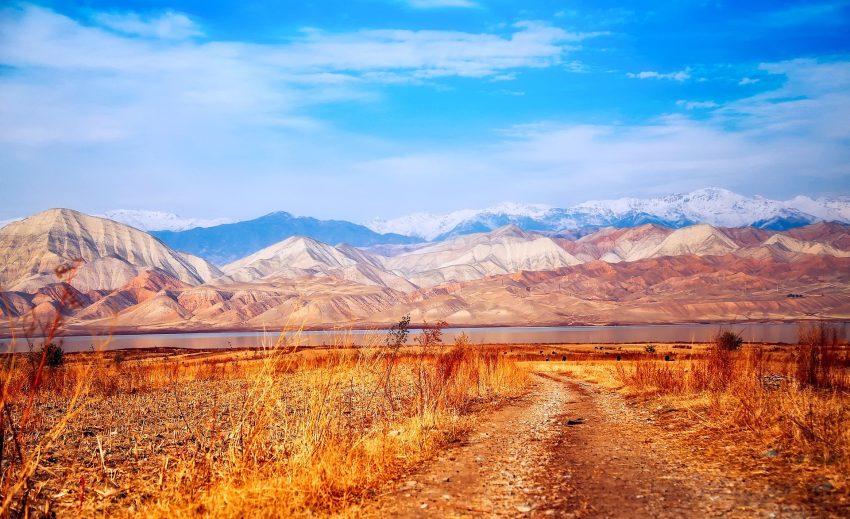
Kyrgyzstan is a mountainous country in Central Asia known for dramatic landscapes, high-altitude lakes, and wide-open valleys shaped by the Tian Shan range. Much of the country sits at significant elevation, giving it crisp alpine climates and striking seasonal contrasts-from green summer pastures to snow-covered peaks. Nature is a major draw, with places like Issyk-Kul Lake and vast trekking routes offering some of the region’s most scenic outdoor experiences.
The country’s culture is closely tied to nomadic traditions that still influence daily life, especially in rural areas. Visitors often encounter yurts on summer jailoo (pastures), horseback travel, and a strong hospitality culture centered on shared meals and community. Kyrgyz and Russian are widely spoken, and the mix of languages, customs, and cuisines reflects Kyrgyzstan’s position at a crossroads of Central Asian influences.
Bishkek, the capital, is the main gateway and a practical base for exploring the north, while Osh in the south offers a different pace and regional character. Travel within Kyrgyzstan ranges from modern city amenities to remote mountain villages connected by winding roads and high passes. Whether you’re interested in hiking, cultural experiences, or simply absorbing big-sky landscapes, Kyrgyzstan offers a blend of rugged nature and living tradition that feels both accessible and distinctly its own.
Table of Contents
- History of Kyrgyzstan
- Ancient and early medieval eras
- Kyrgyz origins and steppe empires
- Mongol and post-Mongol period
- Khanates and Qing pressure
- Russian conquest and colonial rule
- Revolt and upheaval
- Soviet nation-building and modernization
- Late Soviet era
- Independence and early statehood
- Revolutions, conflict, and constitutional shifts
- Recent period
- Best Time to Visit Kyrgyzstan
- Food and Drink from Kyrgyzstan
History of Kyrgyzstan
Kyrgyzstan’s history is shaped by steppe empires, Silk Road exchange, shifting identities among Turkic and Mongol peoples, and—more recently—Russian imperial rule, Soviet nation-building, and a turbulent post-independence politics.
Ancient and early medieval eras (to 900s)
Human settlement in the Tien Shan and Fergana-adjacent valleys dates back to prehistory, with pastoral nomadism and oasis agriculture developing alongside long-distance trade. The region sat on northern branches of the Silk Road, linking China, Central Asia, and the Middle East. Over centuries it fell under the influence or control of various steppe confederations and empires, including the Xiongnu and later Turkic polities. Turkic languages and cultures spread widely across the area, mixing with older Iranian-speaking and other local populations.
Kyrgyz origins and steppe empires (900s–1200s)
The Kyrgyz are historically associated with communities farther north (often linked to the Yenisei region), with identities and political formations shifting over time. By the medieval period, Turkic-speaking groups across Central Asia were reorganizing under powerful khanates, and the Tien Shan region became a zone of competition and migration. Islam expanded in nearby settled centers and gradually deepened its influence in the broader region, though nomadic practice and local custom remained strong.
Mongol and post-Mongol period (1200s–1500s)
Mongol conquest in the 13th century reshaped Central Asia’s political map. The Tien Shan and surrounding areas were drawn into Mongol successor states, with trade routes reorganized and populations displaced or integrated. Over time, post-Mongol khanates and tribal confederations competed for control, and the balance between nomadic pastoralism and settled agriculture continued to define regional life.
Khanates and Qing pressure (1500s–1800s)
From the early modern period, the region was influenced by neighboring powers and khanates, especially the Khanate of Kokand, which extended authority into parts of what is now Kyrgyzstan through forts, taxation, and local intermediaries. To the east, Qing expansion into Xinjiang altered regional dynamics, prompting migrations and new security pressures. Kyrgyz communities were not a single unified state; political authority often rested in tribal leaders and shifting alliances, with periodic resistance to external control.
Russian conquest and colonial rule (mid-1800s–1916)
In the 19th century the Russian Empire expanded into Central Asia, defeating or absorbing local khanates and establishing administrative control. Russian settlement and land policies increasingly favored incoming Slavic farmers in fertile valleys, pushing many Kyrgyz toward less arable lands and intensifying social strain. The colonial economy tied the region more tightly to imperial markets and governance, while local customary structures persisted under supervision.
Revolt and upheaval (1916–1920s)
In 1916, amid World War I pressures and conscription policies, a major uprising erupted across Central Asia. Repression and violence were severe, and many Kyrgyz fled toward China in a mass exodus remembered as a national trauma. The collapse of the Russian Empire and the ensuing civil war brought further instability, with competing forces fighting for control before Soviet power consolidated.
Soviet nation-building and modernization (1920s–1950s)
Under Soviet rule, Central Asia was reorganized into national republics. Kyrgyzstan moved from autonomous status to becoming the Kyrgyz Soviet Socialist Republic in 1936. The Soviet period brought literacy campaigns, industrial and infrastructural development, and expanded education and healthcare, alongside forced collectivization, political repression, and attacks on traditional elites and religious institutions. Urban centers grew, and the republic’s economy became integrated into Soviet planning.
Late Soviet era (1960s–1991)
Kyrgyzstan experienced relative stability, with continued urbanization and a mixed economy combining agriculture, mining, and light industry. Ethnic diversity increased in some areas, especially in the north and in parts of the Fergana Valley. By the late 1980s, reforms and economic strain exposed grievances; interethnic tensions flared in the Osh area in 1990, foreshadowing challenges the new state would face.
Independence and early statehood (1991–2005)
Kyrgyzstan became independent in 1991 as the Soviet Union dissolved. The country pursued political and economic reforms, but faced severe economic disruption, rising inequality, and corruption. Power increasingly concentrated around the presidency, and regional and clan networks played a significant role in politics. Public frustration culminated in the 2005 “Tulip Revolution,” which ousted the sitting president.
Revolutions, conflict, and constitutional shifts (2005–2020)
Post-2005 politics remained unstable. In 2010, another uprising removed the president amid widespread anger over governance and economic conditions. That year also saw deadly interethnic violence in southern Kyrgyzstan, particularly in and around Osh and Jalal-Abad, leaving deep social scars. A new constitution moved the country toward a more parliamentary system, and Kyrgyzstan became known for comparatively competitive elections in the region, though corruption and patronage persisted.
Recent period (2020s–present)
In 2020, protests following disputed parliamentary elections led to another rapid change in leadership and a shift back toward a stronger presidency through constitutional changes. The state has emphasized political consolidation and security, while civil society and media have faced tighter pressures than in earlier periods. Kyrgyzstan has also dealt with periodic border clashes and disputes—especially along the complex frontier with Tajikistan—alongside ongoing challenges of economic development, labor migration, and balancing relations with major partners in the region.
Best Time to Visit Kyrgyzstan
Visiting Kyrgyzstan in Spring
Spring (roughly March to May) is ideal if you want greener valleys, wildflowers, and fewer crowds before peak trekking season. Lower-elevation areas warm up first, while higher mountain passes can still be snowy into late spring, so it’s a great time for scenic road trips, city sightseeing in Bishkek, and day hikes around Ala Archa as trails begin to open up. Festival highlight: Nooruz (around March 21) is widely celebrated with traditional food, music, and cultural events.
Visiting Kyrgyzstan in Summer (Best)
Summer (roughly June to August) is the best time for most travelers because mountain weather is most stable and high-altitude routes are generally accessible. This is peak season for trekking, horseback riding, yurt stays, and alpine lake visits—especially around Issyk-Kul, Song-Kul, and the Tian Shan ranges. Expect the most tour options and the liveliest atmosphere, particularly near Issyk-Kul’s north shore. Festival highlight: Many of the biggest cultural events and horse games take place in summer, including yurt-based festivals and traditional sports celebrations around Issyk-Kul and mountain pastures.
Visiting Kyrgyzstan in Autumn
Autumn (roughly September to November) is excellent for crisp hiking weather, golden landscapes, and a calmer, less crowded feel after summer. Early autumn is still great for trekking and lake trips, while later autumn brings cooler temperatures and shorter days, especially in the mountains. It’s also a rewarding season for food-focused travel, with harvest produce and local markets at their best. Festival highlight: Harvest-themed fairs and local cultural events are more common in early autumn, varying by region.
Visiting Kyrgyzstan in Winter
Winter (roughly December to February) is best if you’re interested in snow sports, dramatic mountain scenery, and a quieter travel experience. Skiing and snowboarding are popular near Bishkek and in mountain resorts, while frozen landscapes around Issyk-Kul and snowy valleys offer striking photography opportunities. Travel in remote areas can be weather-dependent, so flexibility helps. Festival highlight: New Year celebrations are a major seasonal event, and some regions host winter sports competitions and local festivities.
Food and Drink from Kyrgyzstan
Kyrgyzstan’s food reflects a nomadic heritage shaped by high mountain pastures, long winters, and a strong tradition of hospitality. Meals tend to be hearty and centered on meat, dairy, and wheat-based staples, with flavors that are straightforward and comforting rather than heavily spiced. Sharing food is important: guests are often offered tea and bread first, and larger gatherings feature generous platters meant for everyone at the table.
Meat is central, especially mutton, beef, and horse, often served boiled or stewed to highlight the quality of the ingredients. A signature dish is beshbarmak, made with chopped boiled meat over wide noodles and broth, traditionally eaten by hand. Plov (rice cooked with meat, carrots, and onions) is common, as are lagman noodles served with a savory meat-and-vegetable sauce. Dumplings and filled pastries also feature widely, including manty (steamed dumplings) and samsa (baked pastries), which are popular both at home and from street vendors.
Bread and grains play a major role, with round loaves and flatbreads appearing at nearly every meal. Simple soups and broths are frequent, especially in colder months, and meals are often accompanied by salads of tomatoes, cucumbers, onions, and herbs when produce is available. In rural areas, food traditions remain closely tied to seasonal rhythms—fresh dairy in summer, preserved or stored foods in winter—while cities offer a broader mix of regional Central Asian influences.
Drinks are dominated by tea, usually black tea served throughout the day and at social occasions. Fermented dairy beverages are distinctive: kymyz (fermented mare’s milk) is the most famous, especially in summer, while ayran (a yogurt-based drink) is widely enjoyed for its cooling, tangy taste. Maksym and other grain-based drinks are also popular, sold chilled in warm weather. Whether in a yurt on a jailoo (summer pasture) or at a family table in town, Kyrgyz food and drink emphasize warmth, sustenance, and welcome.