Kenya: The Ultimate Travel Guide 2026
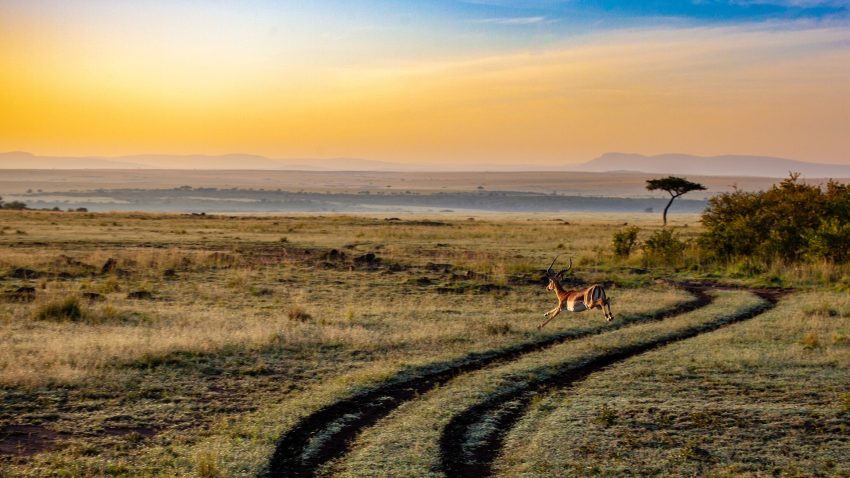
Kenya is a vibrant East African country known for its dramatic landscapes, rich wildlife, and warm hospitality. From the snow-capped peaks of Mount Kenya to the sweeping savannahs of the Maasai Mara, the country offers an extraordinary mix of natural beauty and outdoor adventure. Its national parks and conservancies are among the world’s most celebrated, drawing visitors eager to experience iconic safaris and diverse ecosystems.
Beyond its scenery, Kenya is a place of dynamic cultures and everyday energy. Dozens of communities contribute to a colorful national identity expressed through languages, music, art, and cuisine. In cities and towns, you’ll find bustling markets, contemporary fashion and creativity, and a strong sense of community that shapes daily life across the country.
Kenya’s capital, Nairobi, is a modern hub for business, technology, and travel, offering everything from museums and restaurants to nearby nature escapes. Along the Indian Ocean coast, destinations like Mombasa, Diani, and Lamu blend beach life with distinctive coastal traditions and architecture. Whether you’re exploring urban neighborhoods, hiking highland trails, or relaxing by the sea, Kenya offers a memorable mix of experiences in one destination.
Table of Contents
- History of Kenya
- Deep prehistory and early peoples
- Migrations, languages, and early states
- Portuguese and Omani influence on the coast
- The colonial conquest and the making of “Kenya”
- Nationalism and the Mau Mau uprising
- Independence and the Kenyatta era
- Moi era and the one-party state to multiparty transition
- Kibaki, constitutional reform, and new political dynamics
- Devolution, security challenges, and contemporary Kenya
- Best Time to Visit Kenya
- Food and Drink from Kenya
History of Kenya
Kenya’s history spans early human origins, centuries of regional trade and migration, colonial conquest and resistance, and a post-independence trajectory shaped by nation-building, political liberalization, and ongoing debates over land, identity, and governance.
Deep prehistory and early peoples (before 1000 CE)
The region that is now Kenya sits within a wider East African landscape central to human evolution. Fossil and archaeological finds in and around the Rift Valley and northern Kenya have made the area important for understanding early hominins and later human societies. Over millennia, communities developed pastoralism and farming alongside hunting and gathering, adapting to diverse environments from highlands to arid lowlands.
Migrations, languages, and early states (1000–1800)
From roughly the first millennium onward, Kenya’s population became increasingly shaped by movements of Bantu-speaking farmers into the western and central regions, Nilotic-speaking pastoralists into the Rift Valley and western areas, and Cushitic-speaking groups in the north and northeast. These migrations and interactions produced a mosaic of societies with distinct political systems—some centralized, many organized through clans, age-sets, and councils of elders.
Along the Indian Ocean coast, Swahili culture emerged through centuries of interaction among African communities and traders from Arabia, Persia, and later South Asia. Coastal city-states such as Mombasa, Malindi, and Lamu became nodes in Indian Ocean commerce, exporting goods like ivory and later enslaved people, and importing textiles, ceramics, and other commodities. Islam spread along the coast and shaped Swahili language and urban life.
Portuguese and Omani influence on the coast (1500–1800s)
The Portuguese arrived at the end of the 15th century, seeking to control Indian Ocean trade routes. They established forts and influence along the coast, but their power fluctuated and faced resistance from coastal communities and rival powers. By the late 17th century, Omani Arabs displaced Portuguese dominance, and Omani influence expanded, especially through trade and political alliances. In the 19th century, the wider region saw intensified long-distance trade networks, including caravans reaching into the interior from the coast.
The colonial conquest and the making of “Kenya” (1880s–1920s)
In the late 19th century, European imperial competition led to the partitioning of East Africa. Britain established control over the territory that became the East Africa Protectorate (later the Colony of Kenya). The construction of the Uganda Railway from Mombasa to Lake Victoria was pivotal: it enabled deeper colonial administration, settler agriculture in the highlands, and the growth of towns such as Nairobi.
Colonial rule brought major land alienation, forced labor practices, taxation, and new legal and administrative systems. Large areas of fertile land were reserved for European settlers, while many Africans were pushed into reserves or became laborers on settler farms. These changes disrupted existing economies and intensified social and political grievances.
Nationalism and the Mau Mau uprising (1920s–1963)
African political organization grew in response to land loss, labor conditions, and exclusion from political power. Over time, nationalist movements expanded, drawing support from diverse communities and urban workers.
The most dramatic confrontation was the Mau Mau uprising (1952–1960), rooted largely in central Kenya and closely associated with grievances over land and colonial repression. Britain declared a state of emergency and responded with a vast security campaign, detention, and forced villagization. The conflict left deep scars and remains central to Kenya’s memory of colonialism and resistance.
By the early 1960s, constitutional negotiations and shifting imperial politics led to self-government and then independence. Kenya became independent on 12 December 1963.
Independence and the Kenyatta era (1963–1978)
Jomo Kenyatta became the country’s first prime minister and later president. The new state prioritized national unity, economic growth, and Africanization of the civil service and economy. Land redistribution occurred, but it was uneven and often favored those with access to capital and political influence, leaving unresolved tensions over land and inequality.
Politically, Kenya moved toward a dominant-party system. Stability and growth in some sectors coexisted with constraints on opposition and civil liberties, and with patronage networks that shaped access to resources.
Moi era and the one-party state to multiparty transition (1978–2002)
After Kenyatta’s death, Daniel arap Moi became president. Over time, political power became more centralized, and Kenya was formally a one-party state for a period. Economic challenges, corruption allegations, and demands for political reform intensified in the late 1980s and early 1990s.
Domestic activism and international pressure contributed to the reintroduction of multiparty politics in the early 1990s. Elections in this period were often contentious, and episodes of political violence and displacement occurred, frequently linked to competition over land and local power.
Kibaki, constitutional reform, and new political dynamics (2002–2013)
Mwai Kibaki’s election in 2002 ended Moi’s long rule and raised expectations for reform. Economic performance improved in parts of the decade, and a major political focus became constitutional change.
The 2007 election triggered a severe crisis: disputed results led to widespread violence and displacement. A power-sharing agreement created a coalition government and set the stage for a new constitution. In 2010, Kenya adopted a constitution that introduced devolution (county governments), a restructured judiciary, and a stronger bill of rights, aiming to reduce centralized power and address longstanding governance problems.
Devolution, security challenges, and contemporary Kenya (2013–present)
Since 2013, devolved county governments have reshaped local politics and service delivery, while also creating new arenas for competition and corruption risks. National elections in 2013 and 2017 were highly contested; the 2017 cycle included a Supreme Court annulment of the presidential result and a rerun amid political tension. In 2022, another closely fought election led to a peaceful transfer of power.
Kenya has faced significant security challenges, including terrorist attacks linked to regional instability, alongside ongoing debates over policing, accountability, and civil liberties. Economically, the country remains a regional hub with strengths in services, technology, agriculture, and finance, while grappling with inequality, unemployment pressures, cost-of-living concerns, and public debt.
Across eras, recurring themes include the centrality of land, the negotiation of ethnic and national identities, the balance between centralized authority and local autonomy, and the continuing effort to deepen democratic governance and equitable development.
Best Time to Visit Kenya
Visiting Kenya in Winter (December–February) (Best)
Winter is one of the most popular times to visit Kenya thanks to warm, sunny days and generally low rainfall. It’s ideal for safari because vegetation is thinner and wildlife is easier to spot around water sources. Coastal areas like Mombasa and Diani are also at their best for beach weather, though it can be hot and humid.
Festival highlights:
- Christmas and New Year celebrations (late December–early January), especially lively in Nairobi and along the coast
Visiting Kenya in Spring (March–May)
Spring includes Kenya’s “long rains,” particularly from late March through May. Landscapes turn lush and green, and you’ll often find fewer visitors and better-value rates, but some roads in parks can become muddy and certain areas may be harder to access. It’s a strong choice if you prioritize scenery, photography, and quieter travel over peak wildlife visibility.
Festival highlights:
- Easter celebrations (March/April, dates vary), widely observed across the country
Visiting Kenya in Summer (June–August)
Summer is cooler and drier in many regions, making it comfortable for safaris and outdoor activities. This is also prime time for wildlife viewing in the Maasai Mara, including the Great Migration period (typically peaking July–August, though timing varies year to year). Because it’s a peak season, booking accommodation and flights well in advance is recommended.
Festival highlights:
- Madaraka Day (June 1), marked with national events and celebrations
Visiting Kenya in Autumn (September–November)
Autumn is a shoulder season that often starts dry in September and October, then transitions into the “short rains” in November. September and October can be excellent for safari—still relatively dry with strong wildlife viewing—while November brings greener landscapes and fewer crowds, with occasional heavy showers.
Festival highlights:
- Mashujaa Day (October 20), a major national holiday with ceremonies and events
- Diwali (October/November, dates vary), celebrated in areas with larger Kenyan-Indian communities, especially in Nairobi and Mombasa
Food and Drink from Kenya
Kenyan food reflects the country’s many communities and landscapes, from the coast to the highlands and arid north. A common foundation is ugali, a firm maize meal staple served with vegetables, beans, or meat stews, and eaten by hand to scoop up sauces. Another everyday favorite is githeri, a hearty mix of maize and beans that’s often enriched with greens, potatoes, or spices depending on the household. Rice, chapati, and potatoes are also widely eaten, especially in towns and along trade routes where culinary influences meet.
Meat dishes are central to many celebrations and social gatherings. Nyama choma—grilled meat, often goat or beef—is perhaps the most iconic, typically enjoyed with kachumbari (a fresh tomato-onion-chili salad) and ugali. Stews such as beef or goat in rich gravy are common, as are chicken dishes that range from simple home-style preparations to more spiced versions in restaurants. In pastoral regions, milk is highly valued, and some communities traditionally consume fermented milk, which has a tangy flavor and is served as a nourishing drink or accompaniment.
Vegetables and greens play a major role in daily meals, with sukuma wiki (collard greens) being a near-universal side dish, sautéed with onions and tomatoes. Other popular greens include spinach, amaranth, and pumpkin leaves, while legumes like lentils and beans provide affordable protein. On the coast, the cuisine shifts toward coconut, tamarind, and aromatic spices, producing dishes such as coconut-based fish curries, pilau rice, and biryani—foods shaped by Swahili culture and long-standing Indian Ocean connections.
Kenya’s drinks are just as distinctive, with tea at the center of everyday life. Kenyan chai is commonly brewed strong and sweet with milk, and is shared at home, at work, and in roadside cafés. Coffee is also important—Kenya grows renowned arabica beans—and is enjoyed in cafés and homes, though tea remains more ubiquitous. Fresh juices and smoothies made from mango, passion fruit, pineapple, and avocado are widely available, and in many areas you’ll find traditional fermented beverages alongside modern sodas and bottled water, reflecting both heritage and contemporary tastes.