Kazakhstan: The Ultimate Travel Guide 2026
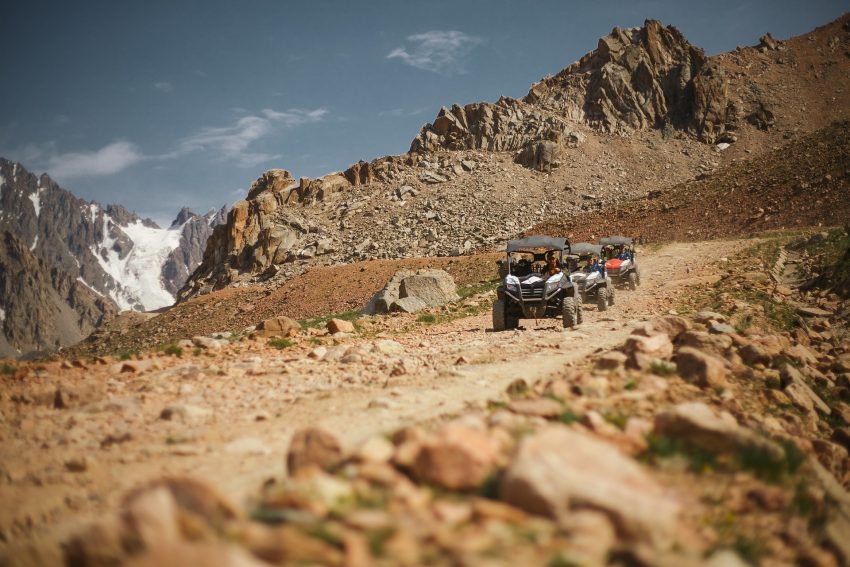
Kazakhstan is a vast country in Central Asia, known for its wide-open steppe landscapes, dramatic mountains, and striking contrasts between modern cities and remote rural regions. It is the world’s largest landlocked nation, stretching from the Caspian Sea in the west toward the Altai Mountains in the east, and it shares borders with Russia, China, and several Central Asian neighbors. This scale gives Kazakhstan an impressive variety of scenery and climates, from semi-desert plains to alpine valleys.
The country’s largest city, Almaty, sits near the Tian Shan mountains and is often seen as a cultural and commercial hub, while the capital, Astana, is recognized for its bold contemporary architecture and fast-paced development. Across the country, visitors and residents experience a blend of urban life and strong connections to nature, with national parks, lakes, and hiking routes not far from major population centers. Kazakhstan’s infrastructure and services are most concentrated in its cities, but its open spaces remain a defining feature.
Kazakhstan is also shaped by its multicultural society and bilingual environment, where Kazakh and Russian are widely used in daily life. Traditions rooted in nomadic heritage influence food, music, and hospitality, while modern influences are visible in education, business, and the arts. Whether you’re interested in city experiences, outdoor travel, or learning about regional cultures, Kazakhstan offers a distinctive mix of Central Asian identity and contemporary ambition.
Table of Contents
- History of Kazakhstan
- Ancient steppe societies and early states
- Turkic khaganates and the Silk Road
- Islamization and regional dynasties
- Mongol conquest and the Ulus of Jochi
- Formation of the Kazakh Khanate
- Dzungar wars and regional rivalry
- Incorporation into the Russian Empire
- Revolt, famine, and revolution
- Soviet Kazakhstan: collectivization, famine, and industrialization
- Late Soviet era: Virgin Lands, urban growth, and environmental crises
- Independence and state-building
- Contemporary Kazakhstan: reform pressures and political transition
- Best Time to Visit Kazakhstan
- Food and Drink from Kazakhstan
History of Kazakhstan
Kazakhstan’s history spans ancient steppe cultures, powerful nomadic confederations, the Silk Road, incorporation into the Russian Empire, the Soviet era, and independence in 1991, followed by rapid state-building and a rebalancing of politics and identity in the 21st century.
Ancient steppe societies and early states (prehistory–6th century)
Human settlement in what is now Kazakhstan dates back to deep prehistory, with archaeological cultures tied to early pastoralism and metallurgy. By the first millennium BCE, steppe peoples such as the Saka (Scythian-related groups) dominated wide areas, leaving rich burial mounds and distinctive animal-style art. In the south, oasis towns and river valleys connected to trans-Eurasian trade networks, linking the steppe to Central Asian and Persian worlds. Later, confederations such as the Xiongnu and other steppe groupings influenced the region’s politics and migrations, while local tribes adapted to shifting alliances and trade routes.
Turkic khaganates and the Silk Road (6th–10th centuries)
From the 6th century, Turkic-speaking polities reshaped the steppe. The Göktürk (Turkic) Khaganate and successor states established political traditions of steppe rule—mobile cavalry power, tribute relations, and control of trade corridors. Cities in southern Kazakhstan became important nodes on the Silk Road, with commerce, diplomacy, and religious exchange (including forms of Buddhism, Christianity, and later Islam) moving through the region. Over time, Turkic languages and identities became dominant across much of the steppe.
Islamization and regional dynasties (10th–12th centuries)
Islam spread gradually, especially in the south and along urban centers, through trade, missionary activity, and the influence of Muslim dynasties in Central Asia. Turkic Muslim states helped anchor Islamic institutions and learning in the region. Steppe and settled zones remained interlinked: nomadic confederations controlled grazing lands and routes, while towns provided markets, crafts, and administration.
Mongol conquest and the Ulus of Jochi (13th–15th centuries)
The Mongol conquests in the early 13th century transformed Eurasia. Much of Kazakhstan became part of the Mongol imperial system and later the Ulus of Jochi (often associated with the Golden Horde). The steppe was integrated into a vast political and trade space, with new elites and administrative practices. Over time, Mongol rulers and their successor states became increasingly Turkic-speaking and Islamized, blending steppe traditions with Islamic governance.
Formation of the Kazakh Khanate (15th–17th centuries)
In the mid-15th century, leaders associated with Kerei and Janibek broke away from rival steppe rulers, laying the foundations of the Kazakh Khanate. The term “Kazakh” came to denote a distinct political and social identity tied to steppe autonomy. The khanate expanded and consolidated under notable rulers, while facing pressure from neighboring powers and rival confederations. Kazakh society organized into three major territorial-political groupings known as the Great, Middle, and Little zhuz (hordes), which shaped alliances and leadership patterns.
Dzungar wars and regional rivalry (17th–18th centuries)
Kazakh lands became a battleground amid the rise of the Dzungar Khanate, a powerful Oirat Mongol state. Repeated invasions and conflicts caused severe disruption and population displacement. Kazakh leaders sought external support and maneuvered among larger neighbors. This period is remembered for hardship and resistance, and it set the stage for deeper involvement by the Russian Empire.
Incorporation into the Russian Empire (18th–19th centuries)
Beginning in the 18th century, parts of the Kazakh steppe entered into Russian protection arrangements that gradually evolved into imperial control. Over the 19th century, Russian administrative structures expanded, forts and towns grew, and steppe governance was reorganized. Slavic settlement increased, especially in northern and eastern areas, and land use changed as agriculture expanded. These shifts strained traditional nomadic patterns and contributed to social tensions. At the same time, new educational and intellectual currents emerged, producing reform-minded Kazakh thinkers who debated modernization, autonomy, and cultural preservation.
Revolt, famine, and revolution (1916–1920s)
In 1916, a major uprising erupted across Central Asia, including Kazakh regions, triggered by wartime mobilization policies and long-standing grievances over land and administration. The violence and reprisals caused widespread suffering and flight. After the 1917 revolutions, competing forces fought for control during the civil war. Kazakh political movements sought autonomy, but the Bolsheviks ultimately consolidated power, and Kazakhstan was incorporated into the Soviet system.
Soviet Kazakhstan: collectivization, famine, and industrialization (1920s–1940s)
Soviet policies radically transformed life. Forced collectivization and sedentarization of nomadic herders in the early 1930s contributed to a catastrophic famine that killed a large share of the Kazakh population and drove many to flee. Political repression targeted elites and intellectuals. Later, industrialization and wartime mobilization expanded mining, metallurgy, and infrastructure. During World War II, industries and populations were relocated eastward, further reshaping Kazakhstan’s demographics and economy.
Late Soviet era: Virgin Lands, urban growth, and environmental crises (1950s–1980s)
In the 1950s, the Virgin Lands campaign brought large-scale cultivation to northern Kazakhstan and accelerated migration from other Soviet republics, boosting grain production but also causing soil degradation and ecological strain. Cities expanded, and Kazakhstan became central to Soviet strategic programs, including nuclear testing at Semipalatinsk and the Baikonur Cosmodrome. Environmental disasters became defining legacies, notably radiation exposure from tests and the shrinking of the Aral Sea (affecting the broader region). By the 1980s, social and national tensions grew, including protests in Almaty in 1986 that signaled rising demands for local representation.
Independence and state-building (1991–2000s)
Kazakhstan declared independence in 1991 after the Soviet Union’s collapse. The new state faced economic dislocation, privatization, and the challenge of building institutions. Nursultan Nazarbayev became the dominant political figure, overseeing a strong presidential system. The capital moved from Almaty to Astana (later renamed Nur-Sultan, then returned to Astana), symbolizing a new national project and shifting political geography. Kazakhstan pursued a “multi-vector” foreign policy, balancing relations with Russia, China, Western states, and regional partners, while leveraging energy resources to drive growth.
Contemporary Kazakhstan: reform pressures and political transition (2010s–present)
In the 2010s, Kazakhstan continued modernization efforts alongside persistent concerns about political openness, corruption, and inequality. In 2019, Nazarbayev resigned the presidency, and Kassym-Jomart Tokayev became president, marking a managed transition while Nazarbayev retained significant influence for a time. In January 2022, widespread unrest and violence erupted amid socioeconomic grievances and political tensions; the state responded with force and subsequent political restructuring. Since then, the government has promoted constitutional and institutional changes, adjusted elite power balances, and emphasized a distinct national identity, while maintaining a strategic balancing act in foreign policy amid heightened regional and global pressures.
Kazakhstan today carries the layered legacies of the steppe—nomadic heritage, Silk Road urban culture, imperial and Soviet transformations, and the ongoing project of defining a modern, independent state at the crossroads of Eurasia.
Best Time to Visit Kazakhstan
Visiting Kazakhstan in Spring
Spring (March–May) is a great time to visit Kazakhstan as temperatures begin to warm and landscapes turn green, especially in the south and around Almaty. It’s ideal for city sightseeing, day trips to Charyn Canyon, and enjoying mountain views without peak-season crowds. Festival highlight: Nauryz (around March 21) is one of the biggest cultural celebrations of the year, with public festivities, traditional food, music, and performances.
Visiting Kazakhstan in Summer (Best)
Summer (June–August) is the best season for outdoor adventures in Kazakhstan. This is the prime time for hiking and trekking in the Tian Shan mountains, visiting alpine lakes like Big Almaty Lake, and exploring national parks with the most reliable access and weather. It’s also a strong season for road trips across wide-open steppe landscapes. Festival highlight: Summer often brings open-air concerts and local cultural events in major cities, and it’s the easiest time to catch regional celebrations while traveling.
Visiting Kazakhstan in Autumn
Autumn (September–November) offers crisp air, golden foliage, and generally comfortable temperatures—excellent for photography, city breaks in Almaty and Astana, and shorter hikes before snow arrives in the mountains. Early autumn is especially pleasant for combining nature and urban travel in one trip. Festival highlight: Harvest-season fairs and regional food markets are a nice bonus in many areas, particularly in September and October.
Visiting Kazakhstan in Winter
Winter (December–February) is best if you enjoy snow, winter sports, and a quieter travel atmosphere. Skiing and snowboarding near Almaty are major draws, and the cities take on a festive feel with winter lights and seasonal activities. Be prepared for very cold temperatures, especially in Astana and northern regions. Festival highlight: New Year celebrations (late December to early January) are widely observed, with events, decorations, and holiday markets in larger cities.
Food and Drink from Kazakhstan
Kazakh food and drink reflect a nomadic heritage shaped by wide steppes, harsh winters, and a livestock-based economy. Meat and dairy sit at the center of the table, with meals designed to be hearty, warming, and easy to prepare in mobile settings. Hospitality is a defining feature: guests are often offered tea and snacks immediately, and larger gatherings revolve around shared platters that emphasize abundance and respect.
Meat dishes are especially prominent, with horse, mutton, and beef commonly used. Beshbarmak—often considered the national dish—features boiled meat served over wide noodles with onion broth, traditionally eaten by hand. Other favorites include kazy (horsemeat sausage), shuzhuk, and various kebabs and stews, alongside pilaf-like rice dishes influenced by neighboring Central Asian cuisines. Bread is also essential, from simple loaves to fried dough such as baursak, frequently served with tea or alongside soups.
Dairy traditions are distinctive and varied, reflecting the importance of mares, camels, cows, and sheep. Fermented drinks and foods are common: kumys (fermented mare’s milk) and shubat (fermented camel’s milk) are prized for their tangy flavor and cultural significance, while ayran and other yogurt-based drinks accompany everyday meals. Dried or strained dairy products such as kurt (salty dried cheese curds) are valued for portability and long shelf life, echoing older nomadic needs.
Tea culture ties daily life together, with black tea widely consumed and often served with milk, sweets, and an assortment of small bites. In cities like Almaty and Astana, modern Kazakhstan also offers a diverse dining scene where traditional dishes sit alongside Russian, Uyghur, Korean, and other influences, reflecting the country’s multiethnic history. Whether in a family home or a bustling café, Kazakh food and drink continue to express warmth, generosity, and a deep connection to land and tradition.