Israel: The Ultimate Travel Guide 2026
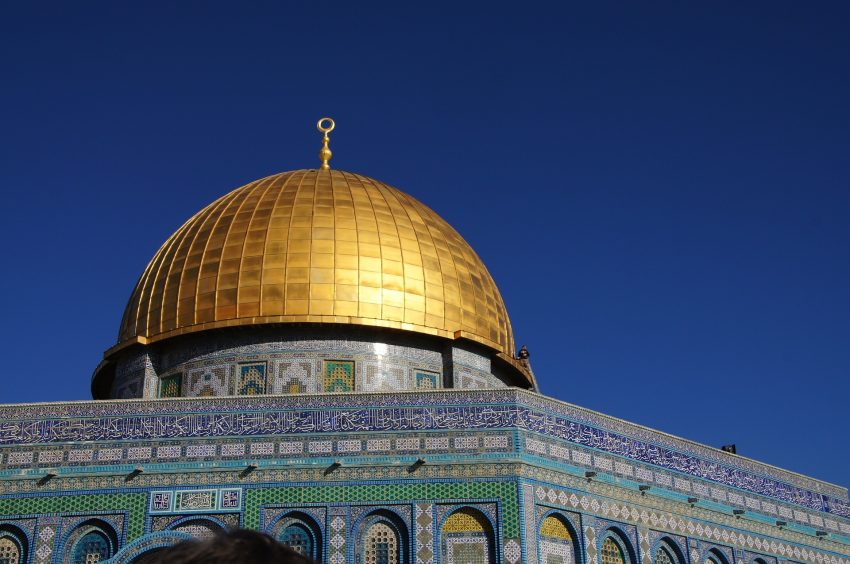
Israel is a small but highly influential country on the eastern shore of the Mediterranean Sea, where Europe, Asia, and Africa feel close at hand. Despite its compact size, it contains striking geographic variety-from the coastal plain and rolling hills to the Negev Desert in the south and the freshwater Sea of Galilee in the north. Its climate ranges from Mediterranean along the coast to arid in desert regions, shaping everything from daily life to agriculture and outdoor culture.
The country is known for its dynamic mix of modern cities and ancient landscapes. Tel Aviv is often associated with beaches, nightlife, and a thriving tech scene, while Jerusalem is a focal point of religious and cultural significance for Judaism, Christianity, and Islam. Across the country, you’ll find a blend of languages, traditions, and cuisines that reflect the diversity of its population and the wider Middle Eastern and Mediterranean region.
Israel’s economy is advanced and innovation-driven, with strengths in technology, research, agriculture, and healthcare. At the same time, it is a place where community life, family gatherings, and food play a central role, from bustling markets to quiet neighborhood cafés. Visitors and residents alike often note the intensity of public life-lively debate, strong local identity, and a pace that can shift quickly from relaxed coastal afternoons to the energy of a crowded city street.
Table of Contents
- History of Israel
- Ancient Israel and Judah
- Persian to Roman Rule
- Early Islamic to Ottoman Periods
- Zionism, British Rule, and Rising Conflict
- Partition, Independence, and the 1948 War
- State-Building and Regional Wars
- Peace with Egypt and Lebanon War
- Intifadas and the Oslo Era
- Gaza, Political Shifts, and Regional Realignments
- 2021–Present: Intensified Polarization and War
- Best Time to Visit Israel
- Food and Drink from Israel
History of Israel
Israel’s history spans ancient kingdoms, successive empires, the development of Jewish and later Christian and Islamic holy sites, centuries of diaspora and minority life in the region, modern nationalism, British imperial rule, the creation of the State of Israel in 1948, and an ongoing conflict with Palestinians and neighboring states that has shaped the country’s politics, society, and borders.
Ancient Israel and Judah (c. 1200–586 BCE)
In the Iron Age, Israelite communities emerged in the highlands of Canaan. Biblical tradition describes a united monarchy under Saul, David, and Solomon, followed by a split into the northern Kingdom of Israel and the southern Kingdom of Judah. The Assyrian Empire conquered the northern kingdom (8th century BCE). Judah persisted until the Babylonian conquest and the destruction of the First Temple in Jerusalem (586 BCE), followed by exile for part of the population.
Persian to Roman Rule (539 BCE–324 CE)
Under the Persian Empire, some exiles returned and the Second Temple was built. After Alexander the Great, the region passed through Hellenistic rule, and tensions over culture and governance contributed to the Maccabean revolt (2nd century BCE) and the Hasmonean kingdom. Rome later took control; Judea became a Roman province. Jewish revolts against Rome (66–73 CE and 132–135 CE) ended with massive devastation, the destruction of the Second Temple (70 CE), and far-reaching demographic and political changes. Over time, Jewish life continued in the land alongside growing Christian communities, especially after Christianity became dominant in the Roman/Byzantine world.
Early Islamic to Ottoman Periods (7th century–1917)
Arab Muslim armies conquered the region in the 7th century. Jerusalem gained major Islamic significance, and Muslim rule—under various dynasties—was punctuated by the Crusader period (1099–1291) and later Mamluk control. In 1517 the Ottoman Empire incorporated the area, which remained largely rural with a mix of Arabic-speaking Muslims and Christians and a smaller Jewish presence, including communities in Jerusalem, Safed, Tiberias, and Hebron. In the 19th century, modernization, increased European involvement, and rising migration began reshaping local society.
Zionism, British Rule, and Rising Conflict (1880s–1947)
Modern Zionism emerged in Europe in the late 19th century, advocating a national home for the Jewish people, with increasing Jewish immigration to Ottoman and then British-controlled Palestine. After World War I, Britain received the League of Nations Mandate for Palestine. The Balfour Declaration (1917) expressed British support for a “national home for the Jewish people,” alongside commitments regarding the rights of existing non-Jewish communities. Jewish-Arab tensions grew amid competing national movements, land and labor disputes, and fears of displacement. Major outbreaks of violence occurred in the 1920s–1930s, including the Arab Revolt (1936–1939). Britain alternated between facilitating and restricting Jewish immigration, especially as the Holocaust in Europe intensified demands for refuge and statehood.
Partition, Independence, and the 1948 War (1947–1949)
In 1947 the UN proposed partitioning the land into Jewish and Arab states with an internationalized Jerusalem. Jewish leaders accepted the plan; Arab leaders rejected it. Civil war broke out, followed by Israel’s declaration of independence on May 14, 1948. Neighboring Arab states invaded. Israel survived and expanded beyond the UN-proposed borders. The war produced a large Palestinian refugee crisis (known to Palestinians as the Nakba) and also led to the departure and displacement of many Jews from Arab and Muslim-majority countries in subsequent years. By 1949, armistice lines left Israel in control of most of the territory; Jordan controlled the West Bank and East Jerusalem, and Egypt controlled Gaza.
State-Building and Regional Wars (1950s–1970s)
Israel absorbed large waves of immigrants, including Holocaust survivors and Jews from the Middle East and North Africa, transforming its demographics and politics. The 1956 Suez Crisis saw Israel, Britain, and France attack Egypt after Egypt nationalized the Suez Canal; Israel withdrew under international pressure. In 1967, amid escalating tensions, Israel fought the Six-Day War, capturing the West Bank (including East Jerusalem), Gaza, the Sinai Peninsula, and the Golan Heights. The occupation of the West Bank and Gaza became central to the Israeli-Palestinian conflict. In 1973, Egypt and Syria launched the Yom Kippur War; Israel eventually repelled them, but the war shook Israeli society and politics.
Peace with Egypt and Lebanon War (1977–1990)
A major political shift occurred in 1977 when the right-wing Likud party came to power. Israel signed the Camp David Accords with Egypt, leading to the 1979 peace treaty and Israel’s return of the Sinai. In 1982 Israel invaded Lebanon, initially aimed at armed Palestinian groups; the war evolved into a prolonged entanglement and contributed to deep domestic controversy. Israel maintained a security zone in southern Lebanon for years.
Intifadas and the Oslo Era (1987–2005)
The First Intifada (1987–1993), a mass Palestinian uprising in the occupied territories, altered international perceptions and pushed diplomacy forward. The Oslo Accords (1993–1995) created the Palestinian Authority and a framework for phased negotiations, but core issues—borders, settlements, Jerusalem, refugees, and security—remained unresolved. Israeli Prime Minister Yitzhak Rabin was assassinated in 1995, a major blow to the peace process. The Second Intifada (2000–2005) brought intense violence and hardened attitudes on both sides. Israel built a separation barrier in and around the West Bank, citing security; critics argued it entrenched occupation and altered realities on the ground. In 2005 Israel unilaterally disengaged from Gaza, removing settlements and permanent ground forces while retaining control over most crossings, airspace, and maritime access.
Gaza, Political Shifts, and Regional Realignments (2006–2020)
After Hamas won Palestinian legislative elections in 2006 and later took control of Gaza, Israel and Egypt imposed a blockade on Gaza, and repeated rounds of conflict occurred between Israel and armed groups in Gaza. In Israel, politics increasingly revolved around security, identity, religion-state issues, and debates over settlements and the judiciary. Regionally, Israel developed quieter ties with several Arab states, culminating in the 2020 Abraham Accords with the United Arab Emirates and Bahrain (and later additional normalization steps with other states), reshaping parts of Middle Eastern diplomacy though not resolving the Palestinian question.
2021–Present: Intensified Polarization and War
Israel experienced heightened internal polarization, including major disputes over proposed judicial changes and the balance of power among branches of government. On October 7, 2023, Hamas led a large-scale attack on Israel, killing civilians and taking hostages. Israel launched a major war in Gaza with extensive destruction and very high casualties, alongside a severe humanitarian crisis and intense international debate over conduct, proportionality, and long-term plans. Violence and instability also rose in the West Bank, and clashes expanded on other fronts, particularly with Hezbollah along the Lebanon border. The war and its aftermath have deepened Israeli and Palestinian trauma and uncertainty, while leaving fundamental political questions—security arrangements, Palestinian self-determination, governance in Gaza, settlements, and the status of Jerusalem—unresolved.
Israel today is a technologically advanced, militarily powerful state with a diverse population and vibrant cultural life, but its history and present are inseparable from the unresolved conflict with Palestinians and the broader regional and global forces that have shaped the land for millennia.
Best Time to Visit Israel
Visiting Israel in Spring (Best)
Spring (March–May) is one of the best times to visit Israel for comfortable temperatures, green landscapes, and wildflowers—especially in the Galilee, Carmel, and around Jerusalem. It’s ideal for sightseeing in Tel Aviv and Jerusalem without peak summer heat, and for hiking in the north before conditions turn hot and dry.
Festival highlights:
- Passover (March/April): Major national holiday with special events, closures, and a busy travel period.
- Jerusalem Marathon (typically March/April): A scenic race week that brings extra energy (and some road closures) to the city.
Visiting Israel in Summer
Summer (June–August) is hot and dry across much of Israel, with the most intense heat inland (Jerusalem and the Negev) and more humidity along the coast (Tel Aviv). This is a great season for beach time, coastal nightlife, and long evenings outdoors. It’s also a strong choice if you’re prioritizing the Red Sea in Eilat and water activities.
Festival highlights:
- Jerusalem Film Festival (typically July): A major cultural draw with screenings and events.
- Pride events (often June): Tel Aviv’s Pride season is a standout for many visitors.
Visiting Israel in Autumn
Autumn (September–November) brings easing temperatures and fewer crowds after summer, making it a strong all-around season for city touring, desert excursions, and food-focused travel. Early autumn can still feel warm, but by October and November conditions are generally pleasant for exploring Jerusalem, Tel Aviv, and the Dead Sea region.
Festival highlights:
- Rosh Hashanah, Yom Kippur, Sukkot (September/October): A major holiday period that can be culturally rewarding, though it may affect opening hours, public transport, and accommodation availability.
- Olive harvest season (October/November): A great time for culinary experiences, especially in northern regions.
Visiting Israel in Winter
Winter (December–February) is mild along the coast and cooler in Jerusalem and the north, with the highest chance of rain. It’s a good time to visit Israel for lower prices, fewer crowds at major sites, and comfortable conditions for desert travel in the Negev. Snow is uncommon but possible in Jerusalem; Mount Hermon may have snow and seasonal skiing.
Festival highlights:
- Hanukkah (December): Festive candle lightings and events, especially atmospheric in Jerusalem.
- New Year cultural programming (late December/January): Concerts and performances are common in major cities.
Food and Drink from Israel
Israel’s food and drink reflect a meeting point of the Mediterranean, the Middle East, and the many Jewish communities that have brought their home cuisines with them. Everyday eating often centers on fresh vegetables, herbs, olive oil, legumes, grains, and dairy, with meals that feel bright and seasonal. Markets and small eateries showcase this diversity, where a single street can offer Yemenite, Moroccan, Iraqi, Ethiopian, Russian, and Balkan influences alongside Palestinian and broader Levantine traditions.
Breakfast is a standout in Israel, commonly served as a generous spread rather than a single dish. A classic Israeli breakfast might include eggs (often shakshuka—eggs poached in a spiced tomato and pepper sauce), salads of chopped cucumber and tomato, olives, cheeses, labneh or yogurt, fresh bread, and spreads like tahini. Lighter bites throughout the day often feature hummus, falafel, sabich (pita stuffed with fried eggplant, hard-boiled egg, salads, and amba mango sauce), and bourekas, with pickles and salads adding crunch and acidity.
Home cooking and holiday foods add another layer, shaped by religious practice and family tradition. Many Israelis keep kosher to varying degrees, influencing how meat and dairy are prepared and served, while others eat more freely, especially in secular settings. Shabbat meals often feature challah, slow-cooked stews like cholent or hamin, and roasted meats or chicken, while festivals bring symbolic dishes such as honey cake and apples for Rosh Hashanah, or matzo-based foods during Passover. Across communities, spice blends like za’atar, sumac, and baharat, plus condiments like harissa and schug, give dishes their signature punch.
Drinks range from strong coffee culture to a growing wine and craft beverage scene. Café life is anchored by espresso-based drinks and “café hafuch” (similar to a latte), alongside black coffee and herbal teas, with fresh juices and smoothies common in warm weather. Israel also produces notable wines from regions like the Galilee and the Golan, and arak—an anise-flavored spirit—is a traditional choice with mezze. In recent years, local craft beers, boutique distilleries, and creative cocktail bars have expanded the drinking landscape, complementing the country’s lively, communal approach to eating.