Indonesia: The Ultimate Travel Guide 2026
Indonesia is a vast archipelago nation in Southeast Asia, made up of thousands of islands that stretch between the Indian and Pacific Oceans. Its geography is remarkably diverse, ranging from dense rainforests and volcanic mountains to coral reefs and long coastlines, creating an extraordinary variety of landscapes and ecosystems. With major islands such as Java, Sumatra, Kalimantan (Borneo), Sulawesi, and Papua, the country’s scale and natural richness shape everything from daily life to regional identities.
Home to hundreds of ethnic groups and languages, Indonesia is known for its cultural diversity and strong local traditions. While Bahasa Indonesia serves as the national language, many communities also speak regional languages and maintain distinct customs expressed through music, dance, textiles, architecture, and cuisine. Religion also plays an important role in society, with a range of faiths practiced across the islands, contributing to a vibrant mix of festivals and cultural life.
Modern Indonesia is a dynamic country with bustling cities, growing industries, and a significant role in regional and global affairs. Jakarta, the capital, is a major urban hub, while other cities and provinces each offer their own character and pace of life. From world-famous destinations like Bali to lesser-known islands with unique wildlife and scenery, Indonesia offers an experience shaped by nature, culture, and the everyday rhythms of island life.
Table of Contents
- History of Indonesia
- Early peoples and island networks
- Indian Ocean trade and early kingdoms
- Java’s consolidation and Majapahit
- Islam’s spread and the rise of sultanates
- European arrival and the spice struggle
- From company rule to colonial state
- National awakening and late colonial era
- Japanese occupation and the road to independence
- Guided Democracy and regional tensions
- 1965–1966 violence and the rise of Suharto
- The New Order
- Reformasi and democratization
- Best Time to Visit Indonesia
- Food and Drink from Indonesia
History of Indonesia
Indonesia’s history is shaped by its geography: thousands of islands positioned on major sea lanes between the Indian and Pacific Oceans. That location made the archipelago a crossroads for migration, trade, religion, and empire—then later a focal point of European colonialism and a major postcolonial nation-state.
Early peoples and island networks (prehistory–600s)
Humans lived in parts of today’s Indonesia very early; Java is famous for “Java Man” (Homo erectus) remains. Much later, waves of Austronesian-speaking peoples spread through the archipelago, bringing seafaring technology, wet-rice agriculture in some regions, and village-based societies. By the first millennium CE, coastal communities were tied into long-distance trade networks exchanging forest products, spices, resins, and metals for textiles, ceramics, and prestige goods.
Indian Ocean trade and early kingdoms (600s–1200s)
As Indian Ocean commerce expanded, local rulers adopted elements of Indian political culture and religions—Hinduism and Buddhism—while blending them with existing beliefs. Powerful polities emerged, especially where they could control ports and chokepoints.
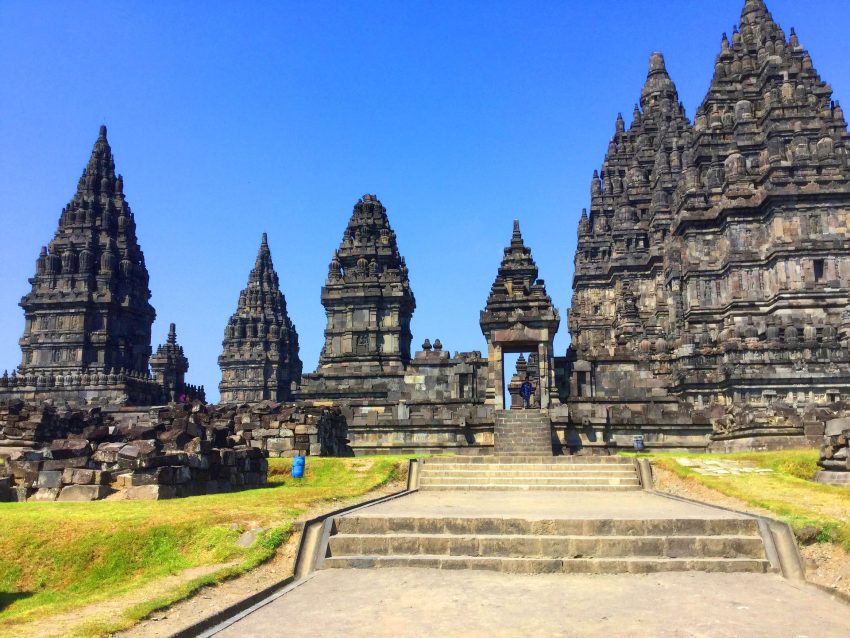
On Sumatra, Srivijaya (centered around Palembang) became a major maritime power from roughly the 7th century, thriving by taxing and protecting trade through the Malacca and Sunda Straits and supporting Buddhist learning. On Java, a succession of kingdoms built monumental architecture and developed sophisticated court cultures. The Sailendra dynasty is associated with Borobudur (8th–9th centuries), while Hindu-Buddhist courts also produced the Prambanan complex and rich literary traditions.
Java’s consolidation and Majapahit (1200s–1500s)
From the 13th century, political gravity in Java shifted through kingdoms such as Singhasari and then Majapahit (founded 1293). Majapahit became the most celebrated premodern Javanese empire, remembered for projecting influence across much of the archipelago through alliances, tributary ties, and maritime power rather than uniform direct rule. Its court culture, administrative practices, and later memory would become important symbols for Indonesian nationalism centuries afterward.
Islam’s spread and the rise of sultanates (1200s–1600s)
Islam arrived gradually via merchants, scholars, and Sufi networks, taking root first in trading ports and then spreading inland. By the 15th and 16th centuries, Islamic sultanates were prominent across the archipelago, including Malacca (just across the strait, deeply connected to Sumatra), Aceh in northern Sumatra, Demak and later Mataram in Java, Banten in western Java, Makassar (Gowa-Tallo) in Sulawesi, and Ternate and Tidore in the Maluku spice islands.
Islamization did not erase older traditions; instead, many regions developed distinctive syntheses in law, ritual, and court culture. Competition among sultanates, and between coastal trade-oriented states and inland agrarian powers, shaped politics—especially on Java.
European arrival and the spice struggle (1500s–1700s)
The Portuguese captured Malacca in 1511 and pushed into the spice trade, building footholds in eastern Indonesia. Spanish influence appeared intermittently from the Philippines. The Dutch entered in the late 16th century and, in 1602, formed the Dutch East India Company (VOC), a state-backed trading corporation with military power.
The VOC sought monopoly control over high-value spices (cloves, nutmeg, mace), especially in Maluku and the Banda Islands, using treaties, fortifications, coercion, and at times extreme violence and forced resettlement. In 1619 the VOC established Batavia (today’s Jakarta) as its headquarters. Over time it expanded influence through warfare, alliances with local rulers, and control of key ports and shipping.
From company rule to colonial state (1700s–1900)
The VOC went bankrupt and was dissolved in 1799; its possessions became a Dutch colonial state. During the Napoleonic era, the British briefly took control of Java (1811–1816), introducing some administrative reforms and encouraging new approaches to land and labor, before the Dutch returned.
In the 19th century, the Dutch consolidated power across the archipelago through a mix of military campaigns and indirect rule. A pivotal policy was the Cultivation System (from the 1830s), which compelled Javanese farmers to grow export crops such as sugar and coffee for the colonial state, generating major revenues but causing hardship and contributing to famines in some areas.
Resistance was frequent. The Java War (1825–1830), led by Prince Diponegoro, was one of the largest uprisings and deeply strained Dutch finances. Later, the long Aceh War (1873–1904) exemplified the brutal conflicts involved in Dutch expansion. By the early 20th century, the Netherlands had largely brought the archipelago under colonial control, though governance varied widely by region.
National awakening and late colonial era (1900–1942)
Around 1900 the Dutch promoted the “Ethical Policy,” expanding education and limited welfare initiatives, partly in response to criticism of colonial exploitation. These changes helped create a new Indonesian intelligentsia and urban political life.
Nationalist and mass organizations emerged: Budi Utomo (1908), Sarekat Islam (1910s), and later secular nationalist currents. The Indonesian Communist Party (PKI) formed and became influential before being repressed after uprisings in the 1920s. In 1928, youth activists declared the “Youth Pledge,” affirming one motherland, one nation, and one language: Indonesia—an important milestone in forging a shared national identity across diverse ethnic and linguistic groups.
Japanese occupation and the road to independence (1942–1949)
Japan occupied the Dutch East Indies during World War II, dismantling Dutch authority and mobilizing society for wartime needs. The occupation was harsh, involving forced labor and severe shortages, but it also accelerated political change by training and arming some local forces and allowing Indonesian leaders greater public roles.
After Japan’s surrender, Sukarno and Mohammad Hatta proclaimed Indonesian independence on 17 August 1945. The Netherlands attempted to reassert control, leading to a bitter revolution marked by diplomacy, guerrilla warfare, and major military operations. International pressure and Indonesian resistance culminated in Dutch recognition of sovereignty in 1949 (with West New Guinea remaining disputed).
Guided Democracy and regional tensions (1950–1965)
Indonesia’s early parliamentary democracy faced cabinet instability, regional rebellions, and economic challenges. Sukarno increasingly centralized power, introducing “Guided Democracy” in 1959, emphasizing anti-imperialism and balancing the military, nationalists, Islamists, and the PKI.
Indonesia pursued an assertive foreign policy, hosted the Bandung Conference in 1955 (a landmark in the Non-Aligned Movement’s emergence), and later confronted the formation of Malaysia in the early 1960s. West New Guinea was transferred from Dutch to Indonesian control in the early 1960s, followed by a controversial “Act of Free Choice” in 1969.
1965–1966 violence and the rise of Suharto
A failed and still-debated coup attempt on 30 September 1965 triggered a seismic political shift. The military, led by General Suharto, moved against the PKI. A vast wave of anti-communist killings and detentions followed across parts of Indonesia, with long-lasting social trauma. Sukarno was gradually sidelined, and Suharto became president, inaugurating the “New Order.”
The New Order (1966–1998)
Suharto’s regime prioritized political stability, centralized control, and economic development, aligning closely with Western-backed anti-communism. Indonesia experienced significant growth, infrastructure expansion, and poverty reduction in some periods, aided by oil revenues and later manufacturing and investment. At the same time, the New Order was marked by authoritarianism, restrictions on political competition, corruption, and human rights abuses.
In 1975, Indonesia invaded East Timor (formerly Portuguese Timor), which was annexed and became the site of prolonged conflict and heavy civilian suffering. The occupation lasted until 1999.
Reformasi and democratization (1998–present)
The Asian financial crisis (1997–1998) devastated Indonesia’s economy and undermined the New Order’s legitimacy. Mass protests and elite fractures led to Suharto’s resignation in 1998. The Reformasi era brought major political reforms: freer elections, decentralization, a more independent press, and stronger civil liberties, though challenges persisted.
Indonesia managed several major conflicts and transitions in the post-Suharto period. East Timor voted for independence in 1999 and became Timor-Leste in 2002 after a violent aftermath and international intervention. Aceh’s long insurgency ended with a 2005 peace agreement, aided by the political opening after the 2004 Indian Ocean tsunami.
Since then, Indonesia has consolidated as one of the world’s largest democracies, with peaceful transfers of power and a vibrant civil society, while continuing to face issues such as inequality, corruption, environmental pressures, and debates over the balance between pluralism, religion, and national identity.
Best Time to Visit Indonesia
Visiting Indonesia in Spring
Spring is a great time to visit Indonesia for generally warm weather and fewer crowds in many areas. It’s a good shoulder-season window for sightseeing in cultural hubs like Yogyakarta and Ubud, and for island-hopping before peak travel periods. Festival highlight: Nyepi (Balinese Day of Silence) usually falls in March. It’s a unique cultural experience in Bali, though note that the island largely shuts down for a day (including airports and many services).
Visiting Indonesia in Summer (Best)
Summer is often the most popular time to visit Indonesia, especially for beach trips and outdoor activities. Conditions are typically at their most reliable for exploring Bali, Lombok, Komodo National Park, and many other islands, with plenty of clear days for snorkeling, diving, and hiking. Festival highlight: Bali Arts Festival (typically June–July) brings parades, performances, and exhibitions across Denpasar and beyond.
Visiting Indonesia in Autumn
Autumn can be a strong choice if you want a balance of decent weather and fewer peak-season crowds. It’s a good time for cultural travel, food-focused trips, and city breaks, and you may find better availability and pricing than in mid-year. Festival highlight: Galungan and Kuningan (Balinese Hindu celebrations) occur on a 210-day cycle, often landing in autumn in some years—expect vibrant temple ceremonies and decorations across Bali.
Visiting Indonesia in Winter
Winter is a popular escape for travelers looking for warmth, and it can be an excellent time for beaches and diving in many regions. It’s also a lively period for events and celebrations, though some destinations can be busier around late December and early January. Festival highlight: Christmas and New Year are widely celebrated in major cities and tourist areas, with events and fireworks in places like Jakarta and Bali.
Food and Drink from Indonesia
Indonesia’s food and drink reflect a vast archipelago of islands, ethnic groups, and trade influences, resulting in bold flavors built on rice, noodles, coconut, chilies, and aromatic spices. A typical meal often centers on steamed rice with several side dishes—vegetables, fish, chicken, or tempeh—balanced by sambal, a chili-based condiment that varies widely by region. Common seasonings include shallots, garlic, ginger, galangal, turmeric, lemongrass, and shrimp paste, creating dishes that can be fragrant, smoky, sweet, and spicy all at once.
Some of the best-known Indonesian dishes are everyday staples across the country. Nasi goreng (fried rice) and mie goreng (fried noodles) are popular comfort foods, often topped with a fried egg and served with pickles and crackers. Satay—skewered, grilled meat—comes with different sauces depending on the area, from peanut sauce to sweet soy-based glazes. Gado-gado, a warm vegetable salad with peanut dressing, and soto, a family of brothy soups with regional variations, show how Indonesian cooking can be both hearty and fresh.
Regional cuisines add even more variety. Padang food from West Sumatra is famous for rich, spicy dishes like rendang and for its “hidang” style of serving many plates at once, letting diners choose what they want. In Java, flavors often lean sweeter due to the use of kecap manis (sweet soy sauce), while Bali features distinctive spice pastes and ceremonial foods. Coastal areas highlight seafood, and eastern regions use sago, cassava, and local fish preparations, reflecting different crops and traditions across the islands.
Indonesian drinks range from simple daily beverages to festive treats. Teh manis (sweet tea) and kopi (coffee) are widely enjoyed, with strong, thick kopi tubruk common in many places and specialty beans grown in regions like Sumatra, Java, and Sulawesi. Traditional herbal drinks known as jamu—made from ingredients such as turmeric, ginger, and tamarind—are valued for their refreshing taste and wellness associations. For something cooling, people often choose es teh, es jeruk (iced citrus), or iced desserts like es cendol and es campur, which combine coconut milk, palm sugar, jellies, and shaved ice.