India: The Ultimate Travel Guide 2026
India is a vast and diverse country in South Asia, known for its striking variety of landscapes, languages, and traditions. From the snow-capped Himalayas in the north to tropical coastlines in the south, its geography shapes everyday life in countless ways. With one of the world’s largest populations, India is also a major global presence in culture, business, and technology.
The country’s diversity is especially visible in its people and daily customs. India is home to many religions and communities, and its linguistic range is immense, with hundreds of languages and dialects spoken across different regions. This mix influences everything from festivals and clothing to music, dance, and local art forms, creating a rich cultural tapestry that changes from one state to the next.
India’s cities and towns reflect both tradition and modern growth. Bustling metros like Mumbai, Delhi, Bengaluru, and Kolkata sit alongside historic temples, forts, and rural villages, offering a wide range of experiences. Whether through its food, cinema, markets, or natural beauty, India leaves visitors and residents alike with a strong sense of energy, color, and variety.
Table of Contents
- History of India
- Prehistory and Early Settlements
- Indus Valley Civilization
- Vedic and Early Iron Age
- Mahajanapadas and New Religions
- Maurya Empire
- Regional Kingdoms and Classical Age
- Early Medieval India and Regional Powers
- Delhi Sultanate
- Mughal Empire
- European Trading Companies and Colonial Expansion
- Revolt of 1857 and the British Raj
- Independence and Partition
- The Republic and Nation-Building
- Liberalization and Contemporary India
- Best Time to Visit India
- Food and Drink from India
History of India
India’s history spans some of the world’s earliest urban societies, major religious and philosophical traditions, powerful empires, long-distance trade networks, and a complex colonial and postcolonial transformation into a modern republic. What follows is a high-level narrative, organized by major periods.
Prehistory and Early Settlements (before c. 2600 BCE)
Human communities lived across the subcontinent for tens of thousands of years, leaving stone tools and rock art. Over time, people shifted from foraging to farming and herding in several regions, developing village life, craft production, and local exchange networks.
Indus Valley Civilization (c. 2600–1900 BCE)
One of the earliest urban civilizations emerged in the northwest, centered on cities such as Harappa and Mohenjo-daro. It featured planned urban layouts, drainage systems, standardized weights, and extensive trade. Its script remains undeciphered. After about 1900 BCE, urban centers declined, likely due to a combination of environmental change, shifting river patterns, and broader economic and social transformations.
Vedic and Early Iron Age (c. 1500–600 BCE)
New cultural and linguistic traditions associated with early Indo-Aryan speakers took shape in northern India, preserved in the Vedas. Society became more agrarian and politically organized, with growing kingdoms and the spread of iron technology. Religious and philosophical ideas evolved, including early concepts that later shaped Hindu traditions.
Mahajanapadas and New Religions (c. 600–322 BCE)
Large states (mahajanapadas) arose, especially in the Ganges plain, alongside expanding trade and urban life. This era also saw the emergence of Buddhism and Jainism, which challenged and reinterpreted existing religious practices and social norms. Magadha became a dominant power, setting the stage for imperial unification.
Maurya Empire (c. 322–185 BCE)
The Mauryas created the first large empire to unify much of the subcontinent. Under Ashoka, the state expanded widely and developed a sophisticated administrative system. After a devastating war, Ashoka promoted Buddhist ethics and public welfare measures, leaving inscriptions that are among India’s earliest extensive historical records. The empire later fragmented.
Regional Kingdoms and Classical Age (c. 200 BCE–550 CE)
After the Mauryas, power shifted among regional dynasties and Indo-Greek, Shaka, and Kushan rulers in the northwest. Trade flourished across the Indian Ocean and overland routes. The Gupta period in northern India is often described as a “classical” age for developments in literature, art, mathematics, astronomy, and Hindu religious life, though it coexisted with diverse regional cultures and was not uniformly prosperous everywhere.
Early Medieval India and Regional Powers (c. 550–1200)
Political authority became more decentralized, with strong regional kingdoms such as the Chalukyas, Pallavas, Rashtrakutas, and later the Cholas in the south. Temple-centered economies, agrarian expansion, and new forms of patronage shaped society. The Chola state, in particular, built naval and commercial influence across the Bay of Bengal, linking South India to Southeast Asia through trade and cultural exchange.
Delhi Sultanate (c. 1206–1526)
Turko-Afghan dynasties established rule from Delhi over large parts of North India, though control varied by region and period. This era brought new administrative practices, military technologies, and cultural syntheses. Persianate court culture influenced language, architecture, and literature, while interactions among communities produced both conflict and exchange. Regional states—such as Vijayanagara in the south and the Bahmani and successor sultanates in the Deccan—were also major centers of power.
Mughal Empire (c. 1526–1707; later influence into the 1800s)
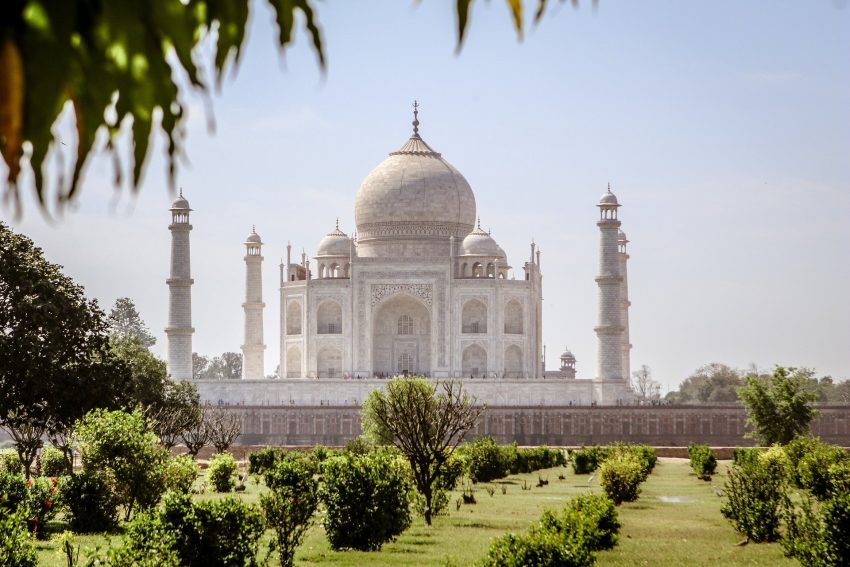
The Mughals built a vast empire with strong revenue administration and a flourishing court culture. Under rulers like Akbar, imperial governance incorporated diverse elites and experimented with policies of accommodation. Mughal art and architecture reached iconic heights, including monumental forts and the Taj Mahal. Over time, fiscal pressures, succession struggles, and regional revolts weakened central authority, and powerful successor states emerged (Marathas, Sikhs, Nawabs of Bengal and Awadh, Hyderabad, and others).
European Trading Companies and Colonial Expansion (c. 1600–1857)
European powers arrived as traders, with the English East India Company gradually becoming a territorial power, especially after gaining influence in Bengal in the 18th century. Through alliances, wars, and administrative restructuring, Company rule expanded. Economic and social changes included new land-revenue systems, commercialization of agriculture, and integration into global trade patterns under colonial priorities.
Revolt of 1857 and the British Raj (1858–1947)
The uprising of 1857 marked a turning point, after which the British Crown took direct control. The Raj built railways, telegraph networks, and new institutions, while also entrenching racial hierarchies and extracting resources. Indian political consciousness grew through social reform movements, new educational opportunities, and expanding print culture. Nationalism developed in multiple strands, including constitutional politics, mass movements, revolutionary activity, and labor and peasant mobilization. The Indian National Congress became a central platform, and leaders such as Gandhi helped shape mass nonviolent resistance, while other leaders pursued different strategies.
Independence and Partition (1947)
British rule ended in 1947 with the creation of two dominions, India and Pakistan. Partition triggered one of the largest mass migrations in history and widespread communal violence, profoundly shaping politics and society in the region.
The Republic and Nation-Building (1950–1990)
India became a republic in 1950 with a constitution establishing a parliamentary democracy, fundamental rights, and a federal structure. Early decades focused on state-led development, land reforms in varying degrees, industrialization, and building scientific and educational institutions. India fought wars with Pakistan (1947–48, 1965, 1971) and a border war with China (1962). The Emergency (1975–77) was a major democratic rupture, followed by a return to electoral politics. Regional parties grew in influence, reflecting India’s linguistic, social, and economic diversity.
Liberalization and Contemporary India (1991–present)
Economic reforms beginning in 1991 reduced many controls, encouraged private enterprise, and increased global integration, contributing to rapid growth alongside persistent inequality and employment challenges. India’s politics became more competitive and media-saturated, with coalition eras and later stronger single-party mandates at the center. Social change accelerated through urbanization, expanding education, and digital connectivity. At the same time, debates over secularism, citizenship, federalism, caste and gender justice, and religious nationalism have remained central. India has also expanded its global role through diplomacy, technology, and a large diaspora, while managing ongoing security concerns and regional tensions.
India’s history is best understood as layered rather than linear: empires rose and fell, but local societies, languages, and cultural traditions continually adapted, producing one of the world’s most diverse historical landscapes.
Best Time to Visit India
Visiting India in Winter (Best)
Winter (roughly November to February) is one of the most comfortable times to travel across much of India, with cooler days and lower humidity in many regions. It’s especially good for exploring cities and heritage sites in North India (like Delhi, Agra, Jaipur) and for wildlife safaris in many national parks. Festival highlights: Diwali (often Oct/Nov), Christmas and New Year (Dec), Makar Sankranti/Pongal (Jan), and Republic Day celebrations (Jan).
Visiting India in Spring
Spring (roughly March to April) brings warmer days and blooming landscapes in many areas, making it a pleasant shoulder season before peak summer heat. It’s a great time for cultural trips, food-focused travel, and visiting hill towns as temperatures begin to rise in the plains. Festival highlights: Holi (usually March) and Ugadi/Gudi Padwa (often March/April).
Visiting India in Summer
Summer (roughly May to June) can be very hot in much of India’s plains, but it’s an excellent time for cooler hill destinations in the Himalayas and other high-altitude regions. It’s also a good season for certain mountain adventures and scenic road trips where temperatures are milder. Festival highlights: Buddha Purnima (often May) and Rath Yatra (often June/July).
Visiting India in Monsoon (Rainy Season)
Monsoon (roughly July to September) transforms many parts of India into lush, green landscapes, which can be ideal for travelers who enjoy dramatic scenery and fewer crowds. It’s particularly appealing in regions known for monsoon beauty, though heavy rain can affect transport and outdoor plans in some areas. Festival highlights: Onam (Aug/Sept), Ganesh Chaturthi (Aug/Sept), and Raksha Bandhan (often Aug).
Food and Drink from India
India’s food is shaped by its geography, climate, and deep regional diversity, resulting in a cuisine that varies dramatically from one state to the next. In the north, wheat is a staple, showing up as rotis, parathas, and naan paired with rich gravies and lentil dishes. In the south, rice dominates, alongside tangy tamarind-based preparations, coconut, and a wide range of fermented foods. Coastal regions lean heavily on seafood and coconut, while inland areas often feature hearty vegetarian meals built around grains, legumes, and seasonal vegetables.
Spices are central to Indian cooking, not just for heat but for aroma and balance. Common ingredients like cumin, coriander, turmeric, mustard seeds, curry leaves, cardamom, and cloves are combined in countless ways, often tempered in hot oil or ghee to release their flavors. Many dishes start with a base of onions, tomatoes, ginger, and garlic, while others rely on yogurt, coconut milk, or ground nuts for richness. The result is food that can be creamy, smoky, tangy, or bright, with each region having signature spice blends and techniques.
Vegetarian food is especially prominent, influenced by cultural and religious traditions, and it ranges far beyond simple salads or sides. Lentils and beans become dals, sambars, and stews; vegetables are transformed into dry stir-fries, curries, and stuffed breads; and dairy appears in the form of paneer, yogurt, and ghee. Street food is another highlight, offering quick, flavorful snacks like chaat, samosas, vada pav, and dosas, often layered with chutneys, crunchy toppings, and bold seasonings that make each bite complex and satisfying.
Indian drinks are equally varied, from everyday staples to festive favorites. Chai—black tea simmered with milk, sugar, and spices—is widely loved, while lassi (a yogurt-based drink) can be sweet, salted, or flavored with mango. In different regions you’ll find refreshing options like coconut water, sugarcane juice, and spiced buttermilk, as well as traditional beverages made for celebrations. Sweets and desserts often accompany these drinks, featuring ingredients like milk, cardamom, saffron, jaggery, and nuts in treats such as gulab jamun, kheer, jalebi, and laddoos.