Greenland: The Ultimate Travel Guide 2026
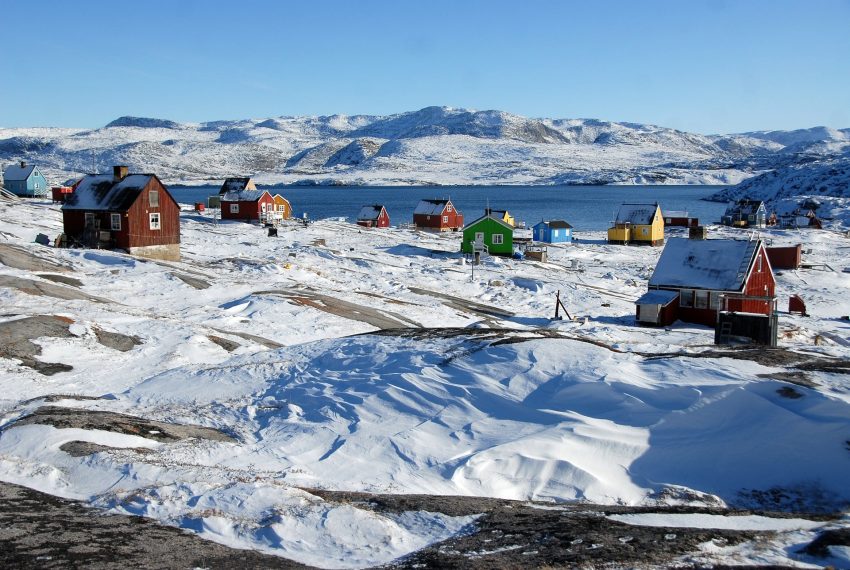
Greenland is the world’s largest island, set between the Arctic and Atlantic Oceans and defined by vast open spaces, dramatic coastlines, and a powerful sense of remoteness. Much of the land is covered by the Greenland Ice Sheet, while the edges are carved into fjords, mountains, and rocky shores where small towns and settlements cluster. The scale of the landscape shapes everything here, from travel routes to daily life, and makes Greenland feel both stark and strikingly beautiful.
Despite its Arctic setting, Greenland is far from uniform. In summer, long daylight hours reveal tundra slopes dotted with wildflowers, and the sea can be busy with drifting ice and migrating whales. In winter, darkness and snow transform the scenery, and the northern lights often appear in clear skies. Weather can change quickly, and the rhythm of the seasons is a central part of what it means to experience the island.
Greenland’s communities are closely tied to the sea and the land, with a culture that blends modern life with strong local traditions. Visitors often come for the wildlife, hiking, dog sledding, and the chance to see glaciers calving into the ocean, but also for the quiet and the clarity that come with being in such a vast place. Whether you’re exploring a colorful coastal town or looking out over an ice-filled fjord, Greenland leaves a lasting impression through its scale, silence, and raw natural presence.
Table of Contents
- History of Greenland
- Before the Norse: Early Arctic Peoples
- Inuit Greenland: The Thule Expansion
- Norse Settlement: Erik the Red and the Greenland Colonies
- Early Modern Era: European Interest and Whaling
- Danish-Norwegian Colonization and Mission
- Under Denmark: Consolidation and Change
- World War II and Strategic Importance
- Integration and Modernization
- Home Rule
- Self-Government and Contemporary Greenland
- Best Time to Visit Greenland
- Food and Drink from Greenland
History of Greenland
Greenland’s history is shaped by repeated waves of migration, long-distance trade, shifting climates, and changing relationships with Scandinavian and later Danish-Norwegian and Danish states. It is also a story of enduring Inuit presence and, in modern times, growing self-government within the Kingdom of Denmark.
Before the Norse: Early Arctic Peoples (c. 2500 BCE–900 CE)
The earliest known human presence in Greenland dates back several millennia, when Arctic hunting cultures moved eastward across the Canadian Arctic into Greenland. These groups (often grouped by archaeologists into several successive traditions) lived by hunting marine mammals and caribou and adapting to extreme seasonal conditions. Over time, some populations disappeared or moved on, while new ones arrived.
Inuit Greenland: The Thule Expansion (c. 1200–1500)
The ancestors of today’s Greenlandic Inuit arrived from the west in what is commonly called the Thule expansion. They brought key technologies for Arctic life—dog sleds, large skin boats (umiaks), and sophisticated hunting tools—enabling efficient travel and hunting across sea ice and open water. Thule communities spread widely along Greenland’s coasts, forming the foundations of later Inuit society and language.
Norse Settlement: Erik the Red and the Greenland Colonies (c. 985–1400s)
In the late 10th century, Norse settlers from Iceland, led by Erik the Red, established colonies in southwestern Greenland—often described as the Eastern and Western Settlements. These communities farmed (as climate and terrain allowed), raised livestock, hunted seals, and traded valuable goods such as walrus ivory into European markets.
Greenland became part of the Norse Christian world: a bishopric was established at Garðar, and the colonies maintained ties with Iceland and Norway. Over time, however, the Norse settlements declined and ultimately disappeared. Likely contributing factors include a cooling climate (often associated with the onset of the “Little Ice Age”), economic shifts that reduced demand for walrus ivory, isolation, soil and pasture pressures, and complex interactions with Inuit groups. By the 15th century, the Norse colonies were no longer functioning.
Early Modern Era: European Interest and Whaling (1500s–1700s)
After the Norse settlements vanished, Greenland remained predominantly Inuit. European powers periodically sought routes, resources, and strategic footholds in the North Atlantic and Arctic. Whaling and sealing expanded in surrounding waters, bringing intermittent contact, trade, and sometimes conflict and disease pressures. European knowledge of Greenland grew through exploration and maritime activity, but sustained colonial administration came later.
Danish-Norwegian Colonization and Mission (1721–1814)
In 1721, a Danish-Norwegian mission and trading effort began a lasting colonial presence, driven by religious aims and economic interests. Trading stations and mission settlements expanded along parts of the west coast. Over the 18th century, colonial structures developed around regulated trade, missionary activity, and administration, reshaping local economies and social life.
Under Denmark: Consolidation and Change (1814–1940)
After the separation of Denmark and Norway in 1814, Greenland remained under Danish control. Denmark strengthened its administrative and trading monopoly for long periods, limiting foreign access and channeling commerce through Danish institutions. Inuit communities continued to rely on hunting and fishing, while increasing numbers of Greenlanders engaged with wage labor, trade, and mission-educated institutions.
During the late 19th and early 20th centuries, scientific expeditions and mapping intensified, and Danish governance expanded. Social changes included growing towns, new forms of schooling, and shifts in health and living conditions—often uneven and shaped by colonial priorities.
World War II and Strategic Importance (1940–1945)
When Denmark was occupied during World War II, Greenland became strategically important in the North Atlantic. Its administration and supply lines shifted, and cooperation with North American partners increased. The war years accelerated Greenland’s geopolitical significance and laid groundwork for a stronger U.S. presence in the region.
Integration and Modernization (1945–1979)
After the war, Greenland’s ties to Denmark were restructured. In 1953, Greenland’s colonial status ended and it was incorporated more directly into the Danish state. The following decades brought rapid modernization: expanded infrastructure, healthcare, education, and urbanization, alongside major social disruption. Policies encouraged movement from smaller settlements to larger towns, and the economy became increasingly tied to fishing and public-sector employment.
These changes improved some material conditions but also produced cultural and social strains, including language pressures and debates over identity and political control.
Home Rule (1979–2009)
In 1979, Greenland gained Home Rule, establishing its own elected government with authority over many domestic matters while Denmark retained control over areas such as foreign affairs, defense, and parts of the legal system. Political life increasingly centered on balancing economic development, cultural preservation, and autonomy.
A major milestone came in 1985 when Greenland left the European Economic Community (after Denmark had joined), reflecting local priorities around fisheries and governance.
Self-Government and Contemporary Greenland (2009–present)
In 2009, Greenland adopted Self-Government, expanding control over internal affairs and recognizing Greenlanders as a people with the right to self-determination under international law. Greenlandic (Kalaallisut) became the primary official language. Denmark continues to provide an annual block grant, and Denmark still handles defense and much of foreign policy, though Greenland plays a growing role in external relations, especially where resources and Arctic issues are concerned.
Today, Greenland’s politics and society are shaped by:
- The fishing-based economy and efforts to diversify
- Debates over resource development (including mining) and environmental protection
- The impacts of climate change on ice, ecosystems, and infrastructure
- Questions of future constitutional status and the long-term path toward possible independence
Across these eras, Greenland’s history remains anchored in Inuit continuity and adaptation, layered with Norse settlement, colonial governance, and modern self-rule in a rapidly changing Arctic.
Best Time to Visit Greenland
Visiting Greenland in Winter (Best)
Winter (December–March) is ideal if your priority is classic Arctic experiences: long nights for aurora viewing, crisp snow conditions, and a true “deep winter” atmosphere. It’s a strong choice for dog sledding, snowmobiling, and winter hiking (with a guide), especially around towns like Ilulissat, Sisimiut, and Kangerlussuaq. Expect very cold temperatures and limited daylight in the far north, but the trade-off is a higher chance of clear, dark skies for Northern Lights.
Festival highlight: In some communities, winter cultural events and local celebrations bring music, storytelling, and Greenlandic food into the season—worth checking local calendars for town-specific winter festivals.
Visiting Greenland in Spring
Spring (April–May) is a shoulder season with longer daylight returning, more stable weather than mid-winter in many areas, and fewer visitors than summer. Snow activities can still be excellent—often with brighter days and more comfortable temperatures—making it a great time for dog sledding in the north before conditions soften. It’s also a good period for photography, with strong light and lingering snow on mountains and sea ice.
Festival highlight: Easter and spring community events can be lively in certain towns, and you may find local sports gatherings as people transition out of winter.
Visiting Greenland in Summer
Summer (June–August) is the most popular time to visit Greenland thanks to mild temperatures, maximum daylight (including midnight sun in many regions), and the widest range of tours operating. This is prime season for hiking, boat trips among icebergs, whale watching, and visiting remote settlements. It’s also the easiest time logistically, with more frequent departures and open-water access to fjords and coastal areas.
Festival highlight: Summer is the peak season for cultural festivals and outdoor events, including national celebrations around Greenland’s National Day (June 21) in many towns, often featuring performances, community gatherings, and traditional activities.
Visiting Greenland in Autumn
Autumn (September–November) offers fewer crowds, dramatic fall colors in tundra landscapes, and the return of darker nights—making it a strong season for Northern Lights while still retaining some of summer’s accessibility in early autumn. September is especially appealing for a balance of workable weather, open-water excursions in some areas, and aurora potential. As the season progresses, tours become more limited and conditions shift toward winter.
Festival highlight: Some towns host late-summer/early-autumn cultural events and music gatherings; it’s a good time to look for local festival schedules if you want a quieter trip with community atmosphere.
Food and Drink from Greenland
Greenland’s food and drink are shaped by its Arctic climate, long winters, and the close relationship many communities have with the sea and the hunt. Traditional diets have relied on what can be harvested locally—fish, marine mammals, seabirds, and hardy land animals—supplemented today by imported groceries in towns and larger settlements. Because fresh produce can be limited and expensive outside the short summer season, meals often emphasize protein-rich ingredients and methods that preserve food well in cold conditions.
Seafood is central. Cold waters yield shrimp, halibut, cod, and Arctic char, which may be pan-fried, baked, dried, or served in soups and stews. In many places, you’ll also find preparations of seal and whale, reflecting long-standing Inuit foodways and the practical need to use available resources. Dishes can be simple and hearty, focusing on clean flavors and the quality of the catch, with modern kitchens adding familiar sides like potatoes, rice, or imported vegetables when available.
Preservation and fermentation have an important place in Greenlandic cuisine. Drying fish and meat, salting, and freezing are common, and some traditional foods involve aging or fermenting to extend shelf life and develop strong, distinctive flavors. Community events and family gatherings often feature shared platters of local foods, and in some areas you may encounter tasting menus that reinterpret Greenlandic ingredients in contemporary Nordic styles, pairing wild meats and seafood with foraged herbs and berries.
Drinks in Greenland range from everyday coffee and tea—often served generously in homes—to beers and spirits available in towns. Local breweries and small producers have grown in visibility, sometimes using pure water and regional branding to create distinctive lagers or ales. When berries are in season, they may be used in juices, syrups, or homemade infusions, and modern restaurants may offer cocktails that highlight Arctic botanicals. Overall, Greenland’s food and drink balance tradition and practicality with an emerging culinary scene that celebrates local ingredients.