Georgia: The Ultimate Travel Guide 2026
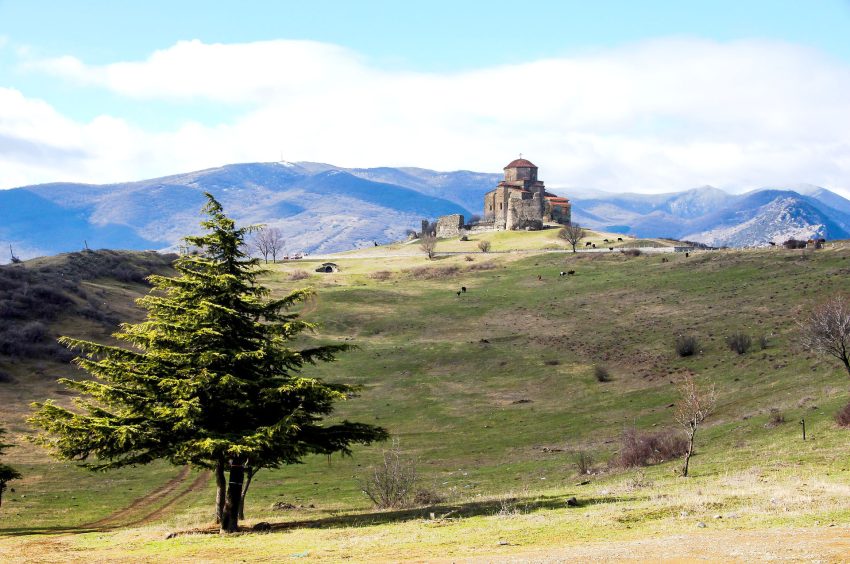
Georgia is a captivating country at the crossroads of Eastern Europe and Western Asia, where dramatic mountain landscapes meet fertile valleys and a lively Black Sea coastline. Its capital, Tbilisi, is known for its distinctive architecture, hillside neighborhoods, and a creative energy that blends old and new. Compact in size but rich in variety, Georgia offers a striking mix of scenery and culture within just a few hours’ travel.
Nature is one of Georgia’s biggest draws, from the snowcapped peaks of the Greater Caucasus to forested national parks, mineral springs, and vineyard-covered regions. Outdoor lovers can hike, ski, raft, or simply take in panoramic views from highland villages and scenic passes. Whether you prefer rugged adventure or relaxed countryside escapes, Georgia’s landscapes make it easy to plan an itinerary that feels both diverse and accessible.
Georgia is also celebrated for its warm hospitality, bold flavors, and strong traditions of food and wine. Meals often revolve around shared dishes, fresh herbs, local cheeses, and hearty breads, paired with wines produced across renowned wine-growing areas. With its welcoming atmosphere, distinctive identity, and memorable experiences, Georgia is a destination that feels both unique and easy to fall in love with.
Table of Contents
- History of Georgia
- Prehistory and the Ancient World
- Early Kingdoms and the Adoption of Christianity
- Medieval Unification and the Georgian “Golden Age”
- Mongol Pressure and Fragmentation
- Between Ottoman and Persian Empires
- Russian Expansion and Annexation
- Independence After the Russian Revolution
- Soviet Georgia
- Independence and Turbulence
- State-Building, War, and Political Change
- Recent Developments
- Best Time to Visit Georgia
- Food and Drink from Georgia
History of Georgia
Georgia’s history spans ancient kingdoms on the Black Sea, centuries as a crossroads between empires, a long Christian tradition, periods of fragmentation and reunification, incorporation into the Russian Empire, a brief independence after World War I, seven decades in the Soviet Union, and a turbulent but increasingly state-building post-Soviet era.
Prehistory and the Ancient World
Human habitation in what is now Georgia dates back deep into prehistory, with early hominin remains found in the region. By the first millennium BCE, western Georgia was associated with Colchis—famed in Greek mythology for the story of the Golden Fleece—while eastern Georgia developed as Iberia (Kartli). These polities sat at the intersection of Greek, Persian, and later Roman influence, benefiting from trade routes linking the Black Sea to the Caucasus and beyond.
Early Kingdoms and the Adoption of Christianity
In late antiquity, the Kingdom of Iberia became a major political center in eastern Georgia. Christianity took root early: Georgian tradition places the conversion of Iberia in the 4th century, making Georgia one of the earliest Christian societies. This religious identity became a durable marker of culture and statehood, especially as neighboring powers—Persian and later Arab—competed for control in the Caucasus.
Medieval Unification and the Georgian “Golden Age”
From the early medieval period, Georgian lands experienced cycles of fragmentation and consolidation. Over time, Georgian rulers and dynasties worked to unite various principalities. A high point came in the 11th–13th centuries, when a unified Georgian kingdom expanded its influence across the Caucasus. This era is often described as a “Golden Age,” associated with strong monarchy, flourishing literature and architecture, and the consolidation of a distinctive Georgian cultural and ecclesiastical tradition. The reign of Queen Tamar (late 12th–early 13th century) is especially remembered for political strength and cultural achievement.
Mongol Pressure and Fragmentation
From the 13th century onward, Mongol incursions and regional instability weakened centralized authority. Over subsequent centuries, Georgia fractured into competing kingdoms and principalities. This fragmentation left Georgian polities vulnerable to repeated invasions and to the growing power of neighboring empires.
Between Ottoman and Persian Empires
By the early modern period, Georgian territories became a contested frontier between the Ottoman Empire and Safavid (and later Qajar) Persia. Western regions often fell under Ottoman influence, while eastern kingdoms were frequently drawn into Persian political and military systems. Local rulers sometimes retained autonomy but were constrained by tribute obligations, dynastic politics, and periodic warfare. Despite these pressures, Georgian cultural and religious institutions persisted, and local elites maneuvered to preserve authority.
Russian Expansion and Annexation
In the late 18th century, eastern Georgian rulers sought protection against Persian and Ottoman threats, culminating in closer alignment with the Russian Empire. Over the early 19th century, Russia annexed the eastern Georgian kingdom and gradually absorbed western Georgian polities as well. Russian rule brought administrative restructuring and deeper integration into imperial economic and political systems, while also provoking resistance and reshaping local elites. The 19th century also saw the growth of modern Georgian nationalism, cultural revival movements, and new political currents.
Independence After the Russian Revolution (1918–1921)
The collapse of the Russian Empire during World War I opened a brief window for statehood. In 1918, Georgia declared independence and established the Democratic Republic of Georgia. The new state faced severe challenges: regional conflicts, economic hardship, and pressure from larger powers amid the chaos of the postwar environment. In 1921, the Red Army invaded, and Georgia was incorporated into the Soviet system.
Soviet Georgia (1921–1991)
Under Soviet rule, Georgia underwent rapid modernization, industrialization, and urbanization, alongside political repression—especially in the early decades. Georgia became a constituent republic within the USSR, with periodic shifts in cultural policy and varying degrees of local autonomy under Moscow’s control. The Soviet period left a complex legacy: expanded education and infrastructure on one hand, and constrained political freedoms and episodes of violence and censorship on the other. By the late 1980s, reform and rising national movements accelerated demands for sovereignty.
Independence and Turbulence (1991–2003)
Georgia regained independence as the Soviet Union dissolved. The early years were marked by internal instability, economic collapse, and violent conflict. Separatist wars in Abkhazia and South Ossetia in the early 1990s resulted in large-scale displacement and left both regions outside the effective control of the central government. Political power shifted amid coups and factional struggles, while the state worked to rebuild institutions and stabilize the economy.
State-Building, War, and Political Change (2003–2012)
A major political turning point came with the Rose Revolution (2003), which ushered in a new leadership focused on anti-corruption measures, state capacity, and closer ties with Euro-Atlantic institutions. Reforms strengthened parts of the state but also generated controversy over governance and political competition. Tensions with Russia escalated, culminating in the 2008 war. After the conflict, Russia recognized Abkhazia and South Ossetia as independent; most of the international community continued to regard them as part of Georgia. The war entrenched the territorial dispute and reshaped Georgia’s security environment.
Recent Developments (2012–Present)
Since 2012, Georgia has experienced further political alternation through elections, alongside persistent polarization. The country has continued to pursue integration with European institutions and has sought to balance economic development, democratic governance, and security challenges. The unresolved status of Abkhazia and South Ossetia remains central to Georgian politics and foreign policy, as does the broader question of how to navigate regional pressures while consolidating domestic institutions.
Across these eras, Georgia’s history has been shaped by its geography at the crossroads of Europe and Asia, its early and enduring Christian identity, and repeated encounters with larger empires—alongside recurring efforts to preserve sovereignty, language, and cultural continuity.
Best Time to Visit Georgia
Visiting Georgia in Spring
Spring (March–May) is one of the best times to visit Georgia for mild temperatures, greener landscapes, and fewer crowds than peak summer. It’s ideal for exploring Tbilisi on foot, visiting wine country in Kakheti as vineyards wake up, and taking scenic drives before high mountain passes get busier. Festival highlight: Tbilisoba (sometimes held in spring depending on scheduling) can be a major draw if it falls during your visit, with food, music, and cultural events.
Visiting Georgia in Summer
Summer (June–August) is great for high-altitude adventures in Georgia, especially in mountain regions like Svaneti, Kazbegi, and Tusheti, where hiking conditions are at their best and alpine villages are fully accessible. Expect hotter weather in Tbilisi and the lowlands, so many travelers balance city time with mountains or the Black Sea coast around Batumi. Festival highlight: Black Sea Jazz Festival (typically in summer in Batumi) is a standout for music lovers.
Visiting Georgia in Autumn (Best)
Autumn (September–November) is often considered the best season to visit Georgia thanks to comfortable weather, golden landscapes, and the peak of the wine and harvest season. It’s an excellent time for Kakheti wine routes, countryside stays, and city sightseeing without summer heat. Festival highlight: Rtveli (the traditional grape harvest celebrations, usually September–October) is a major seasonal highlight, especially in Kakheti, with tastings, feasts, and local traditions.
Visiting Georgia in Winter
Winter (December–February) is a strong choice if you want snow, cozy city breaks, and winter sports. Ski resorts like Gudauri and Bakuriani are popular, and Tbilisi’s cafés, sulfur baths, and museums make for an easy cold-weather itinerary. Some mountain roads can be challenging in heavy snow, so plan transport carefully if heading to remote areas. Festival highlight: New Year and Orthodox Christmas celebrations (late December through early January) bring a festive atmosphere, lights, and seasonal markets in major cities.
Food and Drink from Georgia
Georgia’s food is built around hospitality, bold seasoning, and a love of shared tables. Meals often revolve around a spread of dishes meant for everyone to taste, with fresh herbs, walnuts, garlic, pomegranate, and tangy dairy appearing again and again. Regional variety is strong: western Georgia tends to favor corn-based breads and richer, cheesier flavors, while eastern regions lean more toward wheat breads, grilled meats, and aromatic spices. The tradition of the supra—a celebratory feast guided by a toastmaster (tamada)—shapes how food is served and enjoyed, with toasts and conversation as central as the dishes themselves.
Bread is a cornerstone, especially khachapuri, Georgia’s iconic cheese-filled bread with many regional forms. Adjarian khachapuri arrives boat-shaped with molten cheese, a pat of butter, and a raw egg stirred in at the table, while Imeretian versions are round and enclosed, and Mingrelian adds extra cheese on top. Another staple is shotis puri, baked in a deep clay oven (tone) and prized for its crisp crust and airy interior. These breads often anchor the meal, perfect for scooping sauces and pairing with salads and spreads.
Hearty mains and dumplings are equally celebrated. Khinkali—juicy, pleated dumplings typically filled with spiced meat and broth—are eaten by hand, with the first bite used to sip the broth before finishing the rest. Mtsvadi (skewered, grilled meat) is a common centerpiece, often served with onions and tart sauces. Walnut-based dishes are distinctive: pkhali combines chopped vegetables with ground walnuts and herbs, and satsivi features poultry in a rich walnut-garlic sauce, especially popular during holidays. Bright sides like tomato-and-cucumber salad with herbs, pickles, and bean dishes such as lobio round out the table.
Georgia’s drinks are led by wine, one of the country’s proudest traditions, with ancient methods that include fermenting and aging in clay qvevri buried in the ground. Amber (skin-contact) wines, robust reds like Saperavi, and aromatic whites are commonly poured during long toasts at a supra. Chacha, a potent grape pomace spirit, is also widely enjoyed, especially in rural areas. For non-alcoholic options, mineral waters like Borjomi are famous, and tarragon soda and other fruit-flavored fizzy drinks are nostalgic favorites. Sweet finishes might include churchkhela—nuts threaded on a string and dipped in thickened grape juice—offering a taste that echoes the country’s grape-rich landscape.