French Polynesia: The Ultimate Travel Guide 2026
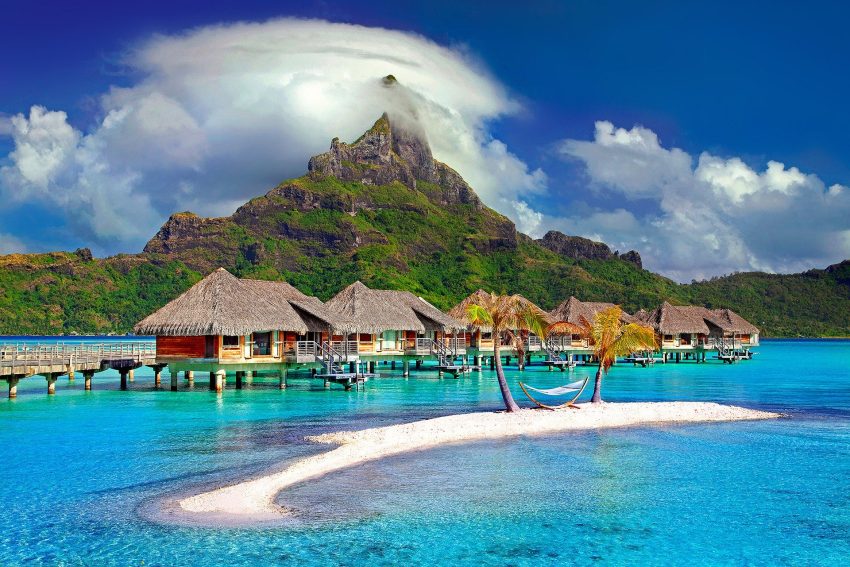
French Polynesia is a vast and captivating region of the South Pacific made up of more than 100 islands and atolls scattered across an area of ocean larger than many countries. Often associated with turquoise lagoons, dramatic volcanic peaks, and palm-fringed shores, it offers a striking mix of landscapes-from coral reefs and white-sand beaches to lush valleys and rugged mountain ridgelines. The islands are grouped into five main archipelagos, each with its own character and scenery.
Travelers are drawn here for the easy rhythm of island life and the variety of experiences across the islands. You can snorkel or dive in clear lagoons, spot marine life like rays and reef fish, hike to panoramic viewpoints, or simply unwind in a waterfront bungalow with the sound of the ocean nearby. Beyond the postcard views, French Polynesia also has lively local markets, small towns, and a strong connection to the sea that shapes everyday life.
Culture is an essential part of the experience, expressed through music, dance, crafts, and a warm sense of hospitality. Local cuisine blends fresh seafood, tropical fruit, and island staples, often enjoyed in casual family-run spots as well as refined resorts. Whether you’re visiting iconic islands like Tahiti, Bora Bora, and Moorea or exploring quieter atolls, French Polynesia feels both remote and welcoming-an ideal setting for adventure, relaxation, or a bit of both.
Table of Contents
- History of French Polynesia
- First settlement and early societies
- European contact and shifting power
- Missionary era and the Pōmare kingdom
- French intervention and the protectorate
- Annexation and colonial administration
- World War II and political awakening
- Autonomy debates and nuclear testing
- Modern status, autonomy, and cultural revival
- Best Time to Visit French Polynesia
- Food and Drink from French Polynesia
History of French Polynesia
French Polynesia’s history spans early Polynesian settlement, the rise of powerful island chiefdoms, European contact and missionary change, French annexation and colonial administration, the upheavals of war and nuclear testing, and the modern era of autonomy debates and cultural revival.
First settlement and early societies (c. 1000–1500)
Polynesian voyagers settled the Society Islands, Marquesas, Tuamotus, Gambier Islands, and Austral Islands in successive waves, building communities linked by ocean navigation, kinship networks, and exchange. Over time, distinct island polities formed, organized around chiefly authority, land and sea rights, and religious institutions centered on marae (ceremonial temple sites). The Marquesas developed dense populations and strong warrior traditions; the Society Islands saw large-scale chiefly rivalries and alliances; the Tuamotus’ atolls supported specialized maritime and lagoon-based lifeways.
European contact and shifting power (1767–1815)
European ships arrived in the late 18th century, bringing new goods and diseases that caused severe population decline and social disruption. Encounters also altered local politics: access to firearms, metal tools, and trade relationships could strengthen particular chiefs. In the Society Islands, the rise of the Pōmare dynasty on Tahiti accelerated during this period, as leaders used alliances and new resources to consolidate power.
Missionary era and the Pōmare kingdom (1815–1842)
Protestant missionaries—especially from the London Missionary Society—became influential in Tahiti and nearby islands. After key military and political victories, the Pōmare rulers promoted Christianity and new legal codes, reshaping religious practice, education, and governance. Traditional religious institutions were suppressed or transformed, and European-style state structures expanded. This era also intensified foreign interest and rivalries, including between British and French actors.
French intervention and the protectorate (1842–1880)
France established a protectorate over Tahiti and Moʻorea in 1842, a move contested by local leaders and entangled with missionary and diplomatic disputes. Armed conflict followed in the 1840s, and French authority gradually expanded. Over subsequent decades, France extended control to other archipelagos through treaties, annexations, and administrative incorporation, often amid local resistance and complex negotiations among chiefs and island communities.
Annexation and colonial administration (1880–1940)
In 1880, Tahiti was formally annexed, and the territory became a French colony (commonly referred to as the Établissements Français de l’Océanie). Colonial governance centralized authority, introduced new courts and policing, and restructured land tenure and labor patterns. The economy relied on a mix of copra production, small-scale agriculture, pearl-related activities in some areas, and services tied to the colonial capital at Papeete. Demographic recovery was slow after earlier epidemics, and social life blended Polynesian traditions with French institutions, Catholic and Protestant influences, and growing urbanization on Tahiti.
World War II and political awakening (1940–1957)
During World War II, local leaders and many residents aligned with Free France, and the conflict accelerated political mobilization and new expectations of citizenship and representation. After the war, the territory’s status evolved: it became an overseas territory, and residents gained expanded political rights. Local parties and leaders pressed for greater self-government, and debates emerged over identity, development, and the balance between local authority and Paris.
Autonomy debates and nuclear testing (1958–1996)
From the late 1950s onward, French Polynesia experienced major political change alongside profound social and environmental controversy. France selected Moruroa and Fangataufa atolls for nuclear testing, beginning atmospheric tests in the 1960s and shifting to underground tests later. The testing program brought infrastructure, jobs, and migration to Tahiti, but also deepened dependence on French spending and sparked sustained opposition over health risks, environmental damage, and sovereignty. Political life polarized between pro-autonomy/pro-independence currents and parties favoring close ties with France, with autonomy arrangements repeatedly revised.
Modern status, autonomy, and cultural revival (1996–present)
Nuclear testing ended in 1996, and the territory’s politics increasingly focused on economic diversification, governance stability, and the legacies of the testing era. French Polynesia’s institutional framework has continued to evolve, with broad internal self-government under French sovereignty and recurring debates over independence. Cultural revival movements have strengthened Polynesian languages, arts, dance, navigation heritage, and the restoration of marae, while tourism, pearls, fishing, and public-sector activity remain central to the economy. Contemporary history is marked by ongoing negotiation of identity and power: maintaining ties to France while asserting Polynesian distinctiveness and greater control over land, resources, and political destiny.
Best Time to Visit French Polynesia
Visiting French Polynesia in Spring
Spring (September to November) is a great time to visit French Polynesia for warm, sunny days, lower humidity, and calmer seas—ideal for lagoon activities like snorkeling, diving, paddleboarding, and lagoon cruises. It’s also a sweet spot between peak winter crowds and the wetter summer months, so you can often find better availability while still enjoying excellent weather.
Visiting French Polynesia in Summer
Summer (December to February) is the warmest and most humid season in French Polynesia, with a higher chance of tropical showers and occasional storms. The upside is lush, vibrant landscapes and warm water temperatures for swimming and diving. If you enjoy cultural events, this period can include holiday celebrations and New Year festivities, though plans can vary by island and year—book accommodations early if traveling around late December.
Visiting French Polynesia in Autumn (Best)
Autumn (March to May) is often the best overall time to visit French Polynesia, balancing warm temperatures with gradually decreasing humidity and fewer heavy rains as the season progresses. It’s an excellent window for beach time, lagoon visibility, and island-hopping, with fewer crowds than peak winter. A major highlight is the Heiva i Tahiti festival (typically in July, outside autumn), but autumn still offers plenty of local dance, music, and community events—especially on weekends—without the peak-season bustle.
Visiting French Polynesia in Winter
Winter (June to August) is the driest, coolest, and most popular season in French Polynesia, making it ideal for comfortable sightseeing, hiking, and long days on the lagoon. This is peak travel time, so prices and occupancy are usually higher—reserve flights and resorts well in advance. Festival-wise, winter is a standout: Heiva i Tahiti (typically July) is one of the biggest cultural celebrations, featuring traditional dance competitions, drumming, music, and sports, and it’s a major reason many travelers plan a winter trip.
Food and Drink from French Polynesia
French Polynesia’s food reflects its ocean setting and its blend of Polynesian tradition with French influence. Fresh fish and shellfish are central, often served simply to highlight their quality, alongside tropical produce such as coconut, breadfruit, taro, sweet potato, bananas, mangoes, and pineapple. Meals commonly balance salty, acidic, and creamy flavors—lime and coconut milk are frequent partners—while herbs, vanilla, and gentle spices add fragrance rather than heat. On many islands, what’s available depends on the lagoon, the season, and what can be grown locally, so markets and roadside stands are as important as restaurants for tasting everyday fare.
One of the most iconic dishes is poisson cru (often called ia ota), raw fish—typically tuna—marinated in lime juice and mixed with coconut milk, sometimes with diced tomato, cucumber, onion, and carrot. It’s refreshing and rich at once, and you’ll find it everywhere from family tables to hotel buffets. Other seafood preparations include grilled mahi-mahi, parrotfish, or swordfish, shrimp and lobster when in season, and simple broths or stews that make the most of the catch. Sea urchin, octopus, and shellfish also appear, especially in coastal communities, often prepared with minimal fuss and served with rice or root vegetables.
Traditional cooking methods remain a point of pride, especially the ahima’a, an earth oven used for communal meals and celebrations. Foods such as pork, chicken, fish, taro, and breadfruit are wrapped (often in banana leaves) and slow-cooked over hot stones, producing smoky, tender results. You may encounter dishes like fāfā (greens such as taro leaves cooked with coconut milk, sometimes with chicken or pork) and po’e, a dense, pudding-like dessert made from fruit (banana, papaya, or pumpkin) and starch, baked and served with coconut cream. These foods emphasize comfort and generosity, reflecting the social role of shared feasts in Polynesian life.
French culinary influence shows up in everyday staples and in the islands’ café culture: baguettes, pastries, and buttery desserts sit comfortably alongside local flavors. Vanilla from Tahiti is a standout ingredient, used in custards, creams, and sauces, and paired with tropical fruit or seafood in more modern dishes. Drinks range from fresh coconut water and tropical juices to Hinano beer and rum-based cocktails, with local fruits adding brightness. Whether it’s a simple plate of grilled fish with rice or a refined meal featuring Tahitian vanilla and lagoon seafood, the food and drink of French Polynesia is defined by freshness, island abundance, and a distinctive Franco-Polynesian character.