Faroe Islands: The Ultimate Travel Guide 2026
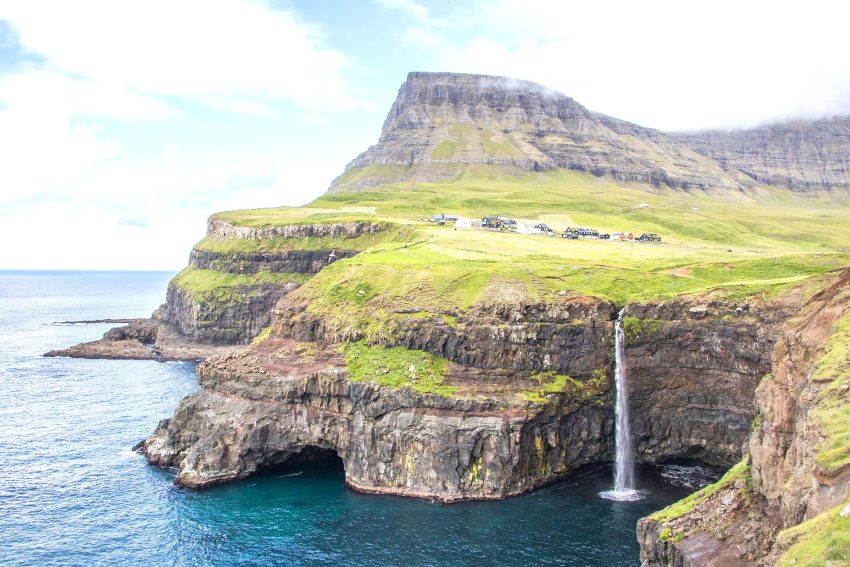
The Faroe Islands are a remote North Atlantic archipelago known for dramatic landscapes, shifting weather, and a strong connection to the sea. Situated between Iceland, Norway, and Scotland, the islands feature steep cliffs, green valleys, and rugged coastlines where seabirds thrive. Despite their wild setting, the Faroes feel welcoming and lived-in, with small towns and villages tucked into fjords and along sheltered bays.
Nature is the main draw: hiking routes trace ridgelines and coastal paths, waterfalls spill into the ocean, and viewpoints open onto wide, wind-swept horizons. The climate is cool and maritime, bringing misty mornings, bright breaks of sun, and fast-changing skies that can make the same scene look different hour to hour. For travelers, this means packing for all conditions and embracing the islands’ moody, cinematic atmosphere.
Daily life blends modern Nordic comforts with a distinct island character. Tórshavn, the compact capital, offers cafés, design shops, and a lively food scene, while beyond it you’ll find quiet harbors, turf-roofed houses, and roads that link islands by tunnels, bridges, and ferries. Whether you come for photography, birdwatching, road trips, or simply a slower pace, the Faroe Islands reward curiosity and time spent outdoors.
History of Faroe Islands
The Faroe Islands’ history is shaped by North Atlantic seafaring, Norse settlement, centuries of rule from Norway and then Denmark, and a modern evolution toward extensive self-government while remaining within the Danish Realm.
Early settlement and the Viking Age (c. 600–1035)
People likely reached the islands before the Vikings, possibly from the British Isles, but the decisive settlement came with Norse expansion across the North Atlantic. By the 9th century, Norse settlers established farms and a maritime economy based on sheep, fishing, and seabird harvesting. A distinctive political culture formed early: local assemblies developed into the Løgting (parliament), often described as one of the world’s oldest continuing parliamentary institutions. Christianity spread around the turn of the first millennium, tying the islands more closely to wider Nordic and European networks.
Under the Norwegian Crown (1035–1380)
In the 11th century the Faroes became more formally integrated into the Norwegian realm. Church organization strengthened, and trade and legal structures increasingly followed Norwegian patterns. Life remained rural and sea-oriented, with power concentrated among leading farmers and church authorities, while the islands’ remoteness preserved strong local customs and oral traditions.
The Kalmar era and shift to Denmark (1380–1814)
When Norway entered union with Denmark, the Faroes followed. Over time, administration and trade became more centralized. From the 16th century onward, the Reformation brought the islands into Lutheran Denmark-Norway, reshaping church life and landholding. Trade was often controlled through monopoly arrangements that limited local merchants but also connected the Faroes to broader markets. The 17th and 18th centuries saw periodic hardship from storms, disease, and economic constraints, but fishing and wool remained central.
A Danish county and the rise of Faroese nationalism (1814–1940)
After the Napoleonic era, Denmark retained the Faroes while Norway separated from Denmark in 1814. The islands were administered more directly from Copenhagen, and the Løgting was abolished for a time before being restored in the 19th century. During the same period, a Faroese national movement grew, focused on language, culture, and political autonomy. Faroese (a North Germanic language closely related to Icelandic) gained renewed status through literature, education, and public use, gradually challenging Danish dominance in administration and schooling. Economically, the 19th and early 20th centuries brought modernization of fisheries, the growth of fishing villages, and increasing dependence on export markets.
World War II and a turning point (1940–1945)
In 1940, Denmark was occupied by Germany, and Britain occupied the Faroe Islands to prevent German control of the North Atlantic. The war years increased the islands’ strategic importance and pushed local administration to operate with greater independence in practice. The experience strengthened arguments for self-rule and accelerated political change after the war.
Home Rule and expanding self-government (1946–1990s)
After the war, Faroese politics polarized around the question of sovereignty. A 1946 vote favored separation by a narrow margin, but the result was disputed and did not lead to independence. Instead, Denmark and the Faroes negotiated a new constitutional arrangement. In 1948, Home Rule was established, granting the islands substantial control over domestic affairs while Denmark retained responsibility for areas such as defense, foreign policy, and parts of the legal system. Over subsequent decades, Faroese institutions expanded, and Faroese became dominant in public life. The economy remained heavily tied to fishing, making it vulnerable to market swings and stock pressures.
In the early 1990s, a severe financial and economic crisis hit the Faroes, driven by problems in the fishing sector and banking. The crisis led to major restructuring and left a lasting imprint on debates about economic resilience and the costs and benefits of greater independence.
Modern era: autonomy within the Danish Realm (2000s–present)
In the 21st century, the Faroe Islands have continued to broaden self-government, taking over additional policy areas from Denmark and strengthening their capacity to act internationally in fields tied to their competencies, especially fisheries. Independence remains a recurring political issue, but there is no single consensus on timing or terms. The economy has diversified somewhat yet remains strongly anchored in marine industries, with aquaculture becoming particularly important. Faroese society today combines modern Nordic institutions with a distinct language and cultural identity shaped by centuries of island life and seafaring in the North Atlantic.
Best Time to Visit Faroe Islands
Visiting Faroe Islands in Spring
Spring (March–May) is a strong choice if you want longer daylight without peak-season crowds. Weather is still changeable—expect a mix of crisp, clear days and fast-moving showers—but landscapes start turning greener and waterfalls run well. It’s also a great time for birdwatching as seabirds return to the cliffs, while roads and hiking routes are generally quieter than summer.
Visiting Faroe Islands in Summer (Best)
Summer (June–August) is the best time to visit Faroe Islands for the widest range of activities and the most reliable access to hiking, boat trips, and remote viewpoints. Days are very long, conditions are typically milder, and tours run most frequently. This is also the peak season for festivals—especially Ólavsøka (late July), the national celebration in Tórshavn with rowing, music, dancing, and cultural events—making summer ideal if you want both nature and a lively atmosphere.
Visiting Faroe Islands in Autumn
Autumn (September–November) is ideal if you prefer fewer visitors, moodier skies, and dramatic coastal scenery. Early autumn can still be excellent for hiking, while later months bring more wind and rain, which can add to the islands’ cinematic feel (but may disrupt ferries or boat trips). It’s a good season for photography and for experiencing a calmer, more local pace after the summer rush.
Visiting Faroe Islands in Winter
Winter (December–February) suits travelers who don’t mind short days and unpredictable weather in exchange for solitude and a raw North Atlantic experience. Expect frequent storms, limited daylight, and occasional travel disruptions, but also cozy towns, quiet roads, and striking winter seascapes. It’s a good time to focus on cultural experiences, cafés, and scenic drives when conditions allow, rather than long hikes or boat-based excursions.
Food and Drink from Faroe Islands
Food and drink in the Faroe Islands are shaped by the North Atlantic: cool waters, steep green hillsides, and a long tradition of making the most of what the sea and land provide. Fish is central—cod, haddock, saithe, and halibut appear in everything from everyday dinners to restaurant tasting menus—often simply prepared to highlight freshness. Shellfish and cold-water delicacies such as scallops and prawns are also prized, while seaweed and coastal herbs sometimes add a briny, local accent. Because the islands historically relied on preservation to get through long winters, many flavors still lean toward cured, dried, and fermented foods.
One of the most distinctive elements is ræst, meaning fermented, which can apply to both fish and meat. Ræstur fiskur (fermented fish) and ræst kjøt (fermented mutton) are traditional staples, developing a strong aroma and deep, savory taste through controlled air-drying and fermentation in the cool, windy climate. Another well-known practice is drying foods in hjallur—ventilated sheds where wind and salt air do the work—producing items like skerpikjøt, air-dried mutton sliced thin and eaten with bread or potatoes. These methods aren’t just culinary curiosities; they reflect a practical food culture built around seasonality, storage, and respect for limited resources.
Lamb and mutton are especially important, as sheep outnumber people on the islands and graze on hardy grasses that influence the meat’s character. You’ll find lamb served roasted, stewed, or alongside root vegetables, and traditional meals often pair meat or fish with potatoes, turnips, and simple sauces. In modern Faroese cooking, chefs increasingly combine these heritage ingredients with contemporary techniques—lighter broths, precise curing, and careful plating—while still keeping the focus on local catch and local pasture. The result is a cuisine that can feel both rustic and refined, with clean flavors and a strong sense of place.
When it comes to drinks, coffee is a daily mainstay, commonly served with home baking in a culture that values hospitality and shared tables. Beer has a strong presence too, including Faroese-brewed options that range from easy-drinking lagers to more characterful craft styles. Spirits and aquavit-style drinks may appear at celebrations, and bars in Tórshavn offer a growing selection of cocktails and imported wines to match the expanding restaurant scene. Overall, Faroese food and drink balance tradition and modernity: sea-driven, weather-shaped, and proudly local.