Djibouti: The Ultimate Travel Guide 2026
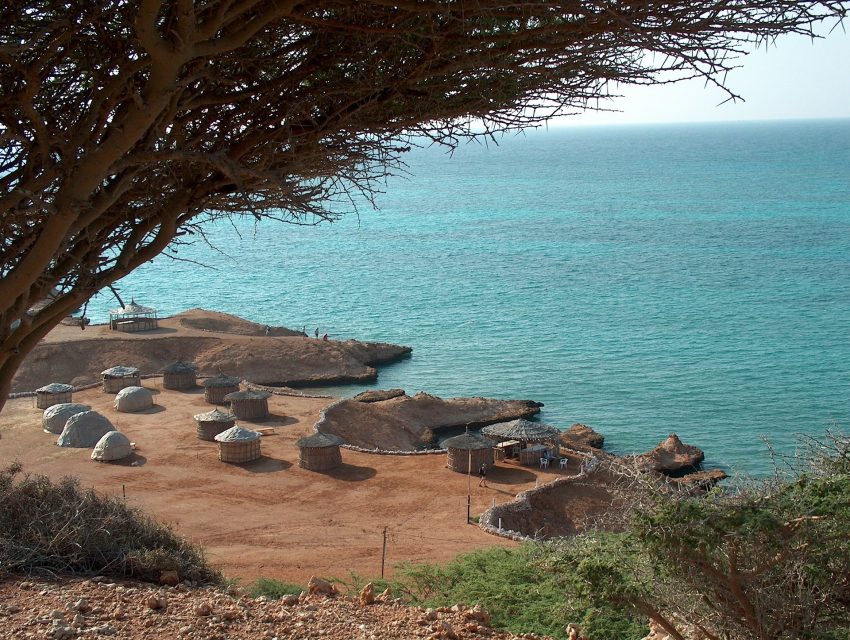
Djibouti is a small but strategically important country in the Horn of Africa, located where the Red Sea meets the Gulf of Aden. Bordered by Eritrea, Ethiopia, and Somalia, it sits along one of the world’s busiest maritime routes, making it a key crossroads for trade and travel between Africa, the Middle East, and beyond. Despite its compact size, Djibouti’s position gives it an outsized role in regional logistics and international shipping.
The country is known for dramatic landscapes shaped by volcanic and desert terrain, from salt flats and lava fields to rugged mountains and striking coastlines. Lake Assal, one of the saltiest bodies of water on Earth and the lowest point in Africa, is among its most distinctive natural features. Along the coast, warm waters and coral-rich areas offer opportunities for diving and marine wildlife viewing, including seasonal whale shark sightings.
Djibouti’s culture reflects a blend of African, Arab, and French influences, with Somali and Afar communities forming the largest groups and French and Arabic serving as official languages. The capital, Djibouti City, is the nation’s main hub for government, commerce, and daily life, combining modern infrastructure with lively markets and waterfront neighborhoods. While the climate is generally hot and dry, the country’s mix of cultures, scenery, and seaborne connections gives it a character that feels both regional and distinctly its own.
Table of Contents
- History of Djibouti
- Ancient and medieval eras
- 16th–19th centuries: regional empires and trade routes
- 1862–1917: French Somaliland and the rise of Djibouti city
- 1918–1945: war, administration, and strategic value
- 1946–1967: decolonization pressures
- 1967–1977: toward independence
- 1977–1999: state-building and civil conflict
- 2000s–present: strategic hub and economic transformation
- Best Time to Visit Djibouti
- Food and Drink from Djibouti
History of Djibouti
Djibouti’s history is shaped by its position at the gateway between the Red Sea and the Indian Ocean, linking Africa, Arabia, and the wider world through trade routes, migration, and strategic competition.
Ancient and medieval eras
The territory of present-day Djibouti has long been inhabited by Cushitic-speaking peoples, including ancestors of today’s Afar and Somali (Issa) communities. Its coastal and hinterland routes connected the Horn of Africa to Arabia and the Nile world. In antiquity, the region was part of broader Red Sea commerce networks that moved incense, livestock, salt, and other goods between African interiors and maritime traders.
From late antiquity into the medieval period, Islam spread across the Horn via trade and migration across the Red Sea and Gulf of Aden. The coastal zones and caravan routes were influenced by Muslim sultanates and trading towns in the wider region, and local societies developed around pastoralism, trade, and control of wells and routes.
16th–19th centuries: regional empires and trade routes
From the 1500s onward, the Horn of Africa became entangled in Ottoman, Portuguese, and regional rivalries, though direct control over the Djibouti interior was limited. The area remained oriented toward caravan commerce and maritime exchange, with local authorities and clan structures managing access to land, ports, and routes.
In the 1800s, European interest intensified as steam navigation, global trade, and imperial competition made the Red Sea corridor more valuable—especially after the opening of the Suez Canal in 1869. France sought a foothold to secure coaling and supply stations and to project influence in the region.
1862–1917: French Somaliland and the rise of Djibouti city
France began establishing formal presence through treaties and purchases along the coast, starting with Obock in 1862. Over subsequent decades, French influence expanded, and the colony became known as French Somaliland.
A decisive turning point was the founding and development of Djibouti city in the late 19th century. Its deep-water port and location made it a natural hub. The construction of the railway linking the port to the Ethiopian interior—completed to Addis Ababa in 1917—transformed the colony’s economy and strategic importance. The port became a principal outlet for Ethiopian trade, drawing labor, merchants, and administrators and accelerating urban growth.
1918–1945: war, administration, and strategic value
Between the world wars, the colony’s importance rested on its port, railway, and position near key sea lanes. During World War II, French Somaliland experienced political and military tension tied to shifting control within the French empire and Allied strategy in the region. The war years reinforced the territory’s strategic significance and the centrality of the Djibouti–Ethiopia corridor.
1946–1967: decolonization pressures
After World War II, French Somaliland became an overseas territory of France. As decolonization gathered pace across Africa, political life in the territory became increasingly shaped by debates over independence, continued association with France, and the balance of influence between major communities—particularly the Afar and the Somali Issa.
Referendums and political contests reflected both local aspirations and regional dynamics, including the rise of neighboring independent states and broader Cold War considerations. France maintained a strong military presence, viewing the territory as a strategic asset.
1967–1977: toward independence
In 1967, another referendum resulted in continued association with France, and the territory was renamed the French Territory of the Afars and the Issas, signaling the central political role of the two largest communities. Over the next decade, pressures for independence intensified, driven by local political movements, demographic change, labor activism, and regional politics.
In 1977, a referendum led to independence, and the Republic of Djibouti was proclaimed on 27 June 1977. Hassan Gouled Aptidon became the country’s first president.
1977–1999: state-building and civil conflict
Post-independence Djibouti built its state around the port economy, services, and its strategic location. Politics, however, were marked by tensions over representation and power-sharing. In the early 1990s, these tensions escalated into civil conflict, largely involving the government and the FRUD (Front for the Restoration of Unity and Democracy), rooted mainly in Afar opposition.
Peace processes in the mid-to-late 1990s reduced violence and brought elements of the opposition into political arrangements, though disputes over governance and inclusion persisted.
2000s–present: strategic hub and economic transformation
In the 21st century, Djibouti has leveraged its geography to become a major logistics and military hub. The country hosts multiple foreign military facilities, reflecting its proximity to vital shipping lanes and regional security concerns.
Economically, Djibouti has invested heavily in ports, free zones, and transport infrastructure tied to Ethiopia’s trade, including modernized port facilities and rail links. These projects have strengthened Djibouti’s role as a gateway for the Ethiopian economy and as a regional services center, while also raising questions about debt, employment, and the distribution of benefits.
Politically, the country has experienced continuity in leadership and strong central control, alongside periodic opposition challenges and debates about political openness. Throughout, Djibouti’s modern history has remained anchored in the same enduring factors that shaped its past: trade corridors, maritime strategy, and the negotiation of identity and power in a diverse society.
Best Time to Visit Djibouti
Visiting Djibouti in Winter (Best)
Winter (roughly December to February) is the most comfortable time to visit Djibouti, with milder temperatures and lower humidity than the rest of the year. It’s ideal for outdoor activities like hiking, exploring Lake Assal and the surrounding volcanic landscapes, and day trips into the desert without the intense heat. This is also a great season for diving and snorkeling in the Gulf of Tadjoura, with generally pleasant conditions for time on the water.
Visiting Djibouti in Spring
Spring (roughly March to May) starts to warm up quickly, especially inland, but it can still be a good shoulder season if you plan early-morning excursions and keep midday plans flexible. Coastal areas can feel more humid as temperatures rise. If you’re focused on marine life, this can be an appealing time for boat trips and underwater activities, though conditions can vary.
Visiting Djibouti in Summer
Summer (roughly June to August) is the hottest period, with high temperatures and humidity—particularly in Djibouti City and along the coast. It’s generally the least comfortable season for extensive sightseeing, but it can work if you prioritize indoor time, short outings at dawn or dusk, and water-based activities. If you’re visiting in summer, plan for heat management (shade, hydration, and slower pacing) and consider higher-elevation or breezier coastal spots when possible.
Visiting Djibouti in Autumn
Autumn (roughly September to November) is a transition back toward more comfortable weather. Early autumn can still be hot, but conditions typically improve as the season progresses, making it a good time to return to longer outdoor days and multi-stop itineraries. It’s a solid option if you want fewer crowds than peak winter while still enjoying better temperatures for landscapes, city exploring, and coastal excursions.
Festivals and cultural highlights in Djibouti
If festivals are a priority, timing your trip around major Islamic holidays can be especially rewarding, as they bring a festive atmosphere, communal meals, and cultural celebrations. Dates vary each year, so it’s worth checking the calendar in advance for:
- Eid al-Fitr (end of Ramadan)
- Eid al-Adha
You may also find national celebrations and local cultural events in and around Djibouti City at different times of year, which can add extra energy to a visit.
Food and Drink from Djibouti
Djibouti’s food reflects its position at the crossroads of the Horn of Africa and the Red Sea, blending Somali, Afar, Arab, and French influences. Meals often center on simple, hearty staples designed for a hot, dry climate, with rice, flatbreads, and stews appearing frequently. Spices such as cumin, cardamom, cloves, and chili are common, giving many dishes a warm, aromatic depth without always being overly hot. In coastal areas, seafood plays a bigger role, while inland cooking leans more toward meat and long-simmered sauces.
A typical plate might feature rice or pasta served with a richly seasoned meat stew, often made with goat, lamb, or beef. One widely enjoyed dish is skoudehkaris, a fragrant rice preparation cooked with spices and commonly paired with meat. Stews and sauces are often tomato-based and may include onions, garlic, and peppers, creating a savory backbone for the meal. Meals are frequently shared, with diners using bread to scoop up food, emphasizing hospitality and communal eating.
Bread is central to daily life, especially lahoh (also spelled canjeero), a soft, spongy flatbread that can be eaten at breakfast or alongside lunch and dinner. It may be served with honey, butter, or a spicy sauce, and it’s also used to mop up stews. Sambuusa—crisp, triangular pastries filled with spiced meat, lentils, or vegetables—are popular as snacks, especially during gatherings and festive times. French influence can show up in urban areas through baguettes and café-style bites, reflecting Djibouti’s colonial history and modern city culture.
Drinks in Djibouti are shaped by both tradition and trade routes. Tea is especially important, often brewed strong and sweet, sometimes with spices, and served throughout the day as a sign of welcome. Coffee is also widely enjoyed, with social coffee breaks common in homes and small cafés. In the heat, people also turn to refreshing options such as fruit juices and simple chilled beverages, rounding out a food culture that is practical, flavorful, and deeply tied to community.