Azerbaijan: The Ultimate Travel Guide 2026
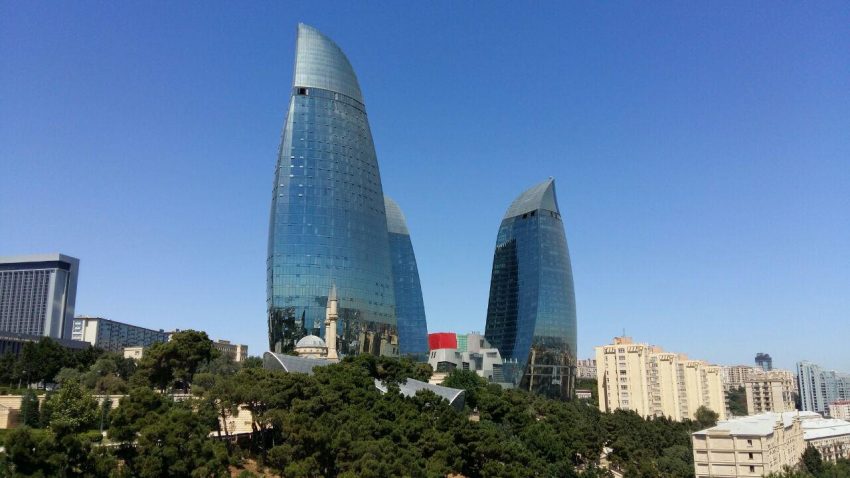
Azerbaijan is a country at the crossroads of Eastern Europe and Western Asia, set along the western shore of the Caspian Sea. Its capital, Baku, is the nation’s largest city and a major hub for culture, business, and travel, known for a striking mix of modern architecture and traditional neighborhoods. With landscapes that range from coastal plains to the peaks of the Greater Caucasus, Azerbaijan offers a surprising variety of scenery within a relatively compact area.
The country is often described as a meeting point of cultures, where Turkic roots blend with influences from the wider Caucasus and beyond. Azerbaijani is the official language, and the local hospitality is a defining feature of everyday life, especially around shared meals and tea. Visitors commonly experience a lively urban atmosphere in Baku alongside quieter towns and villages where crafts, music, and regional traditions remain central.
Azerbaijan is also recognized for its natural resources and distinctive natural phenomena, including mud volcanoes and “eternal flames” fed by underground gas. Its cuisine highlights fresh herbs, grilled meats, rice dishes, and seasonal produce, with regional variations across the country. Whether you’re drawn by city life, mountain escapes, or the Caspian coastline, Azerbaijan offers a blend of modern energy and local character that feels both familiar and unique.
Table of Contents
- History of Azerbaijan
- Ancient and early medieval foundations
- Arab conquest and Islamization
- Turkic migrations and regional dynasties
- Safavid era and the Sunni–Shia transformation
- Khanates, Russian expansion, and partition
- Oil, urban growth, and national movements
- Independence and the Azerbaijan Democratic Republic
- Soviet Azerbaijan
- Post-Soviet independence and the Nagorno-Karabakh conflict
- Renewed war and reassertion of control
- Best Time to Visit Azerbaijan
- Food and Drink from Azerbaijan
History of Azerbaijan
Azerbaijan’s history sits at the crossroads of the Caucasus, the Iranian plateau, the Eurasian steppe, and Anatolia. Over millennia, its territory has been shaped by shifting empires, trade routes, religious change, and—more recently—oil wealth and post-Soviet state-building.
Ancient and early medieval foundations (to 7th century)
Human settlement in what is now Azerbaijan dates deep into prehistory, with evidence of early habitation in the Lesser Caucasus and along the Caspian. In antiquity, two major political-cultural zones emerged: Caucasian Albania in the north (roughly corresponding to much of modern Azerbaijan) and regions in the south that were more directly tied to Iranian imperial spheres.
Caucasian Albania developed its own local dynasties and institutions while interacting with neighboring powers, including the Achaemenid, Parthian, and Sasanian empires. Christianity spread into the Caucasus in late antiquity, and parts of the region adopted Christian institutions, though religious life remained diverse and often contested due to imperial rivalries.
Arab conquest and Islamization (7th–10th centuries)
In the 7th century, Arab armies expanded into the South Caucasus. Over time, Islamic rule and culture took hold, and the region gradually Islamized. Local elites often negotiated autonomy under larger caliphal authority, while trade and urban life expanded in key centers.
Islam became the dominant religious framework, though the pace and depth of change varied by region. The foundations were laid for later Turkic and Persianate cultural syntheses that would strongly influence Azerbaijani identity.
Turkic migrations and regional dynasties (11th–15th centuries)
From the 11th century onward, Oghuz Turkic migrations and Seljuk influence transformed the linguistic and demographic landscape. Turkic speech spread widely, eventually forming the basis for the Azerbaijani Turkic language. Political authority shifted among regional dynasties and imperial formations, and the area became part of broader Persianate-Islamic civilization, with Persian often serving as a major literary and administrative language.
The Mongol invasions in the 13th century brought upheaval and new political structures. Successor states and confederations later competed for control, and the region’s cities and trade routes remained important links between the Caspian basin and the wider Middle East.
Safavid era and the Sunni–Shia transformation (16th–18th centuries)
In the early 16th century, the Safavid state rose to power with deep roots in the region and established Twelver Shiism as the state religion across its domains. This period was decisive for the religious profile of much of present-day Azerbaijan, where Shiism became predominant, especially in lowland and urban areas.
The territory became a frontier zone in recurring wars between the Safavids (and later Iranian successor states) and the Ottoman Empire. Control shifted at times, but Iranian-centered political and cultural influence remained strong. Local khanates and semi-autonomous rulers gained prominence as central authority weakened in the 18th century.
Khanates, Russian expansion, and partition (18th–19th centuries)
By the mid-18th century, a patchwork of khanates and principalities governed much of the area. This fragmentation coincided with the Russian Empire’s southward expansion. A series of Russo-Iranian wars ended with treaties that transferred large parts of the South Caucasus to Russian control.
This era effectively partitioned Azerbaijani-speaking populations between the Russian Empire (north of the Aras River) and Iran (south of it), a division that continues to shape regional identities and geopolitics. Under Russian rule, administrative reforms, new economic ties, and changing social structures accelerated modernization in some areas while also generating new tensions.
Oil, urban growth, and national movements (late 19th–early 20th centuries)
Baku became one of the world’s major oil centers in the late 19th century. Rapid industrialization drew investment, migrants, and labor movements, turning the city into a diverse and politically active hub. Wealth from oil reshaped society, while stark inequalities fueled social unrest.
At the same time, modern political ideas—constitutionalism, socialism, and nationalism—spread among educated elites. Azerbaijani cultural and political life expanded through print, theater, and schools, and debates intensified over identity, language, and reform.
Independence and the Azerbaijan Democratic Republic (1918–1920)
After the collapse of the Russian Empire and the upheavals of World War I and revolution, Azerbaijan declared independence in 1918, forming the Azerbaijan Democratic Republic (ADR). It established institutions of statehood and pursued diplomatic recognition, with Baku eventually becoming its capital.
The period was marked by regional conflict, shifting alliances, and internal political competition. In 1920, the Red Army entered, and the ADR was replaced by Soviet rule.
Soviet Azerbaijan (1920–1991)
Azerbaijan became a Soviet republic, undergoing collectivization, industrialization, and major social transformation. Soviet policies expanded education and urbanization while imposing strict political control. The oil sector remained strategically vital, especially during World War II, when Baku’s energy resources were crucial to the Soviet war effort.
Over decades, Azerbaijani culture developed within Soviet frameworks, balancing promotion of national forms with limits on political expression. Late Soviet reforms and rising nationalism in the 1980s coincided with escalating tensions over Nagorno-Karabakh, setting the stage for conflict as the USSR weakened.
Post-Soviet independence and the Nagorno-Karabakh conflict (1991–2020)
Azerbaijan regained independence in 1991 amid political instability and war. The conflict over Nagorno-Karabakh and surrounding districts led to large-scale displacement and a ceasefire in 1994 that left Armenian forces in control of Nagorno-Karabakh and adjacent territories for decades.
From the mid-1990s onward, Azerbaijan pursued state consolidation and leveraged major oil and gas projects—especially through pipelines linking the Caspian to global markets—to drive economic growth and strengthen international partnerships. Political power became increasingly centralized, and the state emphasized sovereignty, territorial integrity, and economic modernization.
Renewed war and reassertion of control (2020–present)
In 2020, a major war reshaped the situation on the ground. Azerbaijan regained control over significant territories lost in the early 1990s, and a Russia-brokered ceasefire introduced new security arrangements and transport discussions.
In 2023, Azerbaijan reestablished full control over Nagorno-Karabakh, leading to a profound humanitarian and political rupture, including the departure of much of the region’s ethnic Armenian population. Since then, Azerbaijan has focused on reintegration of regained territories, reconstruction, and redefining regional connectivity and security relationships, while broader negotiations and tensions in the South Caucasus continue to evolve.
Best Time to Visit Azerbaijan
Visiting Azerbaijan in Spring (Best)
Spring (March–May) is one of the best times to visit Azerbaijan for mild temperatures, greener landscapes, and comfortable sightseeing in Baku and beyond. It’s ideal for exploring the Old City (Icherisheher), taking day trips to Gobustan, and heading into regions like Sheki and Gabala before summer heat arrives. Festival highlight: Novruz (around March 20–24) is a major cultural celebration with traditional food, music, and public festivities.
Visiting Azerbaijan in Summer
Summer (June–August) is warm to hot, especially in Baku and the lowlands, making it a good season for coastal time along the Caspian Sea and evening-focused city exploring. If you prefer cooler air, consider heading into the mountains and higher-elevation regions where temperatures are more comfortable. Festival highlight: Summer often features open-air concerts and cultural events in Baku, with a lively nightlife scene.
Visiting Azerbaijan in Autumn
Autumn (September–November) brings pleasant temperatures and fewer crowds, making it a strong choice for city breaks and regional travel. It’s a great time for hiking and scenic drives in the Greater Caucasus and for enjoying harvest-season flavors and local markets. Festival highlight: Food and harvest-themed events are common in the fall, and cultural programming in Baku typically ramps up after summer.
Visiting Azerbaijan in Winter
Winter (December–February) is best for travelers who want a quieter trip, lower accommodation prices, and winter sports in the mountains. Skiing and snow activities are popular in resort areas such as Shahdag and Tufandag, while Baku remains relatively mild compared with inland and higher-altitude regions. Festival highlight: New Year celebrations in Baku can be a draw, with festive decorations and events in the city center.
Food and Drink from Azerbaijan
Azerbaijani food reflects a crossroads of the Caucasus, Central Asia, and the Middle East, with a strong emphasis on fresh herbs, fragrant spices, and seasonal produce. Saffron, sumac, dried fruits, and nuts appear often, while coriander, dill, tarragon, and mint brighten many dishes. Bread is a daily staple, and meals commonly feature a balance of grains, vegetables, and meats, with flavors that are aromatic rather than overly hot. Regional variety is significant, shaped by the Caspian coast, mountain areas, and fertile lowlands.
One of the best-known pillars of Azerbaijani cuisine is plov (pilaf), typically made with long-grain rice cooked so the grains stay separate, then served with a rich topping (gara) such as lamb, chicken, dried apricots, chestnuts, or herbs. Dolma is another classic, ranging from grape leaves stuffed with minced meat and rice to vegetables like peppers, eggplants, and tomatoes filled and gently simmered. Kebabs and grilled meats are popular, often accompanied by onions, sumac, and flatbreads, while soups and stews—such as hearty bean or meat-based bowls—provide comfort in colder seasons.
The country is also famous for its distinctive breads and pastries. Tandoor-baked loaves and thin flatbreads are common at the table, used to scoop up dips and stews or to wrap grilled foods. Savory baked items like qutab—thin stuffed pancakes filled with greens, cheese, or meat—are widely enjoyed, especially with a sprinkle of sumac and a side of yogurt. Sweet treats include baklava and shekerbura, often associated with holidays, featuring layers of nuts, honeyed syrup, and delicately patterned pastry.
Drink culture in Azerbaijan is strongly centered on tea, typically black tea served in pear-shaped armudu glasses. Tea is often offered to guests alongside lemon, jams, or sweets, and it plays a key role in hospitality and social life. Ayran (a salted yogurt drink) is a refreshing companion to grilled dishes, and compotes made from fruits are also common. Azerbaijan also produces wines, particularly from regions with long-standing viticulture, and local fruit-based drinks and syrups add to the country’s varied table.