Angola: The Ultimate Travel Guide 2026
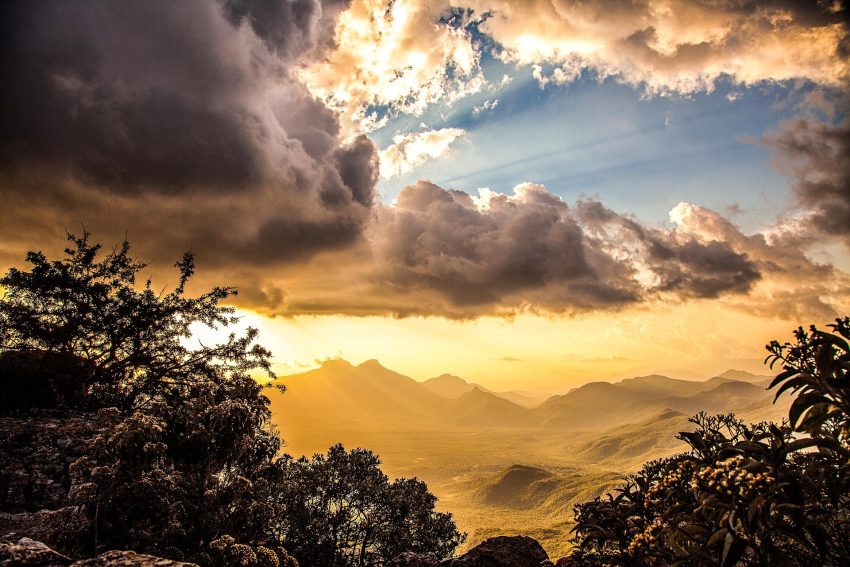
Angola is a large country on the west coast of Southern Africa, bordered by the Atlantic Ocean and sharing frontiers with Namibia, the Democratic Republic of the Congo, the Republic of the Congo, and Zambia. Its geography is strikingly varied, ranging from a long coastal plain to inland plateaus and highlands, with major rivers and broad savannas shaping the landscape. This diversity supports rich ecosystems and a wide range of climates, from more humid areas in the north to drier regions in the south.
The capital, Luanda, is the country’s biggest city and a major hub for government, business, and culture. Angola is home to many ethnic groups and languages, with Portuguese as the official language and numerous national languages spoken across different regions. Music, dance, and storytelling are central to everyday life, and Angolan cuisine reflects local ingredients and regional traditions, often featuring staples like cassava, maize, beans, and fresh seafood along the coast.
Angola’s economy is strongly influenced by its natural resources, particularly oil and gas, alongside diamonds and other minerals, while agriculture and fishing remain important for livelihoods in many communities. In recent years, the country has focused on rebuilding and development, expanding infrastructure and services while working to diversify economic activity. For visitors, Angola offers a mix of urban energy and dramatic natural scenery, from Atlantic beaches to waterfalls, national parks, and wide open landscapes.
Table of Contents
- History of Angola
- Before European contact
- The Kingdom of Kongo and other states
- Portuguese arrival and the rise of the slave trade
- “Effective occupation” and colonial consolidation
- Colonial rule, forced labor, and the growth of nationalism
- War of independence
- Independence and immediate conflict
- Civil war and Cold War entanglement
- Attempts at peace and renewed war
- Reconstruction, oil boom, and political continuity
- Recent developments
- Best Time to Visit Angola
- Food and Drink from Angola
History of Angola
Angola’s history spans early human settlement, powerful precolonial kingdoms, centuries of Portuguese colonial rule and the Atlantic slave trade, a long anti-colonial struggle, a devastating post-independence civil war shaped by Cold War rivalries, and a recent era defined by oil wealth, reconstruction, and ongoing political and social challenges.
Before European contact
People lived in the region for tens of thousands of years, with early hunter-gatherer communities later joined and partly displaced by Bantu-speaking migrations that spread agriculture, ironworking, and new political formations across much of what is now Angola. Over time, diverse societies emerged, including centralized kingdoms and smaller chiefdoms linked by trade networks that moved goods such as salt, iron, textiles, and later ivory and captives.
The Kingdom of Kongo and other states (c. 14th–17th centuries)
By the late medieval period, the Kingdom of Kongo became one of the most influential states in west-central Africa, with a capital at Mbanza Kongo and authority extending into parts of northern Angola and beyond. To the south and east, other important polities developed, including Ndongo (associated with the Mbundu peoples) and later the kingdom of Matamba, among others. These states competed, allied, and traded with one another, and their politics were shaped by control of land, tribute, and regional commerce.
Portuguese arrival and the rise of the slave trade (late 15th–18th centuries)
Portuguese explorers reached the Kongo coast in the late 1400s and established diplomatic and commercial ties with Kongo’s rulers. Over time, Portuguese interests shifted toward securing captives for the expanding Atlantic slave trade. Luanda was founded in 1575 and became a key hub for exporting enslaved Africans, especially to Brazil. Portuguese military campaigns and alliances with local factions intensified warfare and raiding, destabilizing many areas. Resistance was persistent; one of the most famous figures is Queen Njinga (Nzinga) of Ndongo and Matamba, who used diplomacy, shifting alliances, and military strategy in the 1600s to oppose Portuguese encroachment and defend her realm’s autonomy.
“Effective occupation” and colonial consolidation (19th–early 20th centuries)
Although Portugal claimed Angola for centuries, its control beyond coastal enclaves was limited for much of that time. In the 1800s, as the transatlantic slave trade was gradually suppressed, Angola’s economy shifted toward “legitimate” commerce and forced labor systems that supplied plantations, public works, and private enterprises. The late 19th-century European “Scramble for Africa” and international pressure to demonstrate “effective occupation” pushed Portugal to expand inland through military campaigns, treaties, and administrative reorganization. By the early 1900s, colonial rule was more firmly imposed, often through coercion, taxation, and labor compulsion.
Colonial rule, forced labor, and the growth of nationalism (mid-20th century)
Portuguese Angola was governed under an authoritarian imperial system that restricted political rights and maintained racial and social hierarchies. Forced labor and harsh working conditions persisted in various forms, alongside land dispossession and limited access to education and skilled employment for most Africans. After World War II, urbanization, labor organizing, and new intellectual currents helped fuel nationalist movements. Several groups emerged with different regional bases and ideological orientations, including the MPLA (Popular Movement for the Liberation of Angola), FNLA (National Front for the Liberation of Angola), and later UNITA (National Union for the Total Independence of Angola).
War of independence (1961–1974)
Armed struggle against Portuguese rule escalated in 1961, marked by uprisings and severe colonial reprisals. The conflict became part of Portugal’s broader colonial wars in Africa (also in Mozambique and Guinea-Bissau). Nationalist movements fought the Portuguese military and also competed with one another for influence. The war strained Portugal economically and politically, contributing to dissent within the Portuguese armed forces.
Independence and immediate conflict (1974–1976)
In 1974, a military coup in Portugal (the Carnation Revolution) ended the dictatorship and set the stage for decolonization. Angola moved toward independence, but rivalry among the main liberation movements turned into open conflict. Independence was declared on 11 November 1975, with the MPLA establishing a government in Luanda. The transition quickly became internationalized: the Soviet Union and Cuba backed the MPLA with major military support, while the United States and others supported rival forces to varying degrees; apartheid South Africa intervened militarily, and Zaire (now the Democratic Republic of the Congo) also played a role. By 1976, the MPLA held the capital and much of the state apparatus, but war continued.
Civil war and Cold War entanglement (late 1970s–1991)
Angola’s civil war became one of the Cold War’s most intense proxy conflicts. The MPLA government, aligned with Marxist-Leninist ideology for a period, relied on Soviet and Cuban assistance, while UNITA, led by Jonas Savimbi, received support from the United States and South Africa at different times, as well as other external backers. Fighting devastated infrastructure and rural livelihoods, displaced millions, and left widespread landmine contamination. Oil revenues (especially offshore) and diamond wealth helped finance competing war efforts and entrenched wartime political economies.
Attempts at peace and renewed war (1991–2002)
With the Cold War ending, Angola entered a new phase of negotiations. A peace agreement in 1991 led to multiparty elections in 1992. The MPLA won, but UNITA rejected the results, and the country returned to large-scale violence, including severe urban massacres and reprisals. Further agreements in the 1990s produced fragile ceasefires that repeatedly collapsed. The conflict finally ended in 2002 after Jonas Savimbi was killed and UNITA agreed to demobilize and transition fully into a political party.
Reconstruction, oil boom, and political continuity (2002–2017)
Postwar Angola undertook massive reconstruction—roads, railways, housing, and public buildings—funded largely by oil revenues and external financing. Luanda became one of Africa’s most expensive cities during the boom years, while inequality remained stark. The MPLA consolidated power, and José Eduardo dos Santos, who had led the country since 1979, oversaw a system marked by strong executive authority, patronage networks, and frequent allegations of corruption. Despite improvements in stability and some social indicators, many Angolans continued to face poverty, limited public services, and constrained political space.
Recent developments (2017–present)
In 2017, João Lourenço became president, initiating a shift in elite politics and launching high-profile anti-corruption efforts and reforms aimed at improving governance and the business environment. Angola has also faced economic pressures from oil price volatility, debt burdens, and the need to diversify beyond hydrocarbons. Social challenges remain significant, including unemployment (especially among youth), regional disparities, and demands for better healthcare, education, and accountability. Politically, the MPLA remains dominant, while opposition parties and civil society continue to press for greater transparency and broader democratic competition.
Angola today is shaped by the legacies of colonial extraction, liberation struggle, and civil war, alongside the opportunities and risks of resource wealth and a young, urbanizing population seeking more inclusive development.
Best Time to Visit Angola
Visiting Angola in Summer
Summer in Angola (roughly December to March) is typically hot and humid, with much of the country experiencing the rainy season. It’s a good time to visit if you don’t mind short, heavy downpours and want greener landscapes, especially in the north and central regions. Beach time around Luanda can still be enjoyable, but humidity can be high and some inland roads may be harder to navigate after rain.
Visiting Angola in Autumn (Best)
Autumn in Angola (roughly April to June) is often one of the most comfortable periods to travel, as rains ease and temperatures become more moderate. Conditions are generally better for road travel and exploring national parks, waterfalls, and inland scenery without peak heat or frequent storms. This shoulder period can be ideal for a well-rounded itinerary that includes both the coast and the interior.
Visiting Angola in Winter
Winter in Angola (roughly July to September) is typically the dry season for much of the country, with cooler evenings and generally pleasant daytime temperatures. It’s a strong choice for wildlife viewing and outdoor activities thanks to clearer skies and easier travel conditions. Along the coast, the Benguela Current can make it feel cooler and sometimes misty, which is worth factoring in if your plans focus on beach time.
Visiting Angola in Spring
Spring in Angola (roughly October to November) brings warming temperatures and the gradual return of humidity ahead of the main rains. It can be a good time for photography and landscapes as vegetation begins to pick up, while many areas remain relatively accessible before heavier rainfall sets in. If festivals are a priority, check event calendars for Luanda and other major cities, as cultural and music events are often scheduled around national holidays and city programming that can vary year to year.
Food and Drink from Angola
Angolan food reflects a blend of indigenous traditions and Portuguese influence, shaped by the country’s coastline, river systems, and fertile interior. Meals often center on a hearty starch paired with a flavorful sauce or stew, with cassava (manioc), maize, rice, and plantains appearing frequently. Cooking methods commonly include slow simmering, grilling, and frying, building depth with ingredients like onions, garlic, tomatoes, okra, and leafy greens. Across regions, dishes vary with what’s locally available, from seafood along the Atlantic to game and farmed meats inland.
A cornerstone of everyday eating is funge, a smooth, elastic porridge made from cassava flour (fuba de mandioca) or maize flour (fuba de milho). It’s typically served as the base for rich accompaniments such as calulu, a savory preparation that can feature fish or dried fish with greens (often including okra or leafy vegetables) and palm oil, creating a distinctive, comforting flavor. Another widely enjoyed dish is muamba de galinha, a chicken stew often cooked with palm oil and aromatics, sometimes with vegetables, and served with funge or rice. Beans, peanuts, and leafy sauces also play a big role, adding protein and texture to home-style meals.
Given Angola’s long coastline, seafood is especially prominent in many areas, with grilled fish and prawns commonly seasoned simply and cooked over open flame. Dishes may be paired with rice, beans, or fried plantains, and brightened with fresh salads or spicy condiments. Inland, meats such as goat, beef, and chicken are popular, and stews are often built to be shared, with family-style serving that emphasizes communal eating. Street food and casual snacks can include fried pastries, roasted corn, and quick plates of grilled meat or fish with starches.
Angolan drinks range from everyday staples to celebratory favorites. Coffee is widely enjoyed, reflecting the country’s agricultural history, and is often taken strong and sweet. Fresh juices and soft drinks are common, especially in cities, while beer is a popular social drink. Traditional beverages include palm wine in some regions, and gatherings may feature local spirits or homemade drinks depending on availability and custom, rounding out a food culture that is both practical and deeply rooted in shared hospitality.