Self-Guided Walking Tour of Tarragona (2026)

This website uses affiliate links which earn a small commission at no additional cost to you.
Tarragona is one of Catalonia's most rewarding cities to explore on foot: compact, layered with history, and full of those small street-level details that make wandering feel effortless. This self-guided walking tour links the city's Roman heart with its medieval old town and the seafront, so you get a satisfying mix of big-ticket sights and local atmosphere in a single route.
Along the way you'll move between monumental ruins and everyday Tarragona-quiet squares, lookout points, shaded lanes, and spots that naturally invite a pause for coffee or a quick snack. It's the kind of city where the route can be structured, but the experience stays flexible, letting you linger where you want and keep the pace that suits you.
Whether you've got a few hours or a full day, this walk is designed to be easy to adapt: shorten it if you're tight on time, or stretch it with museum visits and longer stops. By the end, you'll have covered many of the best things to see in Tarragona, with a route that feels logical, scenic, and genuinely enjoyable rather than rushed.
Table of Contents
- How to Get to Tarragona
- A Short History of Tarragona
- Tarragona Before Rome: Iberian Roots & Early Trade
- Tarragona as Tarraco: The Roman Capital on the Frontier of Empire
- Tarragona After Rome: Late Antiquity, Faith & Reused Stone
- Medieval Tarragona: Rebuilding Authority & the Rise of the Cathedral City
- Early Modern Tarragona: Civic Life, Squares & Local Government
- 19th Century Tarragona: Modern Boulevards, Commerce & a New Urban Pace
- 20th Century to Today: Memory, Culture & the City as a Living Stage
- Where to Stay in Tarragona
- Your Self-Guided Walking Tour of Tarragona
How to Get to Tarragona
By Air: The nearest major airport is Barcelona El Prat, which gives you the widest choice of international and low-cost flights. From the airport, you can reach Tarragona by heading into Barcelona to connect with onward rail services, or by using direct coach options when they suit your timing, then finishing in Tarragona's centre where most hotels and sights are walkable. If you are arriving via Girona or Reus, they can work for specific routes and seasonal flights, but services are generally less frequent than from Barcelona. For the best deals and a seamless booking experience, check out these flights to Tarragona on Booking.com.
By Train: Tarragona is well connected by rail, and for many travellers this is the simplest option, especially from Barcelona and other cities along the Mediterranean corridor. High-speed services typically use the Camp de Tarragona station (outside the centre), while regional trains serve Tarragona station closer to town, so it's worth checking which one your ticket uses and planning the last leg accordingly. From either station, you can get into the centre quickly by taxi or local bus, making the train a very practical choice for a car-free trip. Train schedules and bookings can be found on Omio.
By Car: Driving is straightforward, with fast motorway routes linking Tarragona to Barcelona and Valencia, and it's handy if you plan to explore the Costa Daurada, small inland villages, or beaches beyond the city. The trade-off is that central parking can be limited or pricey in peak season, so consider choosing accommodation with parking, using public garages, or parking on the edge of town and walking in. Once you're in the historic core, the streets are better suited to exploring on foot than navigating by car. If you are looking to rent a car in Spain I recommend having a look at Discover Cars, first, as they compare prices and review multiple car rental agencies for you.
By Bus: Long-distance and regional buses can be good value, and they often arrive close to the centre, which is useful if you want to step straight into sightseeing without transfers. They’re particularly handy for direct connections from nearby coastal towns, resorts, and smaller places that aren’t as well served by rail, although journey times can be slower than the train depending on traffic and stops.
A Short History of Tarragona
Tarragona Before Rome: Iberian Roots & Early Trade
Long before the city became a showpiece of empire, Tarragona's story began with Iberian communities shaped by Mediterranean exchange, seasonal agriculture, and coastal commerce. This early phase left fewer monumental traces than later centuries, but it established the idea of Tarragona as a place where goods, people, and ideas flowed in and out, creating a durable urban identity. When you visit the Mercado Central today, it echoes that older rhythm of trade and daily life, even if the building itself belongs to a much later era.
Tarragona as Tarraco: The Roman Capital on the Frontier of Empire
The decisive turning point came with Rome, when Tarragona-known as Tarraco-grew into one of the most important urban centres in Roman Hispania. Power, entertainment, and civic pride were built in stone: the Circ Roma hosted the roar and danger of chariot racing, while the Anfiteatro staged the city's public spectacles with a stark view of Roman authority and ritual. For a quick grasp of how extensive Roman Tarragona once was, Maqueta Tarraco helps you visualise the ancient street plan, major complexes, and the sheer ambition of an imperial city designed to impress.
Tarragona After Rome: Late Antiquity, Faith & Reused Stone
As Roman administration weakened, Tarragona moved into a more uncertain period marked by shifting rulers, reduced long-distance trade, and the gradual reshaping of the city around Christian institutions. In many places, the grand materials of Tarraco did not disappear so much as get repurposed-walls, blocks, and foundations becoming the raw fabric of later construction. This is where Tarragona's layered character starts to feel most tangible: the Roman past remains present, but increasingly filtered through the needs of communities trying to defend, worship, and survive in a changing world.
Medieval Tarragona: Rebuilding Authority & the Rise of the Cathedral City
The medieval centuries saw Tarragona rebuilt around ecclesiastical power, with the Catedral Basilica Metropolitana Primada de Tarragona becoming the dominant symbol of continuity and prestige. The cathedral's presence is not only architectural; it represents a long project of reasserting order, identity, and legitimacy after earlier disruptions. Around it, streets and civic spaces developed in ways that still shape how Tarragona feels today-compact, textured, and defined by the relationship between sacred space, local governance, and everyday life.
Early Modern Tarragona: Civic Life, Squares & Local Government
Over time, Tarragona’s public life became increasingly anchored in civic institutions and communal gathering places, not just religious ones. Plaça de la Font is a good lens on this era: a place tied to administration, ceremony, and the social theatre of the city, where decisions and daily routines met in the open. The older Roman footprint never vanished, but it was now part of a living city whose priorities included municipal order, trade stability, and the quieter continuity of neighbourhood life.
19th Century Tarragona: Modern Boulevards, Commerce & a New Urban Pace
The 19th century brought a distinctly modern Tarragona, shaped by new economic patterns, changing tastes, and a desire for more open, structured public space. La Rambla Nova captures that shift: a broad promenade that speaks to civic confidence and a city looking forward, not only back. In the same spirit, Mercado Central reflects the era's push to organise commerce with modern infrastructure-cleaner lines, regulated trade, and a civic statement that everyday buying and selling mattered to the city's identity.
20th Century to Today: Memory, Culture & the City as a Living Stage
Modern Tarragona has increasingly treated its heritage as something to be lived alongside, not simply preserved behind glass. Monumento als Castellers signals the importance of local tradition and collective effort, a reminder that identity is also performed and renewed. At the same time, contemporary Tarragona keeps adding layers: the Plaça dels Sedassos Mural turns an ordinary corner into an artwork that rewards looking twice, while the Balcó del Mediterrani distils the city into a single pause-an outlook where people still gather to take in the horizon and, in their own way, mark Tarragona's continuity across centuries.
Where to Stay in Tarragona
To make the most of visiting Tarragona and this walking tour, consider staying overnight in the centre. If you want to be right in the middle of the historic atmosphere and close to the cathedral-and-ruins circuit, the Old Town is the most convenient base, especially for early starts and evening strolls when the streets quieten down. Good options here include H10 Imperial Tarraco for a polished stay near major Roman sights, and Hotel Plaça de la Font if you like the idea of stepping straight into a lively square with cafés and an easy walk to the route’s key stops.
For a more “modern centre” feel with fast access to shops, restaurants, and transport connections, base yourself around Rambla Nova and the Plaça Imperial Tarraco area. This keeps you within walking distance of the Old Town while making arrivals and departures simpler, especially if you are coming by train or bus. Try Hotel Lauria for an excellent central position on the main boulevard, or Hotel SB Ciutat de Tarragona if you want a straightforward, comfortable hotel right by the city’s transport hub area.
If you prefer somewhere practical and good-value near the station and easy to drop bags before starting the walk, the lower-centre streets between the station and the shopping core can work very well. These hotels are also handy if you plan day trips and want quick onward connections. Consider Hotel Pigal for a simple, central base, or Hotel Catalunya Express if you prioritise a no-fuss stay close to the rail station.
For more breathing room, pool time, or a beach-leaning break after sightseeing, look along Via Augusta and the seafront-leaning neighbourhoods, which still keep you within easy reach of the walking tour by taxi or a manageable walk depending on your exact location. This is a strong choice in warmer months when you want to mix ruins with swimming and sea air. Two reliable picks are Hotel Astari and Hotel Núria.
Your Self-Guided Walking Tour of Tarragona
As this is a self guided walking tour, you are free to skip places, swap the order of a few stops, and take coffee breaks whenever you want. If something catches your eye, linger. If a museum visit takes longer than planned, let it. Tarragona rewards a slower pace, and the best moments often come from small detours, a shaded square, or a spontaneous stop for a pastry and a cold drink.
Whether you complete the full route in one go or split it across the day, this walk gives you an easy framework for seeing the city in a way that feels unforced. You will come away with a clear sense of Tarragona’s layers-Roman, medieval, and modern-without feeling like you have spent the day rushing from one sight to the next.
1. Balcó del Mediterrani
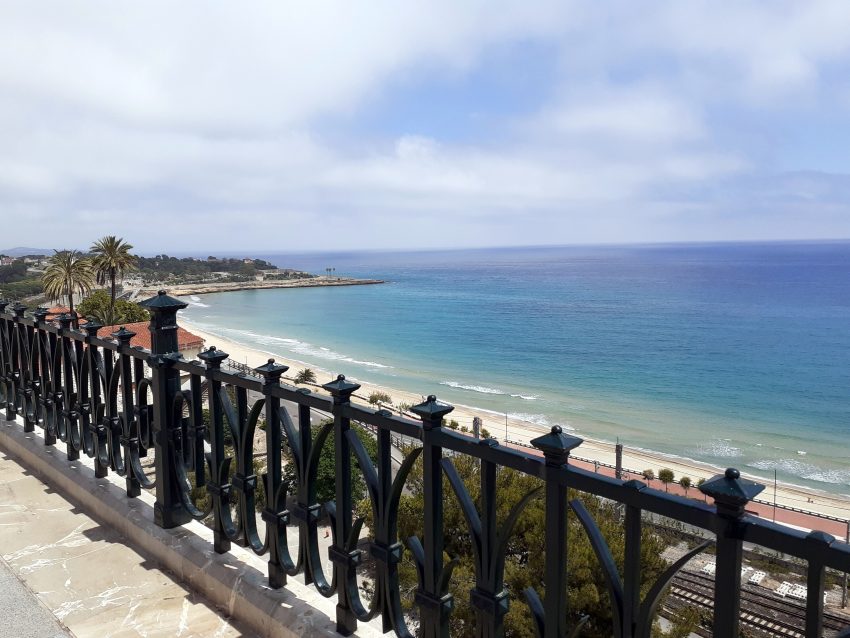
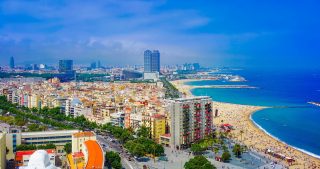
The Mediterranean Balcony is Tarragona’s iconic viewpoint, a modern ritual point where locals and visitors pause to take in the coastline and the open horizon. While it’s not ancient in the way the Roman sites are, it belongs to the city’s longer story of looking outward—Tarragona has always been oriented toward the sea, economically and psychologically.
What to see is the sweep: the waterline, the curve of the coast, and the way the city steps down from the historic heights toward the shore. The view is especially rewarding at changing light—late afternoon and early evening—when the sea surface and sky shift rapidly and the lookout feels like a natural stage.
Treat it as the punctuation mark to your walk. It’s a simple stop, but it recalibrates your sense of place, linking Tarragona’s Roman monuments, medieval streets, and modern boulevards to the one constant that shaped them all: the Mediterranean directly in front of you.
Location: Passeig de les Palmeres, s/n, 43004 Tarragona, Spain | Hours: 24 Hours. | Price: Free.

2. La Rambla Nova
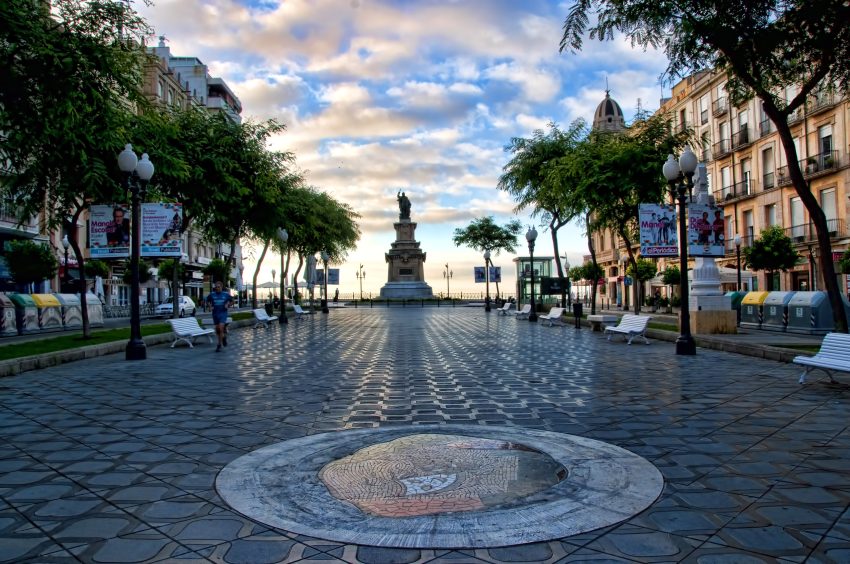
La Rambla Nova is Tarragona’s modern urban spine, created as the city expanded beyond its older core and needed a broad, walkable boulevard that could carry daily life—shopping, cafés, civic events—without the tight constraints of medieval streets. It represents a later chapter of Tarragona’s story: a confident, outward-looking city that continued to reinvent itself long after the Roman era.
As you walk, treat it like a moving viewpoint rather than a destination with a single “must-see” object. Watch how the architecture and street activity change by block, with open plazas and shaded stretches that invite you to slow down. It’s also a useful connector, leading you naturally toward major viewpoints and landmarks.
The best time to experience it is when locals are out in force—late afternoon into evening—when the boulevard feels like a shared living room. Take your time, people-watch from a terrace, and keep an eye out for public art and small monuments that act as punctuation marks along the route.
Location: Rambla Nova, Tarragona, Spain | Hours: 24 Hours. | Price: Free.
3. Mercado Central de Tarragona
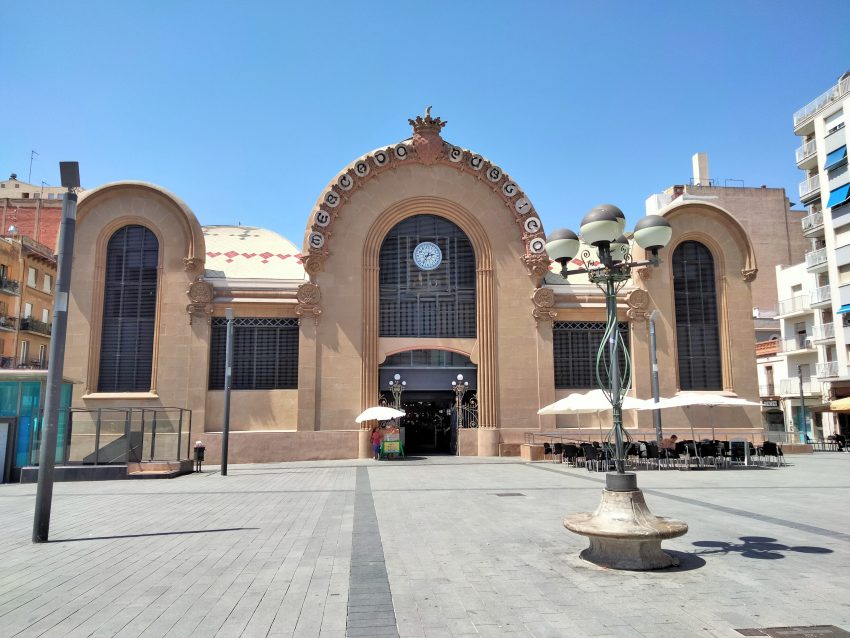
The Central Market reflects Tarragona’s long role as a trading city, where daily commerce has always been tied to the rhythms of the port, the surrounding countryside, and the urban neighbourhoods. Markets here have historically been more than a place to buy food—they’re social spaces, price-checking arenas, and a living snapshot of what people actually eat at home.
Inside, focus on the stalls that best show the region’s character: seafood counters displaying the Mediterranean catch, cured meats and local sausages, olives and pickled goods, and seasonal fruit that shifts dramatically through the year. The most enjoyable way to “see” the market is to do a slow loop, letting the colours and conversations set the pace, then stopping for a small bite or coffee nearby.
Go with an eye for details that visitors often miss: handwritten signage, speciality ingredients used in Catalan cooking, and the subtle differences between everyday products and higher-end local treats. Even if you don’t buy much, it’s one of the quickest ways to understand Tarragona as a working city rather than a museum of Roman ruins.
Location: Pl. de Corsini, 43001 Tarragona, Spain | Hours: Monday – Saturday: 08:30–21:00. Sunday: Closed. | Price: Free. | Website
4. Monumento als Castellers
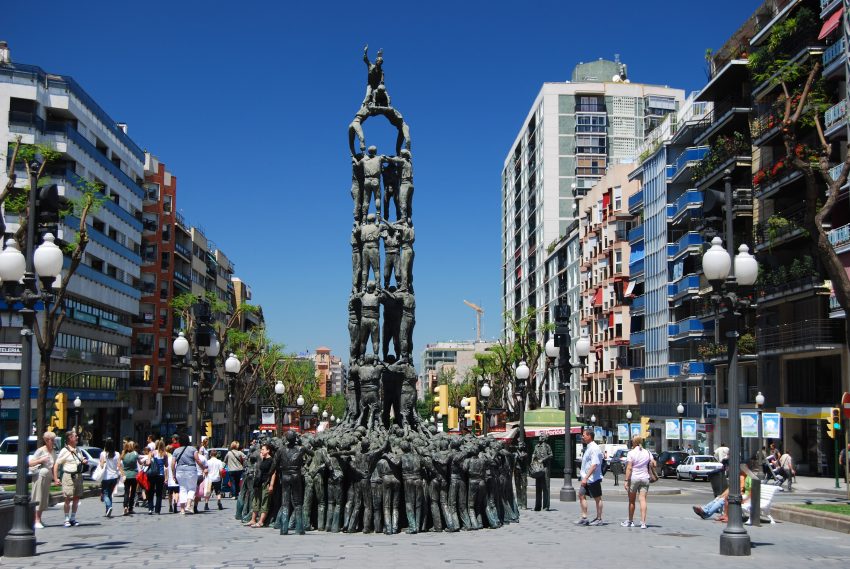
Rising as a tribute to Catalonia’s castells tradition, this monument celebrates the human towers that have long been a symbol of local identity, teamwork, and civic pride. Tarragona has a deep relationship with castellers culture, and the sculpture acts as a kind of public “thank you” to the generations who have kept the practice alive through neighbourhood groups and festival days.
Up close, look at how the figures are arranged to suggest the upward rhythm of a tower: the solidity of the base, the tightening spiral of bodies, and the lightness toward the top. It’s a good spot to pause and think about how castells are built in real life—carefully choreographed, with roles that range from strong “pins” at the bottom to the smallest climber who completes the structure.
Treat the visit as a quick, atmospheric stop rather than a long one: it’s about context and storytelling. If you’re in Tarragona during a festival period, this monument takes on extra meaning after you’ve seen a rehearsal or a live performance, because you can connect the static sculpture to the noise, nerves, and applause of the real thing.
Location: Rambla Nova, 129, 43001 Tarragona, Spain | Hours: 24 Hours. | Price: Free.
5. Muralla Romana de Tarragona
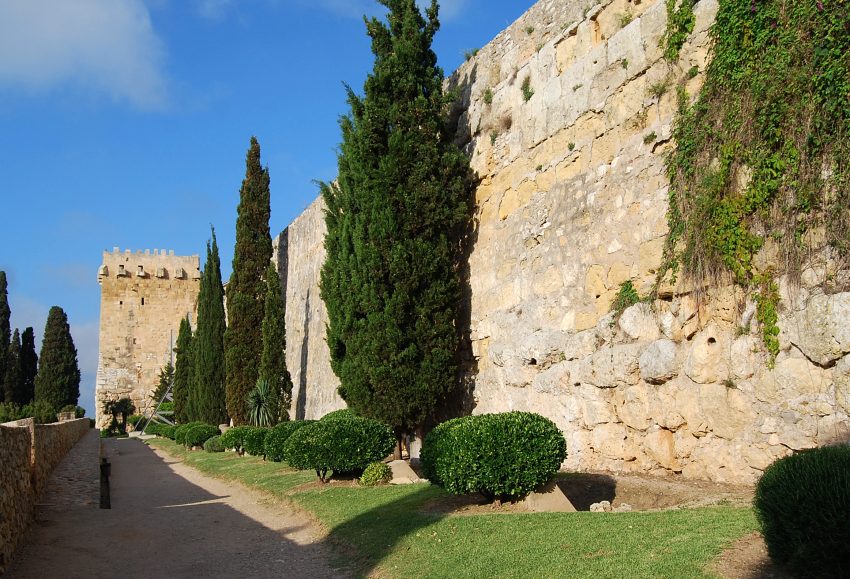
Tarragona’s Roman walls are among the clearest reminders that ancient Tarraco was built to last. Raised and reinforced over time as the city grew in strategic importance, the defences helped protect a major provincial centre and projected Roman authority in stone. Even in surviving sections, you can read the engineering logic: thick masonry, carefully set blocks, and the sense that this boundary once defined where “the city” began and ended.
What to see is the texture and scale up close. Look for changes in masonry that hint at different building phases, and pay attention to how later Tarragona absorbed the walls into its own growth, treating Roman fortifications as foundations rather than relics. Walking alongside them gives you a strong feel for the topography, because the Romans used the terrain to strengthen the line of defence.
This is a site that rewards slow walking rather than quick photos. Follow the wall segments you can access, then pause to imagine the city beyond the stones: soldiers on watch, gates managing movement, and travellers arriving to a place that looked—and was meant to look—powerful.
Location: Rambla Vella, 1, 43003 Tarragona, Spain | Hours: (Summer) April 1 – October 26; Tuesday – Saturday: 09:00–20:45. Sunday: 09:00–14:30. Closed on Monday. (Winter) October 27 – March 31; Tuesday – Friday: 09:00–18:30. Saturday: 09:30–18:30. Sunday: 09:30–14:30. Closed on Monday. | Price: Check official website. | Website
6. Maqueta Tarraco

Maqueta Tarraco is a compact gateway into the ancient Roman city, designed to help you visualise what’s otherwise difficult to reconstruct from scattered ruins. “Tarraco” was one of Rome’s most significant settlements in Hispania, and understanding its scale and layout can change how you experience the amphitheatre, circus, walls, and forum remains across the city.
The main thing to see is how the pieces fit together: the relationship between entertainment venues, administrative zones, and the city’s connection to the sea. A good maquette turns names on a map into something spatial and intuitive, so you can grasp distances, alignments, and the logic behind where the Romans built what they built.
Use this stop as a planning tool for the rest of your visit. Take a few minutes to identify the sites you’ve already seen (or are about to see), then revisit the model in your mind as you walk—Tarragona becomes more legible when you can picture the ancient city beneath your feet.
Location: Plaça del Pallol, 3, 43003 Tarragona, Spain | Hours: Check official website. | Price: Free. | Website
7. Tarragona City Hall
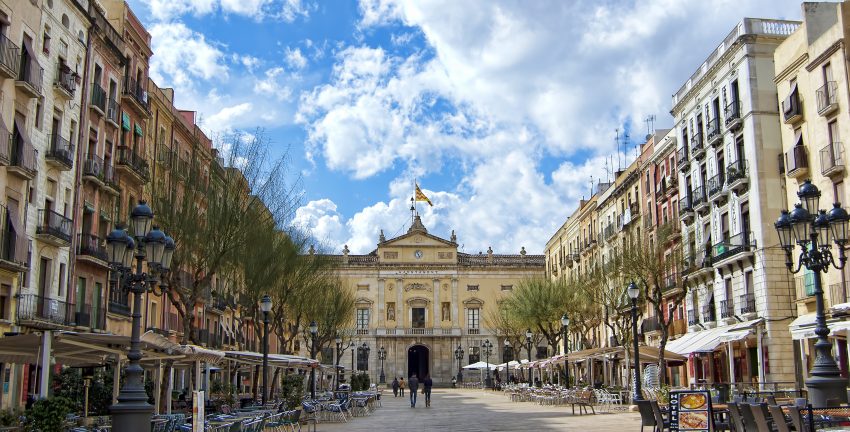
Tarragona City Hall represents the city’s civic continuity: whatever Tarragona was under Rome, under medieval rule, or in modern Spain, the need for local administration and public decision-making never disappeared. The building stands as a symbol of municipal authority and public life, and it anchors the idea that Tarragona is not only a heritage city but also a living community governed day to day.
When you visit, focus on the exterior presence and its relationship to the square around it. Civic buildings like this are designed to be read publicly—through their symmetry, scale, and formal detailing—because they communicate stability and legitimacy. Even without stepping inside, you can get a lot from observing how people use the space: meetings, errands, photos, and everyday movement that keeps the civic centre active.
It’s also a useful place to tie the city’s layers together. After Roman sites and medieval streets, City Hall brings you back to the present, showing how Tarragona’s story continues through institutions and public spaces that still organise city life.
Location: Tarragona City Hall, Plaça de la Font, Tarragona, Spain | Hours: Monday – Friday: 09:00–21:00. Saturday – Sunday & public holidays: 10:00–14:00. | Price: Free. | Website
8. Plaça de la Font
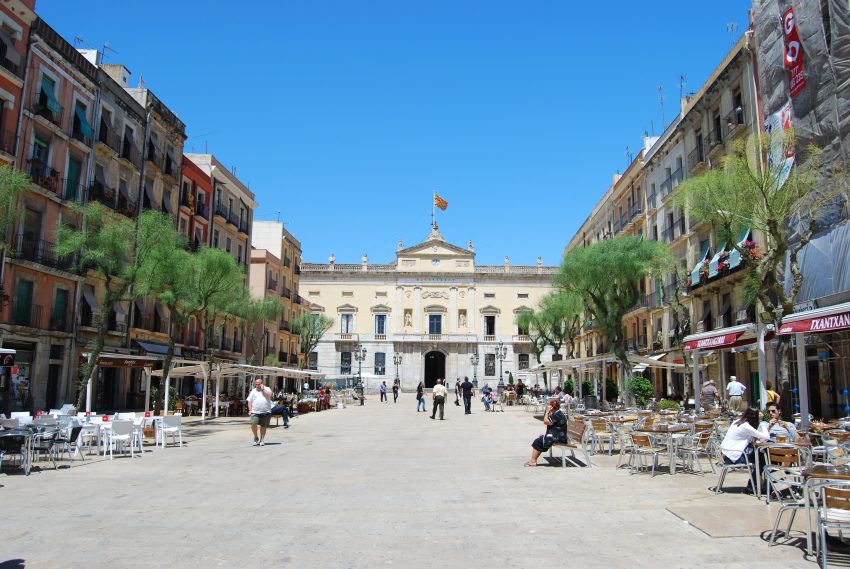
Plaça de la Font sits at the intersection of Tarragona’s layered past and its everyday present, a square where civic life has long gathered in the open air. Like many historic plazas in Catalonia, it has evolved from older urban functions into a social heart—less about one defining building and more about the feeling of the space and how people use it.
What makes the square especially interesting is the way Tarragona’s Roman foundations echo beneath later city life. In this part of town, the ancient city’s footprint is never far away, and the square’s broad openness hints at the long history of public gathering spaces here, even as the visible architecture belongs to more recent centuries.
When you visit, focus on the square’s edges: the facades, the arcades and terraces, and the comings and goings that give it energy. It’s an ideal place for a pause—sit for a drink, take in the proportions of the plaza, and let the city’s tempo come to you before moving on.
Location: Plaça de la Font, 43003 Tarragona, Spain | Hours: 24 Hours. | Price: Free.
9. Plaça dels Sedassos Mural
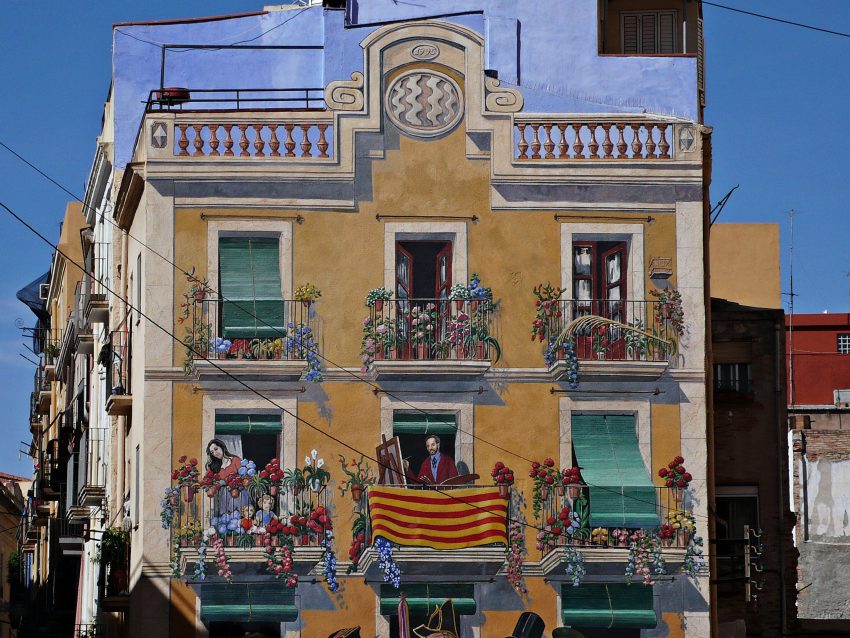
This mural has become one of Tarragona’s most memorable modern landmarks, using illusion and perspective to transform an ordinary wall into a playful piece of street theatre. While Tarragona is famous for Roman monuments and medieval stonework, the mural is a reminder that the city continues to add new layers of identity in contemporary ways.
The fun is in how you look at it: from the right angle, the painted figures and architectural tricks create the sense of depth and movement, almost as if the wall opens into another scene. Spend a few minutes shifting position and noticing how the composition changes, and you’ll see why it’s such a popular stop for photos.
Pair the visit with a slow wander through the surrounding streets, because the mural works best as part of the neighbourhood atmosphere rather than a standalone “tick-box.” It’s a quick stop, but it adds a bright, human counterpoint to Tarragona’s heavier monumental history.
Location: Pça. dels Sedassos, 2, 43003 Tarragona, Spain | Hours: 24 Hours. | Price: Free.
10. Tarragona Cathedral
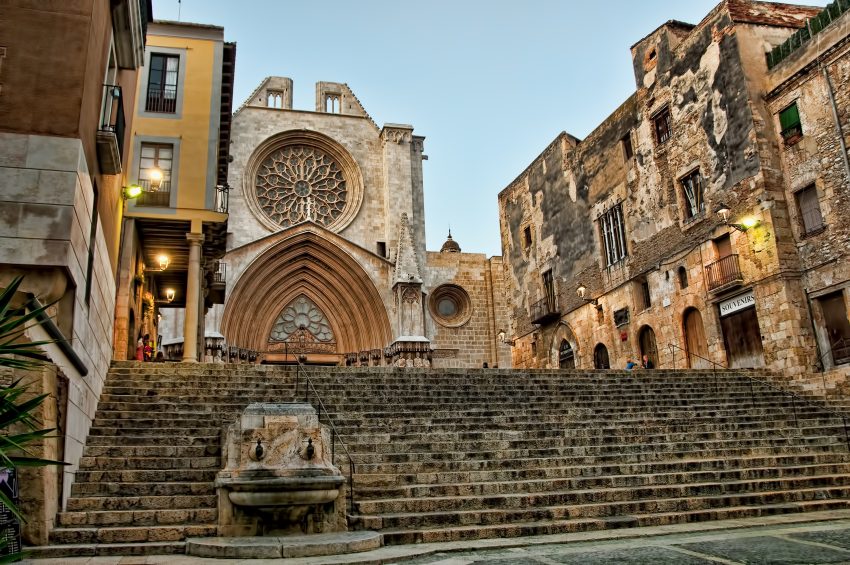
Tarragona’s cathedral crowns the historic upper city, embodying centuries of religious, civic, and artistic power. Built over a long period, it reflects the transition from earlier medieval forms into later refinements, and its presence is inseparable from Tarragona’s role as an important ecclesiastical centre in the region.
Inside, give yourself time to absorb the shift from bright exterior streets to the cooler, resonant interior space. Look for the architectural rhythm—columns, vaulting, chapels—and the way stonework and decoration tell stories of patronage and changing tastes across generations. The cloister is often a highlight, offering a calmer, enclosed world of arches and carved details.
What to “see” here isn’t only individual artworks, but the overall layering: different building phases, different styles, and the sense of continuity. Step outside afterward and notice how the cathedral’s elevated position frames views and streets below, reinforcing the feeling that the upper town was designed to impress as well as to endure.
Location: Pla de la Seu, 1, 43003 Tarragona, Spain | Hours: (Winter) January 1 – March 1; Monday: 10:30–17:00; Tuesday – Friday: 09:30–17:00; Saturday: 09:30–18:00; Sunday: 14:00–18:00. (Spring) March 2 – June 28; Monday: 10:30–19:00; Tuesday – Saturday: 09:30–19:00; Sunday: 14:00–19:00. (Summer) June 29 – August 30; Monday: 10:30–20:00; Tuesday – Saturday: 09:30–20:00; Sunday: 14:00–20:00. (Autumn) August 31 – November 1; Monday: 10:30–19:00; Tuesday – Saturday: 09:30–19:00; Sunday: 14:00–19:00. (Winter) November 2 – December 31; Monday: 10:30–17:00; Tuesday – Friday: 09:30–17:00; Saturday: 09:30–18:00; Sunday: 14:00–18:00. | Price: General: €12.50; Reduced: €8.50; Junior (7–12): €5.50; Under 7: free. | Website
11. Fòrum Square
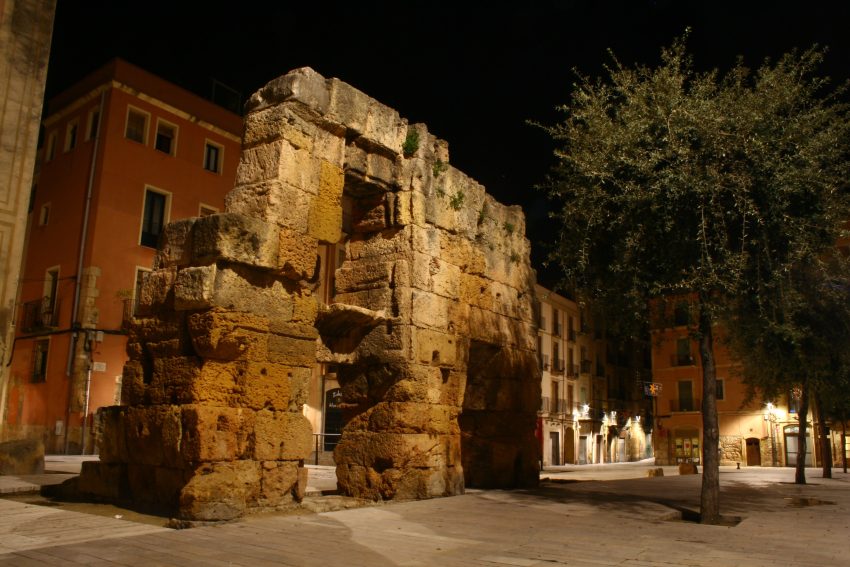
The Provincial Forum of Tarraco was one of the most ambitious Roman building projects in the western empire, created to house the administrative and representative functions of the province. More than a local forum, it was designed to serve imperial governance: a monumental setting for officials, ceremonies, and the public display of Rome’s order. Its scale and layout reinforced Tarraco’s status as a key centre in Roman Hispania, linking the city’s political importance directly to architecture.
What to see today is the footprint of that ambition, even if you’re encountering it in fragments and terraces rather than as a complete complex. Look for the way space is organised into broad platforms, with walls and structural lines that hint at enormous courtyards and formal processional routes. The best mental exercise here is reconstruction: imagine how intimidating and theatrical the complex would have felt when dressed with columns, statues, and crowds.
To get the most out of the forum remains, connect them to nearby Roman sites rather than treating them as isolated stones. The provincial forum helps explain why Tarraco’s entertainment venues, walls, and civic spaces were so substantial: they belonged to a city performing an official role on behalf of Rome, not merely a prosperous local settlement.
Location: 43003 Tarragona, Spain | Hours: 24 Hours. | Price: Free.
12. Torre del Pretori

The Torre del Pretori, also known as the Castell del Rei, is one of Tarragona’s most striking examples of how the city continuously reused Roman infrastructure for new purposes. Originally integrated into the vast complex of Tarraco’s provincial forum, the tower functioned within an administrative and ceremonial landscape built to project imperial authority. Over later centuries, as power structures shifted, the same robust Roman stonework lent itself naturally to fortification, helping the site evolve into a medieval defensive stronghold.
What to see is the architecture that signals this long life: heavy masonry, vaults and corridors that feel engineered rather than decorative, and the sense of a structure designed to control movement and visibility. As you move through the spaces, pay attention to the transitions between Roman and later elements, because the tower is less a single “period piece” than a layered document of Tarragona’s urban survival.
The visit is especially rewarding when you treat it as a viewpoint and a connector. From elevated points you can read the city’s topography and understand why this area mattered strategically, while the internal passages help you grasp how the Roman forum zone was organised. It’s a place where Tarragona’s political history—Roman administration, later military control, and the city’s evolving identity—feels physically present.
Location: Pl. del Rei, s/n, 43003 Tarragona, Spain | Hours: (Summer) April 1 – October 26; Tuesday – Saturday: 09:00–20:45; Sunday: 09:00–14:30; Closed on Monday. (Winter) October 27 – March 31; Tuesday – Friday: 09:00–20:00; Saturday: 09:30–20:00; Sunday: 09:30–14:30; Closed on Monday. | Price: Individual entry (1 site): €5; Combined entry (5 sites): €15; Discounts available; Under 12: free. | Website
13. Circ Romà de Tarragona

The Roman circus speaks to Tarragona’s status in antiquity, when public spectacle was a core part of civic life and a tool of political legitimacy. In Roman cities, venues like this were not just entertainment—they were statements of order, wealth, and connection to imperial culture, with massive infrastructure built to stage crowd-pleasing events.
When you visit, focus on what remains of the structure’s bones: long corridors, stone vaulting, and the sense of engineered movement—how crowds would have entered, circulated, and poured back into the city. Even in fragmentary form, the scale is readable, and it’s worth pausing to imagine the noise and speed that once filled the space.
To get the most from it, connect it mentally to nearby Roman sites rather than seeing it in isolation. Tarragona’s Roman remains make more sense as an urban system, and the circus is one of the best places to appreciate how entertainment architecture was woven directly into the city’s fabric.
Location: Rambla Vella, 2, 43003 Tarragona, Spain | Hours: (Summer) April 1 – October 26; Tuesday – Saturday: 09:00–20:45. Sunday: 09:00–14:30. Closed on Monday. (Winter) October 27 – March 31; Tuesday – Friday: 09:00–20:00. Saturday: 09:30–20:00. Sunday: 09:30–14:30. Closed on Monday. | Price: Adults: €5. | Website
14. Anfiteatro de Tarragona

Set dramatically near the sea, Tarragona’s amphitheatre is one of the city’s most evocative Roman monuments, tying together architecture, landscape, and the darker edge of ancient spectacle. Amphitheatres were built for mass audiences, and their very form—tiered seating wrapped around an arena—was designed to focus attention on staged conflict and performance.
What to see is the interplay between the surviving stone outlines and the setting: from many angles, the amphitheatre feels both monumental and exposed, with the Mediterranean as a constant backdrop. Walk the perimeter slowly to understand the oval plan, then look across the arena and imagine the choreography of a full crowd—movement, hierarchy of seating, and the controlled drama at the centre.
This is a place where a little imagination goes a long way. It’s worth lingering for the view as much as the archaeology, because the site captures something essential about Tarragona: a Roman city built with confidence, positioned to face the sea, and still shaped by those choices in the present.
Location: Parc de l'amfiteatre, s/n, 43003 Tarragona, Spain | Hours: (Summer) April 1 – October 26; Tuesday – Saturday: 09:00–20:45; Sunday: 09:00–14:30; Closed on Monday. (Access until 30 minutes before closing.). (Winter) October 27 – March 31; Tuesday – Friday: 09:00–18:30; Saturday: 09:30–18:30; Sunday: 09:30–14:30; Closed on Monday. (Access until 30 minutes before closing.). | Price: Individual entry (1 site): €5; Combined ticket (5 sites): €15; Under 12: free; Discounts available for eligible visitors. | Website

Moira & Andy
Hey! We're Moira & Andy. From hiking the Camino to trips around Europe in Bert our campervan — we've been traveling together since retirement in 2020!
This website uses affiliate links which earn a small commission at no additional cost to you.
Walking Tour Summary
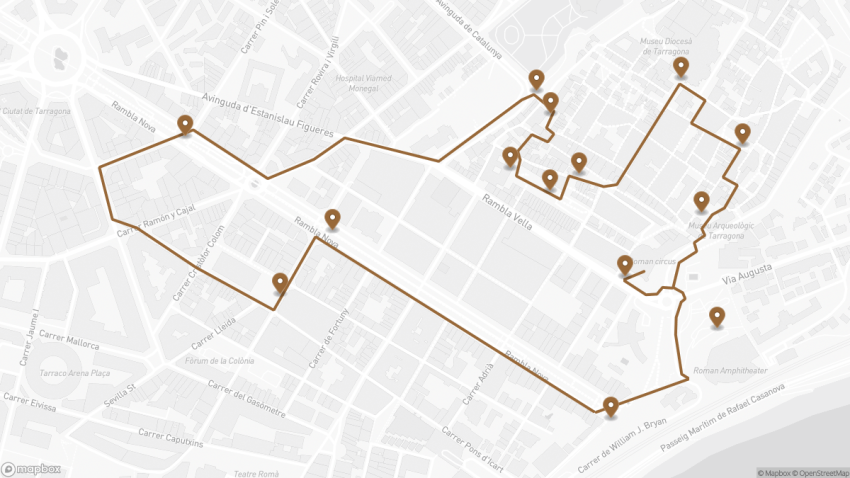
Distance: 3.5 km
Sites: 14
Walking Tour Map