Self-Guided Walking Tour of Santiago de Compostela (2026)
This website uses affiliate links which earn a small commission at no additional cost to you.
Santiago de Compostela is compact, atmospheric, and made for walking, with grand stone façades, lively plazas, and quiet arcaded streets that reveal something new every few minutes. This self-guided route is designed to be simple to follow and flexible to enjoy, taking you through the historic core while keeping detours easy when a café terrace or a small church pulls you off course.
Along the way you'll cover many of the best things to see in Santiago de Compostela, mixing headline landmarks with smaller details that give the city its texture, like street carvings, tucked-away courtyards, and viewpoints that open up between medieval lanes. Expect a steady rhythm of “big moment” sights followed by calmer stretches where you can slow down, browse shops, or linger in a square with a drink.
Because it’s self-guided, you can run it exactly how you want: start early for quieter streets, begin later for a more energetic atmosphere, or split the walk into two shorter loops with a long lunch in between. The route works well year-round, but it’s especially rewarding if you build in time to pause, look upward, and let the city’s layered history unfold as you move from one stop to the next.
Table of Contents
- How to Get to Santiago de Compostela
- History of Santiago de Compostela
- Santiago de Compostela in Legend and Early Origins
- Santiago de Compostela in the Romanesque City
- Santiago de Compostela in the Gothic and Late Medieval Pilgrimage Boom
- Santiago de Compostela in the Counter-Reformation and Baroque Transformation
- Santiago de Compostela in Enlightenment, State Power, and Civic Order
- Santiago de Compostela in the Modern Era: Memory, Markets, and Living Tradition
- Where to Stay in Santiago de Compostela
- Your Self-Guided Walking Tour of Santiago de Compostela
- Plaza del Obradoiro
- Palacio de Rajoy
- Cathedral Museum
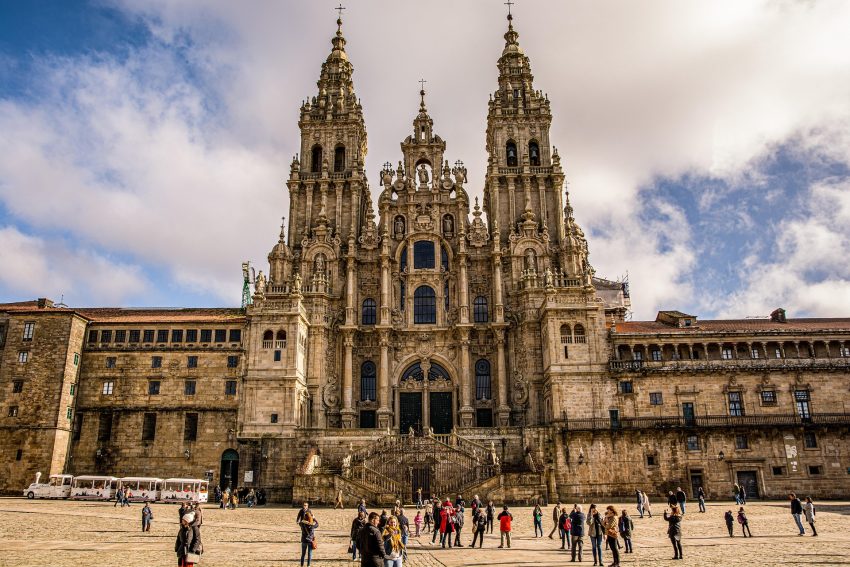
- Santiago de Compostela Cathedral
- Hostal dos Reis Catolicos
- Praza de Cervantes
- Monasterio de San Martin Pinario
- Porta do Camiño
- Parque de San Domingos de Bonaval
- Museum of the Galician People
- Mercado de Abastos
- Rúa Nova
- Monasterio de San Paio de Antealtares
- Plaza de la Quintana
- Plaza de las Platerias
- Museum of Pilgrimages and Santiago
- Casa do Cabildo
- Rua do Vilar
- Parque La Alameda
- Palace of Fonseca
How to Get to Santiago de Compostela
By Air: Santiago de Compostela Airport (SCQ) is the main gateway and sits a short drive from the city centre, with frequent connections from major Spanish hubs and a good spread of European routes depending on season. From the airport, the simplest transfer is the airport bus into the centre (typically terminating near the main transport hubs), while taxis are quicker and convenient if you have luggage or are arriving late. If you're landing via a larger airport, Porto (OPO) can also be a practical alternative, with onward links into Galicia by train or bus. For the best deals and a seamless booking experience, check out these flights to Santiago de Compostela on Booking.com.
By Train: Santiago's main station (Santiago de Compostela railway station) is connected to key Galician cities and wider Spain, with regular services from places like A Coruña and Vigo, and longer-distance routes via hubs such as Ourense and Madrid depending on the service pattern. Trains are a good option if you want a straightforward arrival without city driving, and the station is close enough to reach central areas by taxi, local bus, or a short walk if you're staying nearby. Book ahead in peak periods, especially around holidays and major pilgrimage dates, as seats can tighten on popular departures. Train schedules and bookings can be found on Omio.
By Car: Driving can work well if you’re combining Santiago with the Galician coast or rural interior, as it gives you flexibility for day trips and smaller towns. The trade-off is that the historic centre has restricted traffic in places and parking can be limited, so it’s usually best to choose accommodation with parking or plan to use public car parks on the edge of the old town and continue on foot. Approach roads are generally straightforward, but allow extra time for arrival if you’re navigating the centre at busy times. If you are looking to rent a car in Spain I recommend having a look at Discover Cars, first, as they compare prices and review multiple car rental agencies for you.
By Bus: Long-distance coaches link Santiago with cities across Galicia and Spain, and they can be excellent value if you book early. The main bus station is within easy reach of the centre by local bus or taxi, and buses are often the most direct option from some regional towns where train routes require changes. This is also a practical fallback in periods when rail options are limited or sold out.
History of Santiago de Compostela
Santiago de Compostela in Legend and Early Origins
Santiago de Compostela’s story begins with the tradition that the remains of Saint James were discovered in the early medieval period, turning a previously quiet area into a place of powerful devotion and shared imagination. The idea of a saint’s shrine drew early pilgrims, and with them came the first practical needs of a pilgrimage town: shelter, food, safety, and the rituals that made a long journey feel purposeful. Over time, the growing cult of Saint James helped shape the city’s identity around arrival, welcome, and ceremony, themes that still underpin the experience of walking its historic streets today.
Those beginnings are most vividly felt in the spiritual gravity of Santiago de Compostela Cathedral, whose presence anchors the city's earliest and most enduring narrative. Around it, the spaces that now feel monumental started as functional thresholds for crowds: meeting points, access routes, and places to organise the steady flow of people arriving with different languages, customs, and expectations. This early phase laid the foundations for the city's long relationship with movement and memory, where streets double as routes and landmarks double as milestones.
Santiago de Compostela in the Romanesque City
As the pilgrimage expanded, Santiago de Compostela entered a period of organised building and urban definition, with the cathedral and its immediate surroundings evolving into a coherent monumental core. Romanesque architecture brought a sense of solidity and order, reflecting both the spiritual ambitions of the shrine and the practical requirements of accommodating increasing numbers of visitors. Pilgrim infrastructure grew alongside religious construction, creating a city pattern in which sacred spaces and everyday services were tightly interwoven.
The heart of this developing city can still be read in the relationship between Santiago de Compostela Cathedral and the great civic spaces that frame it, especially Plaza del Obradoiro. Even when later architectural layers arrived, the Romanesque impulse remains visible in the way the city feels choreographed: routes converge, sightlines tighten, and then open dramatically into wide squares. That sense of arrival-compressed lanes releasing into a grand public space-became one of Santiago's defining urban experiences.
Santiago de Compostela in the Gothic and Late Medieval Pilgrimage Boom
In the later Middle Ages, Santiago de Compostela’s pilgrimage economy and cultural prestige deepened, and the city’s architecture began to show more complexity, refinement, and institutional confidence. New religious communities and expanding ecclesiastical structures added weight to the city’s skyline and routines, while streets filled with the services pilgrims relied on: lodging, craftsmen, food sellers, and devotional trade. The city’s public spaces matured into stages for processions, markets, and the shared theatre of pilgrimage life.
This period resonates strongly around Plaza de la Quintana, a space that feels simultaneously solemn and communal, and along historic streets such as Rua do Vilar and Rúa Nova, where arcades and shopfront rhythms speak to centuries of foot traffic. Nearby, Plaza de las Platerias reflects a long tradition of skilled craft and commerce tied to the needs of visitors-tokens, repairs, and small purchases that marked the journey. The city’s medieval character isn’t just in stonework; it’s in the way streets still encourage slow movement, frequent pauses, and a constant turning toward the cathedral.
Santiago de Compostela in the Counter-Reformation and Baroque Transformation
From the 16th to 18th centuries, Santiago de Compostela underwent a dramatic visual consolidation as Baroque architecture reshaped key façades and urban scenes, projecting authority, triumph, and theatricality. This was not only about beauty; it was also about messaging-reinforcing the city's religious significance and strengthening institutions during an era of reform and competition for influence. The result is a city where older medieval bones are wrapped in a more expansive, performative skin, especially around the cathedral precinct.
Monasterio de San Martin Pinario embodies this institutional power, with its scale and presence asserting the role of monastic life in the city’s hierarchy. At a smaller, more urban scale, Casa do Cabildo adds an elegant architectural punctuation near the cathedral complex, reinforcing how even modest structures were used to refine the visual experience of major squares. The cumulative effect is most striking when you step into Plaza del Obradoiro, where the city’s story reads like a curated façade: faith, governance, hospitality, and prestige presented in one sweeping tableau.
Santiago de Compostela in Enlightenment, State Power, and Civic Order
As governance and civic administration became more formalised, Santiago de Compostela’s core spaces increasingly expressed state presence alongside religious authority. Buildings linked to administration and public order gained prominence, and the city’s great squares became places where political and institutional life could be seen as clearly as devotion. The pilgrimage remained essential, but the city’s identity broadened: it was also a seat of decision-making, bureaucracy, and public ceremony.
Palacio de Rajoy is a key symbol of this shift, facing the monumental centre with a sober, official composure that complements the religious grandeur nearby. On the same stage, Hostal dos Reis Catolicos reflects a parallel story: care, patronage, and the management of pilgrimage needs through a formal institution of hospitality. Together with the cathedral and Plaza del Obradoiro, these buildings express how Santiago developed a layered authority-spiritual, civic, and social-each reinforcing the others in the city’s most visible space.
Santiago de Compostela in the Modern Era: Memory, Markets, and Living Tradition
In modern times, Santiago de Compostela has balanced conservation with daily life, keeping the old town active rather than turning it into a static museum. Pilgrimage continues to shape the city's rhythms, but so do local routines: shopping, meeting friends, and celebrating seasonal moments. This blend is one reason the city feels inhabited and textured; the historic core is not only a destination, but also a working environment where residents and visitors constantly overlap.
That living character is clear at Mercado de Abastos, where food culture and everyday commerce remain central to the city’s pulse, and in the way Rua do Vilar and Rúa Nova function as both heritage corridors and practical walking routes. For a more reflective layer of the story, the Museum of Pilgrimages and Santiago connects the personal experiences of travellers to the long historical arc of the city, helping explain how Santiago’s identity was built through repetition-thousands of arrivals, each one small, collectively enormous. To step back from the stone and crowds, Parque La Alameda offers a different perspective: a place where the city’s monumental profile feels calmer, and where Santiago’s long history can be taken in as a single, evolving skyline rather than a sequence of individual sites.
Where to Stay in Santiago de Compostela
To make the most of visitng Santiago de Compostela and this walking tour then you consider stay overnight at the centre. Old Town (around the Cathedral and the main historic squares) is the most convenient base because you can start early, return for breaks, and enjoy the lanes after day-trippers fade. If you want a boutique feel right in the old streets, try A Tafona do Peregrino or Hotel Casa do Pozo; for a higher-end, heritage-style stay close to the Cathedral core, consider Eurostars Araguaney.
North Old Town and the market quarter (near Mercado de Abastos) suits you if you like having great food options on your doorstep and an easy route into the most atmospheric lanes without being in the busiest pinch points. This area is ideal for grabbing breakfast supplies, casual lunches, and late tapas between walking stops. Good bases here include Hotel Pazo de Altamira for a historic, central feel and Hotel Costa Vella for a quieter pocket that still walks quickly into the core.
Ensanche and the “edge of centre” (around Praza de Galicia and the Alameda side) is a strong choice if you want the walking tour to be easy while also having wider streets, more cafés, and simpler taxi access. You’ll still be on foot to the old town in minutes, but logistics like arrivals and day-to-day conveniences are often smoother. Consider Hotel Compostela for a classic central base, Hotel Plaza Obradoiro by Bossh! Hotels if you want the old-town feel with a straightforward approach, or Exe Peregrino for comfort and value slightly back from the busiest streets.
West side and greener stays (San Francisco quarter and the university side) works well if you prefer calmer evenings, a little more space, and easy access by car while still being close enough to walk or hop in a short taxi to the tour start. This is also a good area if you want a “retreat” feeling between sightseeing bursts. For a characterful, historic option near the park-like approaches into the old town, pick San Francisco Hotel Monumento; for a modern full-service hotel with easy road access, consider NH Collection Santiago de Compostela or Eurostars Gran Hotel Santiago.
Your Self-Guided Walking Tour of Santiago de Compostela
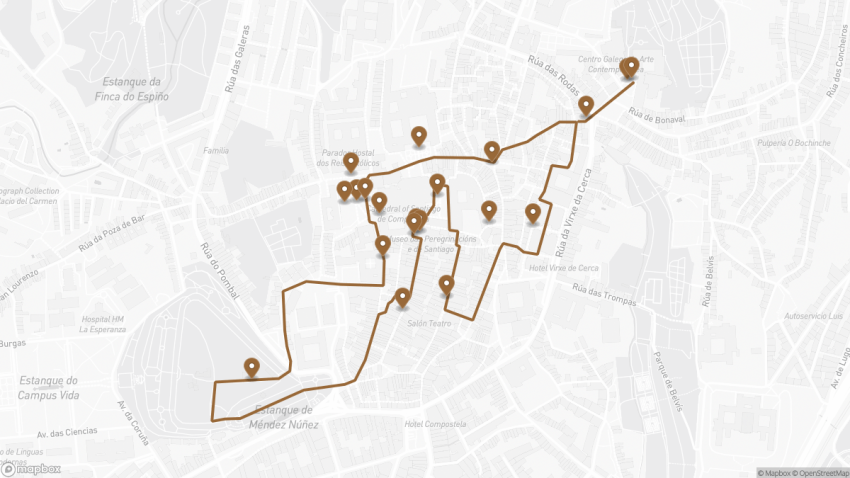
Discover Santiago de Compostela on foot with our walking tour map, guiding you from stop to stop as you explore the city's streets, squares, and landmark sights at your own pace. Because it's a self-guided walk, you can follow the route exactly or dip in and out-skip anything that doesn't interest you, linger where you want, and build in coffee breaks whenever the mood strikes.
1. Plaza del Obradoiro
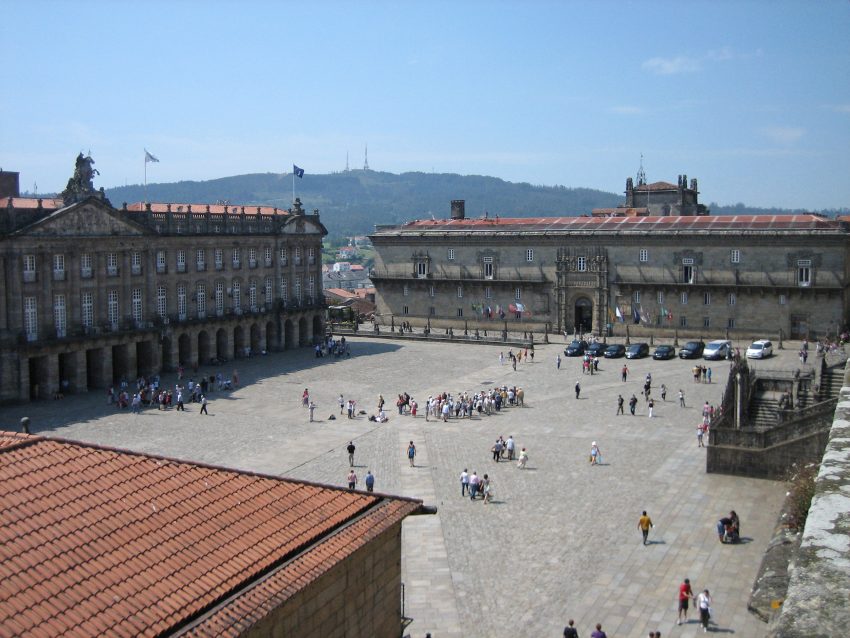
Plaza del Obradoiro is the ceremonial heart of Santiago, shaped by centuries of pilgrimage culture and the city’s role as a religious and civic centre. Its name comes from the workshops that once clustered here to serve the vast building campaigns of the cathedral, when masons, carpenters, and sculptors turned the square into a working forecourt for sacred architecture.
What you see today is an open-air “stage set” of power and purpose: the cathedral’s monumental façade dominates one side, while the principal civic and institutional buildings frame the others. It’s where arriving Camino walkers spill into the city, and that constant flow gives the square an energy that’s equal parts reverent and celebratory.
On a walking tour, come for the sightlines and stay for the details: façade carvings, changing light on stone, and the way the square compresses Santiago’s history into one panorama. Early morning is best for calm; late afternoon is best for atmosphere, with music, gatherings, and a sense of arrival that’s been repeating here for generations.
Location: Praza do Obradoiro, Santiago de Compostela, A Coruña, Spain | Hours: 24 Hours. | Price: Free. | Website
2. Palacio de Rajoy
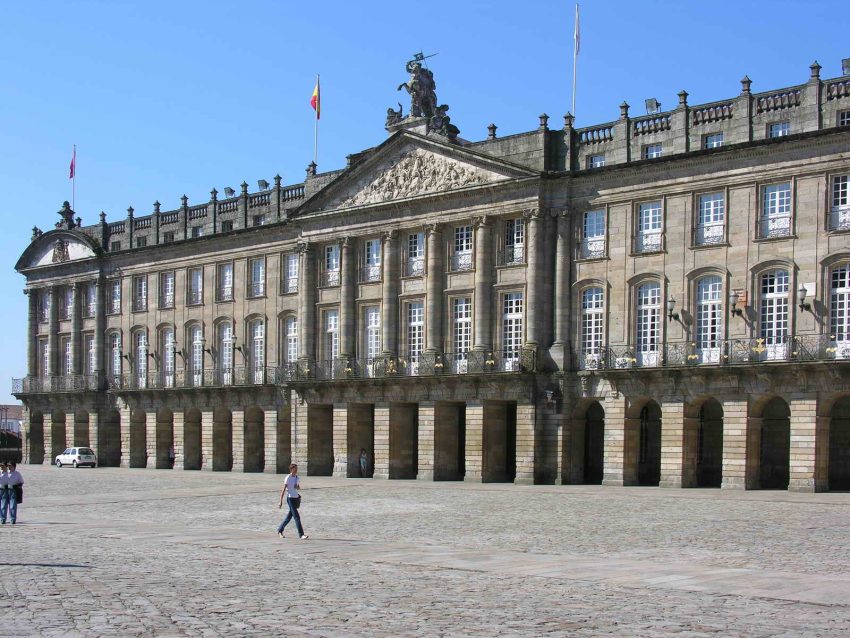
The Palacio de Rajoy is the square’s civil counterweight to the cathedral—an 18th-century neoclassical façade built to project order, governance, and institutional stability. Its very presence tells you Santiago was never only a religious destination; it was also an administrative city where power had to be visible and close to the sacred centre.
Architecturally, it’s about symmetry and restraint: long horizontals, disciplined repetition, and a monumental scale that holds its own opposite the cathedral’s dramatic sculptural language. It reads as “official” at a glance, and that contrast is precisely the point—faith and government in direct conversation across the plaza.
On foot, the best way to appreciate it is from multiple angles around Obradoiro, watching how the façade anchors the square and how the arcades and openings create depth. Even if you don’t go inside, it rewards slow looking: statues, proportions, and the way the building frames the daily life of the plaza.
Location: Praza do Obradoiro, 15705 Santiago de Compostela, A Coruña, Spain | Hours: 24 Hours. | Price: Free. | Website

3. Cathedral Museum
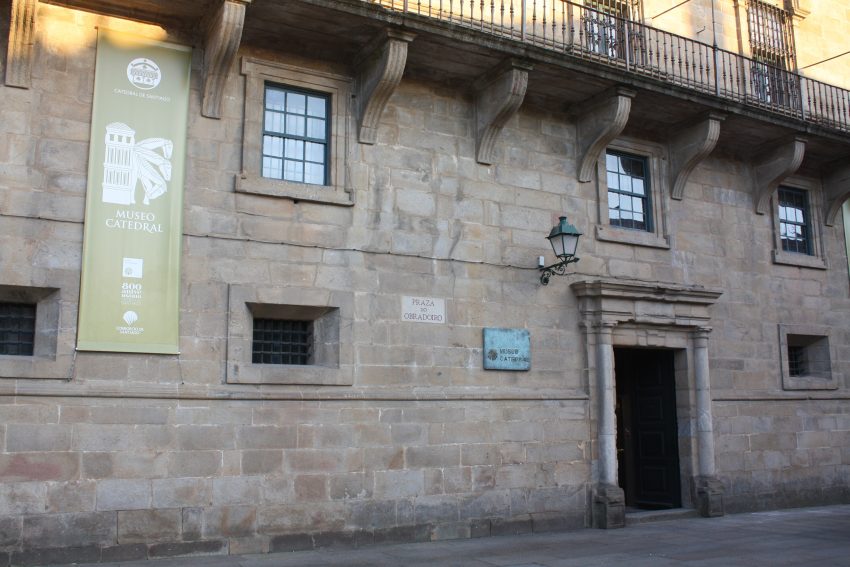
The Cathedral Museum is the best way to understand the Santiago de Compostela Cathedral beyond the main basilica visit. Rather than being a single gallery, it spreads through key parts of the cathedral complex (notably the cloister and adjacent historic rooms), so it feels like you are walking through the building’s “backstage” spaces—where the cathedral’s administration, ceremony, and art were actually organised over centuries.
Historically, the collection exists because Santiago accumulated objects that were functional as well as prestigious: liturgical pieces, treasures, relic-related art, architectural fragments, and documents linked to the long life of a major pilgrimage shrine. The museum in its modern form was established in the 20th century, but what you are seeing is effectively the curated material record of a medieval and early modern institution that was wealthy, influential, and continuously active.
What to see depends on what you value most. If you want the strongest “cathedral craft” experience, prioritise the cloister circuit and the permanent collection rooms for sculpture, goldsmith work, and the institutional feel of the complex. Many visitors also pair the museum with a timed visit to the Portico of Glory or rooftops when available, because those give you either the cathedral’s most important sculptural threshold or a structural, city-facing perspective that you simply can’t get from the nave alone.
Location: Praza do Obradoiro, S/N, 15705 Santiago de Compostela, A Coruña, Spain | Hours: Monday – Sunday: 10:00–20:00. | Price: Check official website. | Website
4. Santiago de Compostela Cathedral
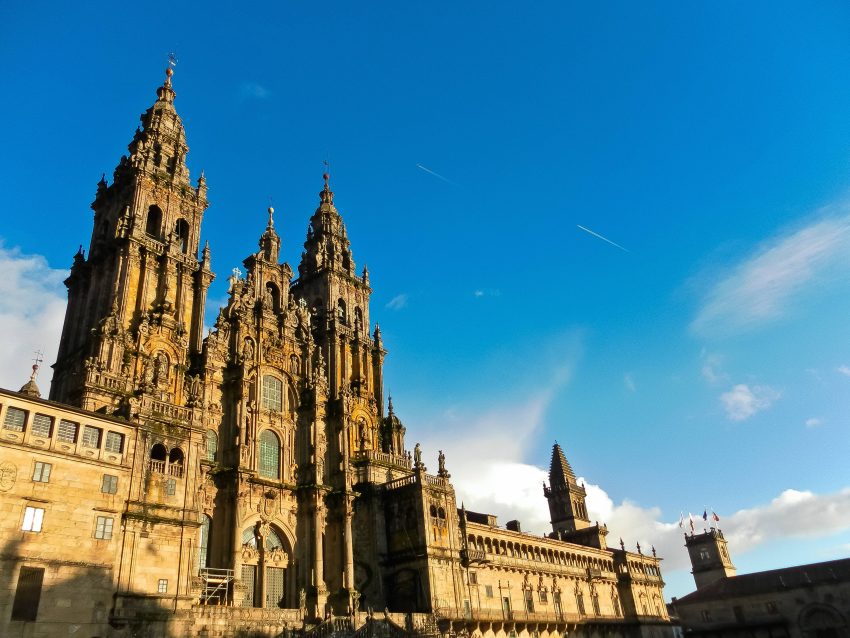
The cathedral is the endpoint of the Camino de Santiago and one of Europe’s most significant pilgrimage churches, layered with Romanesque foundations, later Gothic additions, and a Baroque exterior that redefined how the building meets the city. Over centuries, it absorbed wealth, artistry, and engineering ambition, becoming both a spiritual magnet and a statement of authority.
Inside, the experience shifts from grand to intimate: long perspectives through the nave, chapels that feel like small worlds, and a sense of architectural time passing as you move between styles. The building’s scale is designed to impress, but its power is in the rhythm of spaces—quiet corners, glowing altars, and sudden bursts of ornament.
What to see depends on your pace: focus on the main interior and key artistic elements, then add a climb or viewpoint if you want the city’s rooftops and the cathedral’s mass from above. If you time your visit well, you’ll also see how the cathedral “performs,” with ceremonies and pilgrim rituals that remain central to the building’s living identity.
Location: Praza do Obradoiro, s/n, 15704 Santiago de Compostela, A Coruña, Spain | Hours: Daily: 07:00–21:00. | Price: Cathedral entry: Free. Cathedral Museum (complete visit): Adults: €23; Reduced: €19; Free categories: €0. | Website
5. Hostal dos Reis Catolicos
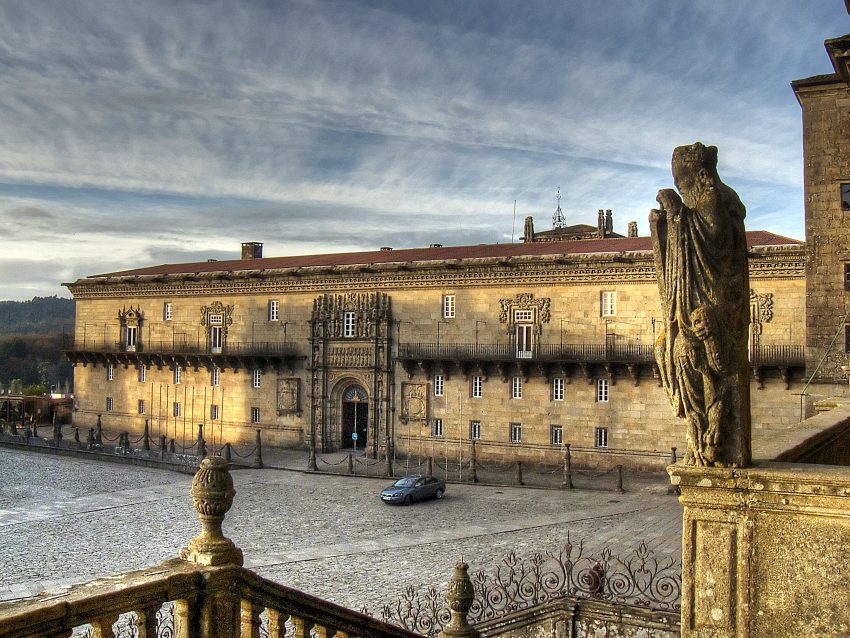
Originally founded at the turn of the 16th century as a royal hospital for pilgrims, Hostal dos Reis Católicos embodies the social infrastructure that made long-distance pilgrimage possible. It’s a reminder that Santiago’s story is also about care: feeding, sheltering, and supporting strangers arriving on foot from across Europe.
The building’s historic character is expressed through grand stonework, courtyard spaces, and an institutional scale that still feels purposeful even as the site functions today as a high-profile historic hotel. The layers of use—charity, prestige, and continuity—are part of what makes it compelling as an object on the square, not just a place to sleep.
On a walking tour, look for the architectural storytelling: cloister-like courtyards, carved portals, and the way the building addresses the plaza with a confident, almost palatial face. Even a brief look in the public areas can give you a tangible sense of how the Camino shaped Santiago’s architecture and civic priorities.
Location: Praza do Obradoiro, 1, 15705 Santiago de Compostela, A Coruña, Spain | Hours: Daily: 07:00–01:00. | Price: Free. | Website
6. Praza de Cervantes
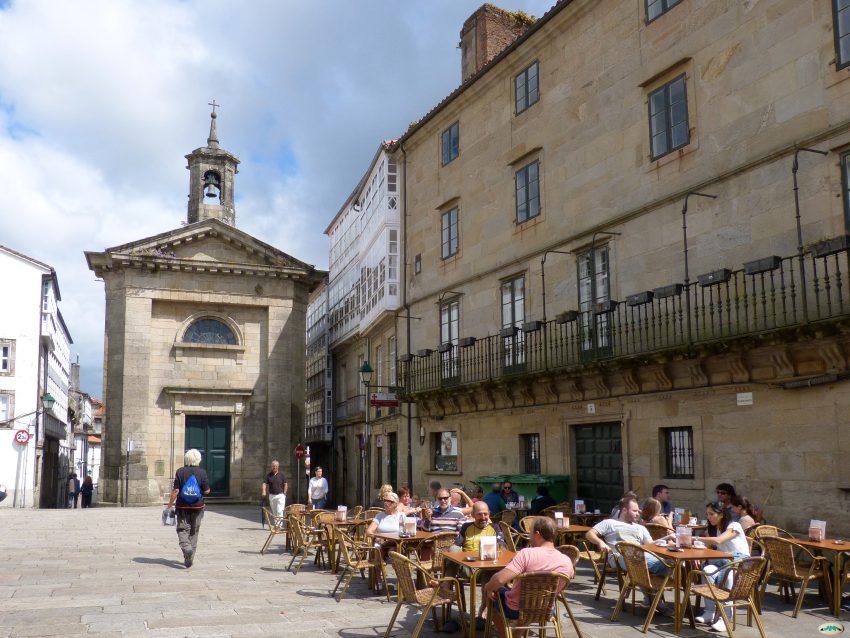
Praza de Cervantes is one of the old town’s most characterful small squares, historically positioned in the medieval street network where commerce and movement naturally concentrated. Its irregular shape and enclosing façades are typical of the pre-planned city: streets converge, space opens just enough for gathering, then tightens again into lanes.
The square’s identity is rooted in civic life rather than monumental spectacle. For centuries, places like this carried the everyday “public room” functions of the city—meeting points, informal trade, and neighbourhood rhythms—while also absorbing the footprint of successive rebuilds that gave Santiago its layered stone streetscapes.
What to see is the square as an ensemble: old façades, the play of light and shadow, and the way each street arrival frames a slightly different view. It’s also a good point to orient yourself, because it sits naturally between the cathedral zone and several older commercial routes.
Location: Praza de Cervantes, Santiago de Compostela, 15704 Santiago de Compostela, A Coruña, Spain | Hours: 24 Hours. | Price: Free.
7. Monasterio de San Martin Pinario
San Martín Pinario is one of the great monastic complexes of Santiago, historically tied to the Benedictine presence that helped shape the city’s intellectual and religious life. Its scale reflects the wealth and influence monastic institutions once held—able to build not just churches, but entire urban precincts.
The monastery’s architecture is designed to impress through mass and craft: broad façades, interior volumes that feel measured and ceremonial, and details that reward attention when you move closer. It’s a quieter counterpoint to the cathedral—less about the climactic finish of pilgrimage, more about the disciplined, daily machinery of faith and learning.
When visiting, prioritise the sense of space: cloister areas if accessible, major interior rooms, and the relationship between the complex and the streets around it. On foot, it’s also a good “reset” stop—less crowded than the cathedral zone, with a calmer atmosphere that helps you absorb the city’s monastic dimension.
Location: Pl. de San Martiño, S/N, 15704 Santiago de Compostela, La Coruña, Spain | Hours: Monday – Friday: 10:00–14:00 & 16:00–18:00. Saturday: 10:00–14:00. Closed on Sunday. | Price: Adults: €5; Free with the ticket of the Cathedral Museum or the Cathedral guided tours. | Website
8. Porta do Camiño
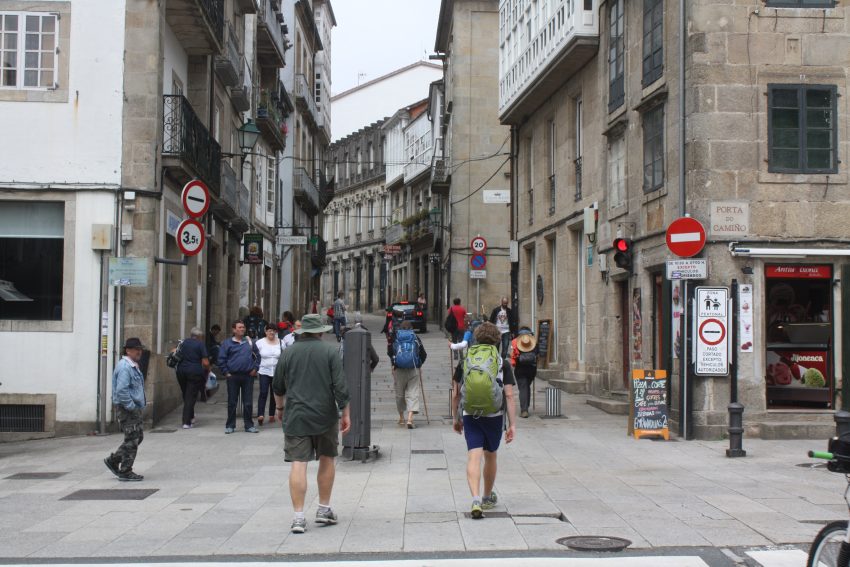
Porta do Camiño marks one of the historic entry zones into Santiago associated with the Camino’s final approach, where route geography turns into city fabric. Even when little of a “gate” survives in the dramatic sense, the place-name preserves the logic of medieval Santiago: controlled thresholds, route management, and the sense of arrival that pilgrims have felt for centuries.
Historically, city gates were about security, taxation, and process—who enters, when, and by what route—and in Santiago they were also about ceremony because pilgrims arrived in identifiable flows. This makes the area important even if the experience today is more urban street than fortified portal.
On a walking tour, treat it as a narrative waypoint: imagine the approach line, look for any surviving fragments or street geometry that suggests an older boundary, and notice how the surrounding streets transition from more ordinary neighbourhood life into the dense, stone-built core. It’s also a good place to reflect on the Camino as infrastructure, not just a story.
Location: Rúa das Casas Reais, 42-44, 15704 Santiago de Compostela, A Coruña, Spain | Hours: Monday – Saturday: 08:00–00:00. Sunday: 08:00–16:00. | Price: Free.
9. Parque de San Domingos de Bonaval
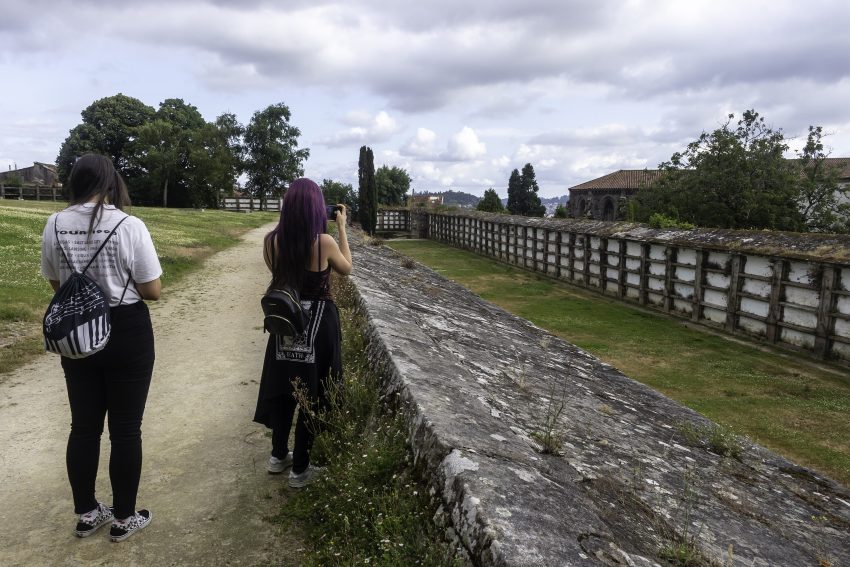
This park sits on the edge of Santiago’s old town beside the former Dominican complex of San Domingos de Bonaval, turning what was once monastic ground into one of the city’s most atmospheric green spaces. Its character is shaped by the site’s layered past: religious precinct, burial ground, and later a civic landscape that reframes history as a place to walk and pause.
The design is intentionally quiet and textural rather than showy, using stone, terraces, and planting to echo the forms of the surrounding architecture. It’s the kind of place where the “history” is not delivered by plaques but by how the terrain and walls guide you, and by the way the convent and adjacent cultural buildings keep appearing through gaps in the greenery.
On a walking tour, come here for a reset away from the cathedral squares. The best “what to see” is the sequence of viewpoints and the dialogue between garden and old stone—move slowly, look back toward the rooftops, and let it function as a calm connector to nearby museums and the Bonaval complex.
Location: Costa de San Domingos, 3, 15703 Santiago de Compostela, La Coruña, Spain | Hours: (Summer) April 1 – September 30; Daily: 08:00–23:00. (Winter) October 1 – March 31; Daily: 08:00–20:00. | Price: Free. | Website
10. Museum of the Galician People
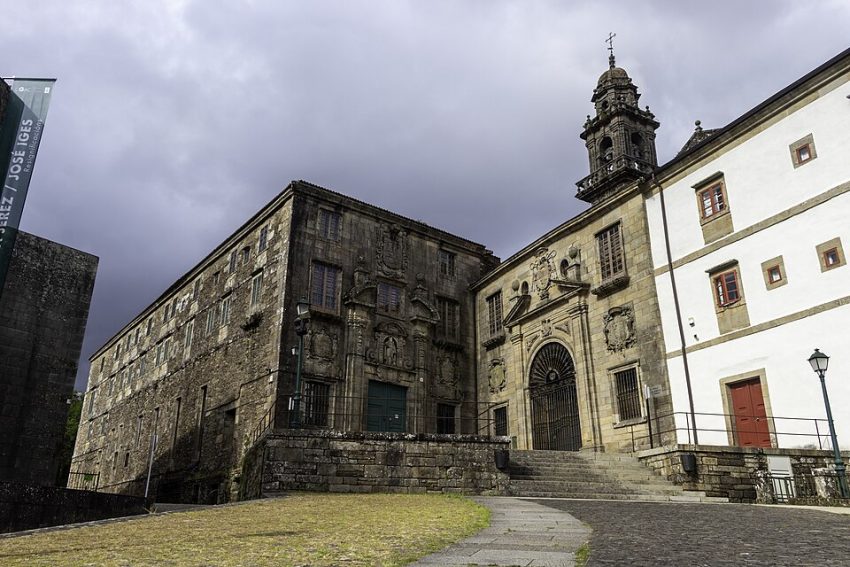
Museum of the Galician People is one of the most rewarding cultural stops in Santiago because it explains “Galicia” as lived experience, not just as geography. The museum was created in the late 1970s and installed in the former Dominican convent of San Domingos de Bonaval, a historic complex whose own fabric (cloister, church spaces, stone corridors) becomes part of the visit. It’s essentially an ethnography-and-history museum: how people worked, travelled, built, celebrated, dressed, and made a living across centuries.
The setting is a major attraction in itself. The convent contains an extraordinary triple helical (triple-ramp) staircase associated with architect Domingo de Andrade, which is often the single most memorable “object” people leave talking about because it’s both sculptural and ingenious. Even before you focus on displays, the building gives you a strong sense of institutional Santiago beyond the cathedral precinct: monastic architecture repurposed into a modern cultural narrative.
For what to see, think in thematic clusters rather than “masterpieces.” The galleries typically cover traditional rural and maritime life (fishing, farming tools, crafts), popular culture and costume, and everyday domestic spaces, with additional sections that can include archaeology and sacred art. A good walk-through rhythm is: staircase and upper levels first for the architectural highlight and overview, then descend through the cultural rooms more slowly, finishing in the quieter parts of the complex when you want a breather from the old-town crowds.
Location: Costa de San Domingos, 3, 15703 Santiago de Compostela, La Coruña, Spain | Hours: Tuesday – Saturday: 11:00–18:00. Sunday: 11:00–14:00. Closed on Monday. | Price: Standard admission: €5; Discounted: €2; Under 18: free; Free entry on Sundays. | Website
11. Mercado de Abastos
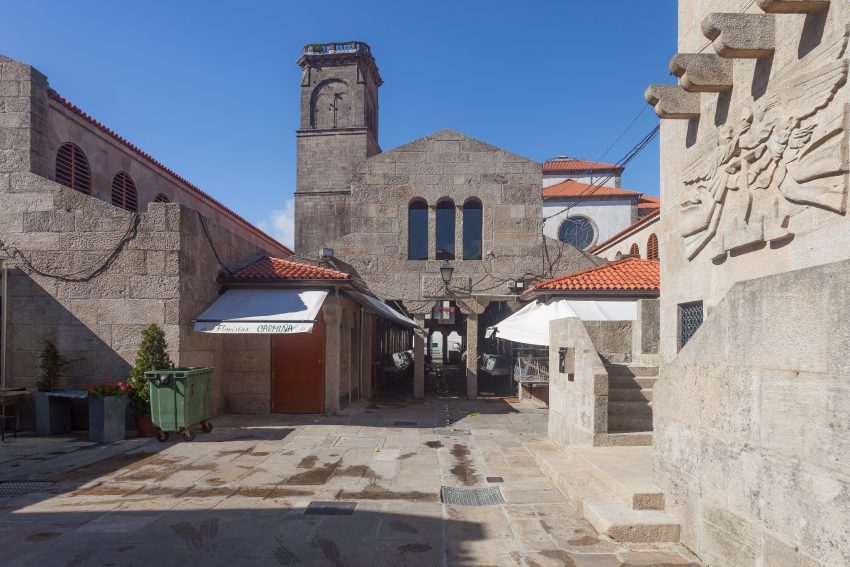
Mercado de Abastos is Santiago’s everyday engine room, the place where local food culture remains most visible and least staged. While the cathedral squares speak to pilgrimage and institutions, the market speaks to continuity—what the city eats, sells, and values day to day.
Historically, markets like this are where rural and coastal supply lines meet the city, and you can still feel that geography in the stalls: seafood, seasonal produce, cheeses, and regional specialities. The rhythm is practical and local, which makes it a useful counterbalance to the monumental core.
What to see is less about a single highlight and more about the overall scene: the displays, the bargaining, and the sense of Galicia’s pantry in one place. Visit in the morning for peak energy, then drift outward into nearby streets for a natural transition back into sightseeing.
Location: Rúa das Ameas, s/n, 15704 Santiago de Compostela, A Coruña, Spain | Hours: Monday – Saturday: 07:00–14:00. Sunday: Closed. | Price: Free. | Website
12. Rúa Nova
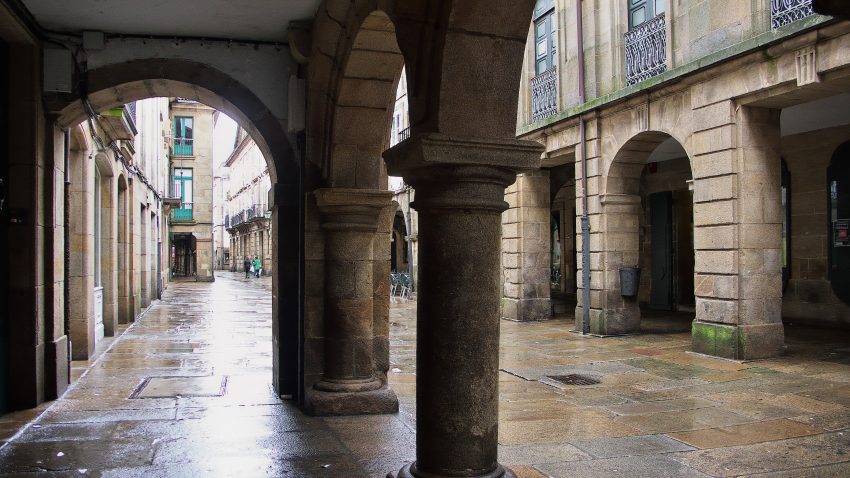
Rúa Nova is part of the historic street network that channels foot traffic through the old town, linking major religious and civic zones with commercial life. Streets like this grew important because Santiago needed to move pilgrims, clergy, students, and merchants efficiently through a compact medieval plan.
The “history” here is in the fabric rather than a single monument: stone façades, arcaded stretches, narrow perspectives that open suddenly onto plazas, and the subtle hierarchy of buildings as you approach the cathedral precinct. It’s the kind of street where the city’s age is felt through proportions and wear.
On a walking tour, take it slowly and look laterally as well as forward: doorways, window details, small shops, and how the street bends to reveal new sightlines. It’s also a good place to watch Santiago’s mix of visitor life and local routine in the same few metres.
Location: Rúa Nova, Santiago de Compostela, A Coruña, Spain | Hours: 24 Hours. | Price: Free.
13. Monasterio de San Paio de Antealtares
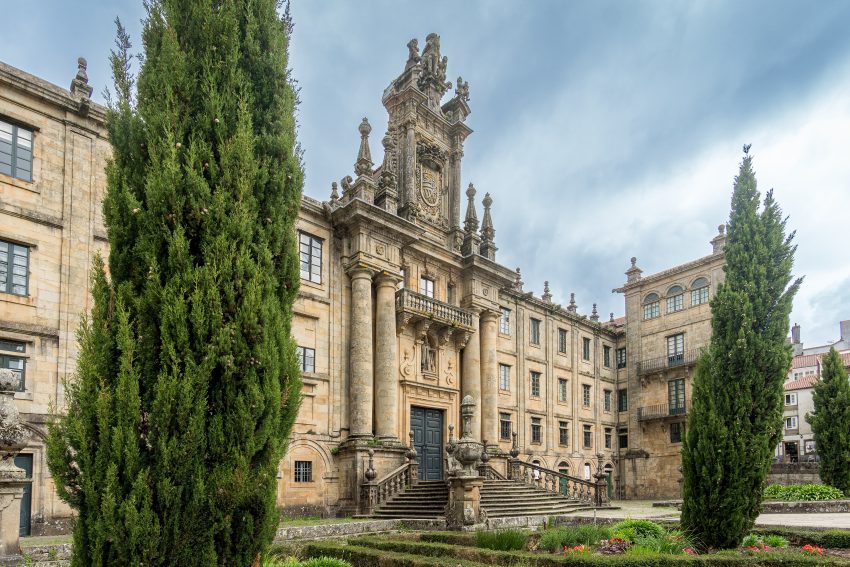
San Paio de Antealtares is a Benedictine monastery with roots tied to the earliest institutional life around Santiago’s shrine. Its long history reflects how the city developed not only as a pilgrim destination but also as a place of enclosed religious communities that supported liturgy, learning, and the steady administrative work behind major sacred sites.
Architecturally, it’s a quieter landmark than the cathedral, but that’s part of its appeal: it represents continuity rather than climax. Monastic buildings in Santiago often feel like they were built to endure—solid stone, measured proportions, and a sense of separation from the street even when they sit right on it.
On a walking tour, appreciate it as a “close-range” stop: façades, entrances, and the way the building mass shapes the street edge near the cathedral precinct. If access is limited, it still rewards attention as a piece of the city’s monastic layer, which is easy to miss if you only focus on the big squares.
Location: Rúa de San Paio de Antealtares, 23, 15704 Santiago de Compostela, A Coruña, Spain | Hours: Monday – Saturday: 10:30–13:30 & 16:00–19:00. Sunday: 16:00–19:00. | Price: Check official website.
14. Plaza de la Quintana
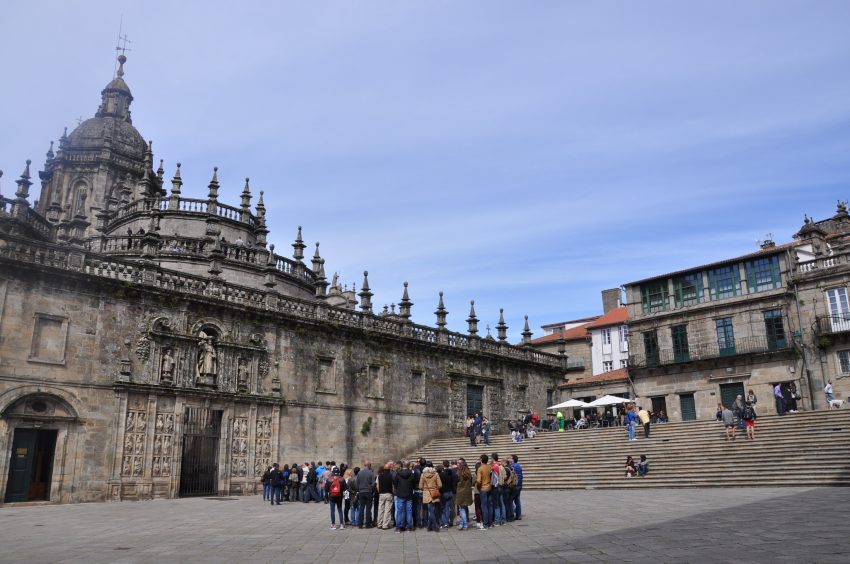
Plaza de la Quintana sits close to the cathedral and feels like one of Santiago’s most theatrical urban rooms—stone, shadows, and a sense of enclosure that heightens the drama of the surrounding architecture. Historically, these adjacent squares functioned as working and ceremonial spaces supporting the cathedral’s life.
Its character changes with the hour: in bright light it’s crisp and monumental; at night it becomes moody, with the cathedral’s stonework reading almost like a stage backdrop. The square’s simplicity is part of its power—broad paving and clean lines that direct your attention to façades, towers, and doorways.
On a walking tour, use it as a pause point to look back at the cathedral from a different perspective than Obradoiro. It’s also a strong place for photos because the open space gives you distance, and the surrounding walls help frame the scene without visual clutter.
Location: Praza da Quintana de Mortos, Santiago de Compostela, 15704 Santiago de Compostela, A Coruña, Spain | Hours: 24 Hours. | Price: Free.
15. Plaza de las Platerias

Plaza de las Platerías has long been associated with craft and trade, reflecting the traditional presence of silversmiths near the cathedral—an economy shaped by pilgrimage, devotion, and souvenir culture long before modern tourism. It’s a compact square, but dense with meaning because it sits at the seam between sacred space and commercial life.
Architecturally, it offers another “reading” of the cathedral complex, with façades and adjoining elements that feel different from the grand frontal presentation of Obradoiro. The square’s scale makes details easier to study: stonework, decorative programs, and the way entrances and side elevations function in practice.
What to see here is the relationship between art, devotion, and trade: the cathedral’s side presence, the sense of craft tradition implied by the name, and the steady circulation of people. It’s an ideal stop when you want cathedral proximity without the biggest crowds.
Location: 15704 Santiago de Compostela, A Coruña, Spain | Hours: 24 Hours. | Price: Free.
16. Museum of Pilgrimages and Santiago
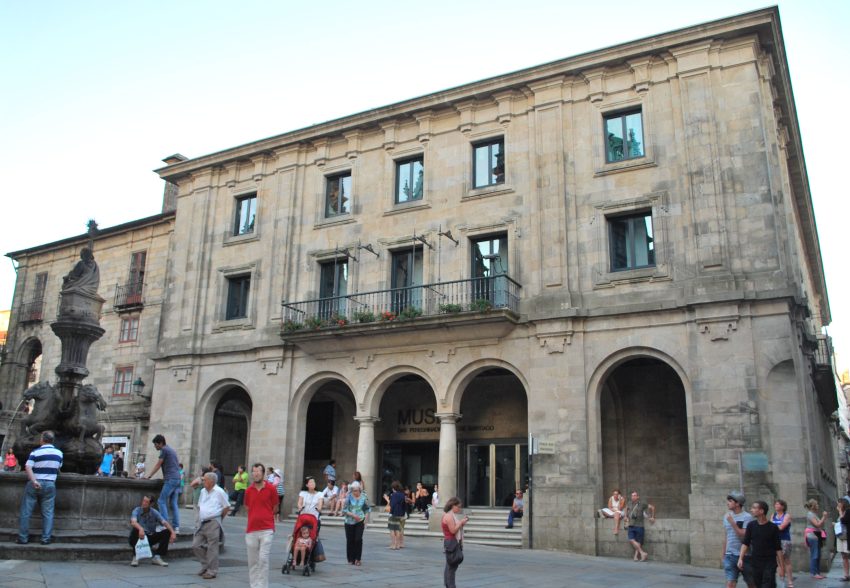
This museum is one of the best places to understand why Santiago became a continental destination, explaining the routes, symbols, and social practices that turned travel into ritual. It puts context around what you’re seeing outdoors—why squares matter, why hospitals existed, why certain streets became ceremonial.
Historically, pilgrimage is as much about infrastructure and storytelling as it is about belief, and the museum helps make that visible. Exhibits typically connect objects, maps, and iconography to the lived experience of movement: badges, routes, and the evolving idea of what it meant to “arrive.”
On a walking tour, it’s a strategic stop: go in when weather turns or when you want a deeper narrative break between cathedral-focused sights. It also improves everything you see afterward, because you start recognising motifs and understanding Santiago as a system, not just a set of monuments.
Location: Praza das Praterías, 2, 15704 Santiago de Compostela, A Coruña, Spain | Hours: Tuesday – Friday: 09:30–20:30. Saturday: 11:00–19:30. Sunday: 10:15–14:45. Closed on Monday. | Price: Free. | Website
17. Casa do Cabildo
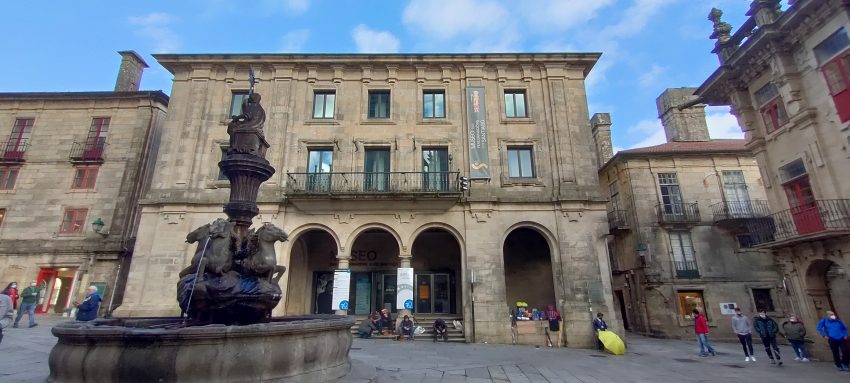
Casa do Cabildo is a small but striking Baroque presence, a reminder that Santiago’s grandeur is often delivered through carefully composed façades rather than sheer size. Buildings like this helped shape the ceremonial texture of the old town, reinforcing key spaces with architectural punctuation.
Its charm comes from proportion and ornament: the façade acts almost like an architectural “mask,” enriching the square it faces and creating a sense of urban theatre. In a city dominated by heavyweight institutions, this kind of refined civic architecture adds nuance and variety.
What to see is mainly exterior: stand back to take in the composition, then move closer for details in carving and rhythm. It’s a quick stop, but a useful one for understanding how Santiago uses architecture to choreograph streets and plazas.
Location: Rúa de San Pedro, 18, 15703 Santiago de Compostela, A Coruña, Spain | Hours: Tuesday – Saturday: 10:00–14:00 & 16:00–20:00. Sunday: 11:00–14:00. Closed on Monday. | Price: Free.
18. Rua do Vilar
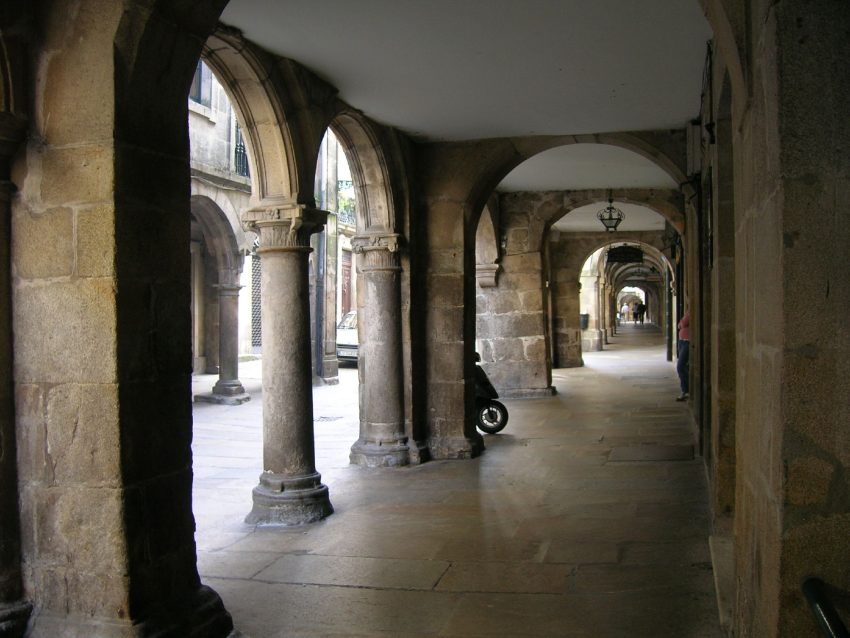
Rua do Vilar is one of the old town’s defining pedestrian routes, known for its arcades and the way it shelters movement through Santiago’s often wet climate. Streets like this are part of the city’s functional genius: they make walking comfortable while keeping commerce and social life close to the pilgrimage core.
The history is embedded in the continuity of use—these are streets designed to carry people, and for centuries they’ve done exactly that, day after day. You can read older Santiago in the stone, the narrowness, and the way buildings present themselves to walkers rather than vehicles.
On a walking tour, it’s an ideal connector with built-in stops: cafés, shopfronts, and small architectural moments under the arcades. Keep your eyes up as well as ahead; the upper levels and arcade details often reveal more than the ground-level bustle.
Location: Rúa do Vilar, Santiago de Compostela, A Coruña, Spain | Hours: 24 Hours. | Price: Free.
19. Parque La Alameda
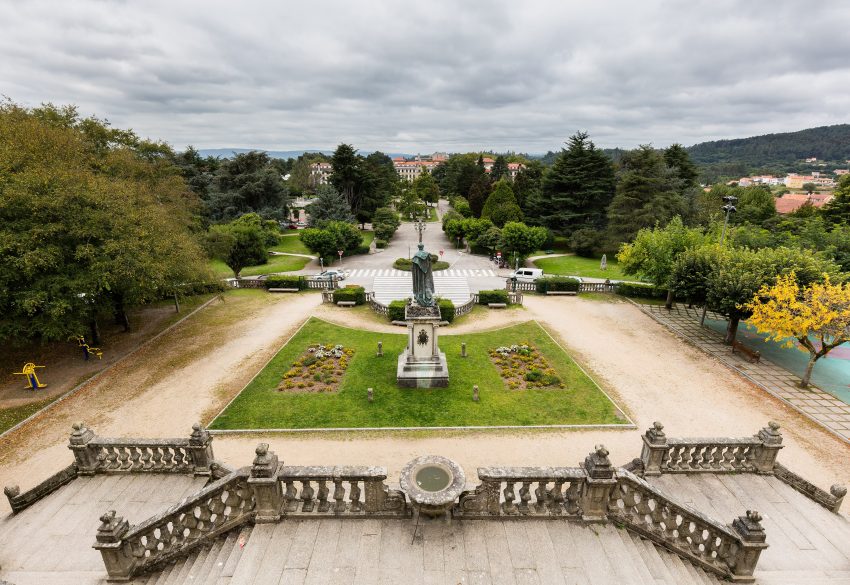
Parque de la Alameda is Santiago’s classic promenade space, offering a shift from stone-dense old-town streets to greenery, open paths, and viewpoints. Historically, urban parks like this served as civic living rooms—places to stroll, meet, and look back at the city’s skyline.
It’s also where Santiago’s beauty becomes legible as a whole: from here, the cathedral and old town read as a composed mass rather than a sequence of tight lanes. That change in scale is valuable on foot because it resets your sense of orientation and gives you a breather between monument clusters.
What to see is the view and the atmosphere: find a vantage point, watch the light change, and take in the contrast between planted calm and the old town’s intensity. It’s a strong late-tour stop, especially if you want to end with a panoramic memory rather than another close-up façade.
Location: Rúa do Campiño da Ferradura, 15705 Santiago de Compostela, A Coruña, Spain | Hours: 24 Hours. | Price: Free. | Website
20. Palace of Fonseca

The Palace of Fonseca is one of the key university-era landmarks in Santiago, associated with the city’s long identity as a place of study and clerical training. Buildings like this signal a shift in the city’s power map: not only church and pilgrimage, but also scholarship, administration, and the institutional life that grows around a major cathedral city.
Its historical significance is tied to higher education and the civic prestige that comes with it. The “palace” label can be misleading if you expect a royal residence; what matters is that it represents a major foundation and the architectural ambition that accompanied Santiago’s academic consolidation.
What to see is the building’s formal presence and its relationship to nearby university spaces: look for compositional symmetry, stone detailing, and any accessible courtyard or interior passage that gives you a feel for how these institutions were built to project stability and seriousness. It’s an excellent contrast stop after the more theatrical cathedral squares.
Location: Rúa do Franco, s/n, 15704 Santiago de Compostela, A Coruña, Spain | Hours: Check official website. | Price: Free.

Moira & Andy
Hey! We're Moira & Andy. From hiking the Camino to trips around Europe in Bert our campervan — we've been traveling together since retirement in 2020!
This website uses affiliate links which earn a small commission at no additional cost to you.
Walking Tour Summary
Distance: 3 km
Sites: 20
Walking Tour Map