Self-Guided Walking Tour of Picasso's Barcelona (2026)
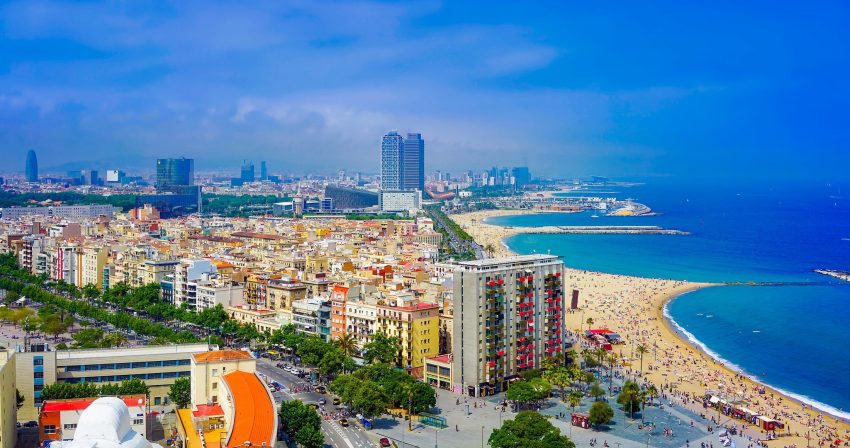
This website uses affiliate links which earn a small commission at no additional cost to you.
Pablo Picasso, the great Spanish painter and sculptor, became an artist in Barcelona, spending key years here from his mid-teens into early adulthood (roughly 14 to 23). Born in Málaga, he later spoke of Barcelona with a particular kind of nostalgia, as if the city had become his emotional “home”: the streets, studios, cafés, and friendships that formed his earliest artistic instincts. In 1936 he wrote, “Barcelona the beautiful and wise, where I left so many things hanging on the altar of happiness…”
This self-guided walk follows that Barcelona on foot, linking the places that trained his eye and propelled his ambition. Along the way you'll visit the Museu Picasso and several public-facing settings-cafés and galleries-where his work first entered the city's creative conversation. It also places you inside the modernista atmosphere of the period, when Barcelona ran on late nights, argument, experimentation, and appetite for the new.
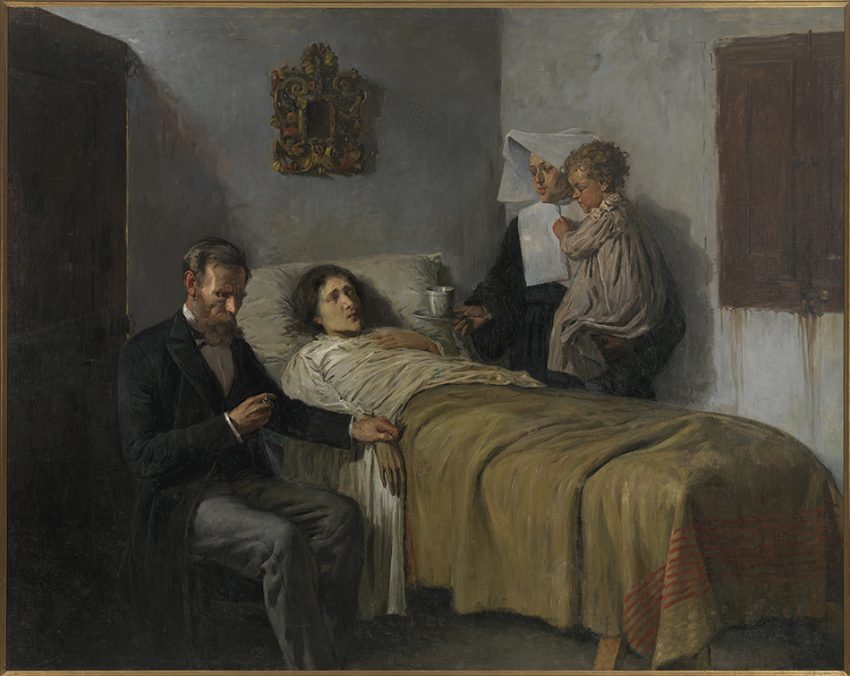
You'll start at Llotja de Barcelona, where discipline and draftsmanship were drilled into him, then move through streets and viewpoints that reveal the old city as both subject and stage. As his circle widened-art, nightlife, provocation-stops like Els Quatre Gats and Carrer d'Avinyó become part of the storyline, especially if you're thinking ahead to Les Demoiselles d'Avignon. The route then leads you into El Born to finish at the museum on Carrer de Montcada, set inside Gothic palaces and grounded by early works such as The First Communion (1896) and Science and Charity (1897), alongside pieces Picasso continued to support throughout his life.
How to Get to Picasso’s Barcelona
By Air: Barcelona-El Prat Airport (BCN) is the main gateway for most visitors and has frequent flights from across Europe and beyond. The simplest way into the city is the Aerobús to Plaça de Catalunya (a central hub for onward metro and walking routes), or the metro (L9S) to connect with other lines toward the centre; taxis are straightforward too if you're arriving late or carrying luggage. From the centre, Picasso sites cluster around the Gothic Quarter and El Born, which are easy to reach on foot or by a short metro ride. For the best deals and a seamless booking experience, check out these flights to Barcelona on Booking.com.
By Train: Barcelona Sants is the city's primary station for high-speed AVE services and long-distance routes, while França Station is historically linked to the old city and can be convenient depending on your arrival. From Sants, use the metro (typically Line 3 or Line 5 connections) or a quick taxi to reach the Gothic Quarter/El Born area where much of a Picasso-focused walk sits; from França, you're already close enough to walk into the historic streets around Carrer de Montcada. If you're arriving from elsewhere in Catalonia, Rodalies (commuter rail) can also drop you into well-connected central stations for an easy start. Train schedules and bookings can be found on Omio.
By Car: Driving into central Barcelona is rarely the most efficient option because of congestion, limited street parking, and traffic restrictions in parts of the inner city. If you do come by car, aim to park once in a paid garage near the edge of the old town (around Eixample, Port Vell, or the perimeter of El Born) and complete the route on foot, which suits the narrow medieval lanes and stop-and-start sightseeing pace. If you're staying outside the centre, consider leaving the car at your accommodation and using the metro or buses for the final leg to avoid parking stress. If you are looking to rent a car in Spain I recommend having a look at Discover Cars, first, as they compare prices and review multiple car rental agencies for you.
By Bus: Long-distance coaches typically arrive at Barcelona Nord station, which is well placed for a Picasso-themed route because it's a short hop from El Born and the Gothic Quarter. From Nord you can walk in around 20-30 minutes depending on your pace, or take a quick taxi/metro connection to begin near Llotja de Barcelona, Carrer Avinyó, or the Picasso Museum area. This option is often good value, especially if you're arriving from nearby cities in Spain or southern France.
Picasso and Barcelona
Barcelona 1895-1897: Training, discipline, and the first serious work
Picasso's Barcelona story is easiest to understand if you start with Llotja de Mar. In the late 1890s this was where formal instruction and ambition intersected: drawing from life, mastering proportion, learning how to build a figure so it could carry weight and emotion. The “young genius” narrative is real, but Barcelona is where that talent was hardened into a working method. The self-portraits and academic studies from this period matter because they explain how he later felt free to distort bodies and space without losing structure.
From there, the city itself became a kind of second classroom. Moving between the waterfront and the old streets around what is now a very walkable central core, he absorbed the theatre of everyday Barcelona: workers, priests, families, illness, poverty, and the public rituals of a Catholic city modernising quickly. That tension-civic pride beside social hardship-helps explain why works from these years aren't just technical exercises. Even when the compositions are academic, the impulse is observational, as if he's already testing how painting can describe the real world rather than idealise it.
This foundation is also why later “breakthroughs” weren't a sudden invention from nowhere. Barcelona gave him repetition and endurance: the habit of returning to the same subject, redrawing it, and pushing it until it becomes a personal language. In that sense, this first chapter of the walk isn't about a picturesque stop; it's about the engine room of his craft.
Barcelona 1898-1901: Cafés, bohemia, and the modernista network
If Llotja de Mar represents discipline, 4 Gats represents permission. This café-bar was a hub of the modernista scene where artists, writers, and provocateurs argued about what art should do next. For Picasso, it was a place to sharpen identity as much as technique: to show work, meet collaborators, and learn how reputation is built through conversation, rivalry, and visibility. The city’s café culture trained him to work fast, to respond, and to treat drawing as something immediate-almost journalistic-rather than precious.
Sala Parés also matters in this phase, because it represents the public-facing side of an artist's life: exhibiting, being judged, and learning how tastes and markets shape what gets seen. Barcelona didn't only offer a bohemian myth; it offered institutions-galleries, critics, patrons-that forced Picasso to negotiate between private experimentation and public reception. That push-pull becomes a pattern across his career: he absorbs the world, then pivots against it.
When you place 4 Gats and Sala Parés on the same mental map, you get a clearer picture of Barcelona’s impact. One space fed the radical, social, restless Picasso; the other taught him how art circulates and how to position himself inside (and against) established culture.
Barcelona 1901-1907: Streets of memory, desire, and the darker edge of the city
As Picasso began spending more time in Paris, Barcelona remained the place he returned to in person and in imagination. Streets like Carrer d'Avinyó became part of his inner archive: the charged, nocturnal side of the city that mixed sex, danger, humour, and a kind of modern urban anonymity. Even if his most famous rupture paintings were executed elsewhere, Barcelona supplied emotional material and street-level realism-how bodies move, how people look at each other, how desire and commerce mingle in cramped lanes.
Other addresses on a Picasso walk-Carrer Nou de la Rambla, Carrer del Comerç, Carrer de la Plata-work less as “he did X here” trivia and more as a way to feel the texture that shaped him. This is the city of workshops and back streets, of quick encounters and long nights, of the old Gothic fabric pressing up against modern life. It helps explain why Picasso’s empathy can be so blunt and why his depictions of people can feel both intimate and unsparing: he learned early to look directly, without smoothing the edges.
Barcelona’s “modernity” wasn’t only architecture and optimism; it was also the visibility of outsiders and the precarious. That undertone sits behind the mood of his early blue-toned work and behind the way he could switch from tenderness to cruelty in a single line.
Barcelona after Picasso: Where the city keeps the story alive
The Museu Picasso is the clearest anchor for the Barcelona narrative because it doesn't just commemorate him; it shows formation. The early works make the point that Barcelona is not a footnote to a Parisian career-it is the formative laboratory. The museum's setting in connected medieval palaces also suits the story: Picasso's work is permanently in dialogue with tradition, and Barcelona is a city where the medieval and the modern coexist in the same walk.
Around the museum, the city has also built a public language of tribute and reinterpretation. Homenatge a Picasso is part of that: Barcelona marking its claim on the artist and reflecting him back through urban art rather than academic framing. And institutions like the Col·legi d'Arquitectes de Catalunya help contextualise the broader cultural environment Picasso grew up in-an ecosystem where design, architecture, and visual culture were taken seriously as expressions of a modern Catalan identity.
Seen this way, “Picasso's Barcelona” isn't just a list of stops. It's a story of training (Llotja de Mar), social ignition (4 Gats), public exposure (Sala Parés), street-level intensity (Carrer d'Avinyó and the old city lanes), and long-term memory (Museu Picasso and the city's tributes). The walk works because it mirrors how he developed: disciplined beginnings, then a rapid widening into the city's full complexity.
Where to Stay in Barcelona
To make the most of visiting Barcelona and this walking tour then you consider staying overnight at the centre. For the strongest “Picasso connection,” base yourself around Port Vell and the southern edge of the Gothic Quarter, where you're a short walk from Carrer de la Plata, Llotja de Mar, and the lanes that lead into the old city. The most on-theme option is Serras Barcelona, set in the building associated with Picasso’s early studio on Carrer de la Plata. Nearby, Hotel Neri and Wittmore Hotel keep you deep in the Gothic Quarter atmosphere for evenings after the walk, while Sonder DO Plaça Reial is a practical choice if you want quick access to La Rambla and easy taxi/metro connections without leaving the old town.
If you want to be closest to the Picasso Museum and the “workshops and bohemian streets” feel of El Born and Sant Pere, look around Via Laietana and the streets just behind it. Grand Hotel Central and H10 Montcada both put you within a very easy walk of Carrer de Montcada and the museum, and they’re well placed for reaching 4 Gats and Sala Parés on foot. For a more design-forward luxury base beside the market and steps from the same core area, The Barcelona EDITION works well, while Aparthotel Allada is ideal if you prefer extra space and a quieter street right in the same historic fabric.
For a slightly broader “city-centre” base that still keeps you walkable to Picasso's old Barcelona (and especially good if you'll mix the tour with nightlife, dining, and other sights), consider the Ramblas/Raval edge and the Avinyó side of the Gothic Quarter. Hotel 1898 is a reliable central hub for moving between the old town streets and the rest of the city, and Catalonia Avinyó puts you directly on Avinyó for that specific Picasso-linked ambience. If you like a boutique stay with a more local neighbourhood feel (and you’re happy to transit a short distance back into Ciutat Vella each morning), Hotel Brummell is well placed for the Nou de la Rambla/Paral·lel side of the story, and Casa Bonay is a stylish Eixample base that’s still a straightforward ride or brisk walk into the Born and Gothic Quarter.
Your Self-Guided Walking Tour of Picasso’s Barcelona
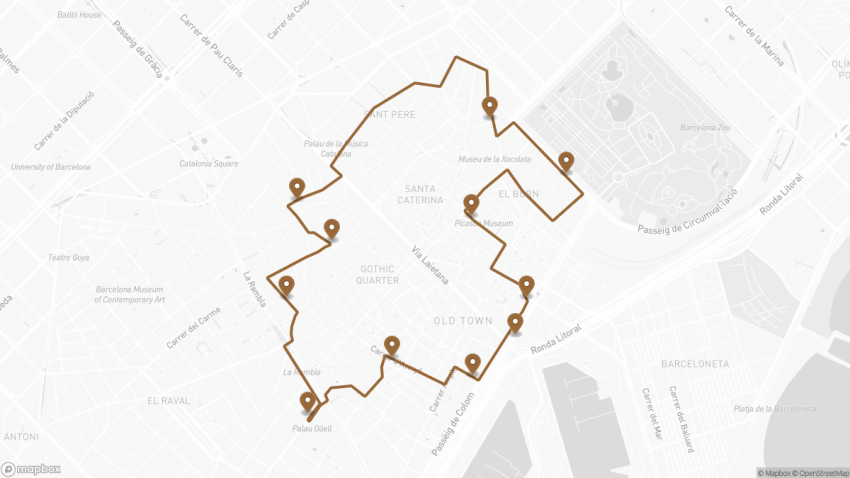
Discover Picasso's Barcelona on foot, with our walking tour map guiding you between each stop as you explore the streets, cafés, and corners that shaped his early years. Because it's a self-guided walking tour, you can set your own pace-skip any stops that don't interest you, linger longer where you want, and weave in coffee breaks whenever the mood strikes.
1. Llotja de Mar
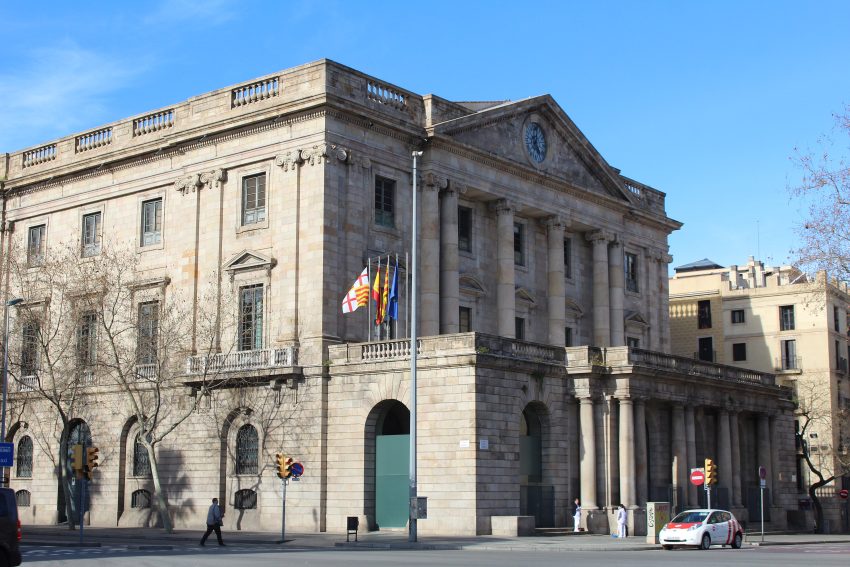
The Llotja de Mar is one of Barcelona’s great civic-commercial monuments: a medieval merchants’ exchange later refashioned with grand neoclassical ambitions. It sits in that seam between the old port economy and the city’s 19th-century cultural confidence, when Barcelona wanted its institutions to look as serious as its trade. Even if you only see it from outside, it reads as a statement building: ordered, formal, and designed to project stability.
What to see is the architecture itself and the atmosphere around it. Look for the restrained classical symmetry, the heavy stonework, and the way the building relates to the nearby waterfront routes that would have been busy with cargo, passengers, and gossip. It’s also a useful “mental anchor” for understanding how close art education and commerce were in Barcelona—patrons, newspapers, cafés, shipping money, and studios all fed the same streets.
The Picasso link is fundamental: the Llotja name is inseparable from the city’s art training because of the Escola de la Llotja, where Picasso studied as a teenager after arriving in Barcelona. This is where he sharpened academic drawing habits—precision, anatomy, disciplined line—that he could later bend, break, and reinvent. Seeing the Llotja in person helps you picture the young Picasso absorbing a rigorous, traditional foundation before he sprinted into modernity.
Location: Edifici Llotja, Pg. d'Isabel II, 1, Pis 2, Ciutat Vella, 08003 Barcelona, Spain | Hours: Monday – Friday: 08:00–18:00. Closed on Saturday, Sunday. | Price: Check official website. | Website

2. Picasso First Home in Barcelona
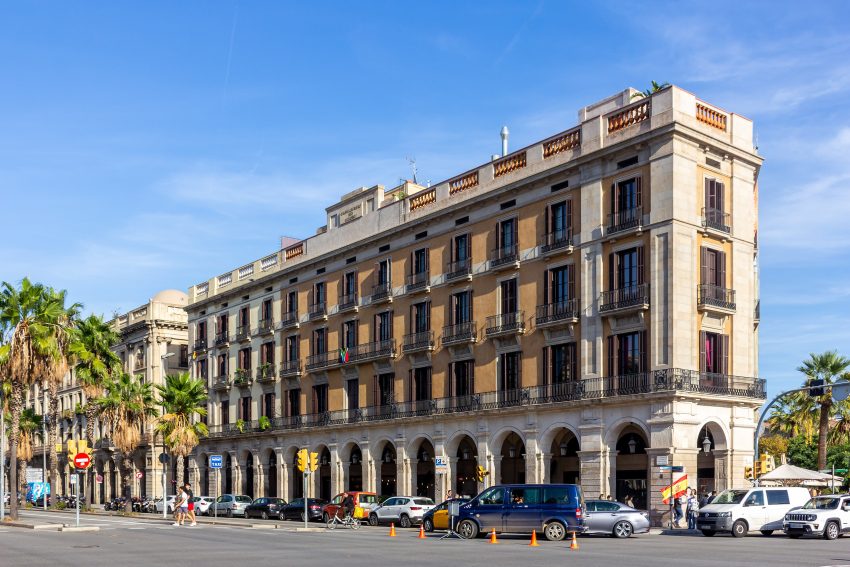
This address sits on a prestigious edge of the old city, facing the port-facing promenades where Barcelona’s modern life arrived early: sailors, new cafés, imported ideas, and the bustle of a city looking outward. Buildings here tend to feel more “open” and worldly than the tighter medieval lanes, and that contrast matters when you’re tracing Picasso’s early Barcelona—he moved between cramped workshop streets and big-city boulevards.
What to see is the façade rhythm and the wider streetscape: arcades, ironwork, and the sense of a threshold between the Gothic Quarter’s density and the port’s airy openness. Take a moment to notice how quickly the mood changes as you pivot your view: behind you is the old city; ahead is a Barcelona tied to travel, trade, and a bigger horizon.
This spot is often connected with Picasso’s first Barcelona chapter because it’s associated with where he and his family lived soon after they arrived in the city. Whether you’re here for that specific biographical detail or simply the vibe, it’s a good place to think about Picasso as a newcomer—talented, ambitious, and suddenly in a metropolis that offered training, rivals, patrons, and constant visual stimulus.
Location: Pg. d'Isabel II, 4, Ciutat Vella, 08003 Barcelona, Spain | Hours: 24 Hours. | Price: Free.
3. Picasso's First Workshop
Carrer de la Plata is the kind of street where Barcelona’s old craft economy still feels close to the surface: narrow, practical, and historically linked to workshops and small-scale trade. Streets like this shaped daily life for artists—materials were bought nearby, frames were ordered locally, and studios were often just a short walk from suppliers and cafés. Even today, the lane’s proportions give you a sense of how compressed and intimate the city once felt.
What to see here is less a single monument and more the urban texture: the tight perspective, the older façades, and the way doorways and shopfronts sit close to the pedestrian flow. These are the lanes where you imagine a young artist moving quickly—sketchbook brain switched on—collecting faces, gestures, and street scenes.
In Picasso terms, this address is commonly included on Barcelona Picasso walks because it’s tied to his early studio geography in the old centre. The broader point is reliable even if you treat the exact doorway as symbolic: Picasso’s Barcelona wasn’t lived from afar. It was street-level, noisy, and made of small rooms and fast walks—conditions that suit an artist who worked like a sponge.
Location: Carrer de la Plata, 4, Ciutat Vella, 08002 Barcelona, Spain | Hours: 24 Hours. | Price: Free.
4. Carrer d'Avinyó, 44
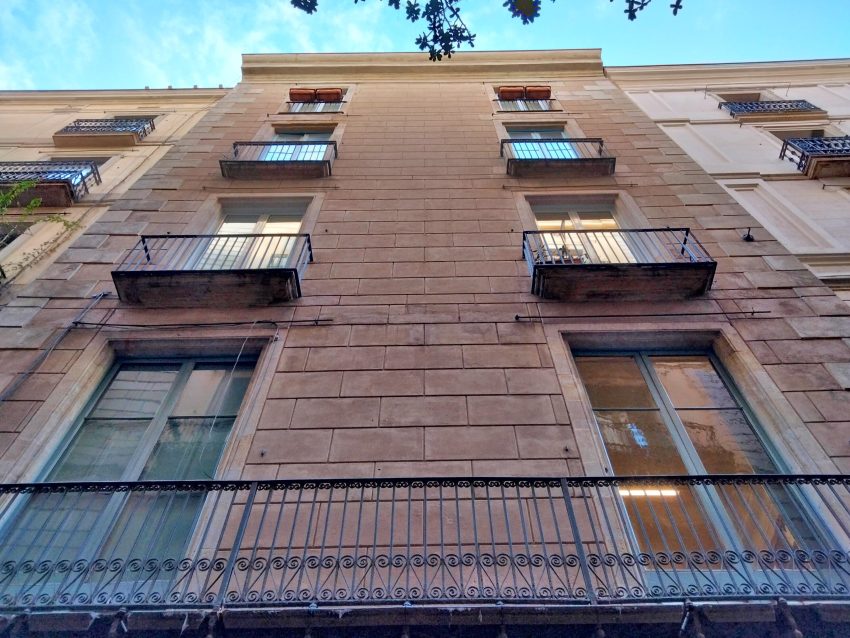
Carrer d’Avinyó, 44 is a pinpoint stop in the Gothic Quarter that’s included on many Picasso-themed walks because it anchors one of the most persistent legends of his Barcelona years. The street itself is narrow and medieval in scale, with close façades, shifting light, and the kind of intimate atmosphere that makes the old city feel theatrical. You’re not here for a formal “attraction entrance” so much as for the setting—standing in a lane that still evokes the layered, sometimes shadowy social world artists moved through in the early 1900s.
This address is most often linked to the brothel said to have operated at number 44, frequently cited in popular accounts as a real-world reference point behind Les Demoiselles d’Avignon. Whether or not you treat the story as literal, it’s useful on a walking tour because it helps explain the kind of environments Picasso was willing to look at directly: private spaces, marginal lives, and subjects outside respectable society. That willingness feeds into the bigger shift the painting represents—an early step toward breaking bodies into sharper, more confrontational forms that would soon connect to cubism’s logic of analysis, deconstruction, and reassembly.
What to do here is simple but effective: pause, look up and down the street, and imagine how different this lane would have felt before modern shopfronts and restaurant signs. Notice how quickly the Gothic Quarter changes from busy corridors to quiet side streets within a block—exactly the kind of urban patchwork that made Barcelona such a charged place for a young artist. Then continue your Picasso walking tour toward El Born and the Museu Picasso, where you can reconnect the street-level myth and atmosphere with the actual works and early development the museum documents.
Location: Carrer d'Avinyó, 44, Ciutat Vella, 08002 Barcelona, Spain | Hours: Monday – Thursday: 09:00–14:00 & 15:00–18:00. Friday: 09:00–14:00. Closed on Saturday, Sunday. | Price: Free. | Website
5. Carrer Nou de la Rambla, 10
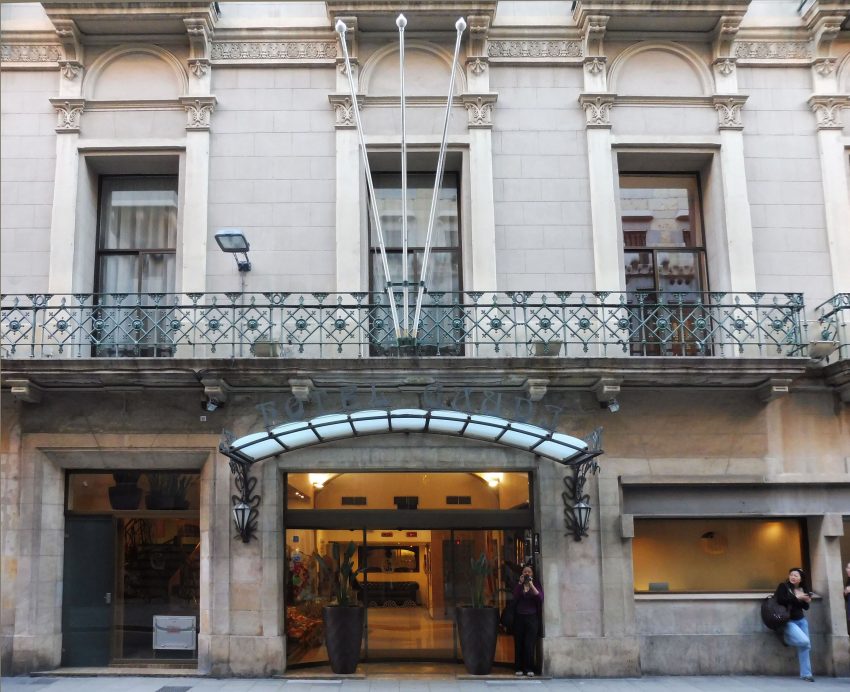
Carrer Nou de la Rambla, 10 in El Raval, a low-key address that matters because it anchors Picasso’s Barcelona to a specific doorway and a specific moment. For Picasso fans, this isn’t about a museum interior or a photogenic facade—it’s about standing where his everyday working life unfolded, in a neighbourhood that still feels close to the city’s raw, lived-in rhythms. It sits roughly opposite Palau Güell, which makes it easy to pair art-history context with one of Gaudí’s most important early buildings.
This address is linked to the studio Picasso rented in 1902 with painter Josep Rocarol and sculptor Àngel Fernández de Soto, during the unsettled years when he was constantly moving between Barcelona and Paris (1901–1904). His work wasn’t selling well, and he was living cheaply, shifting through modest rooms and hard-up apartments while his palette narrowed into the blue tones that define his Blue Period. The studio was on the top of the building, and from here he painted roof terraces and developed the moodier, more introspective themes that would soon make his early modern work unmistakable.
Just next door was the Eden Concert, a variety hall that Picasso and his friends frequented, and it fed directly into what he made—he drew quick sketches of performers, including cuplé singers from the era’s risqué theatre-song scene. Seen in the context of this walk, Carrer Nou de la Rambla, 10 is a “real-life coordinate” in Picasso’s story: a point where the city’s nightlife, rooftop views, and the harsher realities he was absorbing—poverty, addiction, and the human body—meet the creative pressure cooker of his early 20s.
Location: Carrer Nou de la Rambla, 10, Barcelona, Spain | Hours: 24 Hours, House viewed from street. | Price: Free | Website
6. Sala Parés
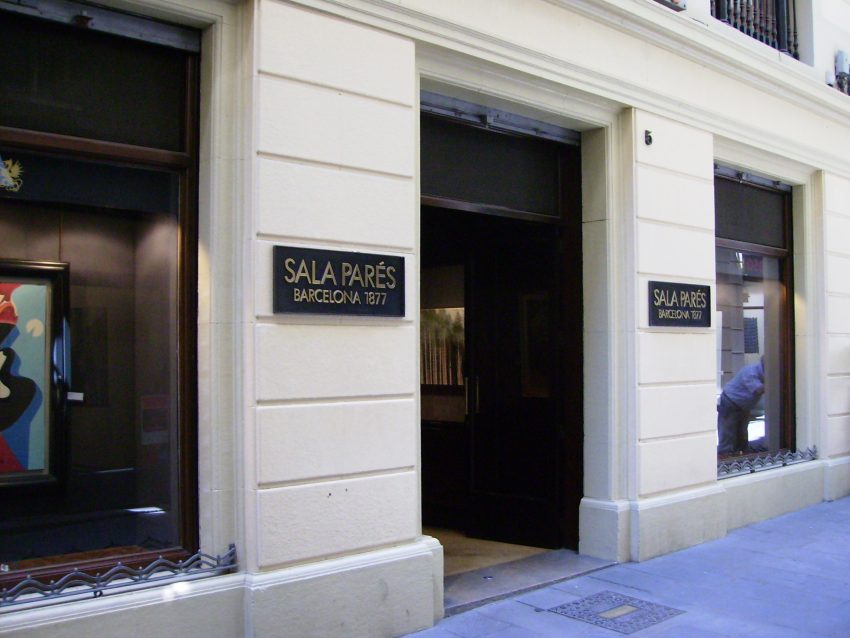
Sala Parés is one of the classic names in Barcelona’s art scene, a gallery that helped formalise what it meant to “make it” locally. In the late 19th and early 20th century, galleries like this were gatekeepers and amplifiers: they shaped taste, connected buyers with painters, and anchored the idea of Barcelona as a serious cultural capital. It’s the kind of institution that reminds you modernism wasn’t only rebellion—it also needed rooms with good lighting and people willing to buy.
What to see is the gallery atmosphere and its continuity. Even if exhibitions change, spaces like this tend to preserve a certain tempo: quiet rooms, concentrated looking, and a sense of tradition. It’s worth noticing how a commercial gallery’s calm can contrast with the noisy café culture nearby—two different ecosystems that artists navigated constantly.
Picasso’s link to Sala Parés is the story of a young artist moving from student promise to public visibility, in a city where showing work mattered. Barcelona’s gallery circuit was part of his early professional formation: not just learning to draw, but learning how art entered society—through critics, collectors, and conversation. Visiting Sala Parés helps you picture Picasso not only as a genius-in-isolation, but as an ambitious young professional in a competitive scene.
Location: Carrer de Petritxol, 5, Ciutat Vella, 08002 Barcelona, Spain | Hours: Tuesday – Saturday: 11:00–14:00 & 16:00–20:00. Sunday – Monday: Closed. | Price: Free. | Website
7. Col·legi d'Arquitectes de Catalunya
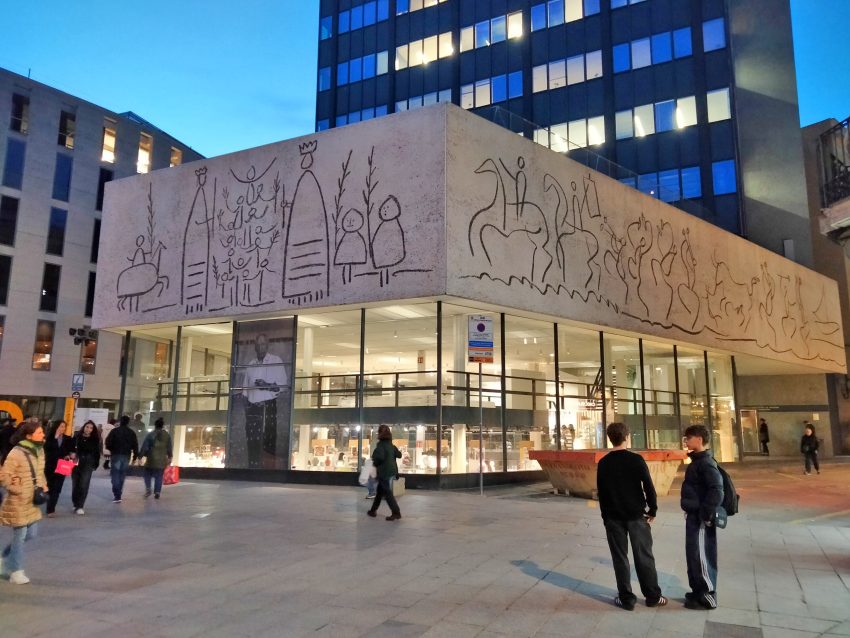
This building matters because it’s where Barcelona literally wears Picasso on its skin. The modern façade near the cathedral became a stage for a celebrated frieze design associated with Picasso—an emblem of how the city later claimed him as part of its cultural identity, even as his career and fame became global. It’s a great stop for understanding “Picasso in Barcelona” as a story that continues well beyond his youth.
What to see is the façade artwork and how it behaves in daylight. Step back far enough to read the sequence, then move closer to appreciate the line quality and the way the imagery plays against the building’s modern geometry. It’s also a good place to watch how passers-by react—some glance, some stop, some photograph—because public art always reveals a city’s habits.
The Picasso connection is explicit: it’s a public-facing homage that embeds his visual language into the everyday life of the Gothic Quarter. Conceptually, it’s also a reminder that Picasso’s Barcelona is not only preserved in museums and archives; it’s also curated in the streets as civic memory. This stop marks the point where biography becomes mythology—and where Barcelona presents Picasso as part of its own brand of modern creativity.
Location: Plaça Nova, 5, Ciutat Vella, 08002 Barcelona, Spain | Hours: Monday – Friday: 10:00–19:00. Saturday: 10:00–14:00. Closed on Sunday. | Price: Free. | Website
8. 4 Gats
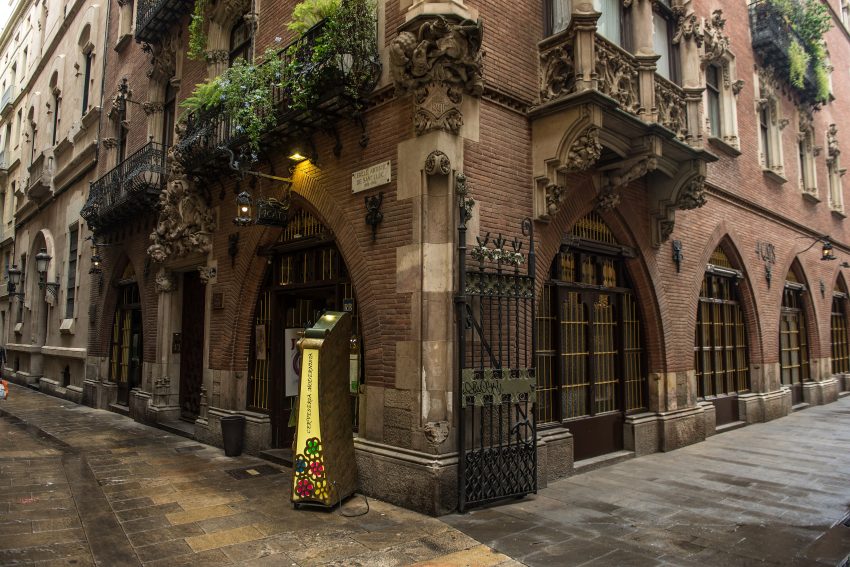
4 Gats is the quintessential Barcelona modernist hangout: a café-cabaret where art, satire, music, and gossip mixed into something combustible. It was modeled on Parisian precedents but became distinctly local—an incubator for the city’s avant-garde, where young artists found peers, patrons, and the confidence to be loud about being new. In Picasso terms, it’s one of the most vivid portals into his formative social world.
What to see is the interior mood: the posters, the decorative details, and the sense of performance that still clings to the place. Even when it’s busy, look for the cues that this wasn’t just a café; it was a cultural engine. Imagine the tables as temporary studios—sketches made fast, ideas exchanged faster.
Picasso’s relationship to 4 Gats is unusually concrete: he wasn’t merely a visitor, he was part of the scene, and the venue is closely tied to his early exhibitions and social network in Barcelona. This is where the “young Picasso” feels most human—eager, sociable, and sharpening his identity through other artists’ reactions. If you want one stop that explains how Barcelona helped accelerate his development, 4 Gats is it.
Location: Carrer de Montsió, 3, Ciutat Vella, 08002 Barcelona, Spain | Hours: Tuesday – Saturday: 11:00–24:00. Sunday: 12:00–17:00. Closed on Monday. | Price: Free to enter; food and drinks are paid. | Website
9. Carrer del Comerç, 28
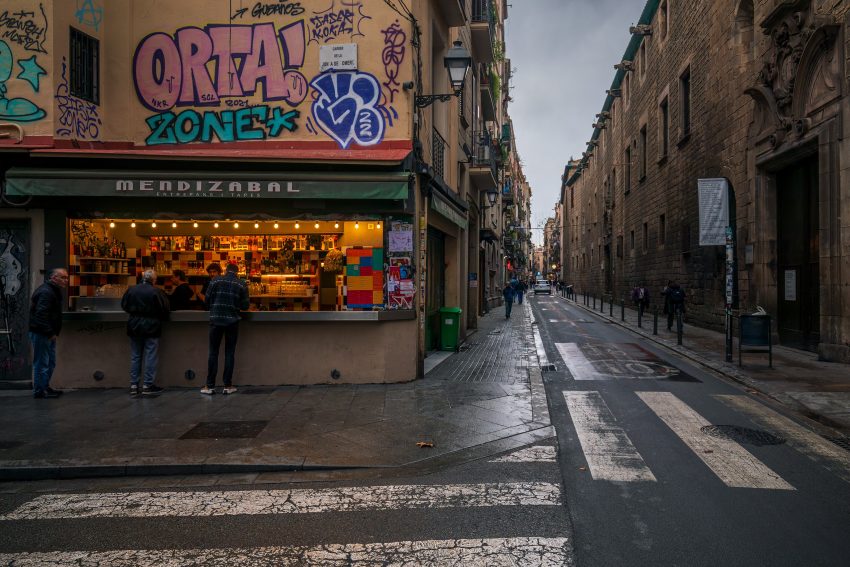
Carrer del Comerç sits in El Born, a district that historically blended trade, workshops, and a street-level intensity that’s ideal for art-watching. The street’s name is honest: commerce was the lifeblood here, and the built environment reflects that practical, mixed-use past. It’s also close to the cluster of medieval palaces and lanes that now hold some of the city’s key cultural institutions.
What to see is the neighbourhood character: stone façades, older doorways, and the way the street connects you into a walkable web of small squares and narrow passages. El Born is best appreciated at human pace—stop often, look upward, and notice how the district’s medieval scale creates a constant sense of discovery.
Its Picasso relevance is strongest in context: this is part of the compact zone where Picasso’s Barcelona story is easiest to trace on foot, because the museum and many “Picasso-era” streets sit close together. Even when a specific doorway isn’t famous, being here helps you feel how tight the geography is—how quickly Picasso could move from studio life to cafés to galleries to the urban theatre of the streets.
Location: Carrer del Comerç, 28, Ciutat Vella, 08003 Barcelona, Spain | Hours: 24 Hours to view from street. | Price: Free. | Website
10. Homenatge a Picasso

This tribute is a later Barcelona speaking back to Picasso—a public artwork that acknowledges his importance while placing him within the city’s own post-war and post-dictatorship cultural narrative. It’s not about the young painter in cafés; it’s about the legacy figure and what his name means to Barcelona as a modern European city. In other words, it marks the shift from “Picasso lived here” to “Picasso belongs to our story.”
What to see is the work’s form, its material presence, and its setting in public space. Walk around it and pay attention to silhouette and texture; tributes like this often reward slow looking more than quick photos. Also notice how the surrounding park/city environment changes your perception—public art isn’t isolated, it’s constantly edited by weather, light, and people.
The Picasso tie is interpretive as much as biographical. This stop asks you to think about how artists become symbols, and how cities choose the version of an artist they want to celebrate. It’s a useful counterpoint to the intimate, early-life stops: here, Picasso is not the ambitious youth but the cultural monument—admired, contested, and permanently woven into Barcelona’s identity.
Location: Passeig de Picasso, 13, Ciutat Vella, 08003 Barcelona, Spain | Hours: 24 Hours. | Price: Free.
11. Museu Picasso
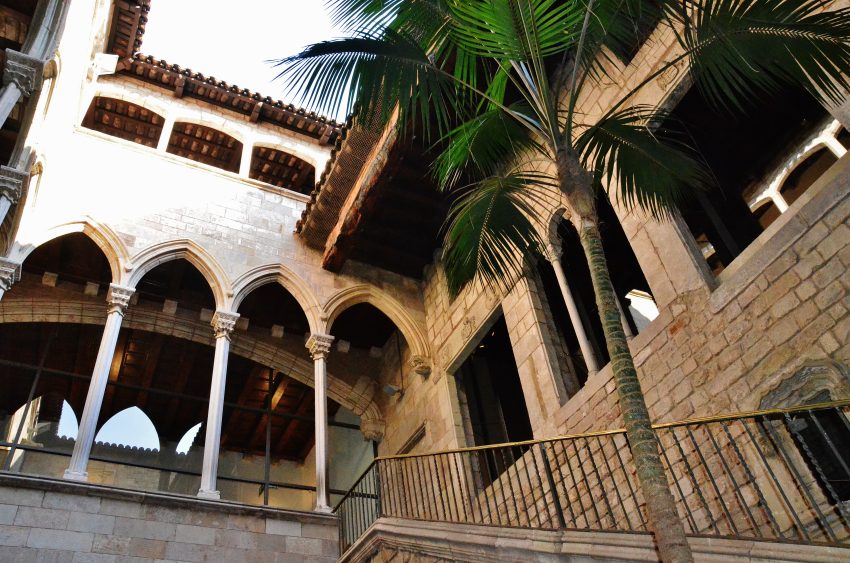
The Museu Picasso is the key institution for understanding how Barcelona shaped Picasso before the world did. The collection is especially strong in early work, which matters because it lets you see the “before” with unusual clarity: academic training, youthful experiments, and the rapid evolution that happens when talent meets a city full of stimuli. The setting—historic palaces in the old city—adds another layer: the modern artist framed by medieval Barcelona.
What to see is the developmental story the galleries can tell. Focus on the shift in drawing confidence, the changing treatment of faces, and the way he moves from observation to invention. If you’re trying to connect street stops to the art, this is where you’ll find the visual proof: the teenager who mastered discipline, the young man who started to compress and distort, and the emerging modernist who refused to stay inside one style.
Its relationship to Picasso is obvious, but the deeper point is why the museum is in Barcelona at all. This city isn’t a footnote in his biography; it’s the furnace where he became Picasso. A good way to end your walk is to enter with the streets still fresh in your head—then you’ll recognise how the neighbourhood’s textures, the social energy of places like 4 Gats, and the training linked to Llotja echo through the work on the walls.
Location: Carrer de Montcada, 15-23, Ciutat Vella, 08003 Barcelona, Spain | Hours: (Winter) September 29 – March 29; Tuesday – Sunday: 10:00–19:00. Closed on Monday. (Summer) March 31 – September 27; Tuesday, Wednesday & Sunday: 09:00–20:00. Thursday – Saturday: 09:00–21:00. Closed on Monday. | Price: General admission: €13 (€12 online). Reduced: €7. Under 18: free. | Website

Moira & Andy
Hey! We're Moira & Andy. From hiking the Camino to trips around Europe in Bert our campervan — we've been traveling together since retirement in 2020!
This website uses affiliate links which earn a small commission at no additional cost to you.
Walking Tour Summary
Distance: 5 km
Sites: 11
Walking Tour Map