Self-Guided Walking Tour of Mahon (2026)

This website uses affiliate links which earn a small commission at no additional cost to you.
Mahon is a city of elevation changes and big maritime scale, built around one of the Mediterranean's most dramatic natural harbours. Walking here is all about shifting perspectives: narrow streets opening into airy viewpoints, historic buildings perched above the waterline, and stairways that drop you toward the port before pulling you back up again. A self-guided tour lets you pace those climbs and pauses so the city feels rewarding rather than rushed.
This route is designed to stitch together Mahon's central lanes, its civic landmarks, and the classic lookouts that make the harbour such a defining feature. You'll pass through the parts of town where daily life is most visible-cafés, small shops, and local squares-then dip toward the waterfront to understand the city's relationship with the sea. It's a practical way to cover many of the best things to see in Mahon without doubling back too much.
Give yourself a relaxed half-day if you want to keep it mostly in the upper town, or a longer day if you plan to include the port area and stop for food by the water. Mid-morning works well for open attractions and a lively atmosphere, while late afternoon is ideal for harbour light and cooler temperatures in warmer months. Wear comfortable shoes for steps and inclines, and treat the tour as a framework-Mahon is at its best when you allow time for spontaneous viewpoints and short detours.
How to Get to Mahon
By Air: The fastest way to reach Mahon is by flying into Menorca Airport (Aeropuerto de Menorca / Maó, MAH), which sits roughly 10 minutes by road from central Mahon. From the airport you can take a taxi directly into town, or use public buses that run between the airport and Mahon (and often onward to other parts of the island) depending on season and timetable. If you're arriving with luggage and want the simplest transfer, taxis are straightforward; if you're travelling light, the bus is usually the cheapest option. For the best deals and a seamless booking experience, check out these flights to Mahon on Booking.com.
By Car: If you're already on Menorca, Mahon is easy to reach by car via the island's main roads, with straightforward drive times from most resorts and beaches. If you're bringing a vehicle from mainland Spain, you'll need to take a car ferry to Menorca (typically arriving at Ciutadella), then drive across the island to Mahon; it's a manageable cross-island trip on well-maintained roads. Parking in the centre can be tight, so it's often easier to use public car parks on the edge of the old town and walk in. If you are looking to rent a car in Spain I recommend having a look at Discover Cars, first, as they compare prices and review multiple car rental agencies for you.
By Bus: Menorca has an island-wide bus network that connects Mahon with Ciutadella and many of the main towns and resorts, with services generally more frequent in summer. For budget travellers or anyone who prefers not to drive, buses are a practical way to arrive, but do check timetables in advance-some routes are limited on Sundays or outside peak season, and late-evening services can be sparse.
A Short History of Mahon
Early Mahon and the Medieval Townscape
Mahon's earliest urban rhythm was shaped by a fortified settlement pattern: a compact centre, defensive edges, and a daily life tied to craft, worship, and local trade. Remnants of this defensive mindset survive in landmarks such as Portal de Sant Roc, a historic gate that signals the old town's former thresholds and the need to control access in uncertain times. As institutions strengthened, civic authority became more visible in the built environment, a story that later culminates in spaces like Ayuntamiento de Mahon, where administration and public life anchored the town's evolving identity.
Mahon in the Age of Seafaring and Commerce
As maritime traffic intensified, Port Mahon became the engine of prosperity and the stage for shifting influence, wealth, and ideas. The waterfront pulled in merchants, supplies, and new tastes, and the town's economy diversified around provisioning, warehousing, and ship-linked services that left a lasting imprint on local business culture. That commercial lineage is still easy to read today in places associated with production and trade, including the Xoriguer Gin Factory, which reflects how local industry adapted to demand and built recognisable products into Mahon's economic story.
18th-Century Mahon and the British Imprint
The eighteenth century brought a period of pronounced external influence and administrative change, with Mahon's harbour value drawing sustained attention and investment. This era is often felt less as a single “event” and more as a reshaping of civic confidence-urban improvements, a more outward-facing mercantile class, and a cultural life that increasingly prized sociability and public display. Teatre Principal De Mao stands as a vivid expression of that confidence: a place where performance, language, and politics could overlap, and where Mahon signalled its modernity through shared public culture rather than purely defensive architecture.
19th-Century Mahon and Civic Religion
During the nineteenth century, Mahon’s institutions matured and its religious architecture became a strong marker of community identity and social order. Esglesia De Santa Maria is central to this period’s narrative, reflecting both the town’s devotional life and its preference for monumental, public-facing sacred spaces that reinforced communal cohesion. Alongside it, Church and Cloister of Saint Francesc evokes a different texture of religious presence-more inward, structured, and connected to education, charity, and the quieter rhythms of cloistered life that still echo in the atmosphere of the surrounding streets.
20th-Century Mahon and Everyday Modernity
In the twentieth century, Mahon’s centre adapted to modern routines while retaining a strong “street-level” economy built around markets, services, and sociable gathering points. Spaces such as Mercat de Peix and Mercat del Claustre capture that everyday continuity: places where local buying habits, seasonal produce, and informal conversation kept the town grounded even as lifestyles changed. Iglesia Del Carmen sits naturally within this daily circuit, reinforcing how faith, neighbourhood life, and commerce remained closely interwoven rather than separated into distinct zones.
Contemporary Mahon and Heritage in Living Streets
Mahon today treats its past as something you walk through rather than something sealed behind glass. Museu de Menorca plays a key role in that approach by providing context for the layers of rule, trade, and cultural change that shaped the town's institutions and aesthetics. At the same time, the story remains visible in the fabric of ordinary routes-Carrer Moreres, for example, where the scale, façades, and shopfront rhythm preserve the feeling of a working town centre, and where historical identity is carried forward through daily use rather than staged reconstruction.
Where to Stay in Mahon
To make the most of visiting Mahon and this walking tour then you consider staying overnight in the centre. If you base yourself in or just off the old town, you can start early, walk everywhere without relying on transport, and easily break the route with cafés and short detours without feeling “committed” to long transfers back to your room. For a central, character-led stay that keeps you close to the main civic sights, consider Boutique Hotel Sant Roc & Spa and Hotel Can Roca Nou, or for a simple, well-located option that’s practical for a walking-heavy itinerary, Hostal Jume - Urban Rooms.
If harbour views and an easier “downhill-to-dinner” rhythm appeal, stay on the slopes above the port or near the viewpoints that look over the water. This area is ideal if you want a calmer feel in the evenings while still being walkable to the historic centre, and it suits travellers who like to finish the day with sunset views and waterfront dining. Strong options around the port side include Catalonia Mirador des Port and Hotel Port Mahón, both of which put you in a good position to stitch the upper town and the harbour into one continuous day on foot.
For a more resort-style base with better facilities (pool, gym, bigger rooms) while still being close enough to join the walking tour easily, look at the modern edge of the centre where you can get space and comfort without losing walkability. This works well if you're doing Mahon as part of a longer Menorca trip and want a “recovery” hotel after beach days and stair-heavy sightseeing. Two reliable picks in this more contemporary zone are ARTIEM Capri and Seth Port Mahón, which keep you within easy reach of the old town while offering a more full-service stay.
Your Self-Guided Walking Tour of Mahon
Discover Mahon on foot with a walking tour map that guides you from stop to stop as you explore its streets, viewpoints, and historic landmarks at your own pace. Because it's self-guided, you can linger where you like, skip anything that doesn't interest you, and build in coffee breaks whenever you want.
1. Port Mahon
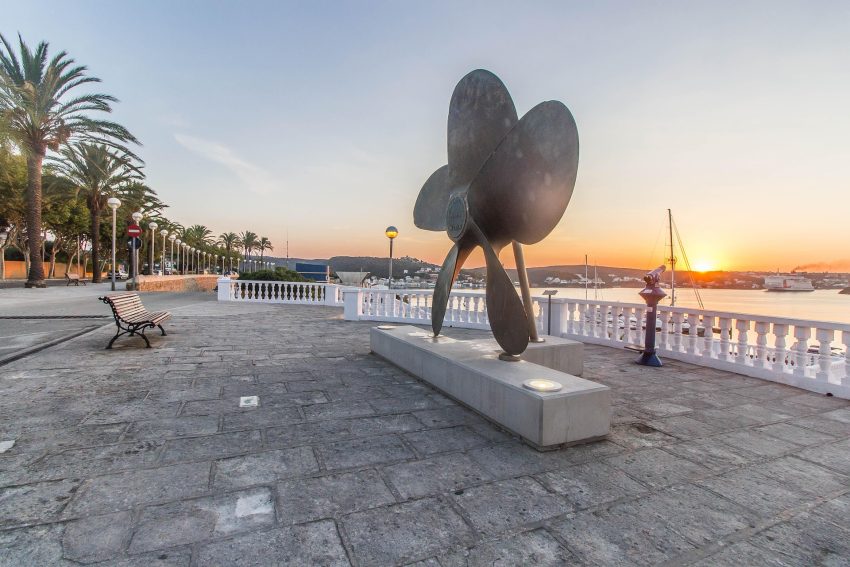
Port Mahon’s long, sheltered natural harbour has shaped the town’s fortunes since antiquity, but its most visible layers are tied to the early-modern contest for Menorca between European powers. Under British rule in the 18th century, the harbour became a strategic naval base and commercial hub, and Maó’s urban fabric expanded in step with maritime trade. That mix of military utility and mercantile energy is still legible in the waterfront warehouses, fortifications across the inlet, and the town’s orientation toward the sea.
When you’re there, treat the harbour as a sequence of viewpoints rather than a single “place”: the upper-town lookouts give you the best sense of scale, while the quayside puts you close to the working-life details. Watch for old stone steps, mooring rings, and industrial façades that hint at the port’s 18th–19th century logistics role. If you enjoy architecture, the contrast between Georgian-influenced townhouses above and the utilitarian waterfront below is part of the appeal.
For things to do, the simple pleasures work well: a slow walk along the Moll de Ponent, stopping at terraces, and taking time to read the harbour’s geography from different angles. Look across to the defensive sites that once controlled access to the inlet, and notice how the harbour narrows and bends—an obvious reason it was so prized. If you have time, a short boat trip is the quickest way to understand how the port’s “inner” and “outer” reaches connect.
Location: Maó, Balearic Islands, Spain | Hours: 24 Hours. | Price: Free. | Website
2. Mercat de Peix
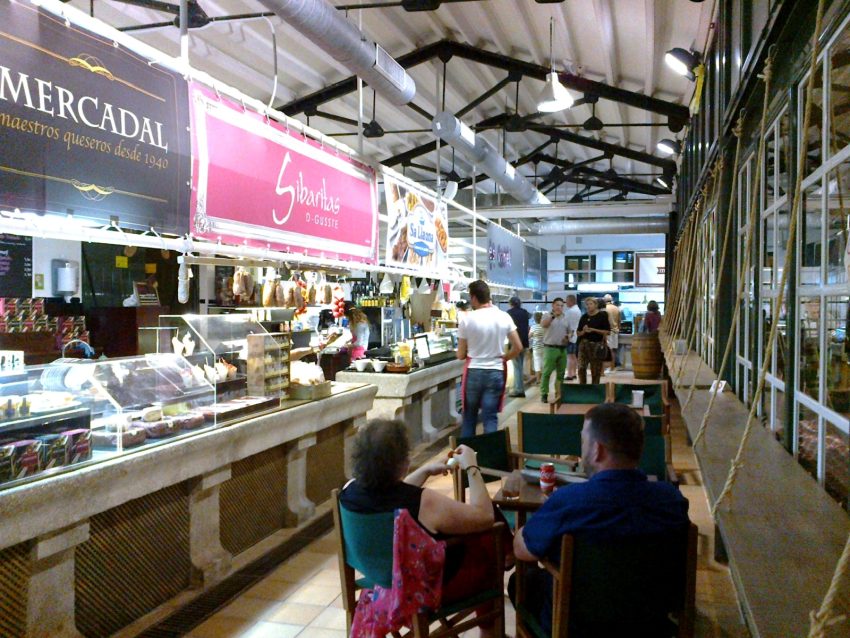
Mahon’s Fish Market sits at the intersection of daily life and the island’s maritime economy. Fish markets in harbour towns aren’t just places to buy food; historically, they were social and economic nodes where fishermen, restaurateurs, and households negotiated the terms of local abundance. Even as retail patterns change, the market remains a strong symbol of Maó’s relationship with the sea and with seasonal rhythms.
What you see can range from a traditional market atmosphere to a more contemporary, repurposed hall, but the best markets still feel anchored in place. Look for the spatial clues of original use: stall layouts, drainage patterns, hooks or counters, and the practical design choices that made trade efficient. Even if the offering is more oriented to food and drink today, the setting often retains that “working” character.
To enjoy it, go at a time when there’s genuine activity rather than just after-hours quiet. Sample local snacks if available and treat it as a low-pressure way to observe local routines—how people gather, how vendors present produce, and what feels distinctly Menorcan. It also pairs well with a harbour walk, because the market experience makes the port’s economy feel immediate rather than abstract.
Location: Pl. de España, 1, 07701 Maó, Illes Balears, Spain | Hours: Monday – Thursday: 11:00–23:00. Friday – Saturday: 11:00–23:30. Closed on Sunday. | Price: Free.
3. Mercat del Claustre

The Cloister Market is a classic example of how historic religious spaces can be adapted into civic and commercial life. Cloisters were built for contemplation and community within a religious framework, but their enclosed courtyards and arcades also lend themselves naturally to market uses once the original institutional role shifts. In Maó, that adaptation highlights a broader theme: buildings survive when they remain useful, even if their purpose changes.
Architecturally, the cloister layout is the main attraction—repeating arches, shaded walkways, and a central open space that encourages browsing. The market environment brings these features to life in a different register: conversation replaces silence, and daily necessities replace devotional routine. The juxtaposition is part of what makes the visit more than a simple shopping stop.
When you’re there, walk the full perimeter first, then slow down and dip into stalls or small counters that catch your eye. Notice how the building frames views inward and outward, and how the acoustics and light make the space feel different from a standard market hall. It’s a strong place for a short break because it combines practical interest with a clear sense of historical continuity.
Location: Carrer del Claustre del Carme, 19, 07701 Maó, Illes Balears, Spain | Hours: Monday – Saturday: 08:00–21:00. Sunday: 08:00–14:00. | Price: Free. | Website

4. Iglesia Del Carmen

The Church of Carmen reflects a strand of Maó’s urban history connected to religious orders and the shaping of neighbourhood identity. Churches dedicated to Our Lady of Mount Carmel often carry associations with seafaring communities and protective devotion, which fits naturally in an island port setting. Over time, these churches can become focal points for local festivals, confraternities, and the kind of community memory that isn’t always visible in museums.
What to see includes the church’s interior composition—altarpiece, chapels, and the way the building’s proportions create a sense of procession toward the sanctuary. Decorative elements can vary widely, but even restrained interiors tend to reward attention to craftsmanship: stonework, wood carving, and devotional imagery. If there’s an adjacent conventual or community space, it can add context to how the site functioned beyond liturgy.
For a good visit, time it to catch the church open and relatively quiet, so you can read the space without interruption. Spend a few minutes looking at iconography and dedications, which often reveal local concerns—safety at sea, family milestones, memorials. It’s also a worthwhile stop to understand Maó as a lived town with neighbourhood institutions, not only as a harbour and a strategic prize.
Location: Plaça del Carme, 07701 Maó, Illes Balears, Spain | Hours: Check official website. | Price: Free; donations appreciated. | Website
5. Teatre Principal De Mao

Teatre Principal de Maó is frequently described as one of Spain’s oldest operating opera houses, and it embodies the cultural ambition that can flourish in a prosperous port town. Maó’s 18th–19th century growth created an audience for theatre and music, and the building stands as evidence that civic identity wasn’t limited to trade and defense. Over time, theatres like this also become archives of local social history—who attended, what was staged, and how the town presented itself.
What to look for is the classic theatre anatomy: auditorium shape, tiers of seating, stage framing, and decorative details that balance grandeur with intimacy. Even if you’re not catching a performance, guided access (when available) can reveal backstage mechanics and the way the building was engineered for sound and sightlines. The building’s position in the town also matters, because theatres were often placed to reinforce a sense of civic centre and evening promenade culture.
If you can, the best experience is to see it in use—concert, play, or recital—because the architecture makes most sense when it’s doing its job. Otherwise, focus on appreciating the interior volumes and the craft of ornamentation. It’s an ideal counterpoint to the harbour narrative: Maó wasn’t only strategic and commercial; it also invested in art, performance, and public life.
Location: Carrer d'en Deià, 40, 07702 Maó, Illes Balears, Spain | Hours: Tuesday – Saturday: 11:30–13:30. Thursday – Friday: 18:30–20:30. Sunday – Monday: Closed. | Price: Prices vary by show. | Website
6. Carrer Moreres

Carrer Moreres is part of the old-town street network where Maó’s history is read at human scale. Streets like this often preserve the logic of earlier urban phases: narrow widths for shade and defense, alignments shaped by topography, and building plots that reflect incremental growth rather than a single master plan. In Maó, these streets also echo periods of prosperity when merchants and officials built townhouses that blended local materials with broader European influences.
What to see is less about single monuments and more about textures: façades, doorways, ironwork, shutters, and the way upper levels project slightly over the street. Notice how the street “paces” you—tight sections opening into small nodes, then tightening again—and how that rhythm encourages slow exploration. Small details like plaque stones, old shopfront proportions, or stairways can be the most revealing.
To make the visit worthwhile, walk it without rushing and keep looking up as well as ahead. If you’re interested in photography, early morning or late afternoon light often works best on narrow streets, bringing out stone colour and shadow. Pair it with nearby lanes rather than treating it as a standalone destination; the reward is the cumulative sense of Maó’s lived urban fabric.
Location: Carrer de ses Moreres, Maó, Illes Balears, Spain | Hours: 24 Hours. | Price: Free.
7. Esglesia De Santa Maria

The Church of Santa Maria is a key landmark in Maó’s historic centre and often functions as an “orientation point” as much as a place of worship. Churches like this typically reflect multiple phases of construction, repair, and embellishment, responding to changing tastes, resources, and the fortunes of the town. In a port city, a principal church also tends to mirror community identity—baptisms, festivals, memorials—across generations.
Inside, focus on the interplay between structure and decoration: the volume of the nave, the side chapels, and the altar area that draws the eye forward. Many visitors are especially interested in the church’s music tradition; if there is an organ or a reputation for performances, that element adds a living dimension to the building’s heritage. The calm interior can be a useful counterpoint to the busy harbour-front pace.
What to do there is simple but effective: take a slow circuit, pausing at chapels or artworks that show local patronage and devotional culture. If you can visit when the light is good, stained glass and high windows can transform the space. If the church hosts concerts or organ recitals, that’s often the most memorable way to experience it—architecture and sound reinforcing each other.
Location: Ajuntament, 07701 Maó, Illes Balears, Spain | Hours: Check official website. | Price: Check official website. | Website
8. Ayuntamiento de Mahon
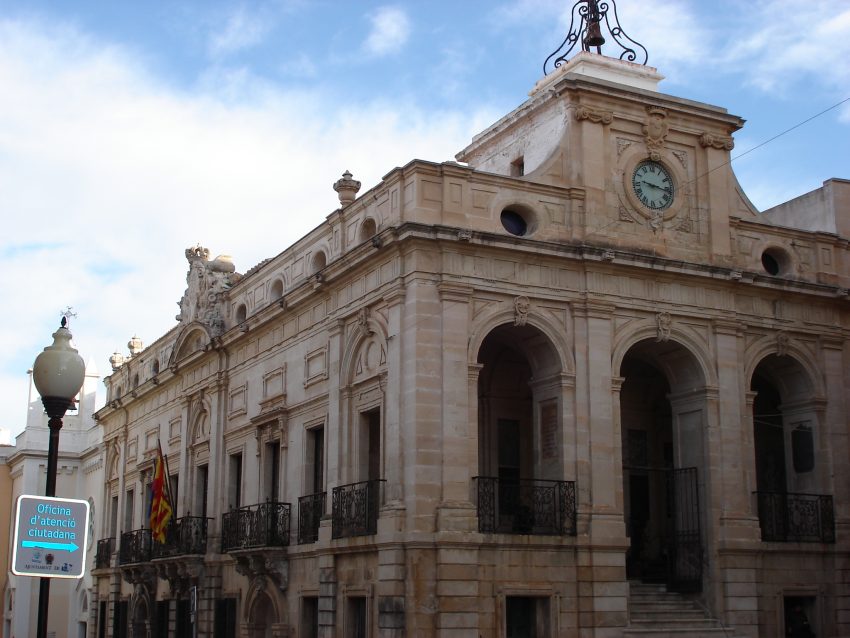
Mahon’s City Hall represents the civic side of the town’s history: administration, public ceremony, and the everyday machinery of local government. In places like Maó, the municipal building often sits in a symbolic urban position, reflecting periods when civic identity strengthened alongside commercial growth. Over time, such buildings can accumulate layers—renovations, stylistic shifts, and interior changes that track political and social evolution.
What to look for depends on access, but the exterior usually tells its own story: proportions, balconies for public announcements, coats of arms, and the way the façade addresses the square. City halls often act as architectural “backdrops” for civic life, so the surrounding space matters as much as the building itself. Pay attention to how people use the square—markets, gatherings, casual meeting points—because that usage is part of what the building exists to serve.
If you can go inside, look for formal rooms, staircases, and any displays that reference local history or notable events. Even if interior access is limited, it’s still worth visiting at different times of day to see how light and activity change the atmosphere. Pair it with nearby streets to get a feel for the administrative heart of the old town rather than the maritime edge.
Location: Plaça de la Constitució, 1, 07701 Maó, Illes Balears, Spain | Hours: Monday – Wednesday: 09:00–14:00. Thursday: 09:00–14:00 & 16:00–19:00. Friday: 09:00–14:00. Closed on Saturday, Sunday. | Price: Free. | Website
9. Portal de Sant Roc
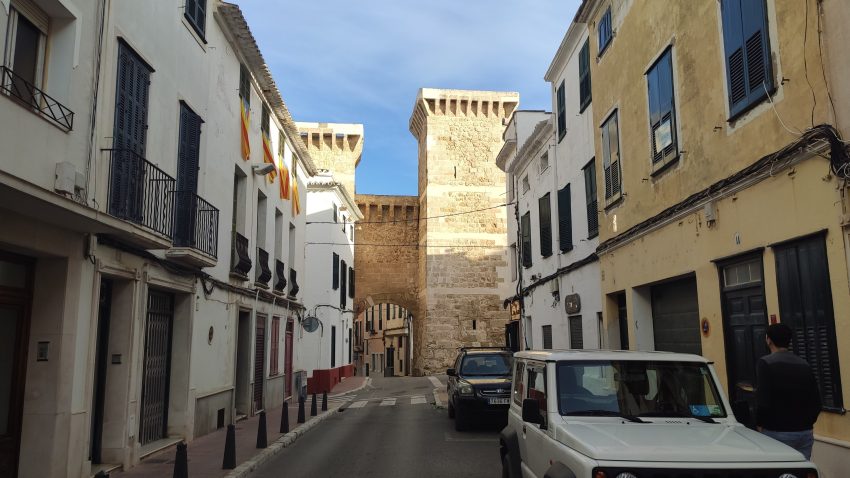
Portal de Sant Roc is one of the most tangible remnants of Maó’s historic defensive perimeter. Like many Mediterranean towns, Maó once relied on walls and controlled gates to manage security, taxation, and movement—especially important in a strategic harbour city. Over centuries, as fortification needs changed and the town expanded, many wall sections disappeared, making surviving gates especially valuable as “anchors” of the old urban outline.
Visually, the appeal is the contrast between old masonry and the surrounding city life. Gates are built to be functional and resilient: thick stone, narrow passages, and a sense of compression as you pass through. Even without extensive ornament, the structure carries a strong historical charge because it marks where the town once ended and the outside began.
When you’re there, treat it as both a photo stop and a navigation clue. Walk around it rather than only through it, looking for alignment with older street patterns and any fragments of wall line that might still be traceable. It’s also a good place to think about Maó’s defensive story in relation to the harbour—how control points on land complemented control points on the water.
Location: 36, Carrer de Sant Roc, 34, 07701 Maó, Illes Balears, Spain | Hours: 24 Hours. | Price: Free.
10. Museu de Menorca
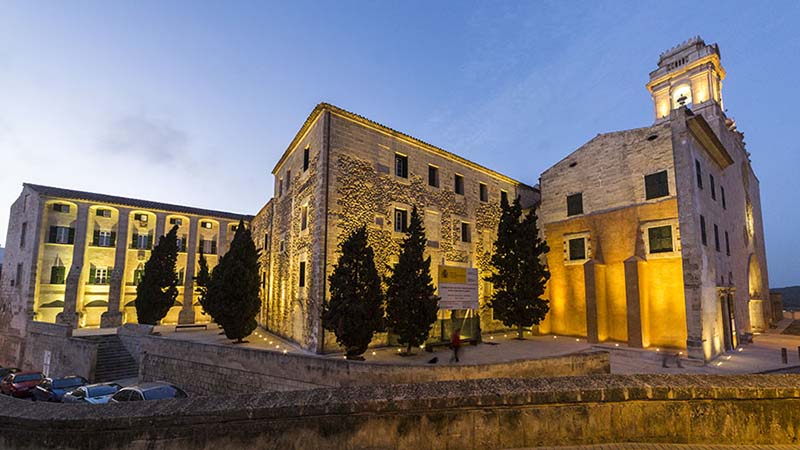
The Museu de Menorca is central to understanding how the island sits at a crossroads of Mediterranean cultures. Menorca’s story runs from prehistoric communities and monumental stone sites through successive waves of outside influence and local adaptation, and the museum is where that long timeline is made legible. Its collections and interpretation typically emphasise continuity: how an island can be both a frontier and a home, repeatedly reshaped yet still distinct.
Inside, expect a structured journey across periods rather than a single-theme display. Prehistory is usually a major focus, because Menorca’s archaeological heritage is unusually visible on the landscape; the museum helps translate those ruins into daily life—tools, ceramics, burial practices, and social structure. Later sections tend to show how trade routes and political shifts affected material culture, from imported wares to changing tastes and technologies.
To get the most out of the visit, start with the earliest galleries and let the chronology build; it will make later objects feel less isolated. Spend extra time with any archaeological displays that connect directly to sites you may have seen elsewhere on the island, because the museum provides the missing context. If there are temporary exhibitions, they can also be worthwhile for local perspectives that go beyond the standard overview.
Location: Pla des Monestir, 9, 07701 Maó, Illes Balears, Spain | Hours: Tuesday & Thursday: 10:00–19:00. Wednesday, Friday, Saturday, Sunday: 10:00–14:00. Closed on Monday. | Price: Adults: €4; Reduced: €3; Sundays: free; Temporary exhibitions: free. | Website
11. Church and Cloister of Saint Francesc
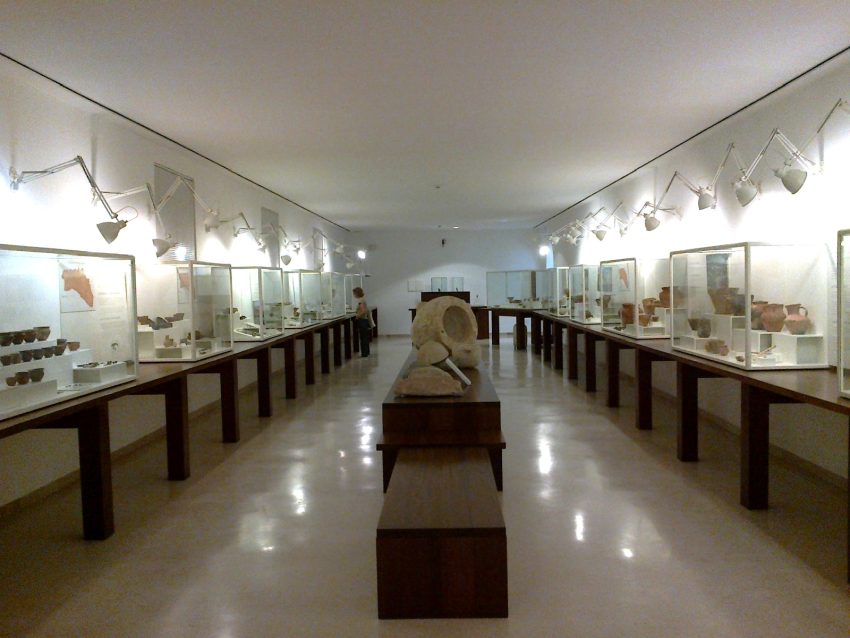
The Church and Cloister of Saint Francesc reflects the long role of religious orders in shaping Maó’s civic and architectural landscape. Franciscan communities across the Balearics historically contributed not only spiritual life but education and charity, and their buildings often became key urban anchors. Over time, many such complexes were altered by reforms, changing civic needs, and occasional periods of suppression or repurposing, leaving layered spaces that mix devotion with local history.
What you see today is typically a blend of church interior elements—altars, chapels, restrained ornament—and the quieter geometry of the cloister. Cloisters are designed for rhythm and reflection: arcades, courtyards, and a sense of enclosure that contrasts with the bustle of nearby streets. Even if you’re not focused on religious art, the spatial experience is often the highlight.
When you visit, move slowly and look for the details that survive transitions: inscriptions, tomb slabs, carved stonework, and the way light falls across the cloister walk. If access allows, step into the courtyard and read the building as a sequence of thresholds—from public nave to semi-private cloister. It’s a good place to pause and understand Maó beyond the port: quieter, institutional, and shaped by long-term community life.
Location: Pla des Monestir, 07701 Maó, Illes Balears, Spain | Hours: Tuesday: 10:00–14:00 & 18:00–20:00. Wednesday: 10:00–14:00. Thursday: 10:00–18:00. Friday: 10:00–14:00. Saturday: 10:00–14:00. Sunday: 10:00–14:00. Closed on Monday. | Price: Adults: €4; Under 18: free. | Website
12. Xoriguer Gin Factory
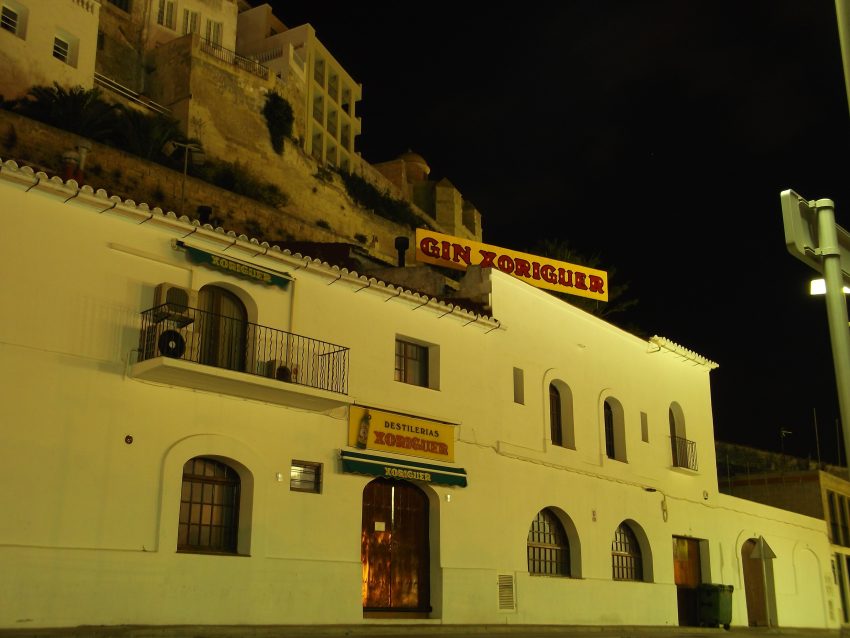
Xoriguer is closely linked to Menorca’s gin tradition, which developed during the period of British influence when gin became popular among soldiers and sailors. Local producers adapted the spirit using Mediterranean botanicals, and the style that emerged is distinct from many mainland gins, often associated with juniper-forward notes and a clean, maritime character. The factory is part of that living continuity: it’s less a museum piece than a working reminder of how an imported taste became local heritage.
On-site, the interest is in the process and the atmosphere: the scent of botanicals, the utilitarian charm of equipment, and the sense of a long-running craft in a compact space. Pay attention to how the production story is framed—raw ingredients, distillation, resting, and bottling—because it ties directly back to the port economy that supplied ships and taverns. Even if you’re not a spirits enthusiast, it’s a quick cultural snapshot of Maó’s trading-era identity.
What to see and do is straightforward: follow the explanation of the stills and production steps, then use the tasting to calibrate what “Menorcan gin” means in practice. If you want something more contextual, note how the brand connects to local drinking customs, especially the way gin is woven into Menorcan social life. It’s also a good stop to pick up a small bottle as a place-specific souvenir that actually reflects the island’s history.
Location: Moll de Ponent, 91, 07701 Maó, Illes Balears, Spain | Hours: (Summer) April 1 – October 31; Monday – Friday: 10:00–18:00; Saturday: 10:00–14:00. (Winter) November 1 – March 31; Closed. | Price: Check official website. | Website

Moira & Andy
Hey! We're Moira & Andy. From hiking the Camino to trips around Europe in Bert our campervan — we've been traveling together since retirement in 2020!
This website uses affiliate links which earn a small commission at no additional cost to you.
Walking Tour Summary
Distance: 2.5 km
Sites: 12