Self-Guided Walking Tour of Madrid (2026)

This website uses affiliate links which earn a small commission at no additional cost to you.
Madrid is a city that rewards walking because its big-ticket landmarks and everyday life sit so close together: a royal axis of palaces and gardens, elegant boulevards, market streets, and small plazas where the pace slows to café speed. On a self-guided route you can stitch these contrasts into one satisfying day, pausing whenever something pulls you in - a terrace table, a gallery detour, a side street of tile-fronted bars, or a viewpoint that suddenly makes the city's layout click.
This Self-Guided Walking Tour of Madrid is designed as a practical “greatest hits” loop that still feels local, moving between the historic core, the grand civic spaces, and the neighborhoods where Madrid's character really shows. It's a strong choice for your first day in the city, but it also works as a reset walk for return trips when you want to revisit favorites and catch details you missed before.
Along the way you'll cover many of the best things to see in Madrid, without the pressure of a timed group tour. Expect a mix of headline architecture, people-watching plazas, and food stops that can turn into spontaneous long lunches - because in Madrid, the best itinerary is one that leaves room for the city to interrupt it.
Table of Contents
How to Get to Madrid
By Air: Madrid is served by Adolfo Suárez Madrid-Barajas Airport (MAD), the country's main international gateway with direct flights from across Europe, the Americas, and beyond. From the airport, the fastest, simplest options into the centre are the Metro (Line 8 connects to the wider network), Cercanías trains from Terminal 4, or an official taxi with a fixed fare to central Madrid zones, depending on where you're staying. For the best deals and a seamless booking experience, check out these flights to Madrid on Booking.com.
By Train: Madrid is Spain's rail hub, with high-speed AVE and other fast services linking the capital to major cities like Barcelona, Seville, Valencia, Málaga, Zaragoza, Valladolid, and many more. Most long-distance services arrive at either Madrid-Puerta de Atocha or Madrid-Chamartín-Clara Campoamor, and both are well connected to the Metro and local trains, making it easy to roll straight into your hotel area without needing a car. Train schedules and bookings can be found on Omio.
By Car: Driving to Madrid can be convenient if you're arriving from smaller towns, doing a wider road trip, or carrying lots of luggage, but it's rarely the easiest way to enter the city itself. Expect heavy traffic at peak hours, low-emission zone rules in parts of the centre, and parking that's limited and costly, so many travelers find it smoother to park at their accommodation (or use a park-and-ride) and rely on walking and public transport once you're in the core. If you are looking to rent a car in Spain I recommend having a look at Discover Cars, first, as they compare prices and review multiple car rental agencies for you.
1. Circulo de Bellas Artes
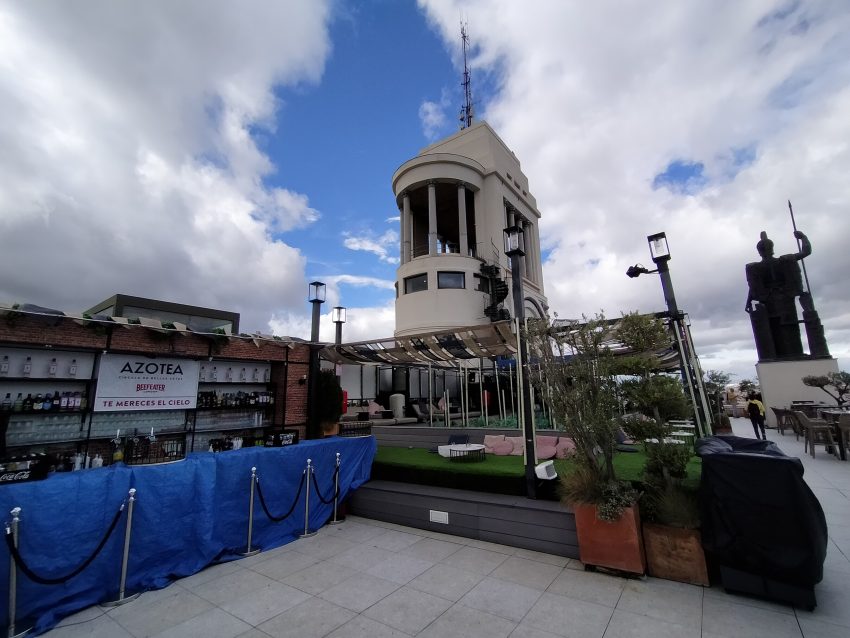
If you want the “best view in Madrid” moment early in your walk, starting here makes more sense than beginning in Plaza Mayor. The building sits right by Calle Gran Vía, and while the venue is a major cultural institution, the real draw for this route is its rooftop perspective over the city’s main axis. It’s an efficient opener: you get instant skyline context, a strong photo opportunity, and a clear orientation for the rest of central Madrid.
Head up to the rooftop bar, Azotea del Círculo, on the upper floors for a panoramic sweep across rooftops and landmarks. The drinks are typical rooftop-bar fare, but the ambience is the point: wide views, open sky, and that iconic Madrid skyline you’ve probably seen in countless photos. You can take the classic “I was in Madrid” shot with the cityscape behind you, then slow the pace on the terrace seating before you launch into the heavier walking part of the day.
A few practical notes make the stop smoother. Rooftop access is usually handled via a paid entry at the ground-floor desk (often around €4), and once you’re up there you’re not obliged to order anything—treat it as a viewpoint first, bar second. In peak season, arrive with buffer time because queues for the elevator are common; late afternoon into early evening is ideal, and if you’re chasing sunset, aim to be up there roughly an hour beforehand. When you come back down to street level, you’re perfectly placed to continue: walk toward the corner where Edificio Metrópolis anchors the junction with Calle de Alcalá, one of the most recognisable Madrid street scenes.
Location: Círculo de Bellas Artes, Calle de Alcalá, Madrid, Spain | Hours: Monday – Thursday: 10:00–01:00. Friday – Saturday: 10:00–02:00. Sunday: 10:00–01:00. | Price: Rooftop access is typically €6 (general) or €5 (reduced), with free entry for eligible visitors. | Website

2. Edificio Metropolis
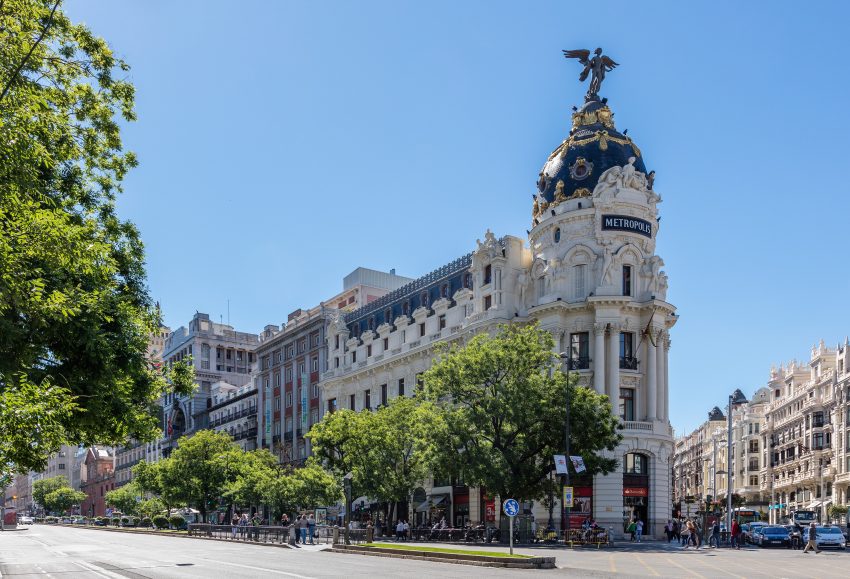
Edificio Metrópolis is one of the most iconic corner buildings in central Madrid, completed in the early 20th century when the city was embracing grand commercial architecture. It was designed as a statement piece at a prime junction, using a richly ornamented façade and a highly legible dome silhouette to mark the city’s new urban confidence. Its style belongs to the same European moment as Parisian and Viennese “city glamour,” translated into Madrid’s own commercial boom.
The main sight is the dome and its sculptural crown. From street level, the building reads like a theatrical set: columns, reliefs, and layered ornament culminating in that rooftop figure that dominates many Gran Vía photos. The corner position matters—this is architecture meant to turn a bend and announce an intersection, so viewpoints from multiple angles are part of the experience.
Treat it as a visual anchor rather than a destination you “do” for a long time. Pause, take in the detailing, then use it to orient yourself between the older core and the Gran Vía corridor. It’s especially effective at dusk or night when the lighting emphasizes the dome and makes the building’s role as urban landmark unmistakable.
Location: C. Alcalá, 39, Centro, 28014 Madrid, Spain | Hours: 24 Hours. | Price: Free. | Website
3. Palacio de Cibeles
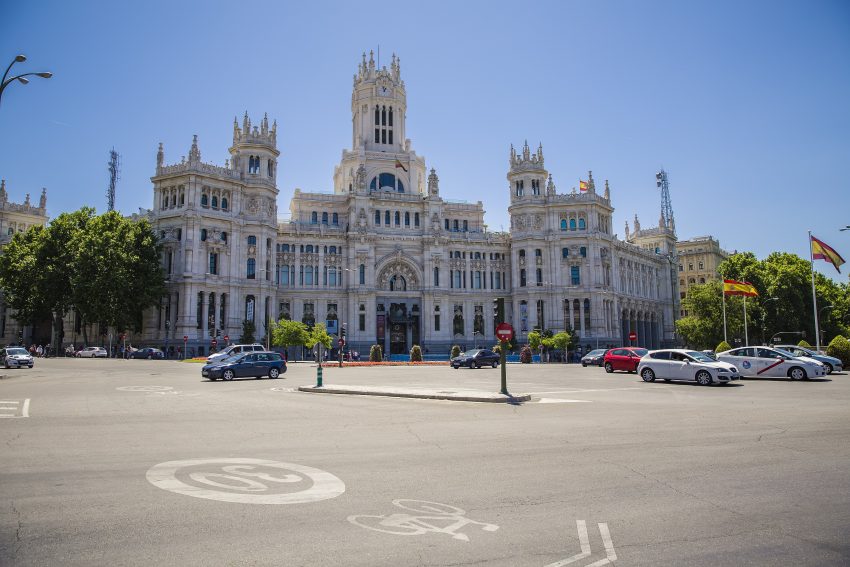
Palacio de Cibeles is a landmark of Madrid’s early-20th-century institutional architecture, built as the headquarters of the postal and communications system and completed in 1919. Its elaborate, almost cathedral-like civic style reflects how important communication was to a modernizing state: the building was meant to embody efficiency and national presence, not just provide office space. In more recent decades it has taken on a new civic life as a major municipal building and public venue.
What to see is the building’s scale and interior public spaces. The façade is a lacework of stone that can look almost weightless from a distance, and inside you typically get generous halls that were designed for public service at a monumental level. If you can access exhibitions or viewpoint areas, they add context and give you a strong city panorama over the surrounding boulevards.
The setting matters as much as the structure. The palace faces the Plaza de Cibeles and its fountain, an ensemble that reads as a statement of Madrid’s civic identity and ceremonial geography. It’s also a natural hinge point between different “Madrids”: older historic routes, the grand 19th-century axis, and the newer cultural and commercial zones that spread outward.
Location: Palacio de Cibeles, Retiro, 28014 Madrid, Spain | Hours: Tuesday – Sunday: 10:00–20:00. Closed on Monday. | Price: Free to enter the building; Mirador (viewpoint): from €4 (discounts available). | Website
4. Puerta de Alcala
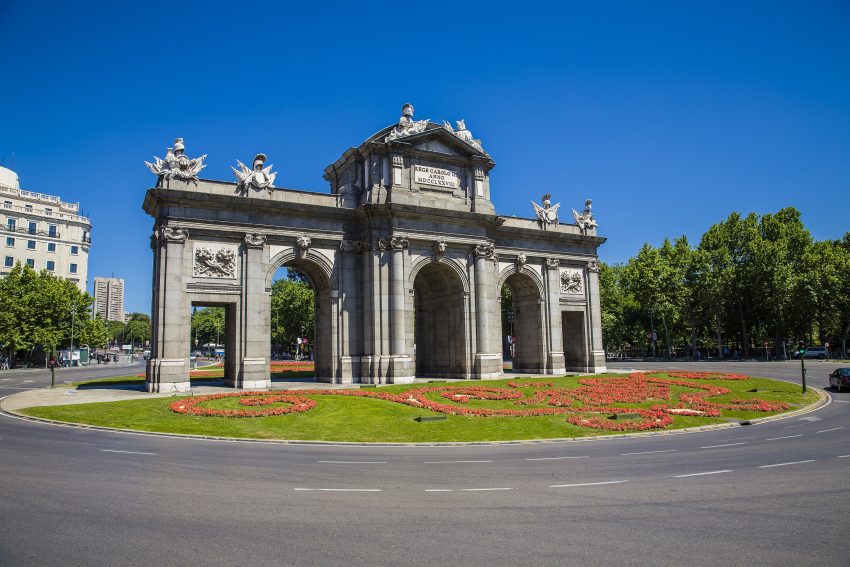
Puerta de Alcalá is one of Madrid’s signature 18th-century monuments, a ceremonial gateway commissioned by Charles III as part of the city’s Enlightenment-era modernization. Completed in 1778 and designed by Francesco Sabatini, it was meant to project order and civic pride at an entrance to the capital. Unlike many triumphal arches, it functioned as a real urban gate, marking a threshold between city and countryside at the time.
What to see is the neoclassical clarity and the sculptural detailing. The arch has multiple openings, balancing monumentality with permeability, and the decorative program shifts depending on which side you approach from—another reminder that it was designed to be experienced in motion. Up close, the stonework and proportions reveal why it holds its own amid heavy traffic and large-scale boulevards.
It works best as part of a broader urban composition. Stand back to read it against the lines of the surrounding streets and the greenery of nearby Retiro, then move closer for details. It’s also a useful narrative stop: it embodies the moment Madrid started to present itself as a “modern” capital with planned vistas, formal gateways, and public works meant to impress as well as to function.
Location: Pl. de la Independencia, s/n, Retiro, 28001 Madrid, Spain | Hours: 24 Hours. | Price: Free. | Website
5. Parque del Retiro
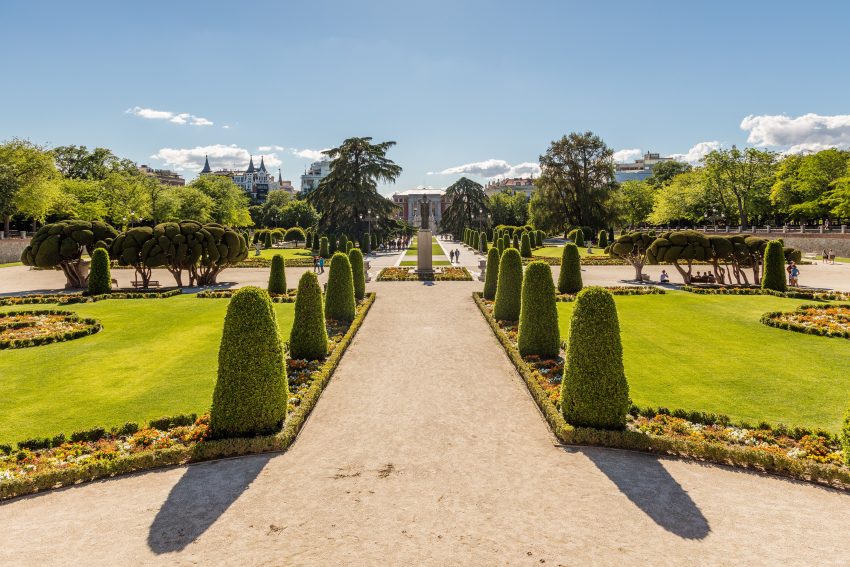
Parque del Retiro began as royal grounds tied to the Buen Retiro palace complex in the 17th century, created for court leisure and display during the Habsburg period. Over time the palace declined, but the parkland endured and eventually became a public park, a shift that mirrors broader changes in how urban space was shared and valued. Today it reads as both a historic landscape and the city’s most important everyday green refuge.
What to see is a mix of set pieces and wandering routes. The large central pond with its monument and boating culture is the classic focal point, while the Crystal Palace and other pavilion structures reflect 19th-century tastes for iron, glass, and exhibition architecture. Gardens, statues, and shaded promenades create a sequence of moods, from formal landscaping to more relaxed woodland edges.
Use Retiro as a reset in the middle of dense city walking. It’s where Madrid’s monumental story softens into lived experience: families, runners, street performers, and quiet benches under old trees. If you plan your route well, you can connect the park to Puerta de Alcalá and then back into the urban core, using the transition from boulevard to greenery as a deliberate part of the day’s rhythm rather than a break from it.
Location: Retiro, 28009 Madrid, Spain | Hours: (Summer) April – September: 06:00–24:00. (Winter) October – March: 06:00–22:00. | Price: Free. | Website
6. Palacio de Cristal
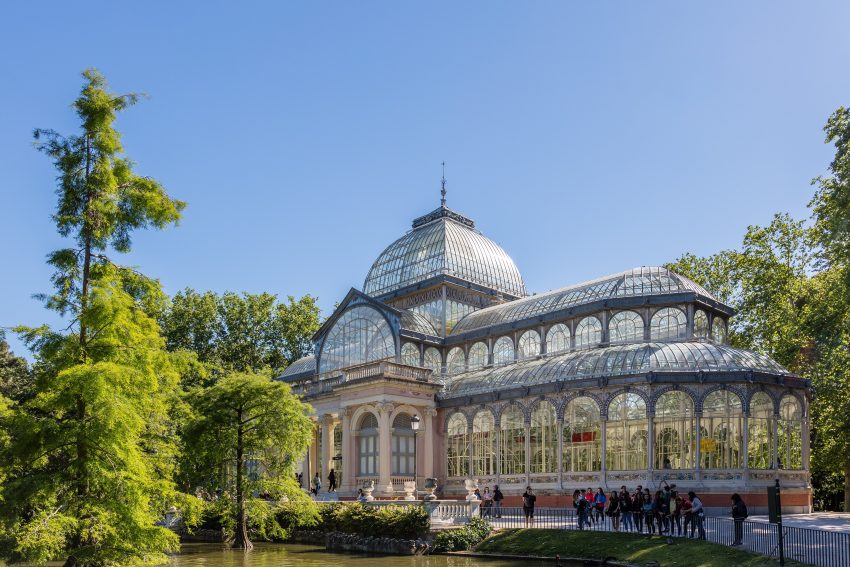
Built in 1887 as part of the General Exhibition of the Philippines, the Palacio de Cristal was conceived as a greenhouse-like pavilion to display tropical flora and to project imperial prestige at a time when Spain was trying to reinforce its overseas image. It was designed by Ricardo Velázquez Bosco, drawing clear inspiration from London’s Crystal Palace tradition of iron-and-glass architecture.
What you see today is a highly photogenic piece of 19th-century engineering: a light, skeletal iron frame wrapped in large glass panels, set on a brick base and accented with decorative ceramic details (including work associated with Daniel Zuloaga). The setting is deliberate—right beside an artificial lake with mature trees around it—so the building reads as much as a landscape feature as it does a pavilion.
For visitors, the experience is usually twofold: the architecture itself and whatever temporary installation is on inside. The palace is now a satellite exhibition space of the Museo Nacional Centro de Arte Reina Sofía, so the interior is often used for contemporary works that play with light, reflections, and the glass envelope. Even if the interior programme is minimal on the day, it’s still worth stepping inside for the shifting perspectives across the lake and the park’s canopy, then circling outside to catch the dome and façade from multiple angles.
Location: P.º de Cuba, 4, Retiro, 28009 Madrid, Spain | Hours: Closed until further notice. | Price: Free. | Website
7. Royal Botanical Garden
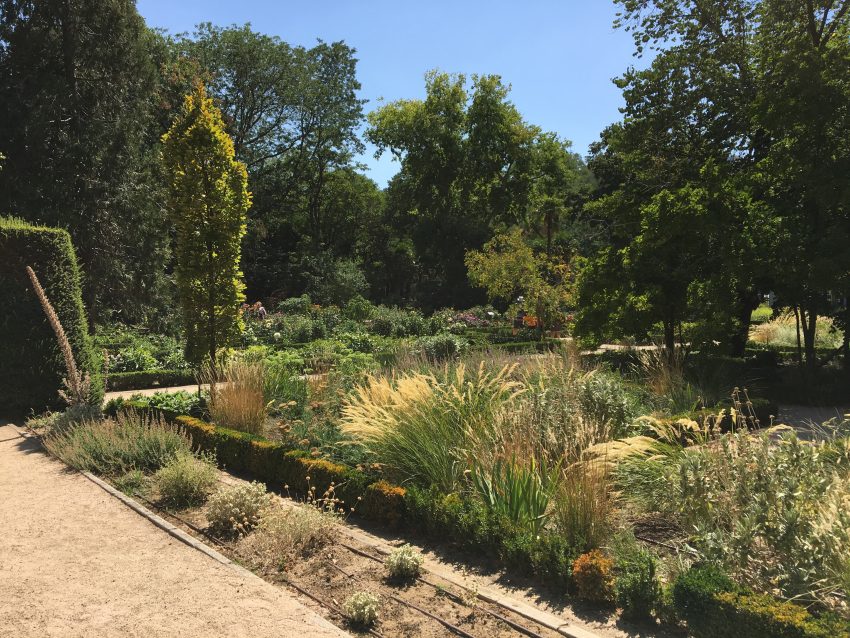
Madrid’s Royal Botanical Garden was founded in the 18th century as part of the city’s Enlightenment-era push to organise knowledge and natural science in a public, systematic way. It began under Ferdinand VI and was later relocated to its present site on the Prado axis under Charles III, with design input associated with architects such as Francesco Sabatini and Juan de Villanueva. Today it functions as a scientific institution as well as a visitor attraction, with links to CSIC.
What to see is organised as a sequence of terraces and collections rather than a single “main sight.” Expect formal beds, an arboretum feel in the tree areas, and planting that shifts by season, so the garden can look completely different month to month. Highlights typically include the historical layout along the central promenades, specialist plant groupings, and the glasshouse spaces that concentrate more delicate species and give you a quick climate-change-of-scene in the middle of the city.
As a visit, it’s best treated as a calm, curated pause between bigger museum and boulevard stops. Because it sits close to Museo Nacional del Prado, it works well before or after gallery time when you want something outdoors but still “cultural.” Walk it slowly, read the labels when something catches your eye, and use the benches and shaded sections strategically if you’re doing a long day on foot.
Location: Pl. Murillo, 2, Retiro, 28014 Madrid, Spain | Hours: Daily: 10:00–17:30 (November – February). Daily: 10:00–18:30 (March & October). Daily: 10:00–19:30 (April & September). Daily: 10:00–20:30 (May – August). | Price: Adults: €4; Students (18–25), large-family adults & seniors (65+): €1; Under 18: free. | Website
8. Museo Nacional del Prado
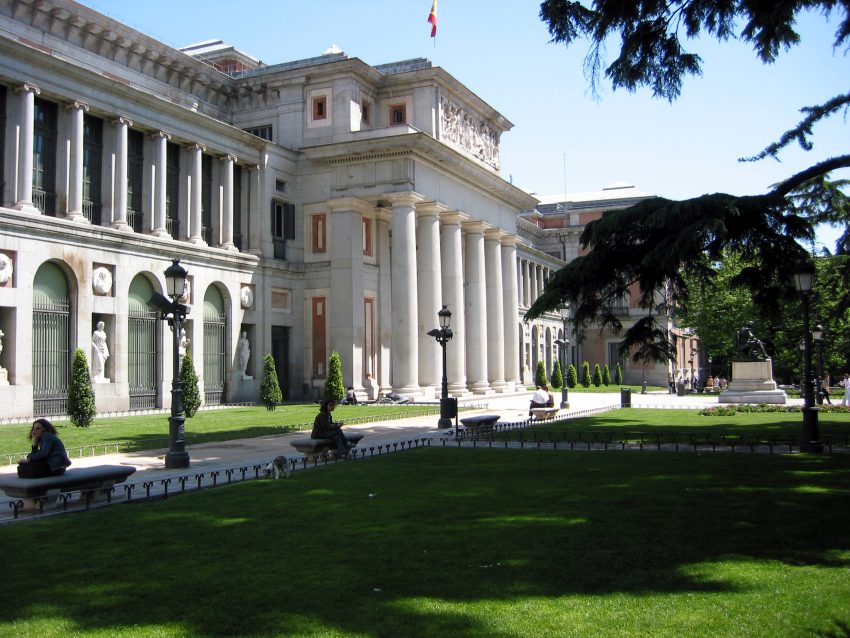
The museum’s identity is inseparable from its building and its royal origins. The neoclassical structure was designed by Juan de Villanueva in 1785 on the orders of Charles III, initially intended for a natural history purpose before being reoriented toward art. It ultimately opened to the public in 1819, becoming the Royal Museum of Painting and Sculpture under Ferdinand VII, a shift that formalised the display of the crown’s collections as a national institution.
What makes a visit distinctive is how concentrated the core of Spanish painting is, set alongside major European schools. The Prado is especially strong for Francisco de Goya, and it also holds high-impact groupings by painters such as Diego Velázquez, El Greco, Titian, Rubens, and Hieronymus Bosch.
On site, plan to treat it as a sequence of “big rooms + targeted stops” rather than trying to cover everything. Prioritise the Spanish Golden Age galleries, then build outward into the Italian and Flemish holdings; many visitors anchor their route around a handful of signature works (often including Velázquez’s Las Meninas and Bosch’s The Garden of Earthly Delights) and use those as waypoints to explore nearby rooms.
Location: Retiro, 28014 Madrid, Spain | Hours: Monday – Saturday: 10:00–20:00. Sunday: 10:00–19:00. Closed on January 1, May 1, December 25. Limited hours on January 6, December 24, December 31: 10:00–14:00. Free access Monday – Saturday: 18:00–20:00. Free access Sunday: 17:00–19:00. | Price: Adults: €15; Reduced: €7.50; Free admission: see conditions. | Website
9. Puerta del Sol
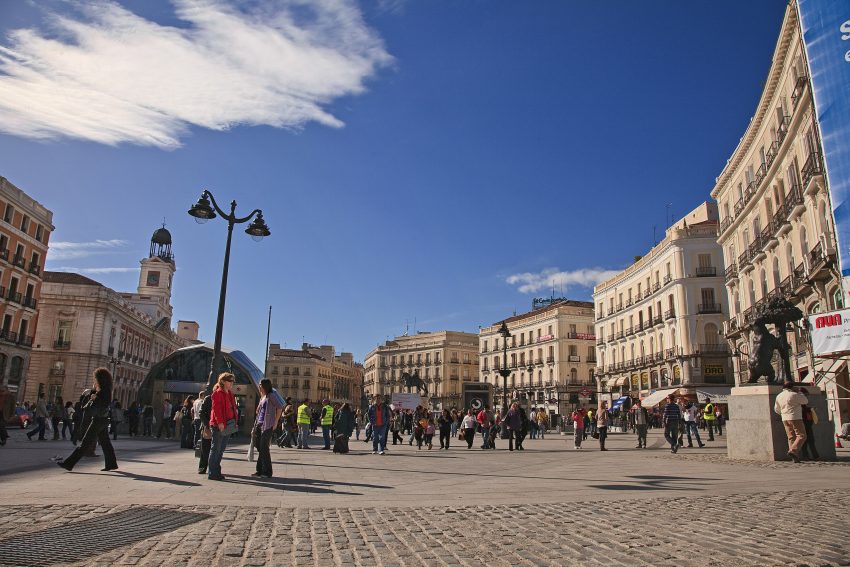
Puerta del Sol is Madrid’s symbolic center, both geographically and culturally, even though its name refers to a former gate in the city’s old walls. As Madrid expanded, the space became a focal point for movement and public life, eventually turning into the capital’s most recognizable meeting place. Its modern identity is tied to civic rituals, demonstrations, and everyday rendezvous—less a “square of monuments” and more a square of shared habits.
Key sights are small but loaded with meaning. The clock on the Real Casa de Correos is central to the New Year’s Eve tradition of eating twelve grapes on the chimes, and the Kilometer Zero marker anchors Spain’s radial road network in the public imagination. You’ll also find famous civic symbols such as the Bear and the Strawberry Tree statue, which ties the square to Madrid’s heraldry.
To appreciate it, stand still for a moment and watch how the city flows through. Sol is a transport and pedestrian knot: streets radiate out, and the square’s energy is about circulation, street performance, and constant turnover. It’s also a practical pivot for the rest of the walk—use it to reset your bearings before heading toward the older Habsburg core or outward toward newer 19th–20th century Madrid.
Location: Puerta del Sol, Centro, Madrid, Spain | Hours: 24 Hours. | Price: Free.
10. Calle Mayor
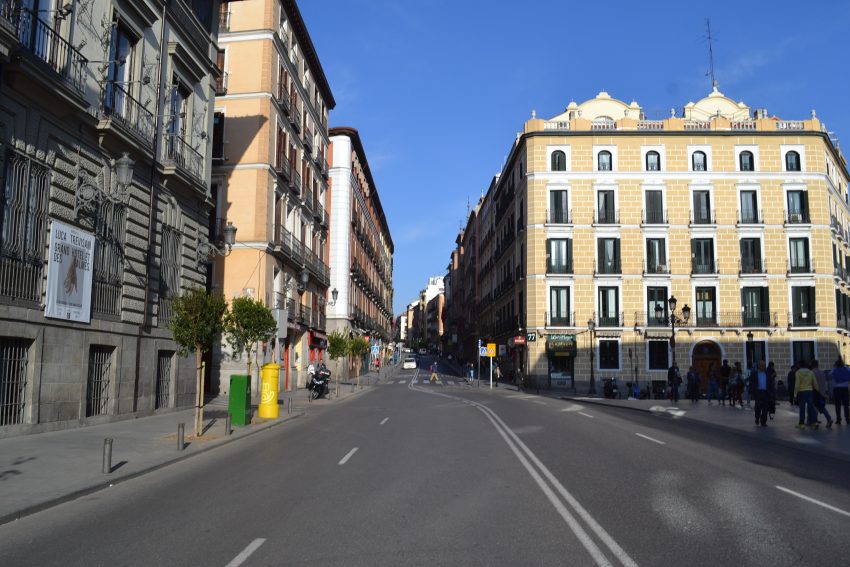
Calle Mayor is one of the old city’s key arteries, a street whose importance comes from continuity: it follows a historic line of movement through central Madrid, linking major civic and ceremonial spaces. In a city that expanded and reinvented itself repeatedly, this street retained a “spine” function, connecting older neighborhoods to the political and religious core near the palace and cathedral. Its history is written in layers of façades, side streets, and the way the urban grain tightens as you move west.
What to see is a sequence rather than a single landmark. You’ll pass historic churches, traditional balconies, and small plazas that open like pauses in the street’s rhythm. The street also offers classic old-Madrid perspectives: framed views toward domes and towers, sudden glimpses into narrow lanes, and the steady sense that you’re walking a route used for processions, commerce, and everyday commuting for centuries.
The best way to do Calle Mayor is to keep looking up and to take one or two deliberate detours. Duck into a side street for a quieter, older texture, then return to the main line to feel the contrast. It’s also an excellent connector on foot: you can treat it as the thread that stitches Plaza Mayor, Puerta del Sol, and the royal-civic zone into one coherent narrative walk.
Location: Calle Mayor, Centro, Madrid, Spain | Hours: 24 Hours. | Price: Free.
11. Plaza Mayor

Plaza Mayor is Madrid’s classic Habsburg-era grand square, developed in the early 17th century as a controlled, monumental urban room for a growing imperial capital. It evolved from earlier market space and was shaped into a formal rectangle under Philip III, whose statue still anchors the center. Over the centuries it has been a stage for everything from festivals and public ceremonies to darker episodes such as trials and punishments, which gives it a charged historical resonance behind the postcard symmetry.
What to see here is the architecture as a unified composition. The enclosed arcades, uniform façades, and rhythmic windows create a sense of order that was deliberate: it is civic theatre. Pay attention to the Casa de la Panadería with its frescoed façade, and walk the perimeter under the arcades to feel how the square was designed to manage crowds, commerce, and spectacle.
To make it more than a photo stop, arrive at a quiet time and read the space from multiple corners. The square changes character with light and density: early morning can feel almost austere, while evenings emphasize social life and performance. From here you can slip directly into the old-town street network toward Calle Mayor or back to the commercial center, which helps you understand how the plaza sits between everyday movement and formal display.
Location: Pl. Mayor, Centro, 28012 Madrid, Spain | Hours: 24 Hours. | Price: Free.
12. Mercado de San Miguel
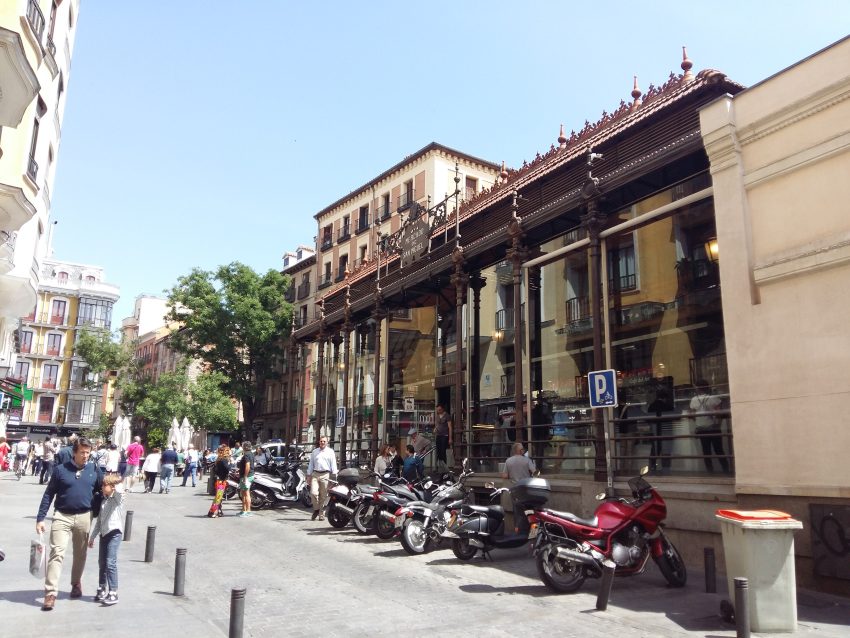
Mercado de San Miguel is a 20th-century market building that has been repurposed into one of Madrid’s best-known food halls. The structure dates to the iron-and-glass market architecture boom, opening in 1916, when cities were modernizing their food supply with hygienic, light-filled covered markets. Its current identity is newer: a carefully curated culinary venue that trades as much on atmosphere and convenience as on everyday shopping.
The main thing to see is the building itself in action: the cast-iron frame, the glazed walls, and the constant movement of people grazing and sampling. Stalls typically focus on tapas culture and Spanish regional specialties—jamón, seafood bites, cheeses, olives, croquetas, and sweets—often with wine, vermouth, or cava to match. It’s less a “market run” and more a concentrated tasting circuit.
If you want the best experience, treat it like a quick sequence rather than a single meal. Go with a short list of tastes, share portions, and then step back outside to reset your palate in the surrounding streets. It’s also ideally positioned for pairing with nearby Plaza Mayor, so you can do the market’s modern food-scene energy and then contrast it with Madrid’s older ceremonial plaza in a single loop.
Location: Pl. de San Miguel, s/n, Centro, 28005 Madrid, Spain | Hours: Sunday – Thursday: 10:00–24:00. Friday – Saturday: 10:00–01:00. Holiday eves: 10:00–01:00. | Price: Free entry; pay per item at the stalls. | Website
13. Plaza de la Villa
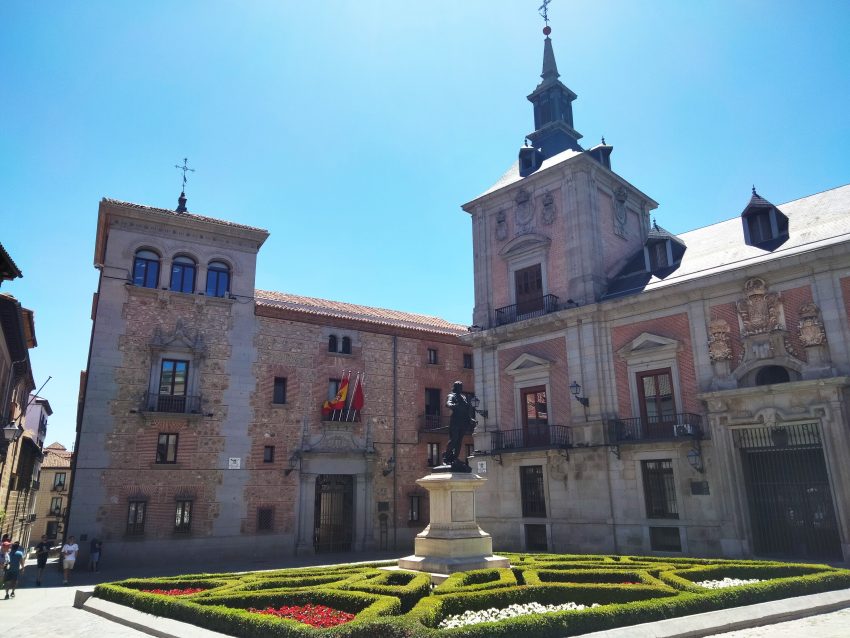
Plaza de la Villa is one of Madrid’s most historically layered small squares, preserving the texture of the medieval and early modern city. Long before the capital became a stage for grand boulevards and huge plazas, this was a civic heart: a place where administrative life clustered in tight streets and compact buildings. Its value is that it still looks like a pre-modern Madrid pocket, more intimate and crooked-edged than the later ceremonial spaces.
The square’s main sights are architectural rather than monumental. Casa de la Villa served as the city hall for centuries, and nearby you’ll find Casa de Cisneros, a classic example of the city’s noble-townhouse tradition. The most evocative building is the Torre de los Lujanes, one of Madrid’s best-known medieval survivals, with a fortress-like profile that hints at the city’s earlier defensive character.
When you’re there, slow down and treat it like a short “reading stop.” The details are in the stonework, balconies, coats of arms, and the way streets funnel into the square. It’s also strategically placed for walking: you can move from here toward Calle Mayor for the processional route into the older royal-religious zone, or angle back toward the more commercial core around Puerta del Sol.
Location: Pl. de la Villa, Centro, Madrid, Spain | Hours: 24 Hours. | Price: Free.
14. Catedral de la Almudena
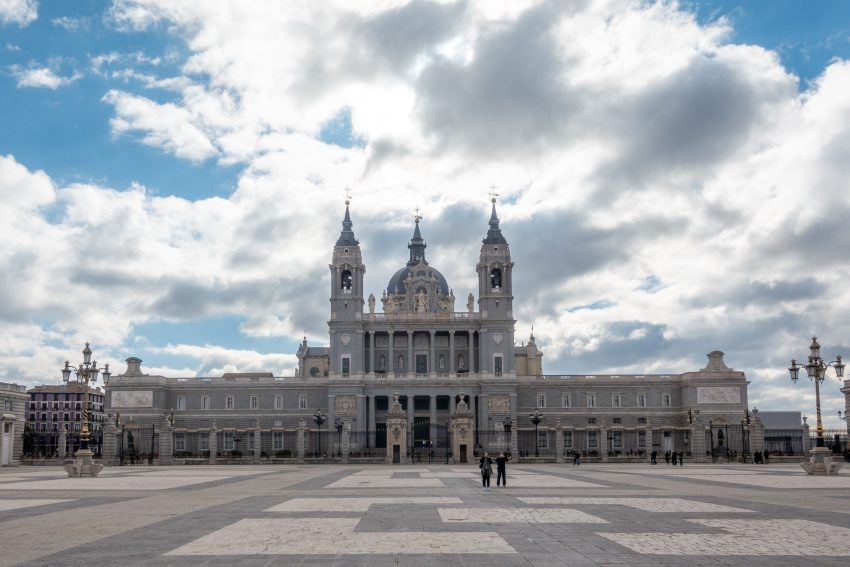
The Catedral de la Almudena feels ancient from a distance, but it is a largely modern cathedral shaped by a long, interrupted construction history. The project began in the late 19th century with ambitions to give the capital a major cathedral beside the royal palace, but progress was slow and repeatedly halted by politics, funding, and the upheavals of the 20th century. It was finally completed and consecrated in 1993 by Pope John Paul II, which is a useful clue to how new it is in comparison to Spain’s medieval cathedrals.
What makes it interesting on site is the blend of styles and the way it was tailored to its setting. The exterior reads as neoclassical to harmonize with the palace next door, while the interior shifts toward a neo-Gothic structure. Many visitors remember the contemporary decorative program: bright chapels, modern Marian imagery, and a visual language that feels closer to late-20th-century Spain than to the High Middle Ages.
Give yourself time for the quieter parts, not just the nave. The crypt (Romanesque-revival in mood) is often the most atmospheric space, and the museum and dome areas (where accessible) add context and city views. Because it sits on the edge of the old town, it also works well as a “hinge” stop: you can read the cathedral as a statement about Madrid’s late-blooming ecclesiastical identity beside a palace that was built to look timeless.
Location: C. de Bailén, 10, Centro, 28013 Madrid, Spain | Hours: (Summer) July 1 – August 31; Daily: 10:00–21:00. (Winter) September 1 – June 30; Daily: 10:00–20:30. | Price: Cathedral: Free (suggested donation). Museum & dome: Adults: €8; Concessions: €5; Under 10: free. | Website
15. Palacio Real
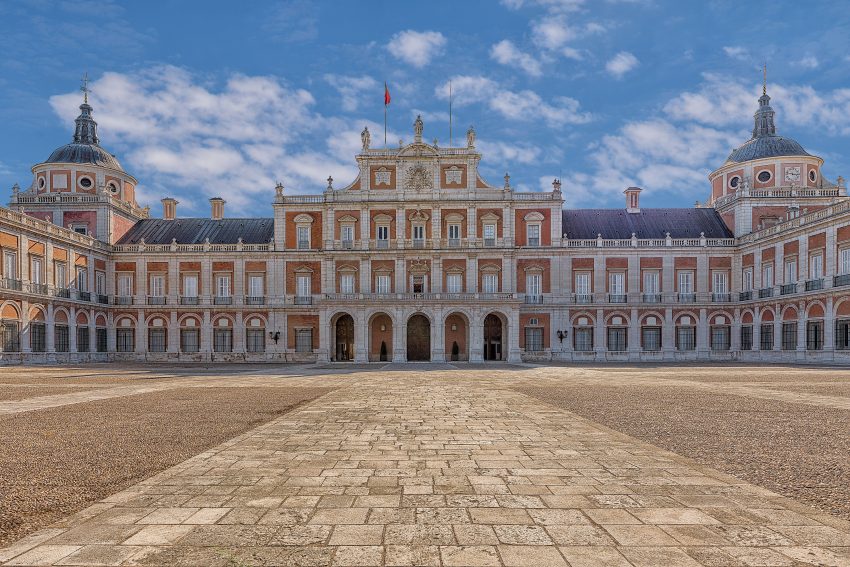
The Palacio Real is the monumental Bourbon-era palace built after the old royal Alcázar burned down in 1734. Commissioned by Philip V and developed through the 18th century, it was designed to project dynastic power in stone: a vast Baroque residence rising above the Manzanares escarpment, using granite and white Colmenar limestone to give it that crisp, formal Madrid look. Although it is officially the royal palace, it is now used mainly for state ceremonies rather than day-to-day royal life.
Inside, the visit is about grand rooms and court symbolism rather than “palace living.” The highlight sequence usually includes the grand staircase, the Throne Room with its red velvet and ceiling frescoes, the lavish Banqueting Hall, and the Royal Armoury (one of Europe’s standout collections of tournament and battlefield pieces). Look as well for the porcelain room and decorative arts that show how tastes shifted from heavy Baroque to lighter neoclassical refinement.
Outside, linger in the courtyards and viewpoints before you move on. The façade and its scale read best from the Plaza de la Armería and the cathedral side, and the gardens (Sabatini and Campo del Moro) give you a calmer, greener framing of the building. It’s also an easy place to connect the story of monarchy, religion, and urban power because the next major landmarks sit almost shoulder-to-shoulder in the old core of Madrid.
Location: Centro, 28071 Madrid, Spain | Hours: (Summer) April 1 – September 30; Monday – Saturday: 10:00–19:00; Sunday: 10:00–16:00. (Winter) October 1 – March 31; Monday – Saturday: 10:00–18:00; Sunday: 10:00–16:00. | Price: Adults: €18; Reduced: €9; Under 5: free. | Website
16. Gran Via
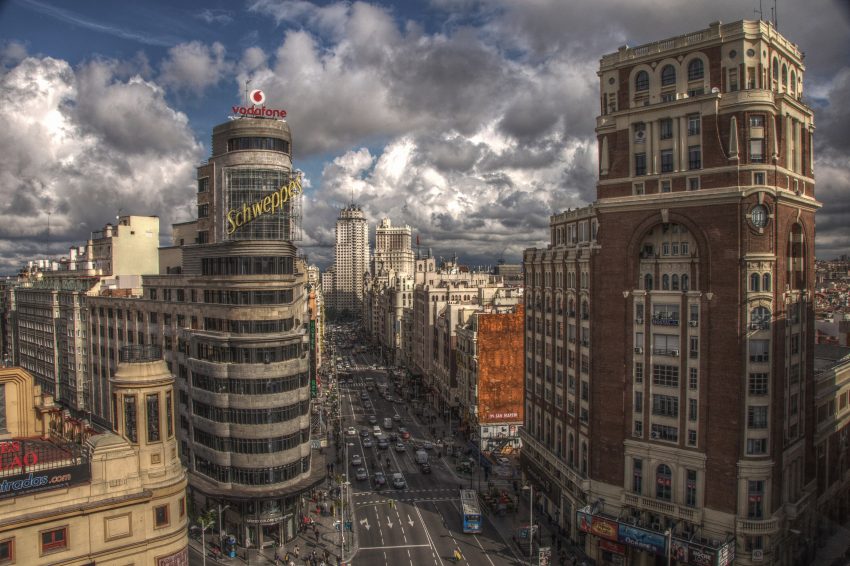
Gran Vía is Madrid’s early-20th-century “modern city” statement: a major avenue cut through older fabric to improve circulation, create commercial frontage, and project metropolitan confidence. Built in stages from the 1910s into the late 1920s, it reflects an era when European capitals were remaking themselves with big gestures—wider streets, new building typologies, and a public realm designed for traffic, spectacle, and consumption. Its history is therefore as much about urban planning as about architecture.
What to see is the architecture-by-episode: the street is a catalog of styles and ambitions. Early sections show ornate, historicist façades; later stretches move toward cleaner lines and early modern influences. The avenue is also tied to entertainment culture—cinemas, theatres, and marquee lighting—so even if you’re not going in, the street reads as a “showfront” for the city.
Walk it with your eyes trained on rooflines and corner buildings, because that’s where the drama is. Many of the most memorable features are above street level: domes, sculptural groups, and curved corners that were designed to be seen from moving vehicles and long approaches. It’s busy and commercial, but as a historical experience it’s one of the best places to feel Madrid’s shift into modern mass culture.
Location: Gran Vía, Centro, Madrid, Spain | Hours: 24 Hours. | Price: Free.

Moira & Andy
Hey! We're Moira & Andy. From hiking the Camino to trips around Europe in Bert our campervan — we've been traveling together since retirement in 2020!
This website uses affiliate links which earn a small commission at no additional cost to you.
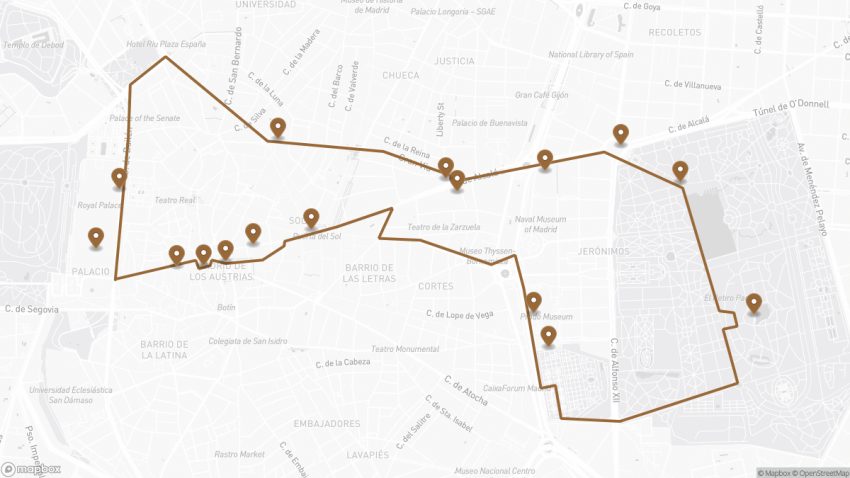
Walking Tour Summary
Distance: 8 km
Sites: 16
Walking Tour Map