Self-Guided Walking Tour of La Coruna Old Town (2026)
This website uses affiliate links which earn a small commission at no additional cost to you.
La Coruña’s Old Town is compact, atmospheric, and ideal for exploring on foot. In a short distance you move from elegant waterfront promenades to narrow lanes lined with glass-fronted galleries, stone churches, and small plazas that still feel distinctly Galician. This self-guided route is designed to be simple to follow, with natural pauses for photos, coffee, and a few local bites along the way.
The walk focuses on the historic heart of the city: the oldest streets, the most characterful viewpoints, and the places where La Coruña’s maritime identity is most visible. Expect a mix of big-name landmarks and quieter corners that reward slow wandering. If you want the best things to see in La Coruña without rushing or joining a group, this route keeps everything logical and walkable.
Plan on a relaxed half-day, longer if you stop often for tapas or linger at the seafront. The route works well in the morning for softer light and fewer crowds, but it’s equally enjoyable later in the day when the old streets start to buzz. Wear comfortable shoes, bring a light layer for coastal wind, and treat this as a framework you can stretch or shorten depending on your pace.
Table of Contents
- How to Get to La Coruña
- A Short History of La Coruña Old Town
- Roman & Early Foundations in La Coruña Old Town
- Medieval La Coruña Old Town & the Rise of a Walled Quarter
- Early Modern La Coruña Old Town: Port Power, Raids & Rebuilding
- 18th–19th Century La Coruña Old Town: Civic Identity & Monumental Spaces
- 20th Century La Coruña Old Town: Preservation, Change & Everyday Life
- La Coruña Old Town Today: Heritage-Led Renewal & Living Traditions
- Where to Stay in La Coruña Old Town
- Your Self-Guided Walking Tour of La Coruna Old Town
- Avenida da Marina
- Pazo da Capitanía
- Castelo de San Anton
- Ruins of the Convent of Saint Francis
- Museo Militar
- Collegiate Church of Santa Maria do Campo
- Coruña City Hall
- Plaza de Maria Pita
- Igrexa de San Xurxo
- Mercado Municipal de San Agustín
- Paseo Marítimo
- Rúa do Orzán
- Playa de Riazor
- Casa Museo Picasso
- Rúa Real
- Casas de Paredes
How to Get to La Coruña
By Air: The nearest airport is A Coruña Airport (LCG), a short drive from the city. From the terminal you can usually reach the centre by taxi or rideshare in roughly 15-25 minutes depending on traffic, then continue on foot into the Old Town. Public transport is also available on some schedules, typically linking the airport with central stops; from there it’s an easy walk or a quick local bus/taxi hop to the historic streets around Plaza de María Pita and the waterfront. For the best deals and a seamless booking experience, check out these flights to La Coruna on Booking.com.
By Train: A Coruña has mainline rail connections to major cities in Galicia and beyond, with services arriving at A Coruña Railway Station (Estación de A Coruña / San Cristóbal). From the station, the Old Town is close enough for a straightforward taxi ride (often around 10-15 minutes) or you can use local buses to reach the centre and then walk the final stretch. If you’re travelling from within Galicia, rail is often one of the simplest options because you arrive already close to the main sightseeing area. Train schedules and bookings can be found on Omio.
By Car: Driving is practical if you’re coming from elsewhere in Galicia or doing a wider road trip, with good motorway links approaching the city. The Old Town itself has narrow streets and restricted access in places, so it’s usually best to park in a public garage or designated parking area on the edge of the centre (near the marina/port side or around the more modern grid) and continue on foot. If you’re staying overnight, check whether your accommodation offers parking or can advise the most convenient garage for Old Town access. If you are looking to rent a car in Spain I recommend having a look at Discover Cars, first, as they compare prices and review multiple car rental agencies for you.
By Bus: Long-distance buses connect A Coruña with many Galician and Spanish cities, typically arriving at the main bus station (Estación de Autobuses). From there, you can take a taxi or local bus toward the city centre and walk into the Old Town; travel times are generally similar to reaching the centre from the train station, and it can be a cost-effective alternative if rail schedules don’t suit.
A Short History of La Coruña Old Town
Roman & Early Foundations in La Coruña Old Town
The earliest chapters of La Coruña Old Town are tied to seaborne trade, coastal defence, and the gradual shaping of an urban core that looked outward to the Atlantic. In the Roman period, the area developed around maritime activity and communications, leaving an enduring imprint on the city’s identity as a port community. While later centuries would transform the streetscape, the logic of the Old Town’s development-defensible high ground, access to the harbour, and short links between civic, religious, and commercial spaces-was established early and remained surprisingly durable.
Medieval La Coruña Old Town & the Rise of a Walled Quarter
During the Middle Ages, La Coruña Old Town consolidated into a denser, more clearly defined settlement, with churches, small squares, and a street network suited to daily life in a fortified port. Religious and civic buildings became anchors for neighbourhood identity, shaping the kinds of routes that still feel “natural” when you walk today: from parish churches to market areas to the water’s edge. The medieval period also strengthened the Old Town’s defensive character, with walls and controlled access reflecting both the value and vulnerability of a community whose prosperity depended on shipping.
Early Modern La Coruña Old Town: Port Power, Raids & Rebuilding
From the 1500s onward, La Coruña Old Town entered a more turbulent, strategic era, shaped by imperial trade, naval logistics, and the realities of Atlantic conflict. The city’s maritime importance brought attention, investment, and-at times-attack, which in turn drove cycles of fortification and reconstruction. Landmarks associated with defence and maritime administration gained prominence, and the Old Town’s relationship with the waterfront intensified: it was not simply a backdrop to the port, but an operational centre where civic authority, commerce, and coastal security were tightly intertwined.
18th-19th Century La Coruña Old Town: Civic Identity & Monumental Spaces
In the 18th and 19th centuries, La Coruña Old Town evolved from a primarily defensive medieval quarter into a more openly civic and representative centre. Key squares and public buildings took on greater symbolic weight, expressing local pride and municipal authority while accommodating a growing urban population. This is the period when the Old Town’s most recognisable “city” spaces feel increasingly intentional: places designed for gathering, ceremony, and administration, alongside older religious sites that continued to structure community life.
20th Century La Coruña Old Town: Preservation, Change & Everyday Life
The 20th century brought modern pressures-traffic, new housing demands, and shifting commercial patterns-while also prompting a stronger appreciation of heritage. As the city expanded, La Coruña Old Town increasingly became valued not only as a functional centre but also as a historic district worth conserving. Restoration campaigns and adaptive reuse helped protect key buildings, while everyday life continued to animate the quarter through cafés, local shops, festivals, and the ordinary rhythms that keep historic streets from becoming purely museum-like.
La Coruña Old Town Today: Heritage-Led Renewal & Living Traditions
Today, La Coruña Old Town is defined by a balance between preservation and active use. Historic churches, fortifications, gardens, and civic spaces form a coherent story of a maritime city shaped by trade and defence, yet the district’s appeal is also grounded in its lived character-small plazas that still host conversation, streets that still funnel people toward the sea, and landmarks that remain part of local routine. The result is a historic core that reads clearly across time: layered, compact, and best understood by walking it slowly.
Where to Stay in La Coruña Old Town
To make the most of visitng La Coruña Old Town and this walking tour then you consider stay overnight at the centre. If you want to be able to start early and finish late without thinking about transport, the most convenient base is the Ciudad Vieja / María Pita side of the Old Town, where you can step straight into the historic streets and waterfront viewpoints. Good, walk-everywhere options here include NH Collection A Coruña Finisterre and Meliá Maria Pita.
If you prefer a slightly more “city-centre” feel while still being within easy walking distance of the Old Town (useful for shopping, cafés, and evening tapas), aim for the Ensanche edge around Plaza de Pontevedra / Juana de Vega / Juan Flórez. This area keeps you close to the Old Town entrances and the seafront, while giving you more choice for dining and practical services. Strong picks here include Eurostars Blue Coruña, Hesperia A Coruña Centro, and Hotel Zenit Coruña.
For travellers who want the walking tour as a “core activity” but also want immediate beach access and an easy evening stroll along the promenade, the Orzán / Riazor frontage is a practical compromise: you’re still close enough to walk into the Old Town, but you also get open views and a relaxed coastal atmosphere. Consider Hotel Riazor or Hotel Maycar for a central, straightforward base that keeps both the Old Town route and the waterfront within easy reach.
Your Self-Guided Walking Tour of La Coruna Old Town
Discover La Coruña Old Town on foot with our walking tour map, guiding you from stop to stop as you explore its historic streets, waterfront viewpoints, and atmospheric plazas. Because this is a self-guided route, you can set your own pace-skip any sights that don’t interest you, linger longer where you want, and add coffee or tapas breaks whenever it suits you.
1. Avenida da Marina
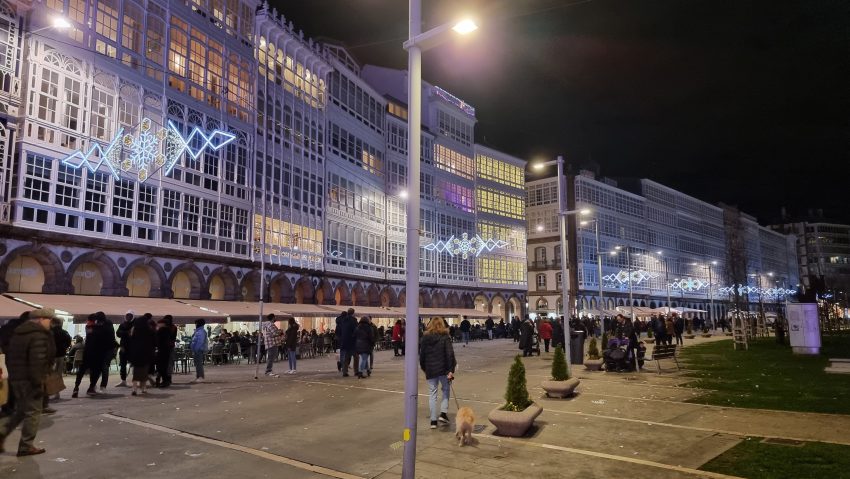
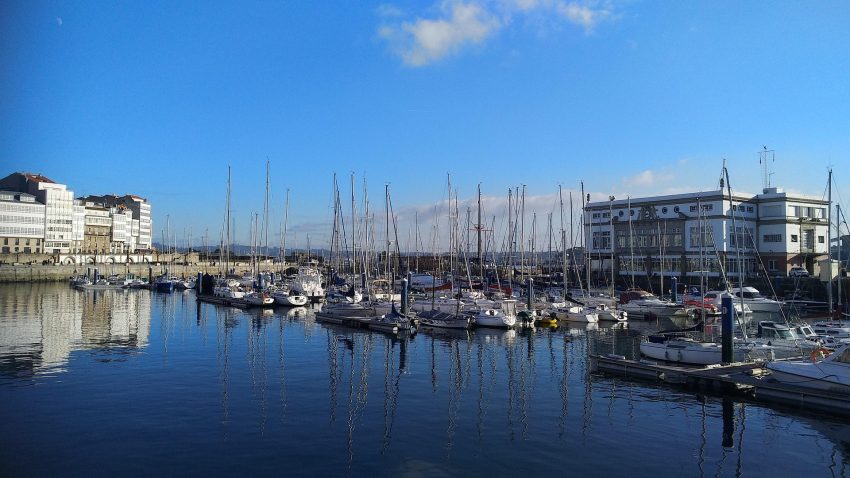
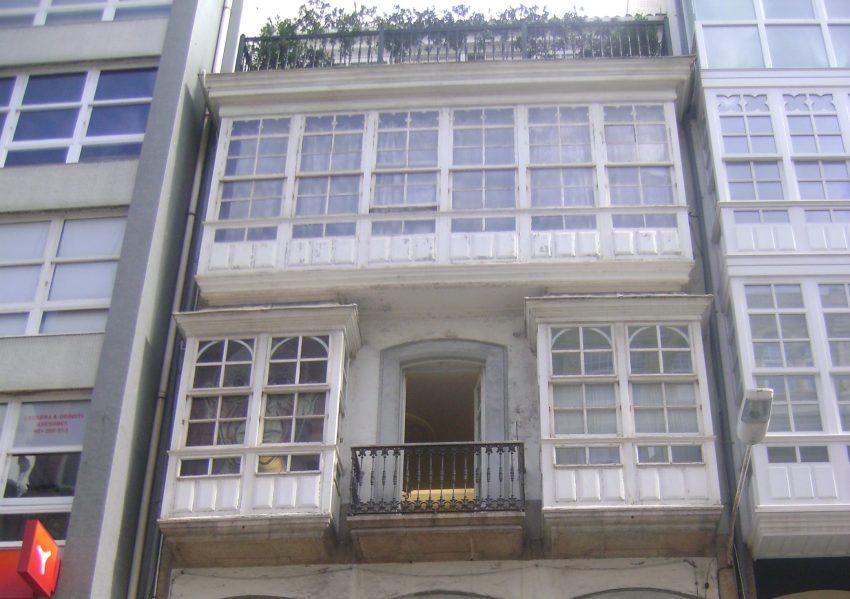
This waterfront frontage is one of A Coruña’s signature urban scenes: a continuous line of buildings whose enclosed glass balconies (galerías) turned the port into a kind of architectural showcase. The fashion took off as the city expanded commercially around the harbour, with galleries solving a practical Atlantic problem—rain, wind, and salty air—while also letting homes capture light and warmth. Over time, the look became so characteristic that it helped cement A Coruña’s “glass city” identity.
What you see today is the rhythm of white-painted frames, repeated panes, and long façades facing the water, punctuated by older stone details and occasional more ornate bay windows. Look for how the galleries are not just decoration: they wrap living spaces like a bright buffer zone, with subtle variations in carpentry, proportions, and ironwork from one building to the next. In certain stretches, the ensemble reads almost like a single monumental screen along the marina.
To visit well, treat it as both a viewpoint and a slow “façade museum.” Walk it once in daylight to catch the reflections and the sense of scale against the harbour, then again near dusk when interior lights turn the glass into a lantern effect. It also works as a connective spine to nearby Old Town streets, letting you dip inland for churches, squares, and cafés, then return to the sea edge for the big Atlantic horizon.
Location: Avenida da Mariña, Sada, A Coruña, Spain | Hours: 24 Hours. | Price: Free.
2. Pazo da Capitanía
Location: Pazo da Capitanía, Praza da Constitución, A Coruña, Spain | Hours: (Summer) Wednesday: 12:00. July–August. Friday: 11:00. Last Friday of the month. | Price: Free (during scheduled guided visits). | Website

3. Castelo de San Anton
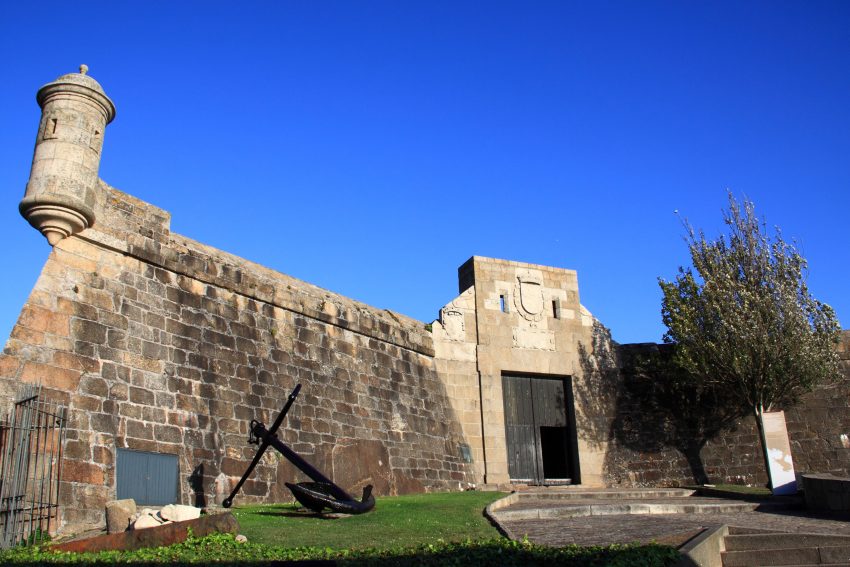
San Antón began as a 16th-century coastal fortress built to defend A Coruña’s harbour approaches, taking advantage of a small island position that gave it clear control over maritime access. Over the centuries it cycled through uses typical of Atlantic fortifications: defensive stronghold, prison, and later a lazaretto connected to the health realities of seafaring and contagious disease. In the 20th century, the building was repurposed as a museum site, and it now houses the city’s Archaeological and History Museum.
What to see is the fortress as a space you can physically “read”: thick walls, controlled entrances, and the logic of coastal defence translated into stone geometry. The museum collections add another layer, presenting material from prehistory through local and Galician history, with the building itself acting as the largest exhibit. Even if you’re not museum-focused, walking the ramparts and moving through the interior chambers gives you a strong sense of how constrained, purposeful military architecture feels.
For visitors, the best approach is to split your attention between exhibits and the structure. Do one loop that prioritises views and fortification features, then a second, slower pass through the museum narratives. Because it sits close to the Old Town, it fits easily into a half-day of historically dense stops—church, ruins, square, castle—without needing transport, and it provides the most tangible “harbour defence” perspective in the city core.
Location: P.º Marítimo Alcalde Francisco Vázquez, 2, 15001 A Coruña, La Coruña, Spain | Hours: (Summer) July – August: Tuesday – Saturday: 10:00–21:00; Sunday & public holidays: 10:00–15:00. Closed on Monday. (Winter) September – June: Tuesday – Saturday: 10:00–19:30; Sunday & public holidays: 10:00–14:30. Closed on Monday. | Price: General admission: €2.06; Reduced: €1.03. | Website
4. Ruins of the Convent of Saint Francis

These ruins are the visible remainder of a Franciscan complex that belonged to medieval A Coruña and later suffered repeated disruption through conflict and urban change. Part of the site’s story is dramatic: sources describe damage and destruction around the period of Drake’s 1589 attack and later phases of abandonment and dispersal, followed by 20th-century efforts to recover and stabilise what remained.
What you see today is an outdoor archaeological fragment—foundations, partial walls, and cloister traces—set within a landscaped green space that makes the remnants legible. The “sight” here is not a complete building but the act of reading absence: you reconstruct the convent’s footprint mentally, using surviving masonry as clues. Interpretive elements and the surrounding setting help turn the ruins into a calm counterpoint to the dense streets of the Old Town.
To get the most from the visit, approach it like a short, focused stop: walk the perimeter first, then step into the interior area and look for alignments that suggest cloister walks and chapels. It’s also worth noticing the conservation approach—how stonework has been preserved and presented—because that tells a modern story about A Coruña deciding what to keep visible of its layered past. If you’re building a route, it pairs well with nearby churches and the castle museum as a compact medieval-to-early-modern cluster.
Location: Ánimas, 10, 15001 A Coruña, La Coruña, Spain | Hours: Monday – Sunday: 10:00–13:00 & 17:00–21:00. | Price: Free. | Website
5. Museo Militar
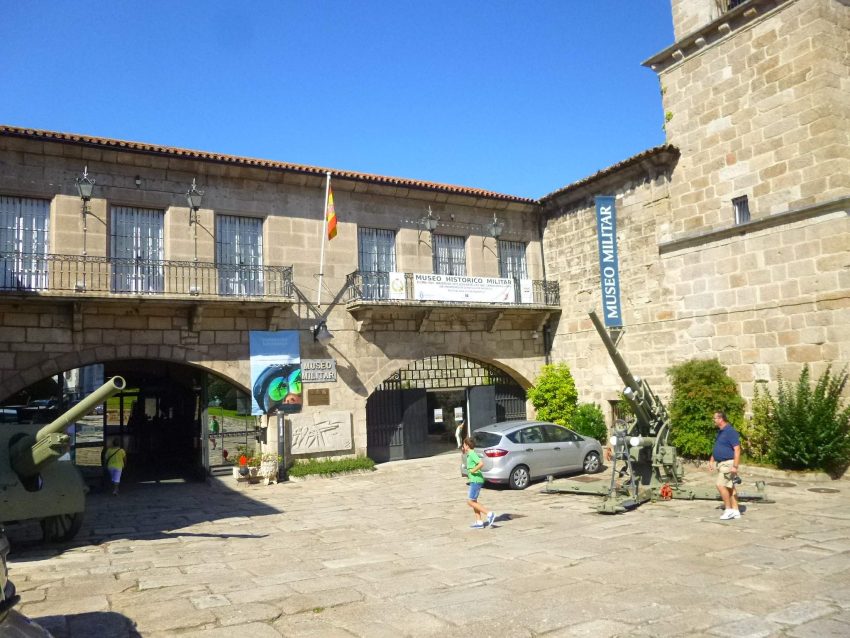
A Coruña’s Military Museum is rooted in 19th-century collecting, with its origins traced to 1858 when an initial collection of models and material related to artillery and military technology was assembled, later expanded by additions from successive conflicts. That long institutional timeline makes it useful not only for “weapons history,” but for understanding how the Spanish state curated military memory across different political eras.
What to see depends on your interests, but expect breadth: firearms, equipment, and objects that map changes in design, manufacture, and doctrine. Collections of this kind are often strongest when they show progression—how mechanisms evolve, how materials change, and how the same category of object (rifle, sidearm, uniform equipment) looks radically different across decades. The museum also tends to include items with specific local resonance, tying the city’s military presence to national history.
For a good visit, set a theme before you go in: technology, uniforms and symbols, or the city’s strategic Atlantic role. That keeps the experience coherent and prevents it from becoming a blur of objects. If you’re pairing it with other nearby sites, it works well after the castle and Old Town churches: you move from medieval/early-modern stone to the institutional world of the modern state, all within a short walk.
Location: Praza de Carlos I, s/n, 15001 A Coruña, Spain | Hours: Monday – Saturday: 10:00–14:00 & 17:00–19:30. Sunday: 10:00–14:00. | Price: Free. | Website
6. Collegiate Church of Santa Maria do Campo
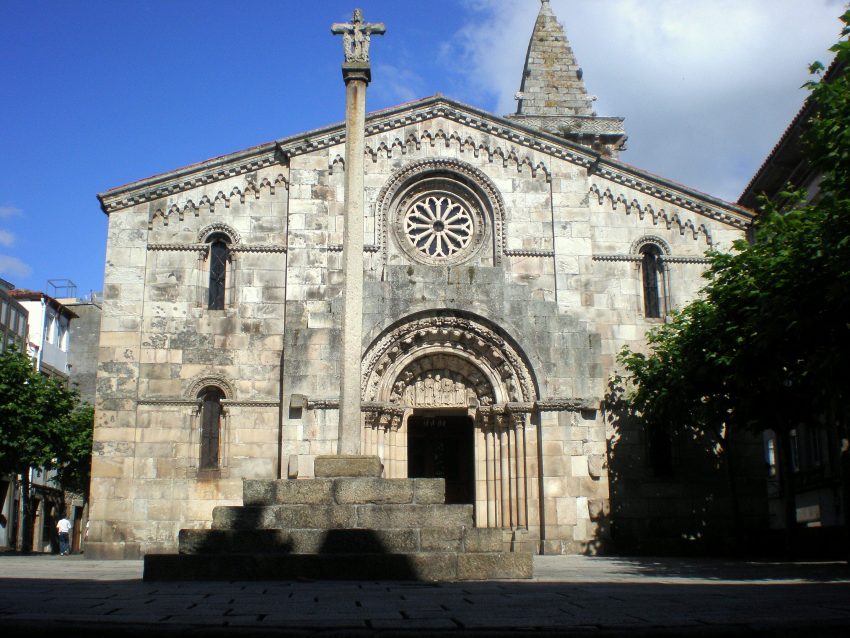
Santa Maria do Campo is one of the Old Town’s key medieval churches, with origins in the 12th–13th centuries and a building traditionally cited as completed in 1302; it later gained collegiate status in 1411. Its history is closely tied to A Coruña’s maritime community, functioning as a major parish church in the port city and accumulating additions and artworks as the city’s fortunes rose and fell.
What to see is a layered fabric: Romanesque structure and planning cues alongside later Gothic elements and sculptural portals. Pay particular attention to the exterior doorways and their carvings, which are among the most visually rewarding features, and then step inside to notice the proportion of the naves and the way the interior columns and arches create a distinctly medieval rhythm.
The visit is most satisfying when you slow down and treat it as a “working archive” rather than a single-style monument. Walk around it first to find the most interesting portal details, then go in and let your eyes adjust to the dimmer interior—medieval spaces reveal themselves gradually. Because it sits in the Ciudad Vieja, it also pairs naturally with nearby convent remains and the castle museum, making it an efficient anchor for a historically focused section of a walking tour.
Location: Rúa Damas, 24, 15001 A Coruña, Spain | Hours: Monday – Friday: 11:00–13:00. Saturday: Closed. Sunday: Closed. | Price: Free; donations appreciated. | Website
7. Coruña City Hall
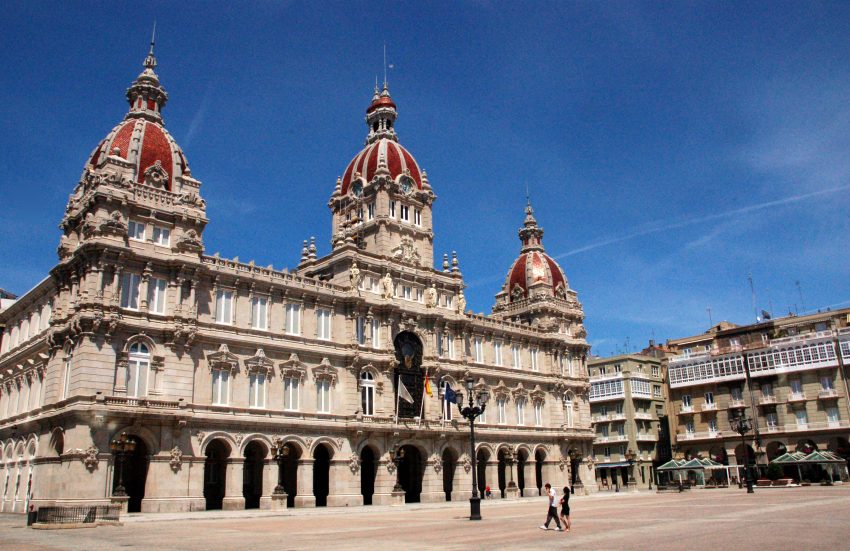
A Coruña’s City Hall is a modernist-era municipal statement built in the early 20th century, designed to give the main square an authoritative civic façade. Construction is commonly dated to 1908–1912, with a later ceremonial inauguration in 1927 by King Alfonso XIII, underscoring the building’s role as both administration and representation.
What to look for is the building’s scale and composition: a long, carefully ordered frontage that reads as “public architecture,” with repeated windows, sculptural details, and a sense of hierarchy from base to roofline. The best view is from mid-square, where you can take in the full width and see how the building anchors the space. If you can go inside on a guided visit, the ceremonial rooms and staircases tend to be the highlights, revealing how civic buildings stage authority through interiors as much as façades.
As part of a visit, this works well as an architectural counterpart to the older religious sites nearby. You can “read” a timeline in a short radius: medieval churches and convent remnants in one direction, and early-20th-century civic modernity in another. Even if you only see it from outside, linger long enough to notice how the arcades, café life, and administrative presence combine to make the square feel continuously inhabited.
Location: 15001 A Coruña, Spain | Hours: Daily: 12:00–14:00 & 18:00–21:00. | Price: Free. | Website
8. Plaza de Maria Pita
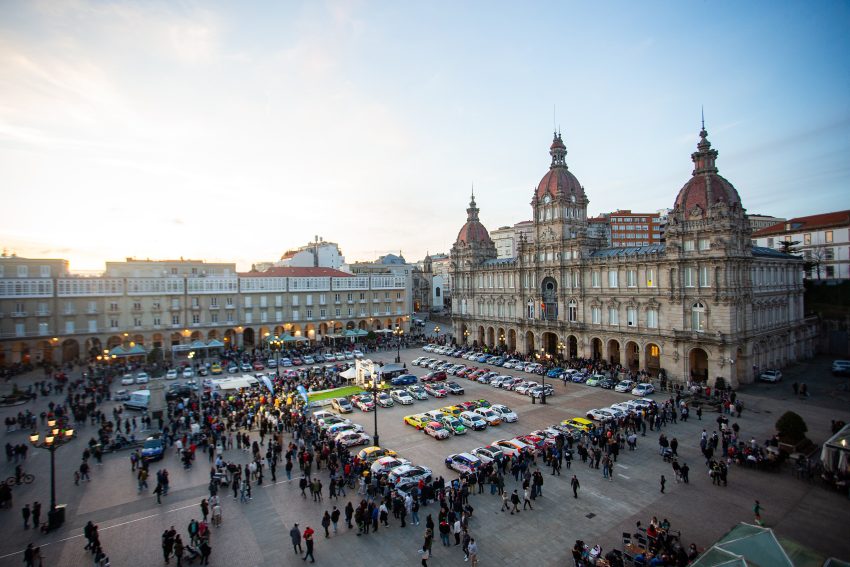
This is A Coruña’s principal civic square, named for María Pita, the local heroine associated with the city’s resistance during the 1589 attack led by English forces under Francis Drake. The square as a formal, monumental urban space is largely a product of later city planning, but its name and symbolism anchor it firmly in the city’s defining narrative of defiance and coastal vulnerability.
What to see here is the choreography of civic power and public life. The space is broad and framed by porticoed buildings that create a continuous sheltered edge, with cafés and terraces animating the perimeter. The central statue of María Pita provides the narrative focal point, while the long north side is dominated by the municipal building that turns the square into a literal seat of administration as well as a symbolic stage.
To experience it, spend time at different points rather than just crossing it. From the statue, take a moment to read the square as a set piece—axes, façades, and the way the arcades “hold” the space. It’s also an excellent reset point on a walking tour: streets radiate outward, so you can use the square to reorient before heading to the marina, the Old Town lanes, or the church quarter.
Location: Pr. de María Pita, A Coruña, 15001 A Coruña, Spain | Hours: 24 Hours. | Price: Free. | Website
9. Igrexa de San Xurxo

Igrexa de San Xurxo is a Baroque landmark whose present form is typically dated to the 18th century, reflecting the period when A Coruña’s religious architecture adopted more theatrical spatial planning and ornament. Beyond style, the church has a distinctive place in social history: it is associated with the 1901 case of Elisa and Marcela, often cited as the first documented same-sex marriage in Spain, which later became widely known through books and film.
Inside and out, look for the Baroque vocabulary: a composed façade, controlled grandeur, and an interior designed to focus attention toward the altar. Even if you’re not timing a visit around services, stepping in briefly is worthwhile for the change in acoustics and light—an architectural “pause” amid the busy streets outside. The church also repays attention to smaller details: altarpieces, chapels, and the way Baroque spaces guide movement and sightlines.
As a visitor, this is a place where meaning comes from layers. You can appreciate it as architecture, but it also invites reflection on the city’s cultural memory—how an event from 1901 is still attached to a physical setting, turning a church visit into a point of contact with a wider narrative about identity, law, and social norms. Pair it with a short walk through nearby streets to see how quickly A Coruña shifts from civic bustle to contemplative interiors.
Location: R. Pío XII, 19, 15001 A Coruña, Spain | Hours: Monday – Sunday: 10:00–13:00 & 18:00–20:30. | Price: Free; donations appreciated. | Website
10. Mercado Municipal de San Agustín
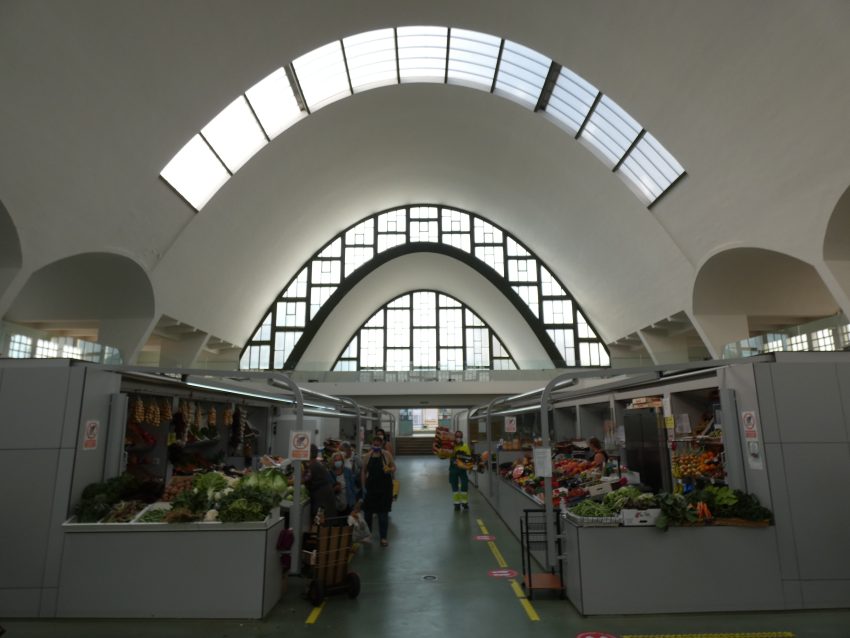
San Agustín Market is a 20th-century answer to an old urban need: a centralised, regulated place to buy food in a city whose identity is strongly maritime. The building itself is part of that story—an architectural statement from the interwar period, credited to key municipal architects and reflecting modern construction techniques and civic investment in public infrastructure.
What to see is both the structure and the produce culture. Inside, the stalls express the region’s strengths—especially seafood—alongside meats, cheeses, and seasonal vegetables, while the building’s form and light are worth noticing as you move through. Look for the way the interior volume is handled: the roofline, the daylight, and the sense of the market as an engineered public room rather than a simple shed.
For visitors, the best visit is early, when selection is highest and the market feels most “working.” Go with a specific tasting mission—shellfish, cured meats, local cheeses—or simply use it as a sensory reset between monuments: voices, knives on boards, briny air, and the everyday tempo of A Coruña. Even if you don’t buy much, it’s one of the fastest ways to understand how the city eats.
Location: Praza San Agustín, 1, 15001 A Coruña, Spain | Hours: Monday – Saturday: 08:00–15:30. Sunday: Closed. | Price: Free. | Website
11. Paseo Marítimo
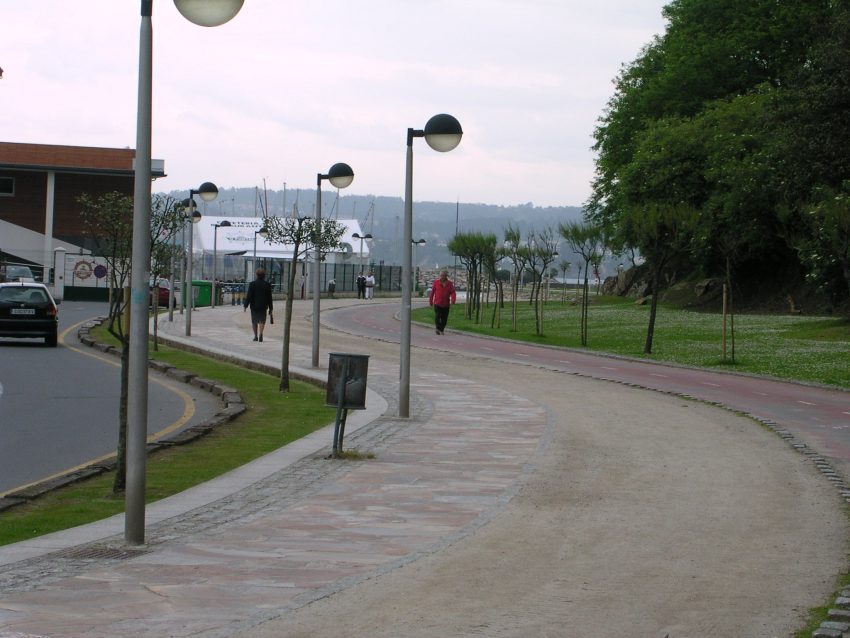
A Coruña’s Paseo Marítimo is a modern civic project in the best sense: a continuous coastal route that encircles much of the peninsula and turns the Atlantic edge into public space. In length and ambition it has been promoted as one of Europe’s longest seaside promenades, reflecting 20th-century urban efforts to connect disparate shoreline areas—beaches, cliffs, and headlands—into a single legible walk.
The “sights” along it are sequential: the city reveals itself in chapters as you move. One stretch is beach-facing and social; another is exposed and cliffy; others open onto viewpoints and harbour scenes. Even the street furniture becomes part of the experience—most famously the distinctive red lamps that act as a visual signature and a navigational cue as the path curves around the coast.
To see it well, don’t treat it as one single walk unless you want a long-distance day. Instead, pick a segment that matches your mood: beach and cafés near Riazor/Orzán; more dramatic ocean exposure toward headlands; or sunset stretches where the light drops behind the city. The promenade is also a practical spine for orientation—when in doubt, find the sea edge, then use the Paseo to “reset” your map before heading back into the Old Town.
Location: P.º Marítimo, A Coruña, 15002 La Coruña, Spain | Hours: 24 Hours. | Price: Free.
12. Rúa do Orzán
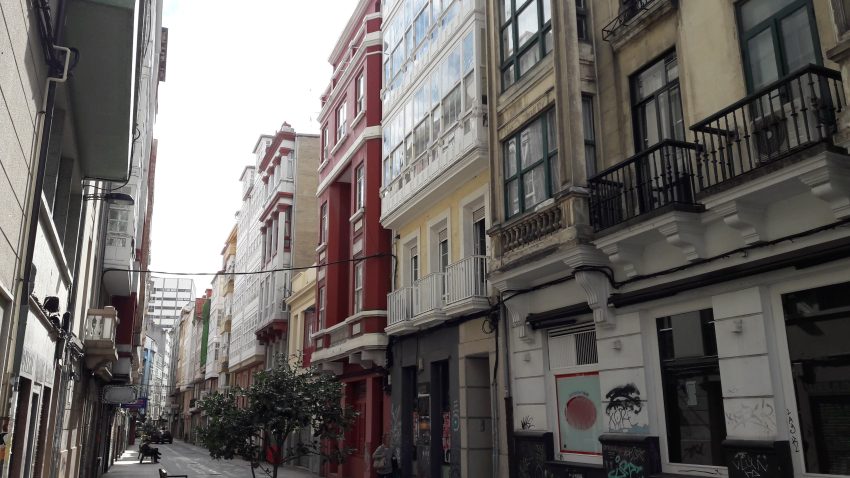
Rúa do Orzán sits in the band of streets where A Coruña’s coastal geography and its social life overlap: close to the sea, parallel to the beach and promenade, and historically positioned to serve both locals and visitors moving between waterfront and centre. Over time, streets like this often evolve from mixed residential and small commerce into recognisable nightlife and dining corridors, reflecting changing patterns in leisure and urban density.
What to look for is the blend rather than a single monument: traditional building forms beside more modern façades, small bars and restaurants tucked into narrow frontages, and the constant “flow” of foot traffic that gives the street its identity. If you visit in the early evening, you’ll see the transition as shutters lift, terraces fill, and the street becomes a social channel running inland from the sea.
As a visitor, the street works best as an atmosphere stop: a place to sample informal Galician dining, catch live energy, and then drift back to the water. It’s also useful logistically—an easy line to follow when you want to move between the beach zone and the commercial core without losing your sense of direction. If you’re sensitive to noise, the simplest strategy is to walk it earlier, then return later only if you specifically want the nightlife pulse.
Location: Av. de Pedro Barrié de la Maza, 26, 15003 A Coruña, La Coruña, Spain | Hours: 24 Hours. | Price: Free.
13. Playa de Riazor
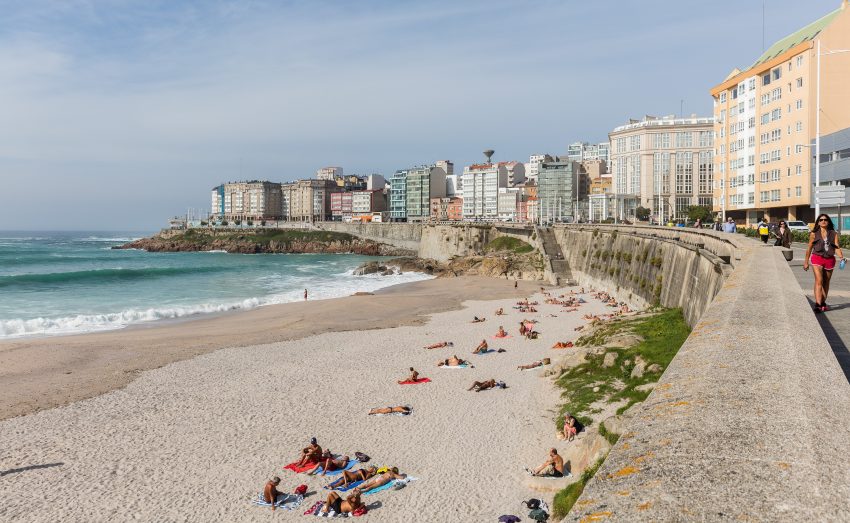
Playa de Riazor is A Coruña’s classic urban beach, sitting in the Ensenada del Orzán and forming part of the city’s Atlantic-facing identity. Its modern popularity rests on accessibility—right on the city’s edge—while its longer story is tied to how A Coruña developed a public waterfront, gradually shaping the shore into a place for leisure, promenading, and civic life rather than only maritime work.
What you “see” here is as much urban scenery as nature: a broad sweep of sand with the built city wrapping it, and a backdrop that includes one of Spain’s most storied football settings at the Estadio de Riazor. The beach connects naturally with neighbouring coastal spaces, so the view changes quickly as you move—open water, headlands, and then the city’s long seawall and promenade structure.
For a visit, time matters. At low tide the beach feels expansive and walkable; at higher tide it becomes more about the edge—waves, surf, and the soundscape of the Atlantic. If you want the “A Coruña” effect, pair it with a promenade walk and a short detour into the nearby streets for food; the best experience is the contrast between salty wind outside and the dense, social city just a minute inland.
Location: Praia de Riazor (A Coruña), Spain | Hours: 24 Hours. | Price: Free. | Website
14. Casa Museo Picasso
This small museum is anchored in a precise biographical fact: Pablo Picasso lived in A Coruña as a child with his family from 1891 to 1895, during the period when his father taught and the young artist developed rapidly through drawing and observation. The institution uses that domestic context as its core idea, recreating the atmosphere of a late-19th-century home rather than presenting a blockbuster “masterworks” gallery.
What to see is therefore intimate and interpretive: rooms furnished to evoke the period, and displays that focus on early formation—studies, themes, and the kind of visual training that precedes the famous stylistic revolutions. Expect reproductions and contextual material rather than original major canvases, with an emphasis on how the city and this household environment shaped the young Picasso’s eye.
The most rewarding way to visit is to treat it as a “chapter” in a larger A Coruña walk. Go in with the question, “What does a future innovator look like before the innovation?” and pay attention to the everyday scale: stairwells, light from windows, and the domestic rhythm of the rooms. When you step back out onto the street, it becomes easy to connect the museum to the city’s broader visual culture—harbour light, stone façades, and the Atlantic weather that sharpens contrast and colour.
Location: Rúa Payo Gómez, 14, 15004 A Coruña, Spain | Hours: Tuesday – Saturday: 10:00–13:00 & 17:00–20:00. Closed on Sunday, Monday. | Price: Free. | Website
15. Rúa Real
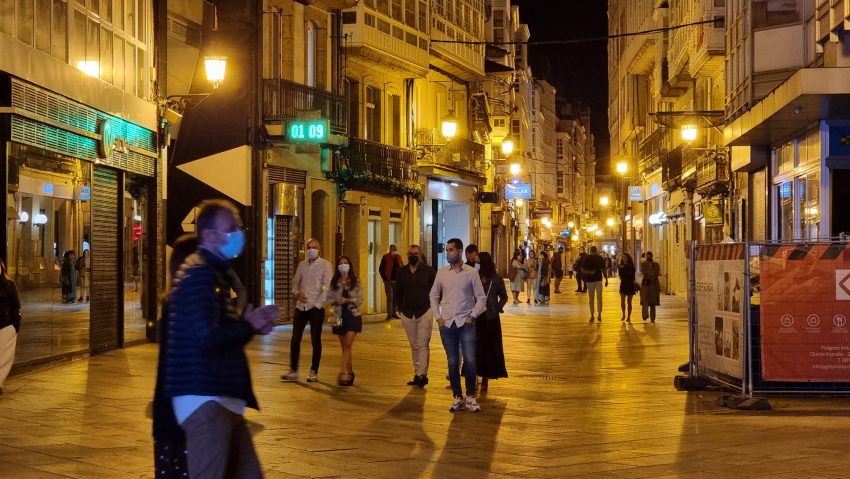
Rúa Real is one of A Coruña’s classic commercial arteries, running through the heart of the historic centre and linking everyday city life with the older fabric of the Old Town. Like many long-lived “main streets,” it has shifted roles over centuries—part thoroughfare, part marketplace, part social promenade—absorbing changes in trade, retail, and the way locals use the centre. Its continued prominence is exactly what makes it historically interesting: it is a living street rather than a preserved monument.
Architecturally, the interest is in how the street holds together as a corridor: consistent building heights, narrow perspectives, and façades that show incremental change—traditional Galician forms alongside more modern storefront interventions. Look up from shop level to catch balconies, cornices, and the way upper floors retain older character even when the ground floor is thoroughly contemporary. Because it’s pedestrian-friendly, you can pause often without fighting traffic.
In practice, Rúa Real is best used as a “working spine” for exploring: a place to browse, pick up essentials, and calibrate your bearings before diving into smaller lanes and squares. Early in the day it feels functional and local; later it becomes more social. If you’re building a walking route, it’s a reliable connector between waterfront areas and the historic core, with plenty of natural stops for cafés and people-watching.
Location: Rúa Real, A Coruña, 15003 A Coruña, Spain | Hours: 24 Hours. | Price: Free.
16. Casas de Paredes
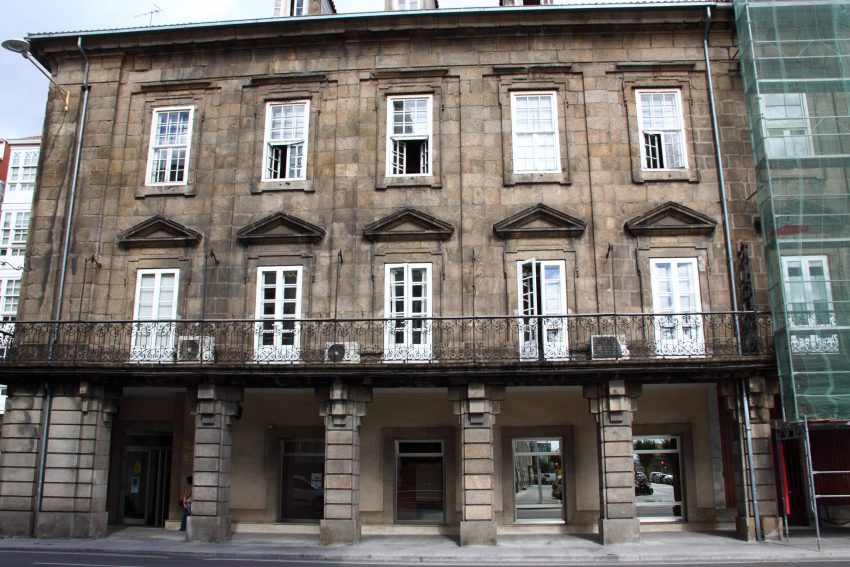
The Casas de Paredes are part of an 18th-century attempt to give A Coruña a more imposing, orderly maritime frontage, aligned with broader Bourbon-era reforms that brought military engineers and new planning ideas to Galicia. The complex is typically dated from the late 1770s and is associated with the Captain General García de Paredes as promoter, reflecting a neoclassical taste for symmetry and civic grandeur on the waterfront.
When you stand in front of them, the first thing to notice is the disciplined, almost “official” feel: repeated openings, balanced proportions, and a restrained ornamentation that contrasts with the later, lighter glass gallery aesthetic nearby. Even without going inside, you can read the building as a statement—architecture meant to project stability and status at the city’s seaward edge. The setting on the marina helps you understand why the project mattered: this is where arrivals, trade, and the public image of the city converged.
For visitors, the appeal is in the details and the context. Photograph it obliquely so the long façade lines up with the curve of the harbour, then compare it with the neighbouring gallery-fronted houses to see how A Coruña’s maritime architecture evolved from stone-heavy neoclassicism to light-filled glass. It’s also a good prompt to look up and spot small variations—later alterations, different window treatments, and how the complex “fits” into the broader waterfront sequence.
Location: Avenida Marina, 17, 15003 A Coruña, Spain | Hours: Monday – Sunday: Open 24 hours. | Price: Free. | Website

Moira & Andy
Hey! We're Moira & Andy. From hiking the Camino to trips around Europe in Bert our campervan — we've been traveling together since retirement in 2020!
This website uses affiliate links which earn a small commission at no additional cost to you.
Walking Tour Summary
Distance: 5 km
Sites: 16