Self-Guided Walking Tour of Catania (2026)
This website uses affiliate links which earn a small commission at no additional cost to you.
Catania is a city you understand best on foot: a compact historic core built from dark lava stone, brightened by flamboyant Baroque façades and wide piazzas that open up unexpectedly as you turn a corner. This self-guided walk stitches together the old center's essential landmarks with the everyday atmosphere that makes the city feel alive, from morning espresso culture to the hum of street life around its main squares.
The route is designed to be flexible and easy to follow, with short distances between major sights and plenty of natural places to pause. You'll move through the city's most photogenic streets and viewpoints, stopping at signature churches, civic monuments, and market areas, while picking up small details that are easy to miss when you're rushing. It's a practical way to cover the best things to see in Catania without needing a guide or a tight schedule.
Expect a mix of grand set-pieces and candid moments: ornate stonework, hidden courtyards, local food stalls, and the distinctive contrast between black lava rock and pale limestone. Whether you have half a day or a full day, this walking tour gives you a clear structure while leaving room for detours, snacks, and spontaneous discoveries that are very much part of Catania’s appeal.
Table of Contents
- How to Get to Catania
- Short History of Catania
- Where to Stay in Catania
- Your Self-Guided Walking Tour of Catania
- Museo Civico
- Giovanni Verga House Museum
- Roman Theater
- Roman Odeon
- Museo Vincenzo Bellini
- Terme della Rotonda
- Benedictine Monastery of San Nicolò l'Arena
- Roman Amphitheater
- Monument to Vincenzo Bellini
- Via Etne
- Piazza dell’Università
- Massimo Bellini Theater
- Chiesa della Badia di Sant'Agata
- Cathedral of Catania
- Fontana dell'Elefante
- Piazza Duomo
- La Pescheria
How to Get to Catania
By Air: Catania is served by Catania-Fontanarossa Airport (Aeroporto di Catania-Fontanarossa), the main gateway to eastern Sicily, with frequent domestic flights (especially from Rome and Milan) and a good spread of seasonal and year-round international routes. From the terminal, the easiest transfer into the center is the airport bus/shuttle, with taxis and ride services also available; if you're continuing beyond the city, picking up a rental car at the airport can be efficient. For the best deals and a seamless booking experience, check out these flights to Catania on Booking.com.
By Train: Catania Centrale is the city's main station and the most practical arrival point if you're coming from other Sicilian cities or transferring from the mainland via Messina. Rail is a solid option for linking up with Taormina/Giardini, Syracuse, Messina, and Palermo (often slower than driving, but straightforward), and it puts you close to the center so you can start walking without needing a car. Use Omnio to easily compare schedules, book train tickets, and find the best prices all in one place for a hassle-free journey across Italy.
By Car: Driving into Catania is convenient for exploring towns along the Ionian coast or for building a broader Sicily itinerary, with fast road access via the A18 (toward Messina/Taormina) and the A19 (toward Palermo). Once you reach the city, expect dense traffic, limited central parking, and ZTL/restricted zones in parts of the historic area-plan to use a garage or park on the edges and walk in to avoid fines and stress. If you are looking to rent a car in Italy I recommend having a look at Discover Cars, first, as they compare prices and review multiple car rental agencies for you.
By Bus: Long-distance coaches can be a cost-effective alternative to trains, with direct or one-change services connecting Catania to Palermo, Messina, Syracuse, Ragusa, and other Sicilian towns, plus airport-to-city services that run frequently. Bus arrival points vary by operator, so check the exact stop location in advance and allow extra time in peak traffic, especially if you're heading straight into the historic center.
Short History of Catania
Catania in the Greek and Hellenistic eras (8th-3rd centuries BCE)
Catania’s earliest urban identity took shape in the classical world, when a gridded street plan, civic spaces, and port-facing commerce anchored daily life. The city’s long habit of public gathering and trade still reads clearly in its central open spaces, especially around Piazza Duomo, where the rhythm of civic life has repeated for centuries in different architectural languages. Even now, the compact walk between the core squares and the market lanes gives you a sense of how an ancient city functioned: business early, social life later, with a strong pull toward the central piazzas.
Catania under Rome (3rd century BCE-5th century CE)
Roman rule scaled the city up into a fully equipped provincial center, leaving the most legible ancient remains you'll encounter on a walking tour. The Roman Amphitheater speaks to mass entertainment and the politics of public spectacle, while the Roman Theater of Catania points to a more structured cultural life, with performances tied to status, patronage, and civic identity. These venues weren't isolated monuments; they sat within a dense fabric of streets, baths, and shops, the same kind of layered city texture you feel today as you move between archaeological fragments and later streetscapes.
Catania from late antiquity to the medieval city (6th-15th centuries)
The centuries after Rome brought repeated transitions in power and urban priorities, with religious institutions gradually becoming the most durable anchors of continuity. The site of the Cathedral of Catania (later rebuilt many times) represents that long arc: a civic-religious center that absorbed change and reasserted order after each upheaval. Markets and public exchange never disappeared, and the continuity of food commerce is easiest to imagine at 'Piscaria (Catania Fish Market), where the city's older mercantile instincts feel intact-loud, immediate, and tied to daily necessities.
Catania’s early modern boom and aristocratic patronage (16th-17th centuries)
In the early modern period, wealth and status increasingly expressed themselves through palaces, ceremonial routes, and the careful staging of public life. This is the background that makes Palazzo Biscari (Biscari Palace) such a revealing reference point: it reflects a world where elite families invested in architecture, art, and hospitality as demonstrations of power and refinement. The city’s main corridors began to act not just as practical streets but as statements-places to be seen, to process through, and to connect institutions, residences, and civic spaces.
Catania after the 1693 earthquake (late 17th-18th centuries)
The 1693 earthquake triggered a dramatic reimagining of the city, producing the lava-stone Baroque character that defines the historic center's look and feel. Piazza Duomo and the Cathedral of Catania became the symbolic heart of this rebuilding, with a renewed emphasis on theatrical façades, balanced proportions, and a sense of ordered grandeur after disaster. The same reconstruction logic shaped other civic showpieces, including Piazza dell'Universita (University Square), where architecture and public space work together to project stability, authority, and confidence.
Catania in the 19th century (1800s)
The 19th century added a more modern civic and cultural layer, with public squares and promenading routes taking on new importance as the city’s social stage. Via Etnea (Etnea Street) became the defining artery for daily life and display, linking major spaces and concentrating shops, cafés, and the steady flow of residents and visitors. Cultural identity also sharpened around music and the performing arts: Piazza Bellini (Bellini Square), the Monument to Vincenzo Bellini, and the broader Bellini legacy signal how the city framed itself not only through religion and politics, but through artistic pride and public commemoration.
Catania from literary realism to contemporary civic memory (late 19th century-today)
From the late 1800s onward, the city's story is also told through its writers, museums, and the preservation of everyday life as heritage. The Giovanni Verga House Museum ties the urban experience to the intimate scale of rooms, habits, and observations that shaped literary realism, while the Museo Civico (Civic Museum) gathers the longer historical arc into collections that help connect ancient fragments to later artistic and civic ambitions. Meanwhile, 'Piscaria (Catania Fish Market) and the surrounding streets remain a living counterpoint to curated history-proof that, alongside monuments and museums, Catania's identity still rests heavily on daily commerce, street culture, and the continuity of communal life.
Where to Stay in Catania
To make the most of visiting Catania and this walking tour then you consider stay overnight at the centre. The most practical base is the Centro Storico around Piazza Duomo, where you can walk straight out to the Cathedral area, the fish market, and the main Baroque squares with minimal transit. Good, walk-friendly options here include Duomo Suites & Spa and Palace Catania | UNA Esperienze, both placing you right on the historic core’s main sight cluster.
If you want the same central convenience but a slightly calmer feel in the evenings, base yourself near Via Etnea and the Bellini area, which keeps you close to Piazza Bellini, the Monument to Vincenzo Bellini, and an easy approach to the Roman Amphitheater and the university squares. This area works well for cafés, dining, and an efficient start point in either direction along the route. Consider Habitat Boutique Hotel and Liberty Hotel for strong location-to-comfort value on foot.
For a more residential base that still reaches the tour quickly, look at the Borgo / upper Via Etnea side, where you’ll typically get a little more space and a quieter street scene while staying within a straightforward walk (or short hop) back into the core. It’s a sensible choice if you like starting early and returning to a less touristy neighborhood later. Two reliable picks in this broader central belt are NH Catania Centro and Romano House.
If you prefer staying near transport links for day trips while keeping the walking route simple, the area around Catania Centrale (and the adjoining streets toward the center) is convenient for rail connections and airport transfers, and you can still walk into the historic core in a reasonable time. This base is especially useful if you're combining Catania with Taormina or Syracuse and want an easy in-and-out routine. Options worth checking include Katane Palace Hotel and Hotel Villa Romeo.
Your Self-Guided Walking Tour of Catania
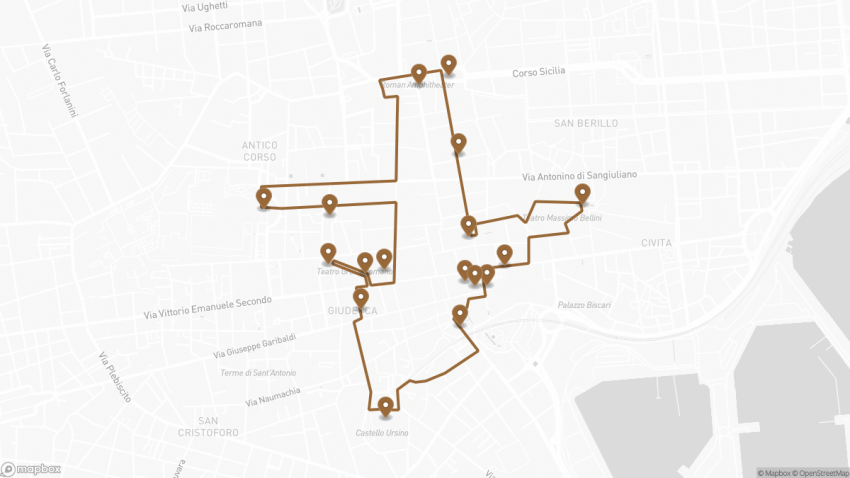
Discover Catania on foot, using our walking tour map to guide you from stop to stop as you explore the city's landmark piazzas, lava-stone streets, and layered history. Because it's a self-guided walking tour, you can set your own pace-skip any sights that don't interest you, linger where you like, and build in coffee breaks whenever you want.
1. Museo Civico

Catania’s Civic Museum is closely tied to the choice of venue: Castello Ursino. The museum’s modern formation gathered major collections (including material associated with the Biscari legacy and other local holdings) into a single stronghold-like space that could protect and present them. That decision matters because it turns the museum visit into two parallel experiences: you’re not only viewing artifacts, you’re also moving through one of the city’s most important medieval structures.
Castello Ursino was built in the 13th century as a royal fortress, later taking on political functions and surviving the city’s many upheavals better than most buildings of its era. Its rectangular plan and corner towers read as pure military logic, and the courtyard gives you a break point where you can reset before diving back into galleries. Inside, collections typically range from classical antiquities to later painting and decorative arts, so the museum acts as a compressed history of the region and the city’s collecting habits.
On a walking tour, this is your “deep time” stop: it’s the place where you can connect Roman, medieval, and early modern threads in one visit. Start by appreciating the building itself—stone thickness, tower geometry, courtyard proportions—then let the collections fill in the context. Because it’s a substantial visit, it also works well strategically: do it when you want a slower, cooler, more contemplative segment of your walk before returning to street life.
Location: Ursino Castle, Piazza Federico di Svevia, Catania, Metropolitan city of Catania, Italy | Hours: Daily: 09:00–19:00. Last entry: 18:00. | Price: €6.00 standard; €3.00 reduced; €2.00 schools. | Website

2. Giovanni Verga House Museum
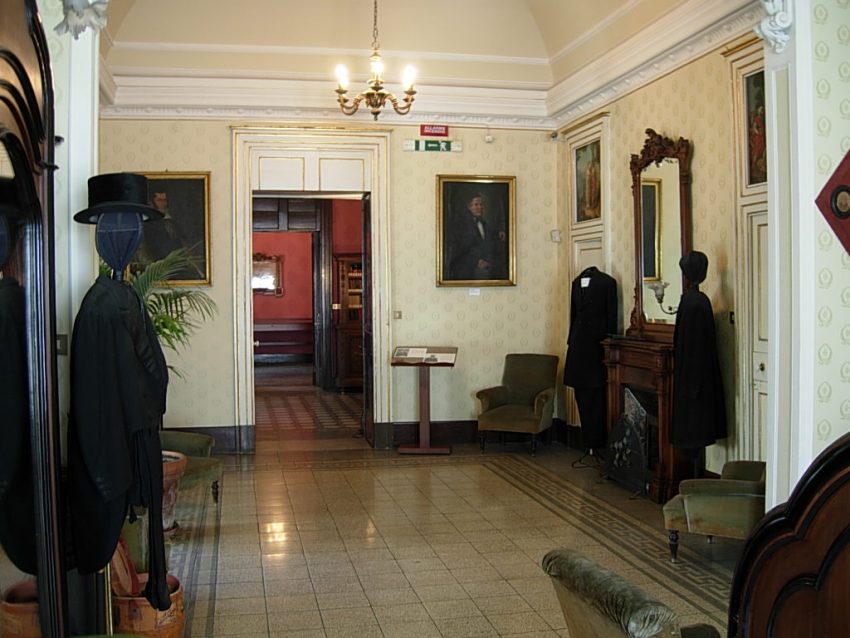
This house museum is valuable because it preserves a domestic scale of history: not a cathedral or palace, but the lived environment of one of Sicily’s major literary figures, Giovanni Verga. Verga’s importance sits in his realist approach to Sicilian life and social conditions, and the house becomes a way to anchor that literary legacy in physical rooms and objects. The museum’s later recognition as a monument and its eventual management by public authorities reflect how Italy formalizes cultural memory—turning a private home into a shared reference point.
Inside, the emphasis is on atmosphere and artifacts rather than spectacle. Manuscripts, portraits, and personal items frame Verga as both public author and private person, and the library is the emotional center: shelves of books, working surfaces, and the sense of a mind built through reading and writing. The rooms are typically understated, which works in the museum’s favor—your attention isn’t distracted by luxury, it stays on the idea of work, discipline, and intellectual life.
On a walking tour, this is a strong “contrast stop” after the monumental sites. It brings you back to human scale and gives your route cultural breadth: Catania isn’t only Baroque and Roman, it’s also modern literary Italy. If you like contextual walking, use the streets around it to imagine the city Verga moved through—where a writer would have observed daily life, overheard conversations, and turned ordinary scenes into enduring stories.
Location: Via Sant'Anna, 8, 95124 Catania CT, Italy | Hours: Monday – Saturday: 08:30–13:30. Sunday: Closed. Closed on Sunday. | Price: Adults: €4; Reduced: €2. | Website
3. Roman Theater
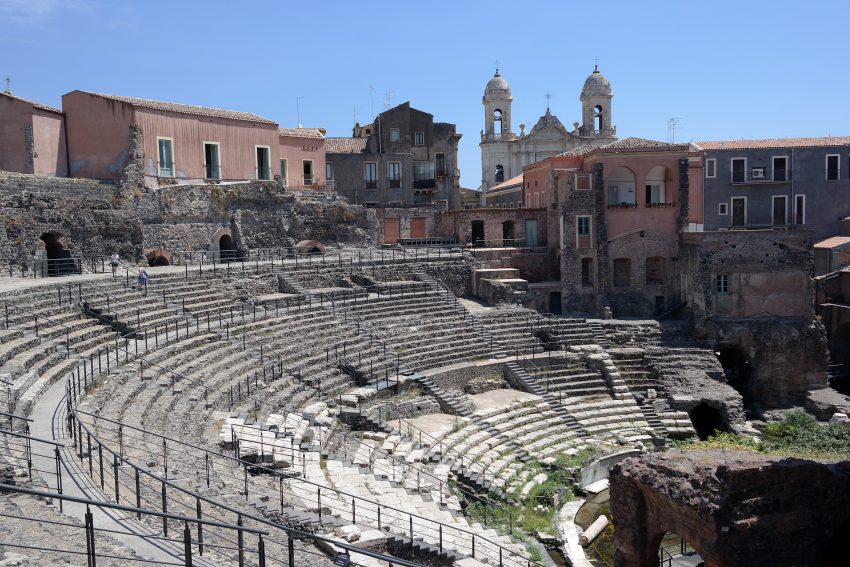
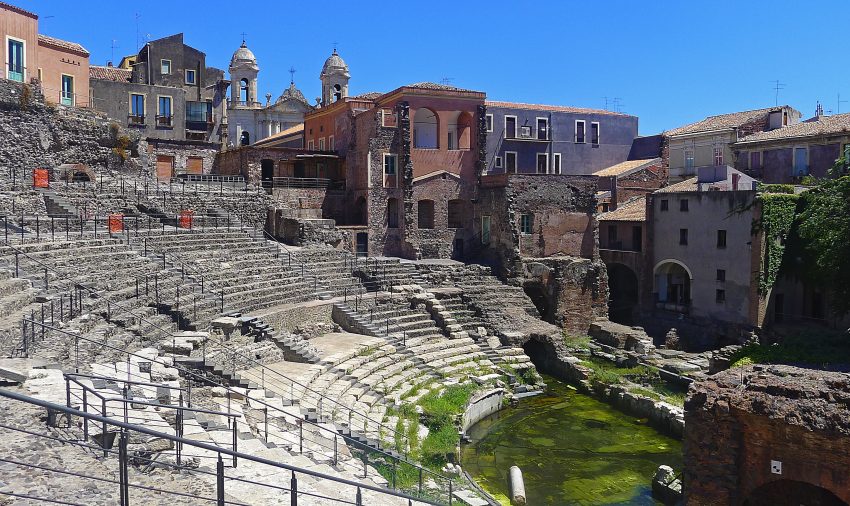
The Roman theatre complex shows Catania’s classical layer in a particularly vivid way because it’s both substantial and embedded in the modern city. Built in the 2nd century AD, it later fell out of use and was gradually swallowed by later construction. The long excavation history—partial digs in earlier centuries and more decisive clearing in the modern era—means the site is also a story about archaeology itself: what a city chooses to uncover, and what it allows to remain hidden.
In layout terms, it’s helpful to know you’re looking at more than one performance space: the main theatre and the smaller odeon. The theatre’s seating climbs the natural slope, which is classic Roman pragmatism—use the landscape to support the architecture—while the orchestra and stage areas show how performance was framed and controlled. Even when the stone is worn, the geometry remains legible, and that legibility is the key to enjoying it.
On a walking tour, approach from the surrounding streets and notice the transition from narrow urban fabric to sudden open ancient volume. Once inside, walk the seating arcs and look back toward the stage to understand sightlines; then turn around and look outward to feel how close the modern city sits. This stop pairs well with nearby Baroque churches and palaces because the contrast is sharp: Roman massing and function versus Baroque display and surface.
Location: Via Vittorio Emanuele II, 266, 95124 Catania CT, Italy | Hours: Daily: 09:00–19:00. | Price: Adults: €8; Reduced: €4. | Website
4. Roman Odeon
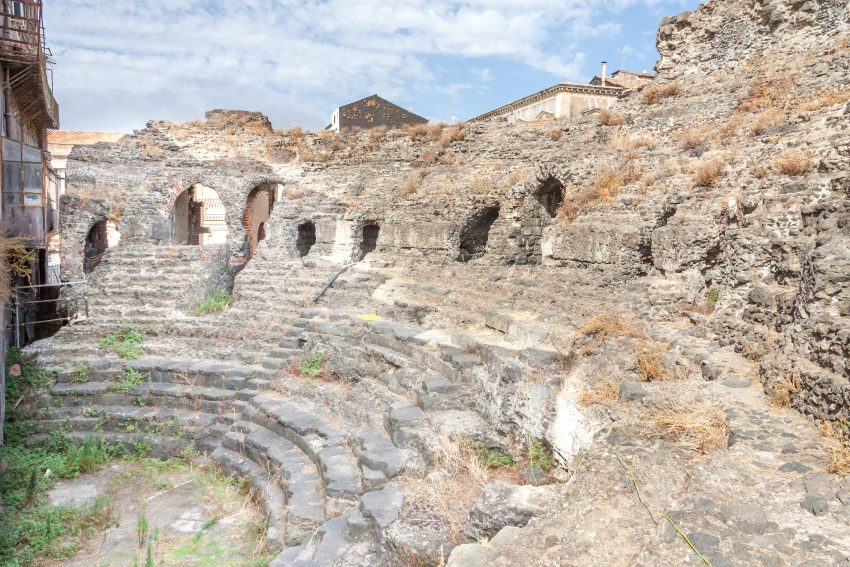
The Odeon of Catania is the smaller, more intimate sibling of the city’s main performance complex, built in the Roman imperial period (commonly dated to around the 2nd century AD). An odeon was typically used for music, recitation, and performances that benefited from a more controlled acoustic environment than a large open theatre. In Catania’s case, it speaks to a city that wasn’t only staging mass entertainment, but also hosting more refined cultural events within the same urban core.
Like much of Roman Catania, the odeon’s later history is a story of disappearance and rediscovery. As the centuries passed and the classical venues fell out of use, parts of the structure were encroached on by later buildings and gradually buried in the fabric of the city. Excavation and clearance in the modern era brought the space back into view, but what survives is necessarily partial—enough to read the plan and construction logic, not enough to feel “complete” in the way better-preserved sites do.
On a walking tour, the best way to visit is to treat it as a detail-rich add-on to the adjacent Roman Theatre of Catania rather than a standalone destination. Look for the tighter scale of the seating, the curvature of the cavea, and the way the venue is tucked into the hillside and hemmed in by later city growth. If you pause in the centre and speak quietly, you can get a sense of why odeons mattered: they were built for listening, not just watching.
Location: Via Vittorio Emanuele II, 266, 95124 Catania CT, Italy | Hours: Monday – Sunday: 09:00–19:00. | Price: Adults: €8; Reduced: €4. | Website
5. Museo Vincenzo Bellini
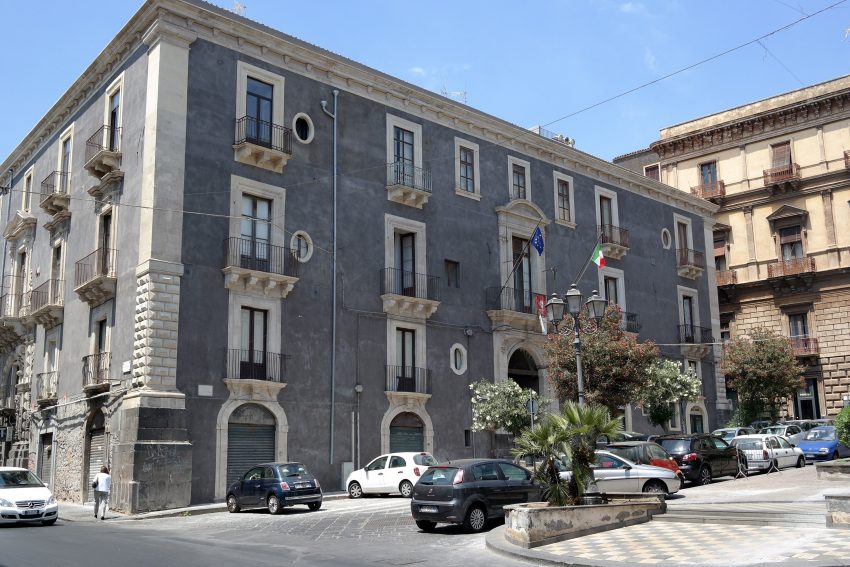
Museo Vincenzo Bellini is a focused stop for understanding how Catania’s most famous composer was shaped by the city that celebrates him so publicly. Vincenzo Bellini became a leading figure of early 19th-century Italian opera, and the museum frames his career against the wider cultural world of the Bourbon-era city and the networks of patrons, theatres, and teachers that a talented young musician needed. Even if you know Bellini only by name, the museum helps you place him as a working professional with deadlines, collaborators, and ambitions, rather than a distant “genius” statue in a square.
What you typically come for is material culture: manuscripts and musical documents, portraits, period objects, and contextual displays that explain how Bellini’s operas moved from composition to performance. The strongest way to experience it is to look for the chain from idea to stage—drafts, revisions, correspondence, and the visual branding of opera in the 1800s. Expect the emphasis to be interpretive rather than monumental: this is about close reading of a life and a craft, not grand architecture.
On a walking tour, the museum works best as a “meaning stop” between outdoor Bellini landmarks. Pair it mentally with Piazza Bellini and the Teatro Massimo Bellini, then later with the Bellini monument: you’ll have seen the city’s celebratory narrative outside, and here you get the quieter evidence behind it. If you’re doing the historic core on foot, slot it after the cathedral area and before you drift toward the theatre district, so the museum visit gives context to what you see on the streets.
Location: Palazzo Gravina-Cruyllas, Catania, Metropolitan city of Catania, Italy | Hours: Monday: 09:00–13:00. Tuesday – Saturday: 09:00–19:00. Sunday: 09:00–13:00. | Price: Adults: €5. | Website
6. Terme della Rotonda
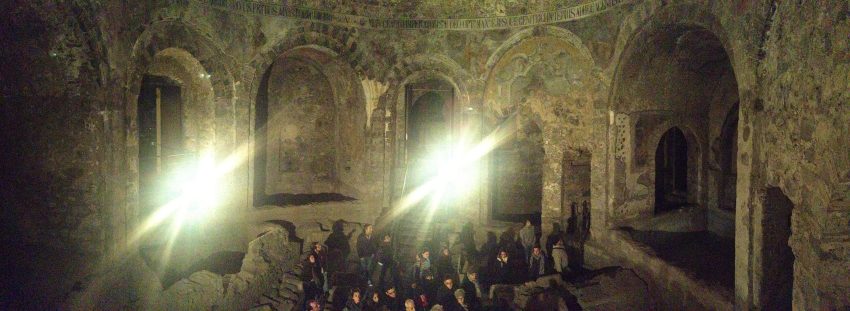
Archaeological Complex Terme della Rotonda (Via della Mecca) sits in the dense historic core of Catania and preserves the remains of a Roman public bath complex from roughly the 1st–2nd centuries CE, later enlarged and then abandoned. In the Byzantine period the site was repurposed rather than erased: a church, Santa Maria della Rotonda, was built directly over the ancient structure, with a distinctive domed space that still defines the place today. That “stacked” history is the key to the visit—you are looking at Roman infrastructure that became medieval worship space, with later phases leaving their own marks.
What to see is unusually legible for a relatively compact site. Look for the bath rooms’ geometry (spaces that would have functioned as cold, warm, and hot areas), and focus on the evidence of Roman heating: hypocaust elements and the small supporting stacks (pilae) that once held raised floors above hot air channels. You may also spot surviving floor fragments and wall sections that help you picture the original volumes, plus the way later church architecture “caps” and reshapes the earlier plan. The most rewarding moment is standing where the circular/domed church space meets the bath remains, because it makes the conversion of function instantly understandable without needing much imagination.
On a walking tour, Terme della Rotonda works best as part of a Roman-performance-and-baths cluster with the nearby Roman Theatre of Catania and the odeon: do the theatres first, then come here to see the “everyday” Roman city (water, heat, routine) that underpinned the spectacle sites. Practical note: access can be restricted by opening times and, at times, reservation rules; the regional archaeological park lists it as free entry and publishes the current timetable and contacts, so it’s worth checking before you build your day around it.
Location: Terme della Rotonda, Via della Mecca, Catania, Metropolitan city of Catania, Italy | Hours: Tuesday – Saturday: 09:00–17:00. Sunday: 09:00–13:00. Closed on Monday. | Price: Free. | Website
7. Benedictine Monastery of San Nicolò l'Arena
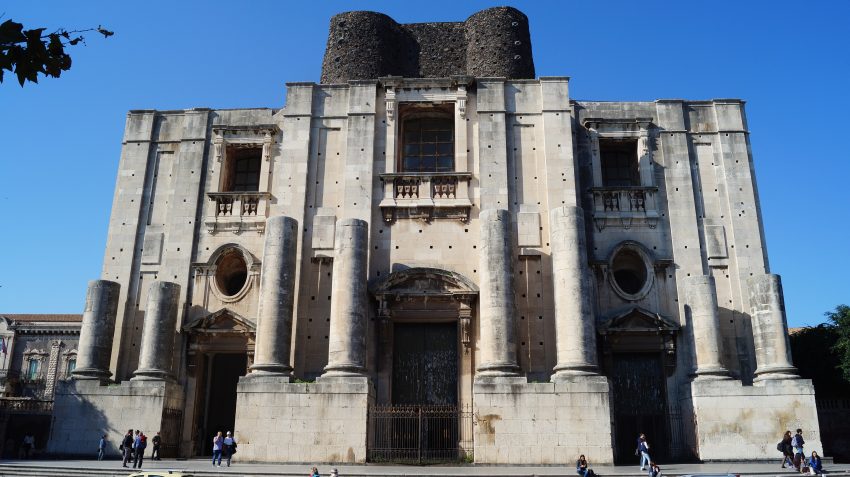
This monastery is a monument to endurance and reinvention. Founded as a Benedictine complex in the 16th century, it was repeatedly disrupted by the forces that define Catania’s history: volcanic events from Mount Etna and seismic catastrophe, especially the 1693 earthquake. The rebuilding that followed turned the site into one of the largest monastic complexes in the region, and later political shifts led to confiscation and reuse. Today, its role as part of the university underscores how Catania repurposes grand structures rather than freezing them in time.
Architecturally, the scale is the first impact: cloisters, long corridors, layered courtyards, and a sense of the monastery as a self-contained city within the city. The rebuilt cloister spaces blend late Baroque richness with a more institutional rhythm, and you can often read different phases of construction in proportions and details. The site also sits in a wider heritage context connected to the Val di Noto story—how southeastern Sicilian cities rebuilt in Baroque form after disaster.
On a walking tour, plan to spend longer here than you expect. The experience isn’t a single “wow” moment; it’s cumulative—moving through courtyards, pausing at thresholds, and noticing how light and shadow animate stone surfaces. If you’re interested in urban history, it’s also a strong place to reflect on reuse: classrooms and offices occupying former monastic space make the building feel active rather than preserved, which changes how you perceive its grandeur.
Location: Piazza Dante Alighieri, 32, 95124 Catania CT, Italy | Hours: Daily: 10:00–17:00. | Price: Adults: €10.00; Reduced: €7.50; University students (non-UNICT): €6.00; UNICT students: €4.00; Under 19: €3.00; Under 7: free. | Website
8. Roman Amphitheater

Catania’s Roman amphitheatre is one of those sites where absence tells the story as much as what remains. Built around the early imperial period, it was once among the larger arenas of the Roman world, designed for spectacle and mass attendance. Over time, the city grew over it, reused its materials, and gradually hid it—until excavations brought parts back into view. That cycle of burying and revealing is a recurring theme in Catania: the city doesn’t discard its past, it builds directly on top of it.
What you see today is only a fraction, but it’s enough to understand the engineering logic: curved masonry, vaults, radial supports, and the geometry that would have carried seating and circulation. Try to imagine the full ellipse and the layered seating that once held thousands. The visible section becomes more meaningful if you focus on construction textures—reused stone, differing masonry techniques, and how later intrusions (stairs, barriers, modern edges) meet ancient structure.
On a walking tour, this stop is best approached with “imagination discipline”: stand still, trace the curve, and mentally reconstruct the missing volume. It pairs well with the Roman theatre later in your route because together they show different kinds of Roman public entertainment—one for gladiatorial spectacle and crowd drama, the other for staged performance and acoustics. Keep an eye out for how close modern life presses in; part of the experience is seeing a major Roman monument surviving in the middle of everyday streets.
Location: P.zza Stesicoro, 95124 Catania CT, Italy | Hours: Monday – Sunday: 09:00–17:00. | Price: Adults: €4; Reduced: €3. | Website
9. Monument to Vincenzo Bellini
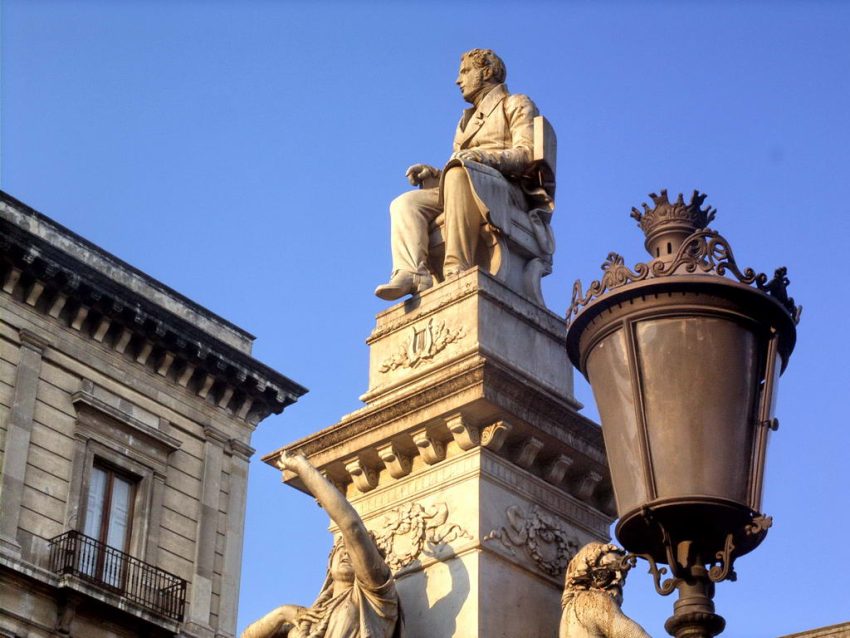
The Bellini monument is a late-19th-century civic statement: Catania publicly elevating its most famous composer as a symbol of cultural prestige. Unveiled in 1882 and designed by Giulio Monteverde, it belongs to the era when Italian cities used monuments to shape identity in public space—turning artists, patriots, and intellectuals into permanent residents of the piazza. It’s also a reminder that Catania’s “heritage story” isn’t only ancient and Baroque; it continues into modern nation-building and cultural pride.
The design is deliberately theatrical: Bellini sits above a layered base, and the composition reads like a staged ascent from narrative to person. Around the pedestal are sculptural references to his operas—figures that make the monument work as both portrait and visual programme. Even the fence matters: it’s not just protection, it frames the monument as something to be approached, circled, and read in sequence.
On a walking tour, treat the monument as a decoding exercise rather than a quick photo stop. Walk around it slowly and identify the opera references; you don’t need to be an opera expert to appreciate how the city chose to “explain” Bellini to the public. It also works as a bridge between nearby theatre culture and the deeper historical layers you’ll see elsewhere: in a few minutes you can move from 19th-century civic sculpture to Roman archaeology, which is exactly the kind of time-travel jump Catania does well.
Location: Monumento a Vincenzo Bellini, P.zza Stesicoro, 36, 95131 Catania CT, Italy | Hours: 24 Hours. | Price: Free.
10. Via Etne
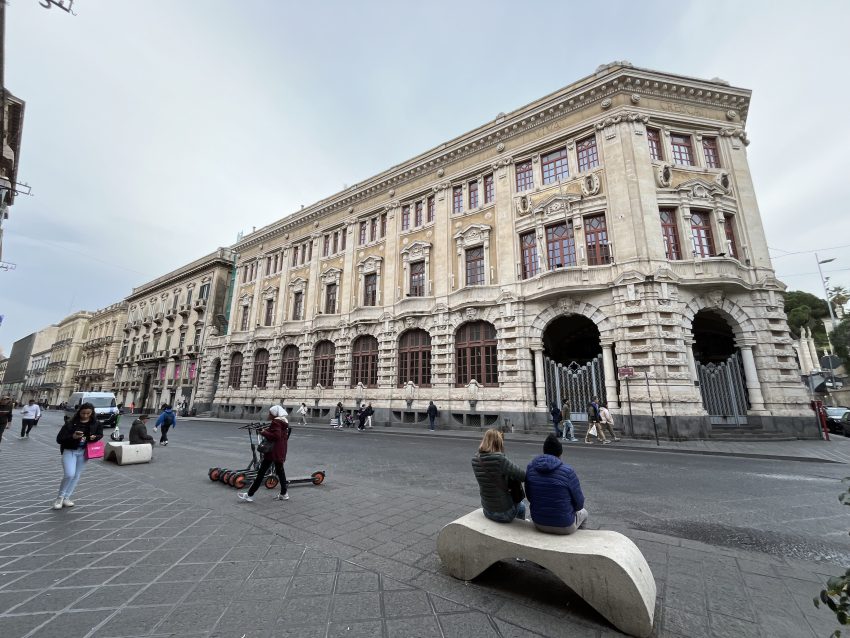
Via Etnea is Catania’s primary spine, and its long history is partly the point: the route echoes older city axes, but the street you experience today is largely shaped by post-1693 planning. After the earthquake, Catania’s rebuild created straighter, more legible streets and a Baroque cityscape that could carry processions, commerce, and daily movement. Via Etnea became the stage where the rebuilt city could be seen, used, and understood at a glance.
The material character is unmistakably local: lava stone underfoot, volcanic greys and blacks contrasted with brighter façades and balconies. Many of the buildings that line the street were designed or influenced by the same architectural minds that remade the central squares, so as you walk, you’re effectively reading a continuous Baroque “gallery” in an everyday setting. Look up often—balconies, cornices, and façade rhythms reward vertical attention, especially where the street opens into squares and small nodes.
On a walking tour, Via Etnea is both route and attraction. It ties together key stops (cathedral area, university area, Stesicoro and the Roman amphitheatre zone, and onward toward gardens), and it’s also where Catania’s food life interrupts the history in the best way. Use it to sample local snacks between monuments rather than treating eating as separate from sightseeing: it’s a street built for strolling, pausing, and rejoining the flow.
Location: Via Etnea, Catania CT, Italy | Hours: 24 Hours. | Price: Free.
11. Piazza dell’Università
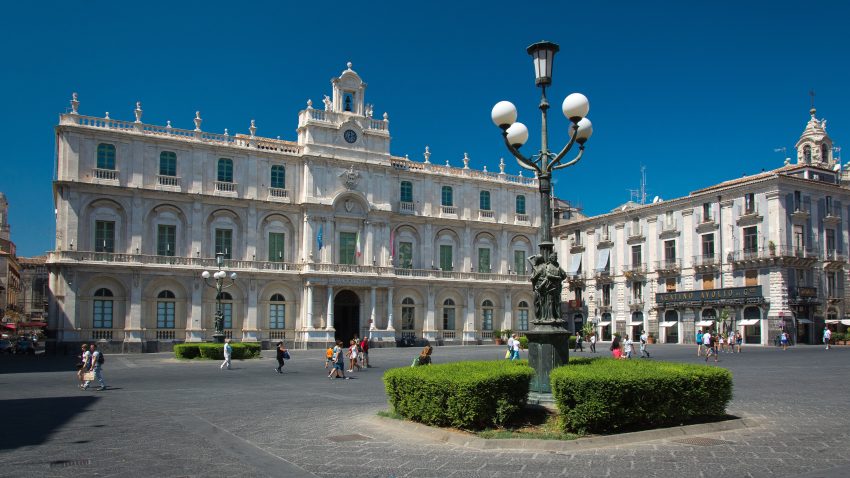
University Square reflects Catania’s identity as a city of institutions as well as churches and palaces. Its Baroque façades frame a space that historically linked power (administration), learning (the university), and public life. The square’s buildings read as composed and ceremonial, and that’s not accidental: in post-1693 Catania, rebuilding wasn’t only structural, it was ideological—order, authority, and continuity had to be visible.
What most visitors remember are the four elaborate bronze candelabra-style lampposts, each sculpted with stories and allegories rooted in Sicilian folklore and values. They aren’t decoration for decoration’s sake; they’re a kind of civic storytelling, turning street furniture into a mini-mythology of chastity, patriotism, filial devotion, and cleverness. If you enjoy details, this is a “slow looking” stop: walk each lamppost, read the figures, and notice how narrative is used as ornament.
On a walking tour, Piazza dell’Università is a practical connector between cathedral-focused highlights and the Via Etnea corridor. It also gives you a different lens on the city: not sacred, not aristocratic, but intellectual and civic. The square is especially good for orientation because it’s relatively open; from here you can pick out routes and decide whether to continue along Via Etnea, loop back toward Bellini-related sites, or cut toward the tighter historic streets where Roman layers start to surface.
Location: Via Etnea, 95124 Catania CT, Italy | Hours: 24 Hours. | Price: Free.
12. Massimo Bellini Theater
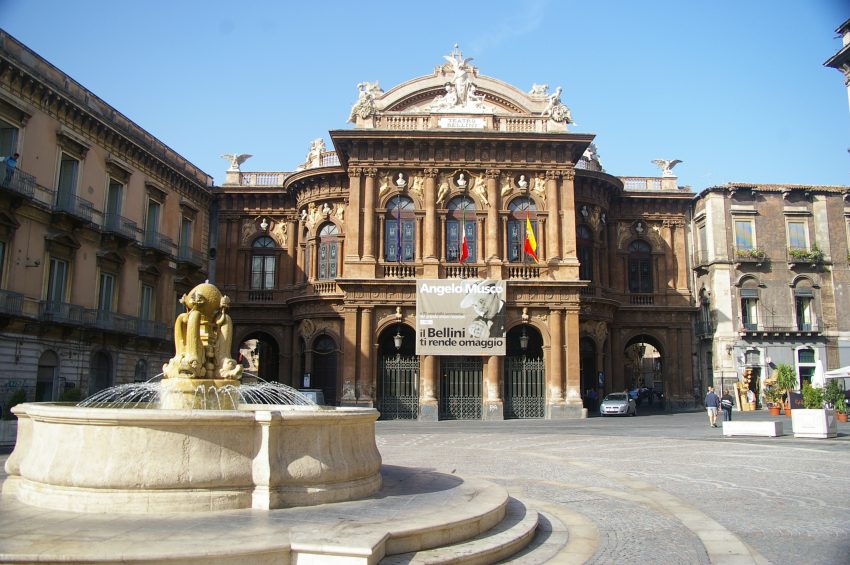
Teatro Massimo Bellini is Catania’s great 19th-century statement of cultural ambition: a purpose-built opera house created when the city wanted a “modern” lyric theatre worthy of its native composer Vincenzo Bellini. The project took shape in the late 1800s, with plans associated with Andrea Scala and the build completed under Carlo Sada, culminating in the theatre’s inauguration on 31 May 1890 with Bellini’s Norma.
From the outside, pause long enough to read the façade and its ceremonial entrance: the building is designed to be approached slowly, like a public monument rather than a simple venue. Once inside (ideally via a guided visit or around a performance), the core “what to see” is the classic Italian horseshoe auditorium with multiple tiers of boxes, built for sightlines and, crucially, sound. Look up for the ceiling fresco by Ernesto Bellandi celebrating Bellini and his major operas, then look toward the stage for the historic painted curtain by Giuseppe Sciuti (a huge narrative canvas that’s part of the theatre’s identity, not just décor).
On a walking tour, the theatre fits naturally into the compact Bellini cluster: approach it from Piazza Bellini so you get the “reveal” of the façade, then continue to Bellini-related stops (the monument and museum) with a clearer sense of why the city venerates him so visibly. If you can time your route with an open house or tour, prioritise a quick interior look over lingering outside—the building’s real impact is the transition from street noise to the hush of the auditorium and its lavish detailing. For practical planning, the theatre’s official site publishes the current season calendar and ticketing information, which is useful because access depends on rehearsals and performance schedules.
Location: Via Giuseppe Perrotta, 12, 95131 Catania CT, Italy | Hours: Monday: Closed. Tuesday: 09:00–13:00. Wednesday: 09:00–13:00 & 16:00–18:00. Thursday: 09:00–13:00 & 16:00–18:00. Friday: 09:00–13:00 & 16:00–18:00. Saturday: 09:30–13:00. Sunday: Opens 1 hour before scheduled performances. | Price: Guided tour: €6.50 (standard); €4.50 (reduced). Prices vary by show. | Website
13. Chiesa della Badia di Sant'Agata
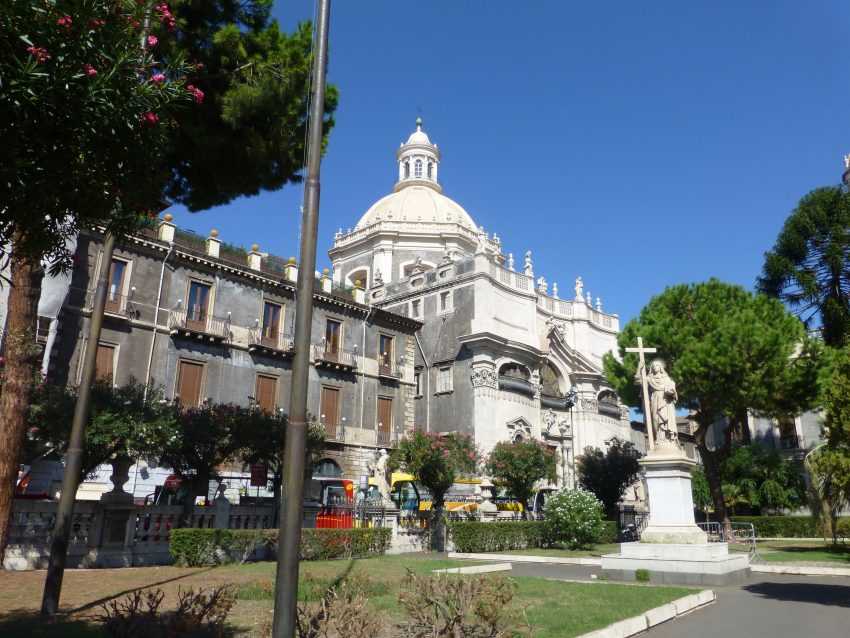
Chiesa della Badia di Sant’Agata is one of the most atmospheric places to understand how deeply the city’s identity is tied to Saint Agatha. The church is part of the former Benedictine “Badia” (abbey) complex dedicated to her, and—like so much of central Catania—its current form is shaped by the great rebuilding after the 1693 earthquake. The result is late Sicilian Baroque: a devotional site, but also a piece of urban theatre, designed to be seen from the cathedral square and to frame the saint’s presence right in the civic centre.
What to look for starts outside: the façade’s Baroque rhythm, the way the building sits close to the cathedral precinct, and how the curves and stonework create movement even when you’re standing still. Inside, the emphasis is on spatial drama—an airy, light-filled volume crowned by a dome, with rich stucco and sculptural detailing that rewards a slow circuit rather than a quick glance. If you’re walking the historic core, this is also a good “contrast” stop: it’s not the cathedral’s scale or tomb-heavy gravitas, but a more intimate, more overtly theatrical expression of the same city-wide cult of Agatha.
The must-do experience here is the upper level and terrace, if access is open when you visit. The climb is part of the appeal: you move from street-level bustle into increasingly quiet spaces, then emerge onto a viewpoint that gives you one of the best panoramas over Piazza del Duomo, the cathedral façade, and the rooftops of old Catania. On a walking tour, it fits perfectly as a short detour while you’re already in the cathedral-square cluster: do it either early for clear light on the views, or late afternoon when the city’s stone starts to warm in colour and the square’s geometry reads more sharply from above.
Location: Via Vittorio Emanuele II, 182, 95131 Catania CT, Italy | Hours: Monday – Saturday: 09:30–12:30 & 16:30–20:00. Sunday: 09:30–13:00 & 16:30–20:00. | Price: Church: free. Terraces & dome walkway: €5.00 per person. | Website
14. Cathedral of Catania
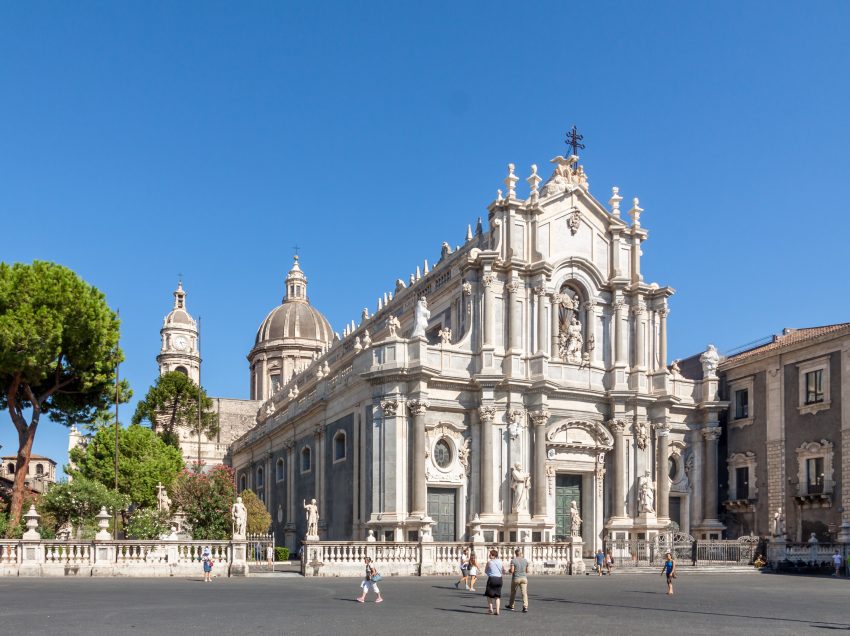
The story of the cathedral is inseparable from Saint Agatha, the city’s patron saint. According to tradition, Agatha was a young woman of noble background who refused the advances of the Roman prefect, was brutally martyred, and then became Catania’s enduring symbol of defiance and protection. Over the centuries, devotion to her shaped civic identity in a very public way: processions, vows, and an almost contractual belief that the saint “answers” injustice done to her city. Even if you approach it as legend, it explains why this cathedral feels less like a museum and more like the city’s living heart.
Architecturally, what you see today is largely the product of rebuilding after the catastrophic 1693 earthquake. The exterior reads as late Sicilian Baroque: a theatrical façade with stacked levels, niches, and columns that were designed to impress from the moment you step into Piazza del Duomo. Look for the carved wooden main door panels that narrate episodes from Agatha’s life, and notice how later additions (dome and bell elements) sit alongside older surviving fragments, including medieval portions around the apse.
On a walking tour, give yourself time to do the interior properly rather than just “popping in.” The plan is a Latin cross with three naves, so it’s easy to orient yourself: move slowly down the central axis, then peel off into the transepts. Seek out the chapels (including the Holy Crucifix) and the tombs that place the cathedral at the crossroads of faith, politics, and culture—especially composer Vincenzo Bellini. Finally, step back outside and read the façade like a civic manifesto: the saint’s presence is not subtle, and the building is meant to be read in the public square.
Location: Piazza del Duomo, 95100 Catania CT, Italy | Hours: Monday – Saturday: 07:15–12:30 & 16:00–19:00. Sunday: 07:45–12:30 & 16:00–19:00. | Price: Free; donations appreciated. | Website
15. Fontana dell'Elefante
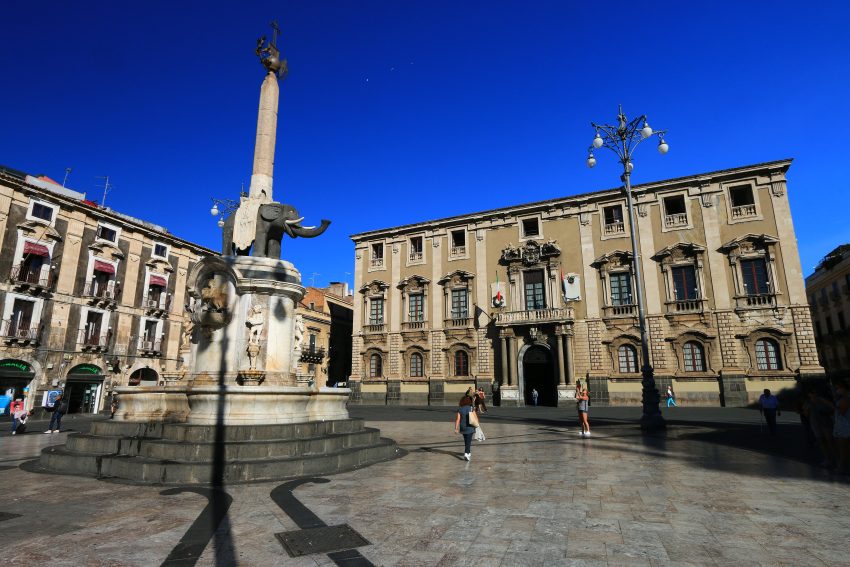
Fontana dell’Elefante is the visual shorthand for Catania: a lava-stone elephant (“Liotru”) carrying an Egyptian-style obelisk, set right in the middle of Piazza Duomo. The monument as you see it today is an 18th-century Baroque composition, created during the post-1693 rebuilding of the city’s centre. It deliberately uses volcanic basalt, so even before you know the symbolism, the material itself points straight to the city’s relationship with Mount Etna and to Catania’s habit of turning disaster materials into civic identity.
The elephant’s origins sit in a mix of folklore and archaeology. Local tradition treats it as a protective emblem, and the obelisk on its back reinforces the idea of ancient prestige being “carried” into the modern city. The effect is intentionally enigmatic: it looks older than the surrounding Baroque façades, yet it’s staged in a way that belongs to the 1700s, when Catania was rebuilding its public image with theatrical urban set pieces. Look closely at the carving and patina differences between elephant and obelisk, and you can read the monument as a curated collage of ages rather than a single-period artifact.
On a walking tour, this is your orientation point. Stand at the fountain and do a slow 360-degree scan: cathedral façade, city hall, the palace fronts, and the key streets that radiate out (especially Via Etnea). The best viewing is not from one spot; circle it once so the elephant aligns with different backdrops, then step a few metres away to see how it anchors the square’s symmetry. If you’re linking stops, use it as the “reset” between the cathedral interior, the fish market lanes nearby, and your next push up Via Etnea.
Location: Piazza del Duomo, 95124 Catania CT, Italy | Hours: 24 Hours. | Price: Free.
16. Piazza Duomo
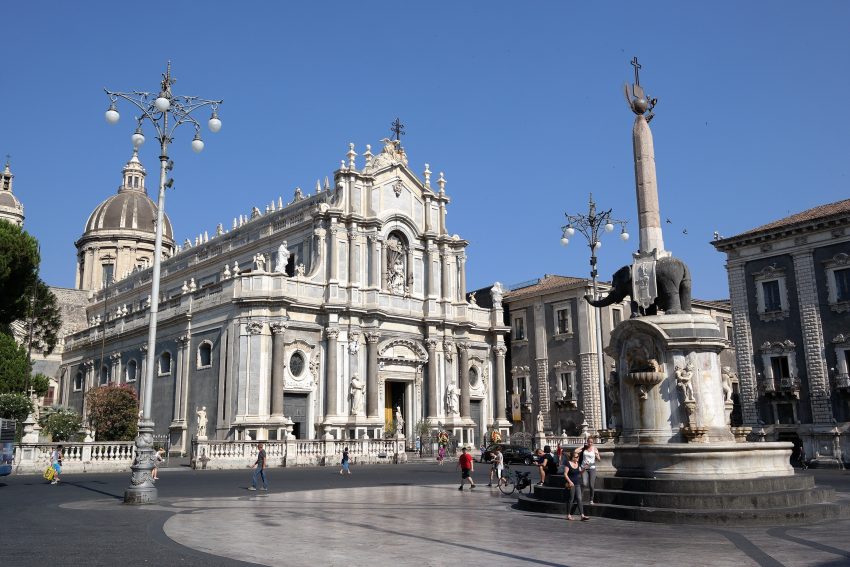
Catania’s main square is a post-disaster masterpiece: after the 1693 earthquake, the city essentially had to restage its center, and the square became the set-piece where order, authority, and pride could be rebuilt. The choreography still works today: you arrive, your eye is pulled to the cathedral, then to the surrounding palaces and church façades, and finally to the central emblem that seals the whole composition. The result is busy and theatrical, but it’s also a coherent urban “room” that feels intentionally designed rather than accidental.
At the center stands the black lava-stone elephant topped with an obelisk—Catania’s symbol, and a pointed reminder that the city is built with the materials (and risks) of Mount Etna. The elephant monument was placed here by Giovanni Battista Vaccarini, the architect who did much of the square’s reimagining. Around it, scan the edges: the Town Hall side, the ecclesiastical buildings, and the gateways that frame how you enter and exit the space. Beneath the surface, water matters too—Amenano’s fountain imagery points to the river system that slips underground and reappears where the city wants it.
On a walking tour, treat the square as your navigational hub. From here you can flow naturally into Via Etnea, drift toward the fish market, or thread into the tighter historic streets toward the Roman-era sites. If you’re in town in early February, the festival of Saint Agatha transforms the square from a scenic stop into the city’s main stage, with processions, lights, and crowd energy that make the architecture feel like it’s performing. Even on an ordinary day, pause long enough to watch how locals use it: this is not just a postcard view, it’s Catania’s daily living room.
Location: Piazza del Duomo, 95100 Catania CT, Italy | Hours: 24 Hours. | Price: Free.
17. La Pescheria
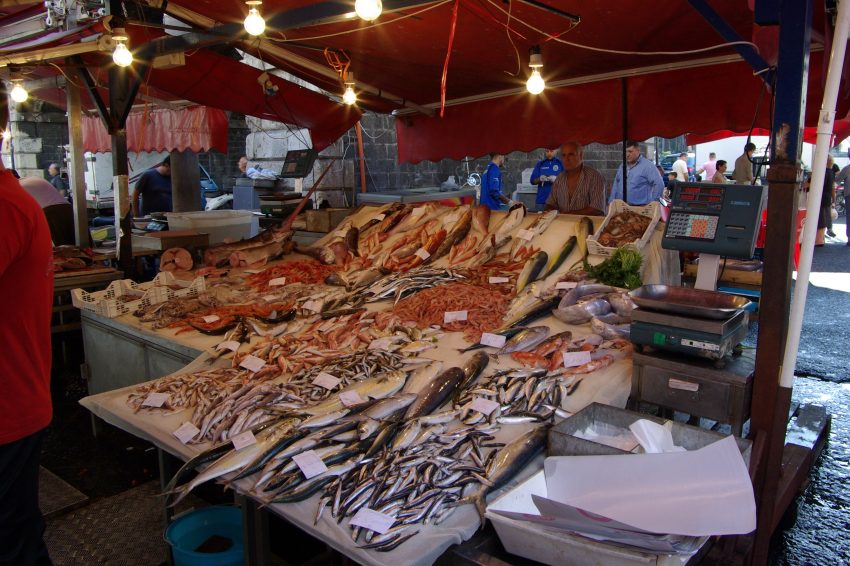
The fish market is one of Catania’s most persistent public institutions: a daily ritual of trade that links the city to the sea and to its own culinary identity. While the present form dates to the modern era, the deeper story is older—Mediterranean port cities have always used markets as both infrastructure and theatre, and Catania is no exception. Here, buying and selling is also performance: voice, speed, humor, and competitive display are part of how commerce works.
Visually, the market is pure sensory overload: fish laid out in dense variety, knives and cutting blocks in constant motion, red awnings filtering the light, and the dark volcanic surfaces that make colours pop. You’ll see the grammar of the catch—whole fish, cleaned fish, shellfish, and the quick transitions between display and preparation. The setting near the cathedral area adds to the effect: within minutes you move from sacred Baroque grandeur to raw everyday life.
On a walking tour, treat A’ Piscaria as a pass-through experience rather than a “stop at a doorway.” Walk into the lanes, let the soundscape surround you, and keep moving so you don’t become an obstacle. If you want photos, take them quickly and respectfully, then step aside. It’s also an ideal place to connect sightseeing to eating: after the market, nearby cafés and trattorias can turn what you’ve just seen into something you taste, which is one of the most Catania ways to end a historic walk.
Location: Via Cardinale Dusmet, 1, 95131 Catania CT, Italy | Hours: Monday – Saturday: 07:00–14:00. Closed on Sunday. | Price: Free.

Moira & Andy
Hey! We're Moira & Andy. From hiking the Camino to trips around Europe in Bert our campervan — we've been traveling together since retirement in 2020!
This website uses affiliate links which earn a small commission at no additional cost to you.
Walking Tour Summary
Distance: 4 km
Sites: 17
Walking Tour Map