Self-Guided Walking Tour of Bordeaux, France (2026)

This website uses affiliate links which earn a small commission at no additional cost to you.
Welcome to Bordeaux, a city where history, elegance, and vibrant street life come together in a beautifully walkable setting. As you set out on this walking tour, you'll traverse centuries of architecture-from Roman ruins and medieval gates to sweeping neoclassical squares and 18th-century mansions. With its limestone facades, tree-lined boulevards, and riverside promenades, Bordeaux offers a rich and varied experience at every turn. This is a city that reveals itself gradually, through narrow alleys, hidden courtyards, and grand civic spaces that speak to its past as a prosperous port and a center of Enlightenment thinking.
Our route will lead you through iconic landmarks such as the Place de la Bourse and the Grand Théâtre, while also dipping into quieter quarters like the Saint-Pierre and Saint-Michel districts, full of charm and character. Along the way, you'll encounter shaded squares, buzzing cafés, ornate churches, and riverside vistas, all infused with the spirit of Bordeaux-refined, creative, and full of life. Whether you're here for the wine, the architecture, or simply the pleasure of discovery, this tour will help you see the city not just as a destination, but as a living, breathing story.
How to get to Bordeaux
By Plane: To get to Bordeaux by plane, fly into Bordeaux-Mérignac Airport (BOD), the city's main international airport with flights from many European and global destinations. The airport is about 20 minutes from Bordeaux city center by taxi, shuttle, or public transport. For the best deals and a seamless booking experience, check out these flights to Bordeaux on Booking.com.
By Train: Bordeaux is easily accessible by train, with excellent connections to Paris, Toulouse, and other major French cities. The main station, Bordeaux Saint-Jean, is located just a few kilometres from the city centre and is well served by local trams, buses, and taxis. From the station, it's a short ride or a pleasant walk to the heart of the old town. You can use SNCF Connect to check schedules, compare routes, and purchase tickets for National (SNCF ) and regional trains (TER). For a more streamlined experience, we recommend using Omio, which allows you to easily compare prices, schedules, and book tickets for both National and Regional travel across all of Europe, all in one place.
By Car: Bordeaux is connected to the national motorway network, making it convenient for drivers coming from all directions. Parking in the city centre can be limited, so using one of the Park-and-Ride (P+R) or Park + Tram (max 2.1m) facilities on the outskirts is a good alternative. From there, you can take a tram directly into the city centre. For example, the P+R at Brandenburg (max 2.1m) or Buttinière (max 1.9m) offers easy access to the main sights and is a practical choice for a hassle-free visit. Alternatively Park in METPARK – Libération and walk. If you are looking to rent a car in France I recommend having a look at Discover Cars, first, as they compare prices and review multiple car rental agencies for you.
Where to Stay in Bordeaux
For a city centre walking tour of Bordeaux, staying within the historic Golden Triangle or along the Garonne River places you close to landmarks like Place de la Bourse, the Grand Théâtre, and the Saint-André Cathedral. A refined option is InterContinental Bordeaux - Le Grand Hotel, a five-star property with luxurious amenities and direct views of the opera house. For a stylish boutique experience, Yndo Hôtel offers individually designed rooms in a 19th-century mansion. If you’re looking for a modern and convenient stay near the old town and tram lines, Mama Shelter Bordeaux combines funky design with rooftop views and a lively atmosphere. All of these choices are ideally located for exploring Bordeaux on foot, with restaurants, shops, and wine bars just around the corner.
A Short History of Bordeaux
Bordeaux, a city whose roots stretch back to Roman times when it was known as Burdigala, has grown into one of France's most important cultural and trading centers. Its prosperity, particularly from the wine trade, has left a legacy of grand monuments, religious buildings, and civic landmarks that chart the city's history through the centuries.
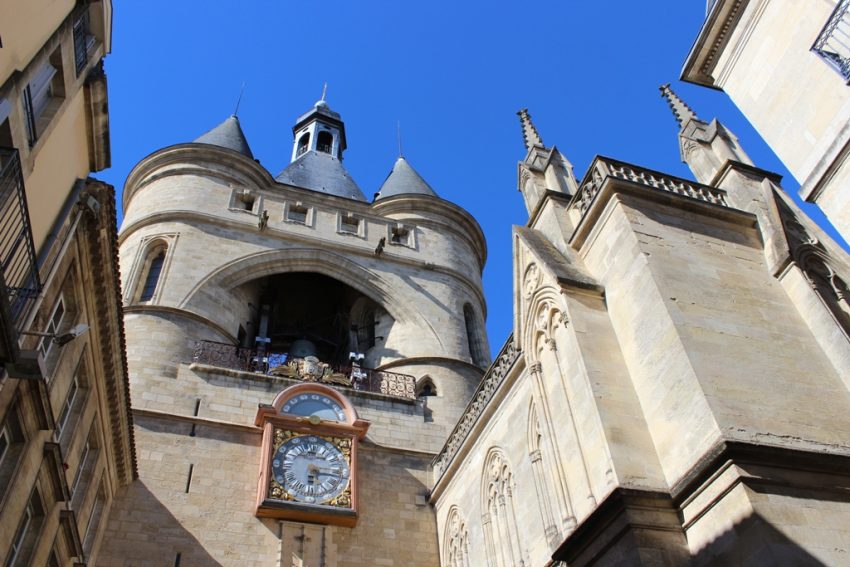
In the Middle Ages, Bordeaux developed as a thriving port under English rule during the Plantagenet era, a time when the Bordeaux Cathedral was built. Construction began in the 11th century, but its most striking feature, the Pey-Berland Tower, was added in the 15th century by Archbishop Pey Berland as a freestanding bell tower. The medieval fabric of the city is still visible in gates like the Grosse Cloche, a 15th-century belfry built on the remains of the old city walls, and the Porte Cailhau, erected in 1495 to celebrate King Charles VIII's victory at Fornovo. The Église Saint-Pierre, founded in the 14th century in the old merchant quarter, reflects the Gothic style that dominated the period.
The 17th and 18th centuries brought immense wealth to Bordeaux, expressed in its harmonious classical architecture. The Grand Théâtre, completed in 1780 by architect Victor Louis, became one of France's finest theaters, while the Palais Rohan, built in the 1770s, now serves as Bordeaux's City Hall. Squares like the Place du Parlement, created in 1754, and the Place de la Bourse, designed by Ange-Jacques Gabriel between 1730 and 1775, became emblems of Enlightenment urban planning. Facing the Garonne, the Place de la Bourse is today mirrored by the modern Miroir d'Eau, the world's largest reflecting pool, inaugurated in 2006.
Religious devotion also shaped the Baroque cityscape. The Église Notre-Dame, built by the Dominicans in the late 17th century, stands out for its elaborate façade. Meanwhile, the 18th-century Maison Gobineau, with its distinctive triangular plan, symbolized Bordeaux’s aristocratic grandeur and its ties to the wine trade.
The revolutionary spirit of the late 18th century is remembered in the Monument aux Girondins, erected between 1894 and 1902 on the Place des Quinconces. Dedicated to the Girondins, deputies of Bordeaux who perished during the French Revolution, it combines sculptural allegories with soaring bronze fountains. The Musée d'Aquitaine, housed in a former university building since 1987, traces the full sweep of Bordeaux's history, from prehistoric times to its role in the transatlantic trade.
Take a Guided or Self-Guided Walking Tour of Bordeaux
If you're spending a day in Bordeaux and want to make the most of your time in the historic centre, consider joining a guided walking tour with a local expert. This 2-hour Bordeaux: City Highlights Guided Walking Tour led by a passionate local guide gives you a perfect introduction to the city’s key monuments and hidden gems.
Your Self-Guided Walking Tour of Bordeaux
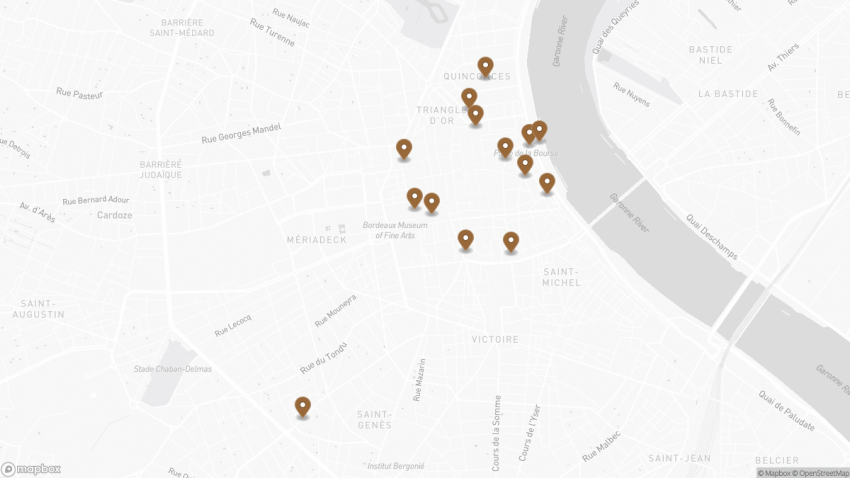
Discover Bordeaux on foot as you wander through its elegant squares, medieval gates, grand churches, and lively neighbourhoods, and you can use our interactive walking tour map to track your current location and your next site as you go. Along the way, you will encounter reminders of Bordeaux's trading past, artistic heritage, and revolutionary spirit, all set against the backdrop of one of France's most graceful riverfront cities.
1. Monument aux Girondins
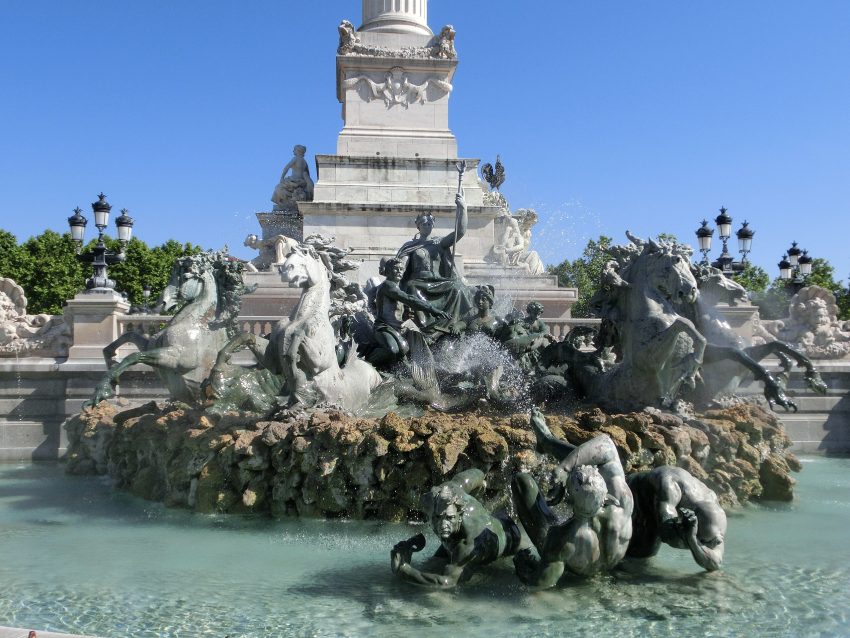
Soaring 43 metres high, this monument dominates the vast Esplanade des Quinconces—Europe’s largest city square. Despite its name, the Monument aux Girondins has no link to Bordeaux’s football team; instead, it was constructed between 1894 and 1902 to honour the Girondins political group, many of whom perished during the Reign of Terror. Visible from multiple vantage points around the city, the column is crowned with a statue of Liberty breaking her chains, a powerful symbol of freedom and resilience.
At its base, you’ll find an ensemble of dramatic bronze sculptures and decorative fountains, which offer a welcome burst of cool air in the warmer months. These figures represent themes such as the Republic, the Triumph of the People, and the defeat of tyranny. Officially listed as a historic monument in 2011, the site remains one of the most photographed landmarks in Bordeaux, drawing visitors who come to admire both its artistry and the ideals it represents.
Location: Place des Quinconces, Bordeaux, France
2. Maison Gobineau
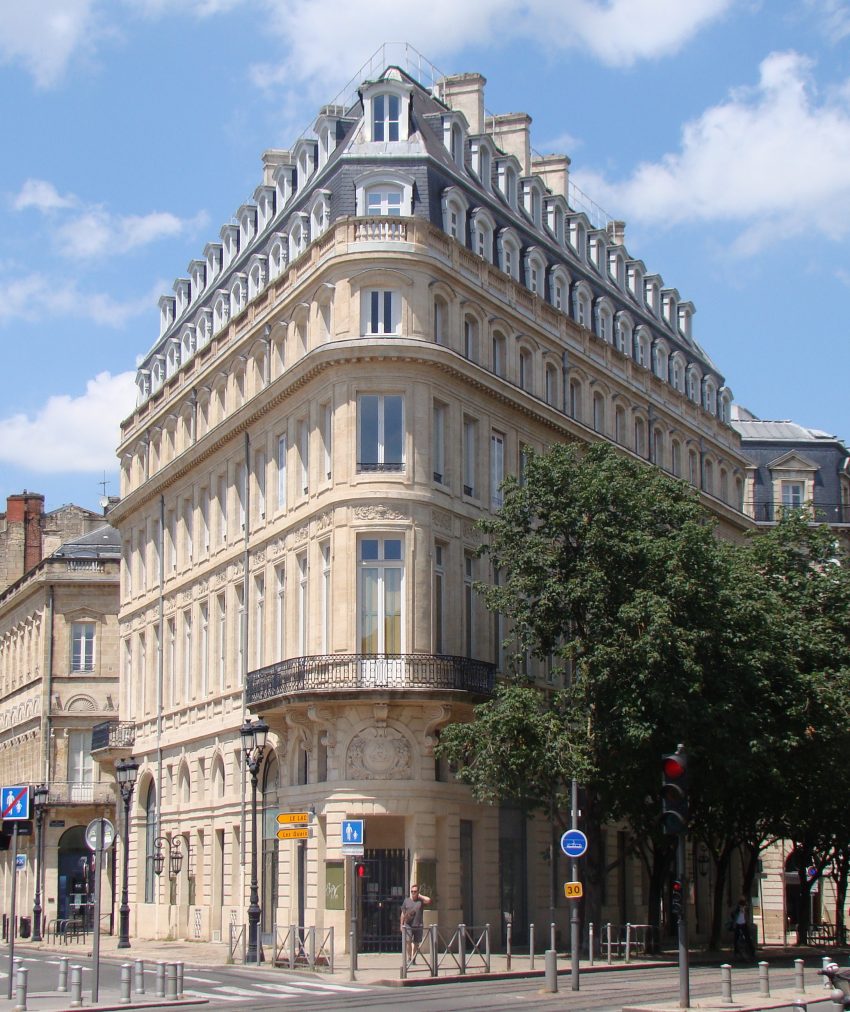
Just a few steps from the Esplanade des Quinconces stands this striking former private mansion—does its shape remind you of another iconic building? Designed by architect Victor Louis and completed in 1789, its distinctive wedge shape evokes the prow of a ship, as if poised to sail toward the nearby ocean. If you’ve visited New York, you might be reminded of the famous Flatiron Building, with which it shares a remarkably similar silhouette.
This building has long been part of Bordeaux’s urban life. Over the years, it has housed a cinema and even served as the site of the city’s first Citroën dealership. Since 1948, it has been the headquarters of the Bordeaux Wine Council (Le Conseil Interprofessionnel du Vin de Bordeaux), which promotes the region’s wine industry. Visitors can also enjoy the wine bar on the third floor, making it not just a historic structure, but a living part of Bordeaux’s culture and identity.
Location: Allée de Tourny, 33000 Bordeaux, France
3. Grand Théâtre
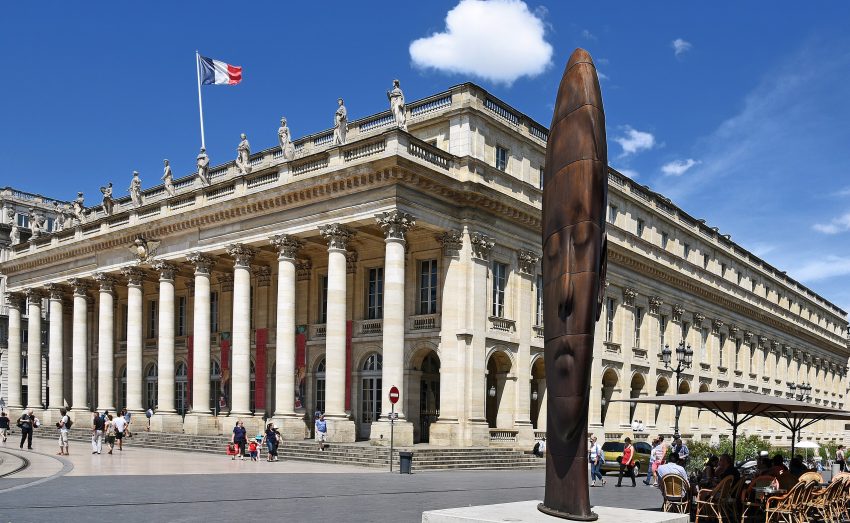
Just steps from Maison Gobineau, the Grand Théâtre is another brilliant showcase of Victor Louis’s architectural genius and one of the most iconic symbols of Bordeaux’s cultural prestige. Inaugurated in 1790, the theatre has long been admired for both its imposing neoclassical exterior and its richly designed interior. It quickly became a landmark of Enlightenment-era Bordeaux and was officially listed as a historic monument in 1899. Today, it remains at the heart of the city’s artistic life as the home of the Opéra National de Bordeaux, regularly hosting performances of music, theatre, and dance.
As you can see from this side, the Grand Théâtre’s façade is a striking example of neoclassical design, with its twelve Corinthian columns and statues of nine Greek muses and three goddesses—Minerva, Venus, and Juno—poised along the top. Victor Louis intentionally designed this frontage to echo the ancient Roman temple of Tutelle, which once stood nearby. Though the temple was demolished in 1675 to make way for the now-vanished Château Trompette, its memory lives on in the theatre’s colonnade—a respectful nod to Bordeaux’s Roman roots.
Yet it wasn’t just the theatre’s monumental exterior that captured the imagination of 18th-century France. The real innovation lies inside. Step through the grand entrance and you’ll find a sweeping staircase of remarkable symmetry and grace, a design so admired that it later inspired Charles Garnier’s famous staircase in the Paris Opéra. With its harmonious proportions, acoustical finesse, and elegant detailing, the Grand Théâtre is not only a stage for performance but also a stage in itself—an enduring masterpiece of architectural theatre.
Location: Grand Théâtre de Bordeaux, Place de la Comédie, Bordeaux, France

4. Église Notre-Dame
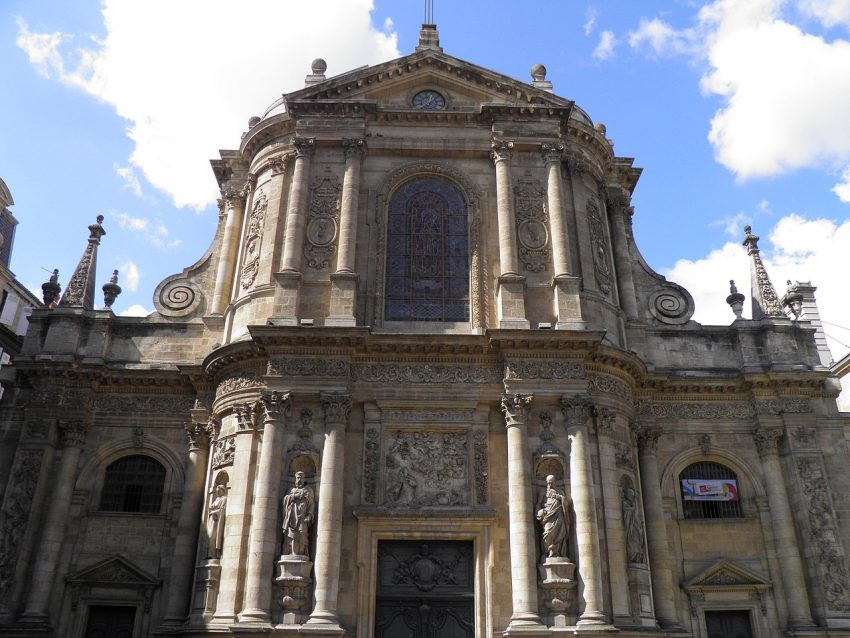
A short stroll brings you to Place du Chapelet, where the elegant Church of Notre-Dame (L’Église Notre-Dame) rises before you. Originally dedicated to Saint Dominic, this Baroque gem reflects the artistic and spiritual sensibilities of the Counter-Reformation. Completed in 1707, the church has been remarkably well preserved, earning its designation as a historic monument in 1908. Its intricately carved organ casing was also listed in 1971, further highlighting the building’s cultural significance.
Thanks to a thorough restoration completed in 1982, the church remains in excellent condition and continues to be an active part of Bordeaux’s cultural life. Known for its superb acoustics, it regularly hosts classical music concerts and recitals. On the outside, the church has also found a place in cinema, with its forecourt frequently used as a backdrop for period films. Whether you’re drawn to its architecture, its music, or its quiet presence amid the bustle of the city, Notre-Dame offers a moment of beauty and reflection.
Location: Église Notre-Dame-des-Anges de Bordeaux, Rue de Pessac, Bordeaux, France
5. Porte Dijeaux
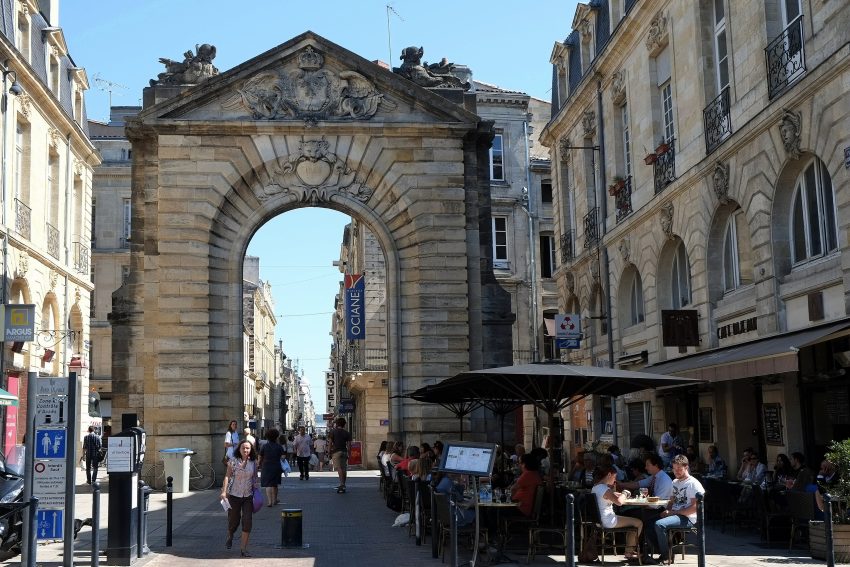
Once the site of the city’s western gateway since Roman times, the Porte Dijeaux now stands at the edge of the revitalised Place Gambetta, offering a striking historical contrast to its modern surroundings. Constructed between 1748 and 1753 by architect Michel Voisin, the arch originally bore the name Porte Dauphine in tribute to the Dauphin—future King Louis XVI—during the reign of Louis XV. It was a ceremonial entrance as much as a functional one, marking the transition from the fortified city to the expanding urban landscape beyond.
Following the French Revolution, the arch was renamed Porte Dijeaux, aligning it with the street it opens onto—either at its beginning or end, depending on your direction. With its clean lines and classical proportions, it remains a proud feature of Bordeaux’s architectural heritage. Constantly admired by passersby and locals, the arch has watched over centuries of transformation, from royal processions to modern foot traffic. It was officially listed as a historic monument in 1921, ensuring its preservation as a symbol of the city’s evolving identity.
Location: Porte Dijeaux, Rue de la Porte Dijeaux, Bordeaux, France
6. Palais Rohan

Constructed between 1771 and 1784, the Palais Rohan has long played host to key figures and major events in Bordeaux’s history. Originally designed as the residence of the city’s archbishop, it quickly took on new roles as political tides shifted. In 1791, it became the seat of the revolutionary tribunal, and by 1800, it served as the prefecture of the Gironde. Its status continued to evolve—Napoleon I used it as an imperial palace during his reign in 1808, and it briefly became a royal residence under Louis XVIII in 1815. By 1837, the building was repurposed once more to serve as Bordeaux’s city hall, a role it continues to fulfill today.
The building is a striking example of monumental neoclassical architecture, with its elegant proportions, symmetrical layout, and stately presence. Positioned at the heart of Bordeaux, it reflects both civic pride and political power, its style echoing the values of the Enlightenment and the prestige of the 18th-century French elite. Its interiors, too, have been shaped by its varied functions, ranging from ecclesiastical splendour to imperial formality and municipal authority.
Recognising its architectural and historical significance, the Palais Rohan was designated a historic monument in 1997. This protection includes not only the building’s grand facades and roof structure but also its formal courtyard and several rooms on the ground floor. As the seat of Bordeaux’s city government, it remains a living institution—one that blends history, governance, and architectural heritage in the very fabric of the city.
Location: Palais Rohan Hôtel de ville de Bordeaux, Place Pey Berland, Bordeaux, France
7. Bordeaux Cathedral & Pey-Berland Tower

Just opposite the Palais Rohan stands La Cathédrale Saint-André, a magnificent Gothic monument that has played host to some of the most significant events in French royal history. Among its most notable moments are two grand royal weddings: the marriage of Eleanor of Aquitaine to the future Louis VII, and the union of Anne of Austria with Louis XIII. These illustrious ceremonies speak to the cathedral’s importance not only as a place of worship but also as a stage for national history. Its construction spanned several centuries, from the 12th to the 16th, resulting in a layered and impressive Gothic structure.
Inside, visitors will find one of the largest pipe organs in France, standing 15 metres tall. This remarkable instrument, itself a listed historical monument, adds to the cathedral’s sense of grandeur and is still used for performances and services. The vast vaulted nave and intricate stonework create an atmosphere both solemn and majestic, making it a must-see for lovers of history and architecture alike.
A short walk from the cathedral’s forecourt brings you to the Tour Pey-Berland, its freestanding bell tower. Built in the 15th century to prevent the heavy bells from damaging the cathedral’s structure, the tower rises 66 metres above the city. Those willing to make the climb—233 steps in total—are rewarded with sweeping panoramic views over Bordeaux’s rooftops, the Garonne River, and beyond. Together, the cathedral and its tower form one of the most iconic and historically rich ensembles in the city.
Location: Cathédrale Saint-André de Bordeaux, Place Pey Berland, Bordeaux, France
8. Musée d’Aquitaine

Once upon a time, there was Aquitaine—a vast and culturally rich region in the southwest of France, with a history stretching back thousands of years. To explore this layered past in a lively and engaging way, the Musée d’Aquitaine is the ideal destination. Conveniently located on the edge of Bordeaux’s historic centre, the museum traces the story of both the city and the wider region, from prehistoric settlements and Roman civilization through to the Middle Ages, the Enlightenment, and into modern times. Its spacious galleries and immersive displays help bring the region’s complex heritage to life.
The museum houses a permanent collection of over 70,000 objects, including archaeological finds, medieval relics, artworks, manuscripts, and items reflecting Bordeaux’s maritime and trading past. One of its standout features is the section dedicated to the transatlantic slave trade, offering an honest and informative look at the city’s role in that dark chapter of history. Alongside the core collection, temporary exhibitions add fresh perspectives on the region now known as Nouvelle-Aquitaine. Whether you’re a history enthusiast or a curious traveller, the Musée d’Aquitaine offers a deep and engaging insight into the people, events, and ideas that have shaped this corner of France.
Location: Musée d'Aquitaine, Cours Pasteur, Bordeaux, France | Hours: The museum is open Tuesday to Sunday, 11 a.m. to 6 p.m. Closed Mondays and public holidays | Price: Adults: €8 | Website
9. Grosse Cloche
10. Porte Cailhau

Having already encountered Porte Dijeaux, it’s now time to meet its equally impressive counterpart—Porte Cailhau. Built between 1493 and 1496, this striking gate once served as the principal entrance to Bordeaux from the Garonne River, welcoming merchants, travellers, and royalty alike. Also referred to as “La Porte du Palais” (the Palace Gate), it stood at the threshold of the old Palais de l’Ombrière, once the seat of ducal and royal authority in the city. Part defensive fortification and part ceremonial gateway, Porte Cailhau reflects Bordeaux’s dual identity as both a stronghold and a thriving hub of political and commercial life.
Designed in the late Gothic style with early Renaissance elements, the gate is richly ornamented, featuring niches, spires, and a carved stone likeness of King Charles VIII, in whose honour the arch was dedicated. This tribute celebrates his victory at the Battle of Fornovo and his brief dominance in Italy—a reminder of Bordeaux’s loyalty to the crown. Standing 35 metres tall, the structure was listed as a historic monument in 1883 and has since been carefully preserved. Today, visitors can step inside the gate to explore its interior exhibits, which detail its history, architecture, and the strategic role it played in the city’s fortifications. From the upper levels, the view over the Garonne and Pont de Pierre offers a rewarding glimpse into the Bordeaux of past and present.
Location: Porte Cailhau, Place du Palais, Bordeaux, France
11. Église Saint-Pierre
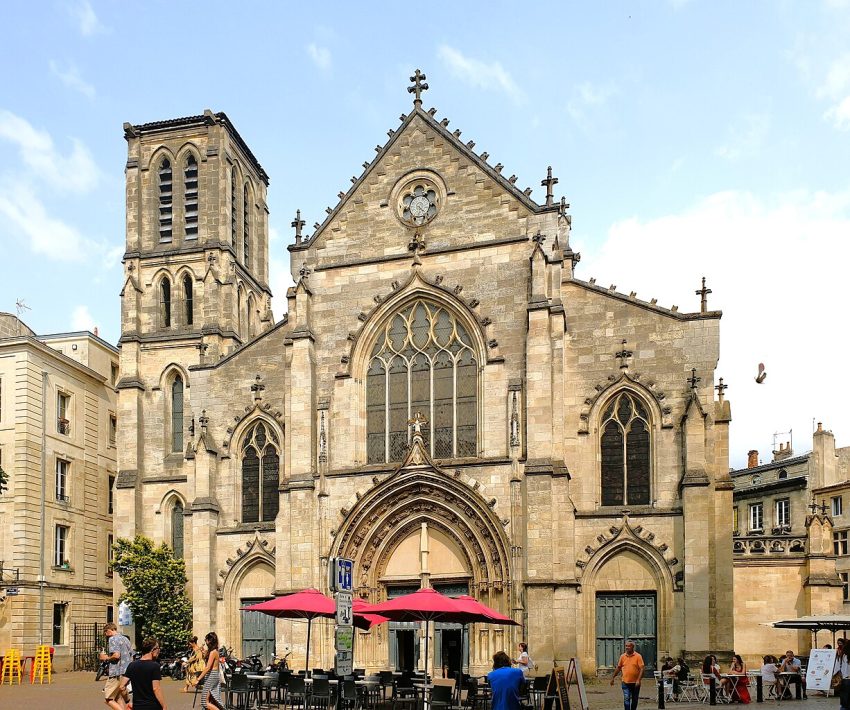
Today, Église Saint-Pierre is tucked away in the maze of narrow, cobbled streets that define Bordeaux’s Old Town, but centuries ago, its setting was very different. In medieval times, this church stood almost at the water’s edge, right beside the Devèze River, not far from where it joined the Garonne. This made it a true port-side church, serving the bustling maritime community that lived and worked in the area. Merchants, sailors, and craftsmen would have passed by or sought refuge within its walls, linking the church closely to the everyday life of Bordeaux’s historic riverfront.
The current building was largely rebuilt from 1358 onwards, with major restructuring taking place in 1882 to preserve and adapt the aging structure. Despite these changes, it retains much of its original Gothic character, from its pointed arches to its compact yet elegant layout. In 1908, Église Saint-Pierre was officially designated a historical monument, recognising its cultural and architectural significance. Today, although the river has long since been redirected and the old port replaced by modern promenades, the church remains an evocative link to Bordeaux’s medieval past, quietly rooted in one of the city’s oldest and most atmospheric quarters.
Location: Église Saint-Pierre, Place Saint-Pierre, Bordeaux, France
12. Place du Parlement

Bordeaux’s geography and history are deeply etched into its squares, each one telling a different chapter of the city’s past. Among them, Place du Parlement stands out for its elegance and sense of timeless charm. Nestled in the Saint-Pierre district, this square transports visitors with its almost Italianate ambiance, thanks to its harmonious classical façades and human-scale proportions. Created in 1754, Place du Parlement is framed by superb limestone buildings dating from the first half of the 18th century—an era when Bordeaux was flourishing as a major port and cultural centre. The square’s compact symmetry and ornate balconies evoke a Mediterranean grace, lending it an atmosphere that is both refined and welcoming.
The central fountain, added in 1865, introduces a touch of English neo-Gothic style to the ensemble, contrasting yet complementing the surrounding architecture. Like much of Bordeaux, the square has had many names and roles, each reflecting the political mood of the time. Originally established as the Place du Marché Royal (Royal Market Square), it was renamed Place de la Liberté during the French Revolution—a period of upheaval that swept away monarchies and redefined public spaces. Its current name, Place du Parlement, pays tribute to the Parlement of Bordeaux, a sovereign judicial body that once exercised significant power before being dissolved in 1790 during the revolutionary reforms.
Since 1952, Place du Parlement has been protected as a listed historical monument, ensuring its preservation for future generations. Today, it is a lively and beloved corner of the city, where cafés and restaurants spill onto the cobblestones and people gather to enjoy the ambiance from morning to night. While it may lack the imposing scale of larger civic squares, its warmth, beauty, and layered history make it an essential stop for anyone seeking to understand the spirit of Bordeaux through its public spaces.
Location: Place du Parlement, Bordeaux, France
13. Place de la Bourse
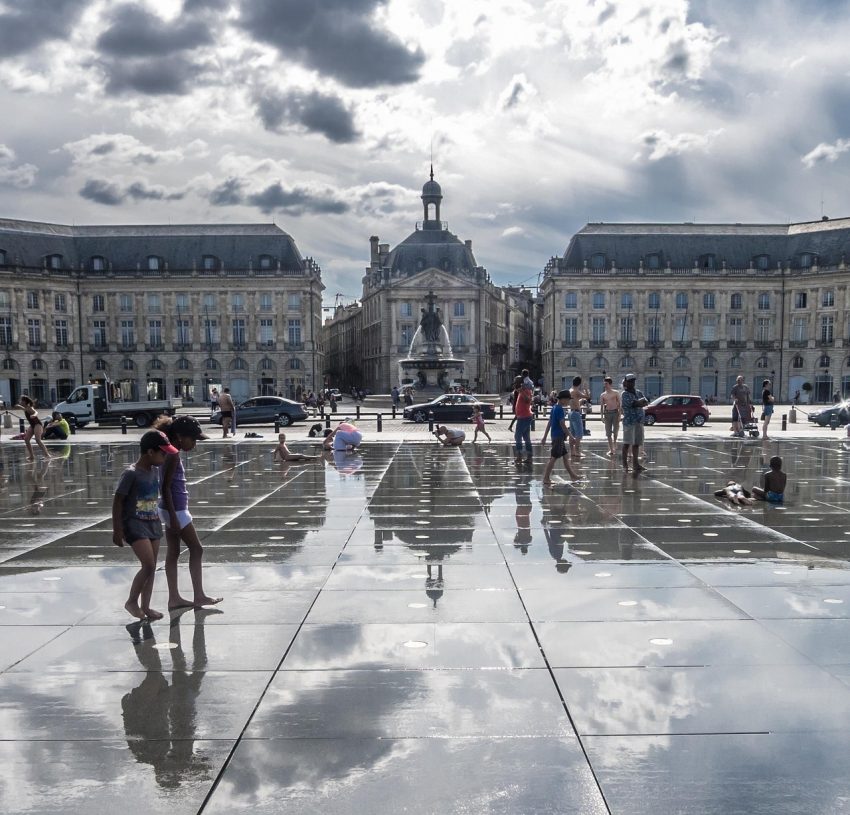
Here, you’d be forgiven for thinking you’ve stepped straight into the age of the French Enlightenment. Close your eyes and you might imagine the gentle rhythm of horse-drawn carriages on the cobblestones, the murmur of merchants, and the rustle of silk dresses beneath soaring limestone facades. Welcome to Place de la Bourse—Bordeaux’s most iconic and photographed square. Constructed between 1730 and 1755, it was originally called Place Royale, built to glorify the reign of Louis XV. With its elegant symmetry, classical architecture, and commanding position opposite the Garonne River, the square was designed as a statement of power, prosperity, and refined urban planning.
Place de la Bourse was groundbreaking in its time, as it was the first open square in Europe—a public space not enclosed by walls, but open to the river and sky. Today, it houses three key landmarks: the Palais de la Bourse, now the Chamber of Commerce; the Hôtel des Douanes, formerly the customs house; and, at its centre, the Fountain of the Three Graces, added in 1869. The square’s grandeur is beautifully mirrored in the Miroir d’eau, the world’s largest reflecting pool, located directly across the street. This modern feature, unveiled in 2006, offers a poetic echo of the past, capturing the classical buildings in its glassy surface and transforming the space into one of Bordeaux’s most magical meeting points, by day and night.
Location: Place de la Bourse, Place de la Bourse, Bordeaux, France
14. Miroir d’Eau
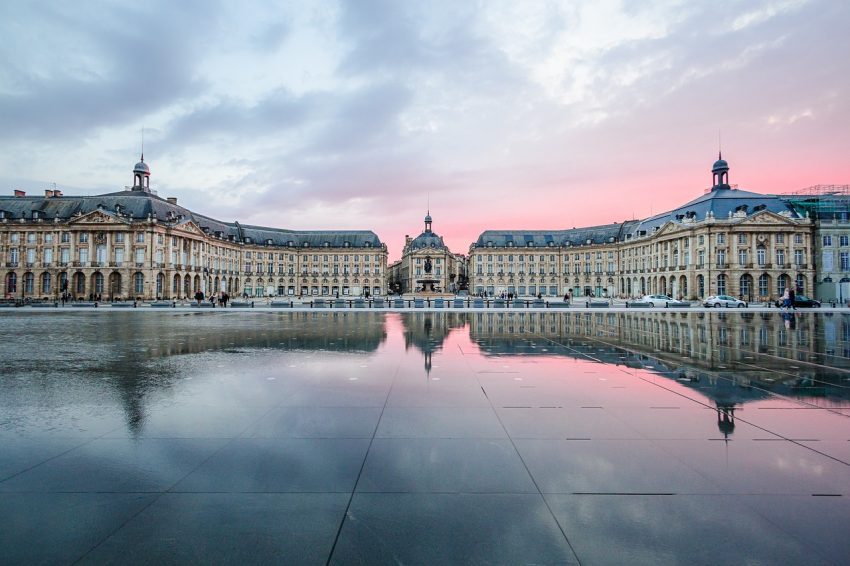
Covering an area of 3,450 square metres and supported by an underground reservoir that holds 800 cubic metres of water, Bordeaux’s Miroir d’Eau is the largest reflecting pool of its kind in the world. Inaugurated in 2006, it quickly became one of the city’s most emblematic features. The installation was part of an ambitious urban renewal project led by then-Mayor Alain Juppé, aimed at revitalising the once-industrial riverfront and reconnecting Bordeaux with its historic relationship to the Garonne River. Designed by landscape artist Michel Corajoud, the mirror has since become a masterpiece of modern urban design—elegant, accessible, and deeply rooted in its setting.
Situated directly opposite the Place de la Bourse, the Miroir d’Eau reflects the grandeur of the square’s classical architecture in its shallow surface, creating an ever-changing spectacle that shifts with the time of day and the mood of the weather. The installation alternates between a mirror-like stillness and a misting effect, which activates every 15 minutes, cloaking the surface in a cool, ethereal fog. This subtle play of water and light has turned the space into a gathering point for all ages—from children splashing through the shallow pool in summer to photographers capturing the poetic beauty of the city’s most famous vista. The Miroir d’Eau is more than just a public artwork; it is a symbol of Bordeaux’s transformation into a modern, walkable city that honours its heritage while embracing innovation.

Moira & Andy
Hey! We're Moira & Andy. From hiking the Camino to trips around Europe in Bert our campervan — we've been traveling together since retirement in 2020!
This website uses affiliate links which earn a small commission at no additional cost to you.
Walking Tour Map