Complete Guide to Canary Islands (2026)
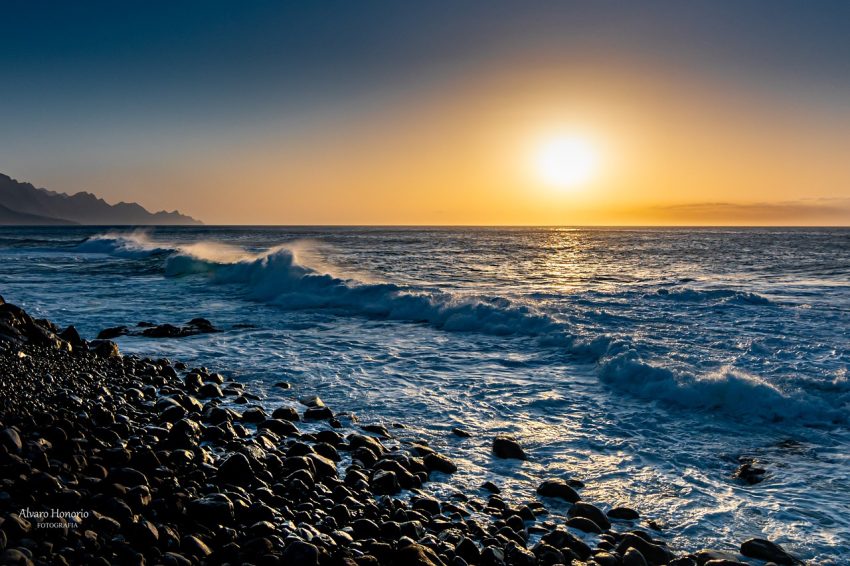
The Canary Islands are Spain’s Atlantic archipelago, set off the northwest coast of Africa, and they work exceptionally well as a “choose-your-own” destination where each island delivers a distinct pace and landscape. You can base yourself in a lively coastal city for easy dining and beach time, retreat to smaller towns for a slower local feel, or plan a multi-island route if you want variety without long travel days. The mix of modern infrastructure and dramatic natural scenery makes the region straightforward to explore while still feeling refreshingly different from mainland Europe.
What most visitors notice first is the contrast: volcanic silhouettes behind resort promenades, black-sand beaches a short drive from pine forests, and ocean viewpoints that change character with the light. The climate is generally mild year-round, which is why the islands are popular for winter sun, but they also reward shoulder-season travel when walking trails are quieter and accommodation prices can soften. Whether your priority is beach-hopping, scenic drives, hiking, food, or nightlife, the islands make it easy to build days that feel full without being complicated.
The practical appeal is just as strong as the scenery. Frequent flights connect the islands to major European hubs, and inter-island ferries make it realistic to add a second base without too much friction. Most trips work best with a simple structure: pick one island as your anchor, add day trips that match your interests, and leave room for unplanned stops-viewpoints, local markets, and small coastal cafés often end up being the highlights.

Cities of Canary Islands
Las Palmas de Gran Canaria
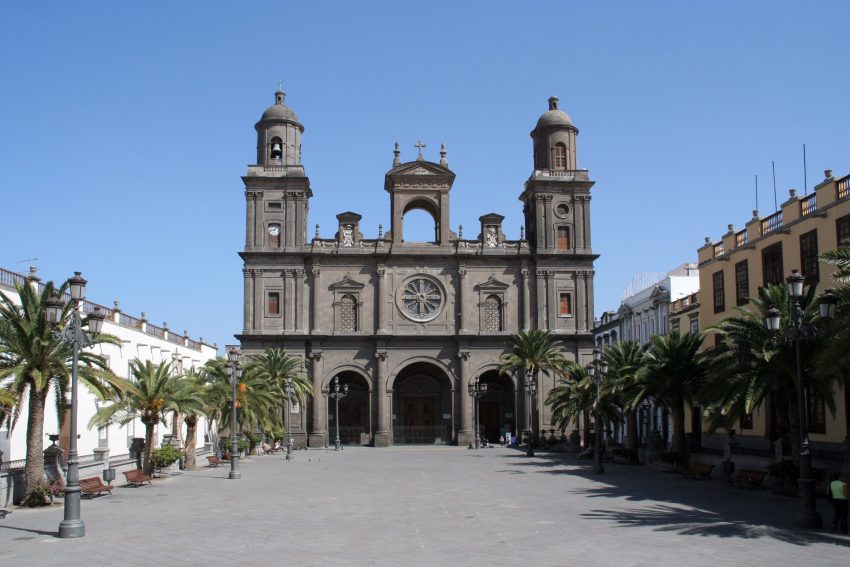
Las Palmas de Gran Canaria sits on the island of Gran Canaria in Spain’s Canary Islands, an Atlantic archipelago off the northwest coast of Africa. It works well as both a base and a destination in its own right: a proper city with neighbourhood character, good food, and plenty to do without needing a car. The overall feel is relaxed and outdoorsy, with the sea never far away and a climate that makes year-round travel straightforward.
For most visitors, the main draw is how easy it is to mix beach time with city time. You can spend the morning on a long urban beach, then shift straight into cafés, shopping streets, markets, and waterfront promenades in the afternoon. The city has distinct districts with different energy, so it’s worth moving around a little rather than staying in one pocket the entire trip; even short taxi rides or local buses can change the vibe from resort-like to residential and local.
Practicalities are simple: plan around the trade winds (a light layer can be useful in the evenings), book accommodation based on whether you want beach access or a more central city feel, and leave space for unstructured wandering. Las Palmas is also a good jumping-off point for seeing the rest of Gran Canaria on a day trip, but you do not need to “escape” the city to have a satisfying visit-its appeal is precisely that it delivers both a laid-back coastal break and an active, lived-in urban scene.
View our Las Palmas de Gran Canaria Guide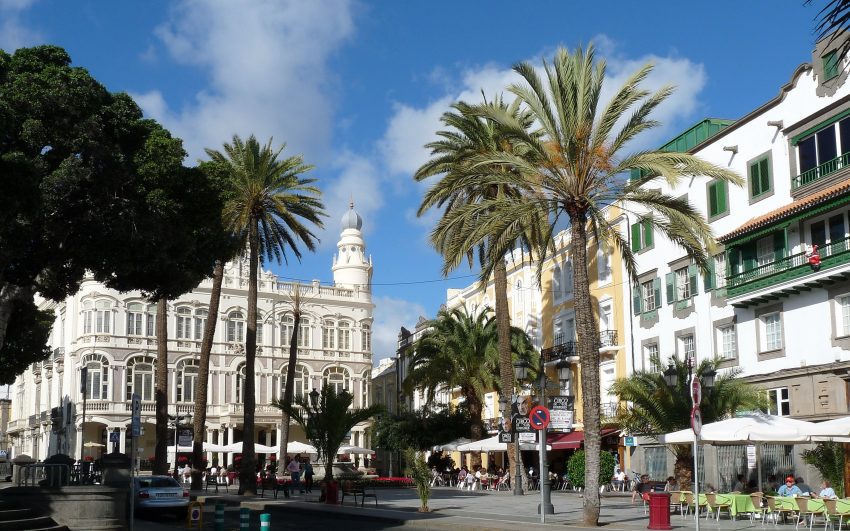
Santa Cruz de Tenerife
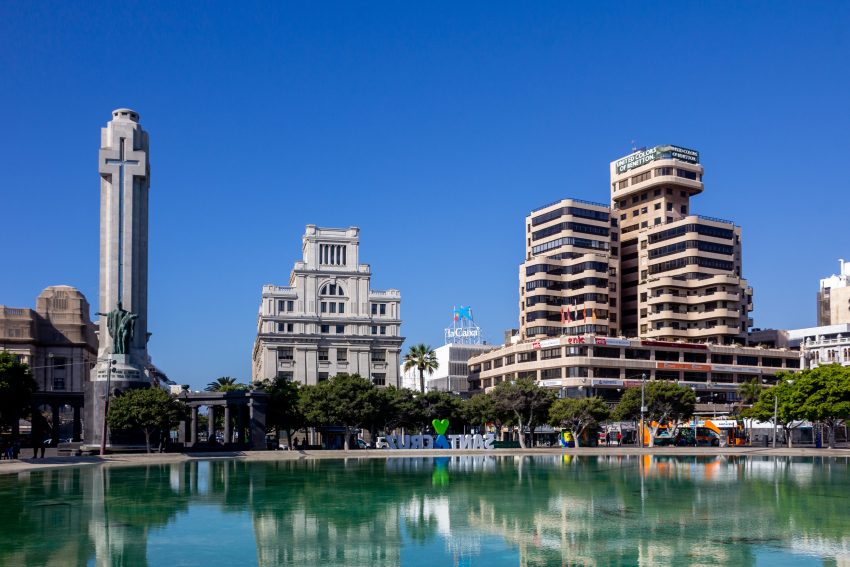
Santa Cruz de Tenerife, commonly known as Santa Cruz, is a major city and the capital of both the island of Tenerife and the Province of Santa Cruz de Tenerife. It also shares the title of capital of the Canary Islands. Santa Cruz has a population of 206,593 within its administrative boundaries, and the urban area extends beyond the city limits, encompassing a population of 507,306, with 538,000 in the greater urban area. It is the second-largest city in the Canary Islands and the main city on Tenerife, with nearly half of the island’s population living in or around it.
Situated in the northeast quadrant of Tenerife, Santa Cruz lies 210 kilometers off the northwestern coast of Africa in the Atlantic Ocean. The nearest point on mainland Spain is 1,300 kilometers away. From the 1833 territorial division of Spain until 1927, Santa Cruz de Tenerife was the sole capital of the Canary Islands. In 1927, a decree ordered that the capital be shared, a status that remains today.
Santa Cruz’s port is a vital communications hub between Europe, Africa, and the Americas, with cruise ships arriving from many nations. The city serves as the focal point for domestic and inter-island communications in the Canary Islands. It is home to the Parliament of the Canary Islands, the Canarian Ministry of the Presidency, half of the Ministries and Boards of the Canarian Government, the Tenerife Provincial Courts, and two courts of the Superior Court of Justice of the Canary Islands. Several faculties of La Laguna University are located in Santa Cruz, including the Fine Arts School and the Naval Sciences Faculty.
The harbor is one of Spain’s busiest, crucial for commercial and passenger traffic, and a major stopover for cruise ships en route from Europe to the Caribbean. The city is renowned for hosting one of the world’s largest carnivals, the Carnival of Santa Cruz de Tenerife, which aspires to become a World Heritage Site and is the second largest in the world.
Key landmarks in Santa Cruz include the Auditorio de Tenerife, the Santa Cruz Towers, and the Iglesia de la Concepción. The city hosts the first headquarters of the Center UNESCO in the Canary Islands. Recent years have seen the construction of numerous modern structures, giving Santa Cruz the sixth tallest skyline in Spain, behind Madrid, Benidorm, Barcelona, Valencia, and Bilbao.
In 2012, the British newspaper The Guardian included Santa Cruz de Tenerife in its list of the five best places in the world to live, alongside the Cihangir district in Istanbul; the district of Sankt Pauli in Hamburg; the north coast of Maui in Hawaii; and Portland, Oregon. Notably, 82% of the municipal territory of Santa Cruz de Tenerife is considered a natural area, largely due to the presence of Anaga Rural Park. This makes Santa Cruz the third-largest municipality in Spain with the highest percentage of natural territory, after Cuenca and Cáceres. The city holds the status of a global city.
View our Santa Cruz de Tenerife Guide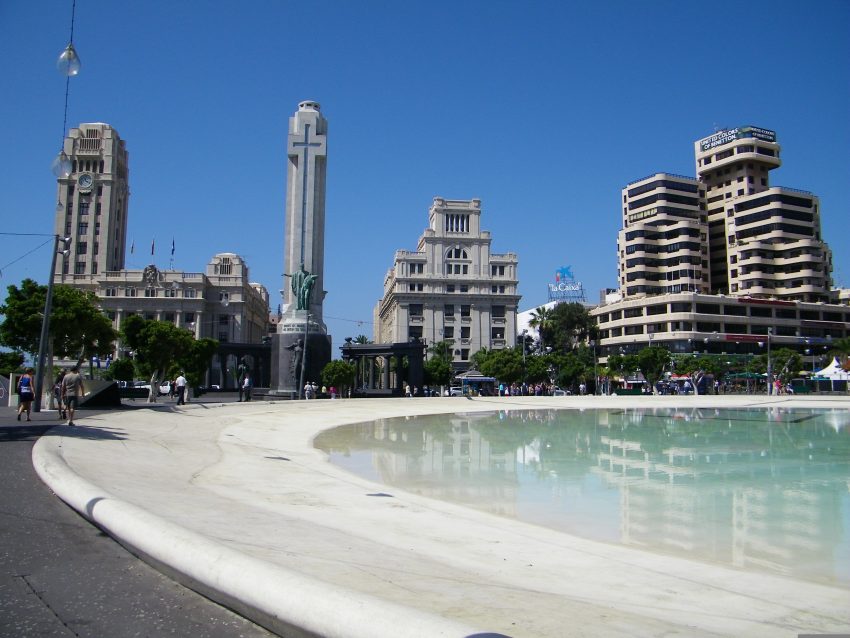
Arrecife
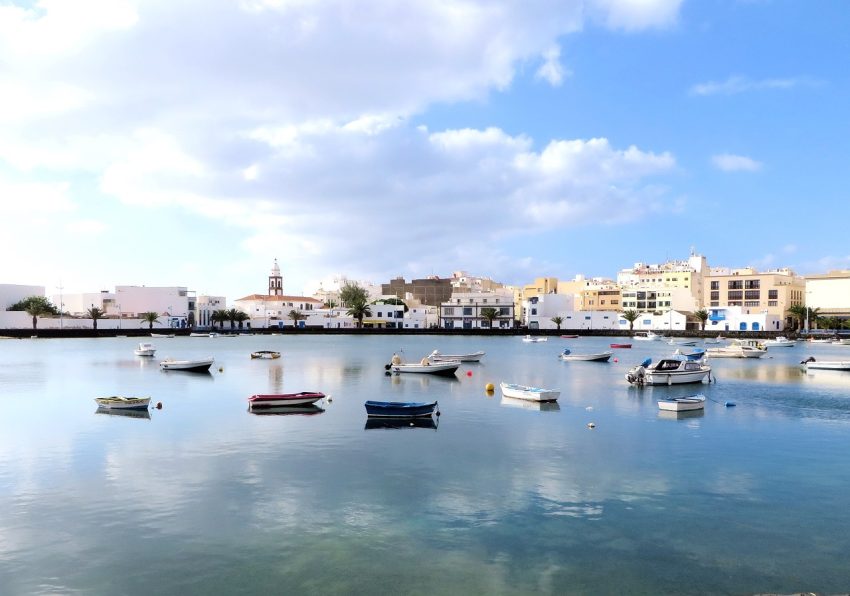
Arrecife is a city and municipality in the Canary Islands, located in the central-eastern part of Lanzarote, and has been the island’s capital since 1852. The city derives its name from the rock reef that lines its beach. It also lends its name to the nearby Arrecife Airport. The municipality has a population of 61,351 and covers an area of 22.72 square kilometers. Arrecife lies south of Teguise and east of San Bartolomé, with the Atlantic Ocean to its southeast. As a port town on the east coast, Arrecife is served by ferries to other islands, as well as Europe and mainland Africa. The LZ1 road connects Arrecife to the northeast of the island, the LZ2 road links the capital to the southwest, and the LZ3 road functions as the city’s beltway. The tallest building in Lanzarote, the Arrecife Gran Hotel, is located on the seafront next to the harbor.
View our Arrecife GuidePuerto de la Cruz
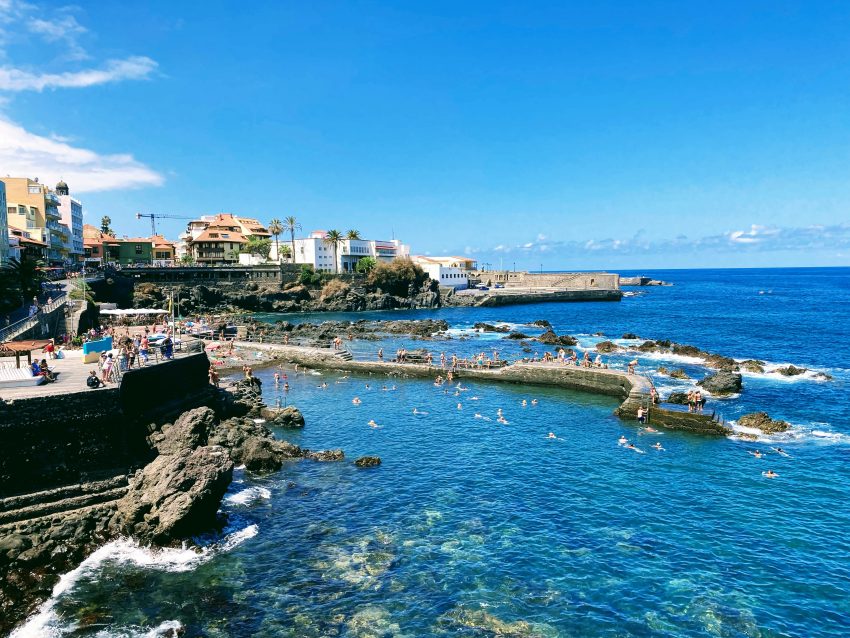
Puerto de la Cruz, located in the north of Tenerife, is the oldest and one of the most popular seaside resorts in the Canary Islands. I wanted to discover what makes it so special.
Originally serving as the port for La Orotava, Puerto de la Cruz is renowned for its rugged coastline of black volcanic rocks, which surround the iconic Lago Martiánez swimming pools. These pools were designed by the famous Spanish artist and architect César Manrique in 1977. I began my exploration of Puerto de la Cruz along the seafront but chose to venture away from the artificial lagoons, opting instead to walk along the stunning natural coastline.
View our Puerto de la Cruz GuideHistory of Canary Islands
Indigenous settlement and early contacts (c. 1st millennium BCE to 15th century)
Long before European conquest, the Canary Islands were home to Indigenous communities often grouped under the label “Guanches” (though historically that term applied most specifically to Tenerife). Linguistic, genetic, and archaeological evidence links these populations to Amazigh (Berber) origins in North Africa, arriving by sea and developing distinct island societies over many centuries. Some research also indicates contact with the wider Mediterranean world in antiquity, including evidence consistent with Roman-era activity, highlighting that the islands were not entirely unknown beyond the Atlantic fringe.
European arrival and Castilian conquest (14th–15th centuries)
From the late Middle Ages, European interest intensified as the Canaries became strategically valuable for Atlantic navigation and trade. The conquest was gradual and uneven across the archipelago, unfolding between 1402 and 1496 through a mix of noble-led campaigns and direct royal intervention. The final stages were particularly associated with the Crown of Castile’s consolidation of control, culminating in the late 15th century as the remaining unconquered islands were brought under Castilian rule. This period also intersected with Iberian rivalry in the Atlantic, with agreements such as the Treaty of Alcáçovas (signed 4 September 1479) shaping spheres of influence and reinforcing Castilian claims to the Canaries.
An Atlantic crossroads and export economy (16th–17th centuries)
With the islands incorporated into the Castilian sphere, the Canaries became an operational stepping-stone in the emerging Atlantic system, positioned between Europe, Africa, and the Americas. Their economy increasingly oriented toward export agriculture, with early emphasis on sugar and later a significant pivot toward viticulture as markets evolved. Canarian wines gained international prominence during this era, reflecting how the islands’ fortunes rose and fell with shifting trade routes, competition from other plantation regions, and changing consumer demand across Europe and colonial markets.
Administrative change, ports, and 19th-century commercial shifts (18th–19th centuries)
Over time, the islands’ strategic value expressed itself through ports, logistics, and maritime services as much as through agriculture. The 19th century brought new commercial dynamics, including the growth of cochineal cultivation (used for red dye) as an export activity and the gradual rebalancing of the economy as global commodity markets changed. A major policy milestone came in 1852, when a free-port regime was extended to the Canary Islands, reinforcing their role as an Atlantic trading and resupply zone and shaping patterns of import-export activity thereafter.
From provincial division to autonomy and the tourism era (20th–21st centuries)
In the 20th century, administrative structure shifted in ways that still define the region: in 1927 the single province was split into two (Las Palmas and Santa Cruz de Tenerife), formalising a dual-provincial framework across the archipelago. Later, democratic-era decentralisation in Spain culminated in the Statute of Autonomy of the Canary Islands (10 August 1982), establishing today's autonomous community arrangements. In the late 20th and early 21st centuries, mass tourism and associated services became dominant economic drivers, layering a global visitor economy onto older foundations of ports, trade, and intercontinental connectivity.
Best Time to Visit Canary Islands
Visiting the Canary Islands in Winter
December to February is the classic “winter sun” window: mild daytime temperatures on the coast, plenty of clear days, and the best overall value if you want warmth without peak-summer heat. It is also the season when the trade winds and Atlantic swells can be more noticeable, which is ideal for surf-focused trips but can make some boat excursions more weather-dependent.
Festival-wise, this is when Carnival season ramps up, with major celebrations typically running through February into early March on islands like Tenerife and Gran Canaria. If you want the full Carnival experience, book accommodation early and expect higher prices around the biggest parade weekends, especially in Santa Cruz de Tenerife and Las Palmas.
Visiting the Canary Islands in Spring (Best)
March to May is the most balanced time to go: warm, bright, and generally comfortable for everything from beach days to long hikes, without the peak-season crowds and pricing. Sea temperatures are still warming up, but conditions are often excellent for walking, viewpoint chasing, and volcano landscapes, particularly on Tenerife, Lanzarote, and La Palma.
Spring also often benefits from a more relaxed “local rhythm,” making it easier to get tables, find parking in popular spots, and enjoy coastal towns without the summer crush. If you want a trip that mixes scenery, food, and time outdoors with minimal friction, this is the strongest all-round choice.
Visiting the Canary Islands in Summer
June to August delivers the hottest, driest feel overall, with long daylight hours and reliably beach-friendly weather, but it is also the busiest period for families and resort travel. The trade winds can be a major feature (especially on Fuerteventura and Lanzarote), which is excellent for wind sports and helps moderate heat, but it can make some beaches feel breezier than visitors expect.
Summer is a strong festival window on several islands, including traditional romerías and patron-saint celebrations, plus late-June/early-summer events such as San Juan festivities in many towns. Some islands also host large, less-frequent signature celebrations in early summer (often tied to multi-year cycles), so if festivals are your main goal, it can be worth checking the specific island calendar for the year you travel.
Visiting the Canary Islands in Autumn
September to November is a “second sweet spot,” especially if you want warmer sea temperatures than spring and a calmer atmosphere than high summer. Early autumn is still very beachable, while late autumn becomes excellent for scenic drives, food-focused itineraries, and hiking as temperatures ease and the islands feel less crowded.
In terms of highlights, November is known for major cultural events on Gran Canaria such as WOMAD in Las Palmas, which can be a strong reason to time a city-and-coast trip around the festival weekend. Autumn is also a practical season for island-hopping: availability improves, travel times feel easier, and you can often build a multi-island route without fighting peak-season demand.
Annual Weather Overview
- January 19°C 71°F
- February 19°C 70°F
- March 22°C 75°F
- April 20°C 72°F
- May 21°C 74°F
- June 23°C 77°F
- July 25°C 80°F
- August 25°C 81°F
- September 24°C 80°F
- October 24°C 78°F
- November 22°C 76°F
- December 20°C 72°F
How to get to Canary Islands
Getting to the Canary Islands by air
Nearest airports: Tenerife South (TFS) and Gran Canaria (LPA) are the main international gateways, with Tenerife North (TFN), Lanzarote (ACE), Fuerteventura (FUE), La Palma (SPC), El Hierro (VDE) and La Gomera (GMZ) serving additional island routes.
Typical flight patterns: Most long-haul and many European services concentrate on TFS and LPA, while inter-island hops and some domestic flights commonly route via TFN/LPA depending on your origin and final island. If you are island-hopping, it is often faster to fly into one main hub (LPA or TFS) and connect onward by a short domestic flight or ferry rather than trying to force a single “perfect” direct flight to a smaller island.
Getting into town on arrival: Each airport is linked to its island’s main resorts and cities by scheduled buses and taxis, and car hire is widely available at the terminals. For late arrivals, a pre-booked transfer can be more predictable than waiting for a less frequent bus service.
For the best deals and a seamless booking experience, check out these flights to on Booking.com.Getting to the Canary Islands by Car
Driving from mainland Spain: You cannot drive directly to the Canary Islands; the practical overland approach is to drive to a Spanish port and continue by ferry, which is a long crossing and typically only makes sense if you specifically need your own vehicle for an extended stay.
On-island driving: For most visitors, the efficient option is to fly in and rent a car on the island where you want maximum flexibility, particularly for beaches, viewpoints, national parks and rural interior routes. In city centres and the busiest resort zones, parking can be limited, so a “car-light” plan (walk + bus + occasional taxi) can work well if your itinerary is mostly urban and coastal.
Travelling around the Canary Islands
Inter-island connections: Island-hopping is done via ferries and short domestic flights; ferries are best for nearby pairs and for travellers who prefer a slower, scenic transfer, while flights are usually fastest for longer jumps across the archipelago.
Getting around within each island: Public buses (often branded locally, and sometimes referred to as “guaguas”) connect airports, main towns, and many resorts reliably, but frequency drops on rural routes and evenings. Taxis are widely available in urban and resort areas, and ride-hailing coverage can vary by island and town.
Planning by travel style: If your trip is hiking-, scenery-, or beach-cove-heavy, a rental car dramatically expands what you can do in a day. If your focus is city culture, dining, and a single resort base, you can often manage with walking, buses and targeted taxis, using organised excursions for the occasional hard-to-reach viewpoint or trailhead.