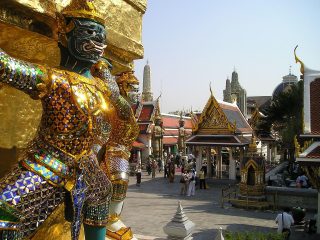
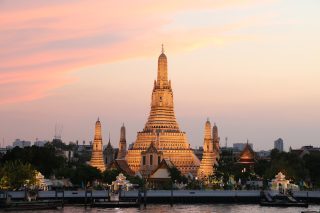
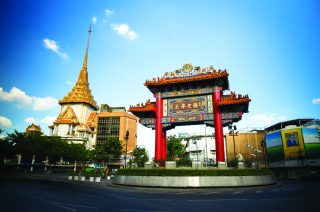
Wat Ratchanatdaram (Temple of the Royal Niece), Bangkok
Buddhist Temple in Bangkok
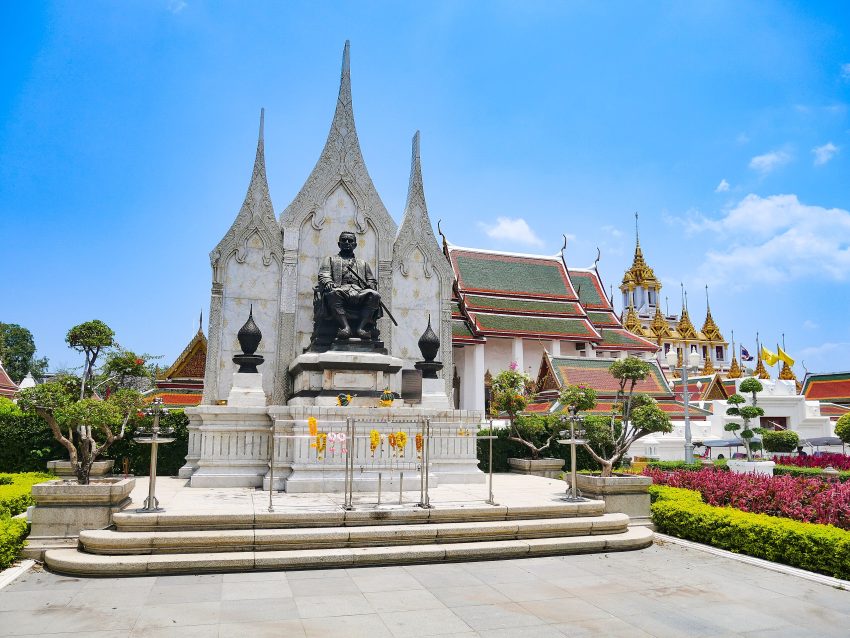
Wat Ratchanatdaram, located in Bangkok's historic Phra Nakhon district, is one of the must-see places in Bangkok for travelers who appreciate architecture, spirituality, and history intertwined. Commissioned in 1846 by King Rama III for his granddaughter, Princess Somanass Waddhanawathy, this temple stands out for its striking design and unique structure-Loha Prasat, the “iron castle.” With its 37 spires gleaming under the tropical sun, it symbolizes the 37 virtues of enlightenment in Buddhist philosophy.
This spot is one of the best places to see in Bangkok if you're exploring Rattanakosin Island, not only for its distinctive appearance but also for its serene ambiance. Unlike the crowded temples nearby, Wat Ratchanatdaram offers quiet corners, graceful symmetry, and one of the best rooftop views of the Old City skyline-a great place to visit on a walking tour of Bangkok.
History and Significance of Wat Ratchanatdaram
Wat Ratchanatdaram, which translates to “Temple of the Royal Niece,” was established in 1846 under King Nangklao (Rama III). It was part of his broader vision to expand and beautify Bangkok with monumental religious architecture. The temple was constructed to honor his beloved granddaughter, Princess Somanass Waddhanawathy, who tragically died young.
The temple’s architectural centerpiece, Loha Prasat, takes its inspiration from ancient Buddhist structures once found in India and Sri Lanka. The original Loha Prasat in Sri Lanka was built in Anuradhapura and featured multiple tiers and thousands of rooms, though none of those earlier examples survive today. Bangkok’s version, standing 36 meters tall, is the only one remaining in existence.
Its pyramid-like design is formed by a square base that narrows toward a central spire, embodying Buddhist cosmology. The 37 metal-tipped spires represent the Bodhipakkhiya Dhamma-the qualities required to achieve enlightenment. Loha Prasat’s structure is also a tribute to King Rama III’s fascination with architectural forms that blended Thai, Sri Lankan, and Burmese styles, reflecting the spiritual and cultural connections between these Buddhist nations.
In 2005, Wat Ratchanatdaram’s Loha Prasat was nominated for inclusion in the UNESCO World Heritage list, further cementing its importance as a cultural and historical treasure.
Things to See and Do in Wat Ratchanatdaram
The main attraction here is, without question, Loha Prasat-the iron castle. Visitors can climb its multiple levels, each offering a new perspective on the temple’s geometric perfection. The labyrinth of corridors on the ground floor is lined with columns and tranquil meditation spaces, while the upper levels provide views of Bangkok’s rooftops and the nearby Golden Mount (Wat Saket).
Inside, you’ll find exhibits detailing the history of Loha Prasat, including photographs, architectural models, and murals added in 2007 that illustrate its construction and symbolic meaning. The topmost level houses a relic of the Buddha, making it a sacred pilgrimage spot for Thai Buddhists.
Surrounding the main structure are smaller pavilions, prayer halls, and a courtyard filled with serene statues. The temple complex is beautifully illuminated in the late afternoon, when the sunlight reflects off the black iron spires and golden tips. For a peaceful end to your visit, stroll over to the nearby Mahakan Fort or enjoy a drink at one of the riverside cafés just a short walk away.
How to Get There
Wat Ratchanatdaram is located at the intersection of Ratchadamnoen Klang Avenue and Mahachai Road, close to Wat Saket and the Golden Mount. The nearest MRT station is Sam Yot, about a 15-minute walk away. Tuk-tuks and taxis can also reach the temple easily from Khao San Road or the Grand Palace area. If you're exploring the Old City on foot, Wat Ratchanatdaram is often visited on walking tours of Bangkok, making it a natural stop between historic sites.
Practical Tips on Visiting Wat Ratchanatdaram
- Best time to visit Wat Ratchanatdaram: Late afternoon for ideal lighting and cooler temperatures.
- Entrance fee in Thai Baht: Free for the temple grounds; a small donation is appreciated for entry to Loha Prasat (20-30 THB).
- Opening hours: Daily from 8:00 AM to 5:00 PM.
- Official website: None; information is available via the Tourism Authority of Thailand.
- How long to spend: Around 45 minutes to 1.5 hours, depending on your interest in climbing Loha Prasat.
- Accessibility: Mostly flat areas with some stairs leading to the upper levels.
- Facilities: Basic restrooms and small souvenir stands nearby.
- Photography tip: Capture Loha Prasat from across Ratchadamnoen Avenue for a full view of its spires, especially during golden hour.
- Guided tours: Frequently included in Old City and Rattanakosin heritage tours.
- Nearby food options: Local cafés and small eateries nearby serve classic Thai dishes like pad kra pao and mango sticky rice.
Is Wat Ratchanatdaram Worth Visiting?
Yes-Wat Ratchanatdaram is one of the top sights in Bangkok for travelers interested in culture and design. Its serene setting, historical depth, and unmatched architecture make it stand apart from other temples in the city. Loha Prasat is especially striking for photographers and architecture lovers, offering a rare combination of elegance and spiritual symbolism.
What Other Travellers Say...

Wat Ratchanatdaram Worawihan sits at the intersection of Ratchadamnoen Klang and Maha Chai Road and is best known for its Loha Prasat, a rare multi‑tiered “metal castle” topped with numerous metal spires; visitors praise its striking, intricately designed spires, calm atmosphere despite the central Old Town location, spiral staircases that let you stop at each level, and a top level that provides 360‑degree views over Bangkok, with onsite displays on multiple levels and a small fee for the Loha Prasat exhibition.


FAQs for Visiting Wat Ratchanatdaram
Nearby Attractions to Wat Ratchanatdaram
- Wat Saket (Golden Mount) - A nearby hilltop temple offering sweeping views of the city.
- Wat Thepthidaram - A Chinese-influenced temple with connections to poet Sunthorn Phu.
- The Giant Swing - Bangkok’s iconic red landmark near Wat Suthat.
- Wat Suthat - One of the oldest and most revered temples in Bangkok.
- Democracy Monument - A symbolic centerpiece of Thailand’s modern history, located along Ratchadamnoen Avenue.
The Wat Ratchanatdaram (Temple of the Royal Niece) appears in our Complete Guide to Visiting Bangkok!

Moira & Andy
Hey! We're Moira & Andy. From hiking the Camino to trips around Europe in Bert our campervan — we've been traveling together since retirement in 2020!
This website uses affiliate links which may earn a commission at no additional cost to you!
Planning Your Visit
Nearby Attractions
- Wat Thepthidaram (0.2) km
Buddhist Temple - Wat Saket (Temple of the Golden Mount) (0.3) km
Buddhist Temple - Bangkok Wat Suthat (Giant Swing) (0.5) km
Historic Site - Khaosan Road (0.9) km
Street - Wat Ratchabophit (1.0) km
Buddhist Temple - Wat Ratchapradit (1.1) km
Buddhist Temple - Lak Mueang (1.1) km
Historic Site - Saranrom Palace (1.2) km
Palace - Sanam Luang (1.2) km
Historic Site and Park - Phahurat Market (1.3) km
Market