Wat Prasat, Chiang Mai
Buddhist Temple in Chiang Mai
Wat Prasat is one of the most atmospheric temples in Chiang Mai's Old City, blending understated beauty with centuries of history. Founded in the 16th century, it stands out for its unusual connection between the viharn and the chedi, where a small hidden chamber shelters the principal Buddha image. For many travellers exploring the Old City, this peaceful temple becomes one of the must-see places in Chiang Mai thanks to its rare architectural layout and quiet, contemplative setting.
Although close to major attractions, Wat Prasat remains a calm retreat and a great place to visit on a walking tour of Chiang Mai. Its traditional Lanna craftsmanship, wooden structures, and faded yet graceful details offer a glimpse of Old Chiang Mai before the more elaborate temple renovations of later centuries.
History and Significance of Wat Prasat
Wat Prasat traces its origins to the 16th century during a period when Lanna religious architecture was characterised by modest scale and refined craftsmanship. Its most distinctive historical feature is the tunnel-like chamber linking the viharn to the old chedi. This passageway is rare in Chiang Mai and suggests the temple once served an important ritual function, possibly connected to meditation practices or protective ceremonies.
The temple's name, which may relate to auspicious or ceremonial enclosures, aligns with its layout: multiple structures grouped closely together, each representing a different aspect of Lanna religious life. Despite later additions, such as the more modern ubosot, Wat Prasat has preserved its historic atmosphere, making it one of the top attractions in Chiang Mai for those curious about traditional temple architecture.
Things to See and Do in Wat Prasat
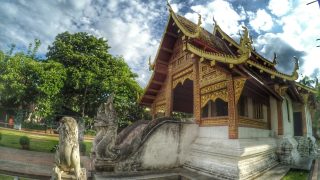
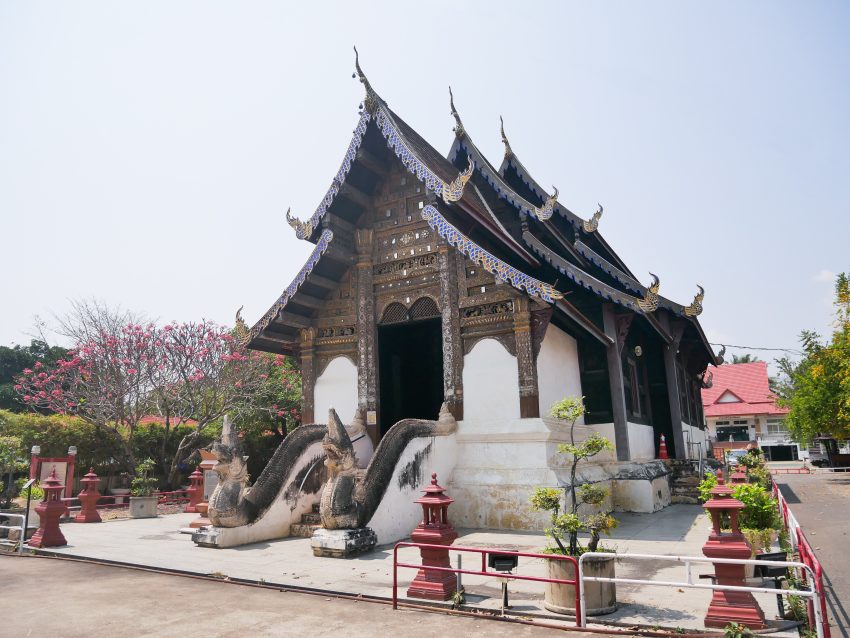
The viharn is one of the temple’s highlights. Its dark-toned teak and stone façade, multi-tiered roof, and understated colour palette set it apart from more flamboyant temples around the city. The plain stone nagas flanking the entrance create a grounded, ancient impression, while the gable’s floral and animal motifs tell of an earlier decorative richness. Inside, red-lacquered teak pillars rise above wooden walls and windows, leading the eye toward the main Buddha image. Behind this statue lies the discreet alcove containing the sacred white Buddha and smaller figures, including a replica of the Emerald Buddha.
The old chedi at the rear of the viharn is perhaps the temple’s most intriguing structure. Its cruciform layout, with three large niches containing white seated Buddhas, forms a striking silhouette. The four small mondop-style towers crowning the chedi, complete with Burmese-style umbrellas, hint at historical cross-cultural influences. The newer chedi, though simpler, adds balance to the complex, surrounded by small stucco towers that may represent future sema markers.
Wat Prasat also features a richly decorated ubosot with brightly adorned makaras and nagas, plus an ornate two-story bell tower adorned with gilt bargeboards and wind bells that chime softly in the breeze.
How to Get to Wat Prasat
From Chiang Mai International Airport, Wat Prasat is about a 15-minute drive, making it easy to reach by taxi or rideshare. For the best deals and a seamless booking experience, check out these flights to Chiang Mai on Booking.com.
From Chiang Mai Railway Station, travellers can take a red songthaew or taxi into the Old City, followed by a short walk to the temple. Train schedules and bookings can be found on Omio.
Drivers can follow the Old City moat road and enter through the nearest gate, with parking available along nearby side streets around the temple.
Practical Tips on Visiting Wat Prasat
- Best time to visit Wat Prasat: Early morning for soft light and quiet surroundings.
- Entrance fee in Euros: Free.
- Opening hours: Generally daylight hours; the grounds remain accessible most of the day.
- Official website: None.
- How long to spend: Around 20-30 minutes.
- Accessibility: Mostly flat, though some steps lead into the viharn and tunnel chamber.
- Facilities: Limited; cafés and small shops nearby.
- Photography tip: Capture the cruciform chedi from the rear to show its full shape.
- Guided tours: Sometimes included in Old City temple tours.
- Nearby food options: Plenty of cafés and restaurants within a few minutes’ walk.
Where to Stay close to Wat Prasat
Wat Prasat sits in a convenient area of the Old City, making it easy to stay within walking distance. For a refined boutique experience, Tamarind Village offers peaceful gardens and traditional Lanna design. A stylish central option close to many temples is U Chiang Mai. Travellers who prefer elegant décor and a more luxurious atmosphere can choose The Inside House.
Is Wat Prasat Worth Visiting?
Yes. Wat Prasat is absolutely worth visiting for its tranquil ambiance, unique tunnel-linked chedi, and beautifully preserved Lanna architecture. It offers a more intimate and traditional experience compared to Chiang Mai's larger temples, making it ideal for travellers seeking authenticity and quiet beauty.
What Other Travellers Say...

Wat Prasat, tucked inside Chiang Mai's old city at 4/2 Soi Intra Warorot Lane 3, is a small, quiet temple complex of two main buildings that visitors find photogenic and peaceful; highlights include a beautifully carved wooden viharn set on a stone base with ornate doors and a bejewelled entrance to a rear square stone mondop housing a Buddha, a short tunnel linking the viharn to the chedi, murals and many Buddha images, plus an ubosot and white chedi with a golden spire—all approachable without an entrance fee and often enjoyed briefly by photographers or those seeking a calm place to pray.


FAQs for Visiting Wat Prasat
Nearby Attractions to Wat Prasat
- Wat Phra Singh - One of the most important temples in Chiang Mai, known for its revered Buddha image.
- Wat Chedi Luang - A dramatic 14th-century chedi and home of the city pillar shrine.
- Lanna Folklife Museum - Exhibits exploring traditional culture and history of the Lanna kingdom.
- Wat Phan Tao - A beautiful teak-wood temple with a distinctive wooden viharn.
- Three Kings Monument - A historic landmark and popular gathering point in the Old City.
The Wat Prasat appears in our Complete Guide to Visiting Chiang Mai!

Moira & Andy
Hey! We're Moira & Andy. From hiking the Camino to trips around Europe in Bert our campervan — we've been traveling together since retirement in 2020!
This website uses affiliate links which may earn a commission at no additional cost to you!
Planning Your Visit
8:00 AM to 5:00 PM.
Nearby Attractions
- Wat Pha Bong (0.1) km
Buddhist Temple - Wat Phra Singh (0.2) km
Buddhist Temple - Wat Tung Yu (0.3) km
Buddhist Temple - Chiang Mai City Arts & Cultural Centre (0.6) km
Museum - Wat Inthakhin Sadue Mueang (0.6) km
Buddhist Temple - Wat Ratcha Monthian (0.6) km
Buddhist Temple - Wat Chedi Luang (0.6) km
Buddhist Temple - Three Kings Monument (0.7) km
Statue - Wat Khuan Khama (0.7) km
Buddhist Temple - Hua Lin Corner (0.7) km
City Walls