Warsaw Barbican
Castle in Warsaw
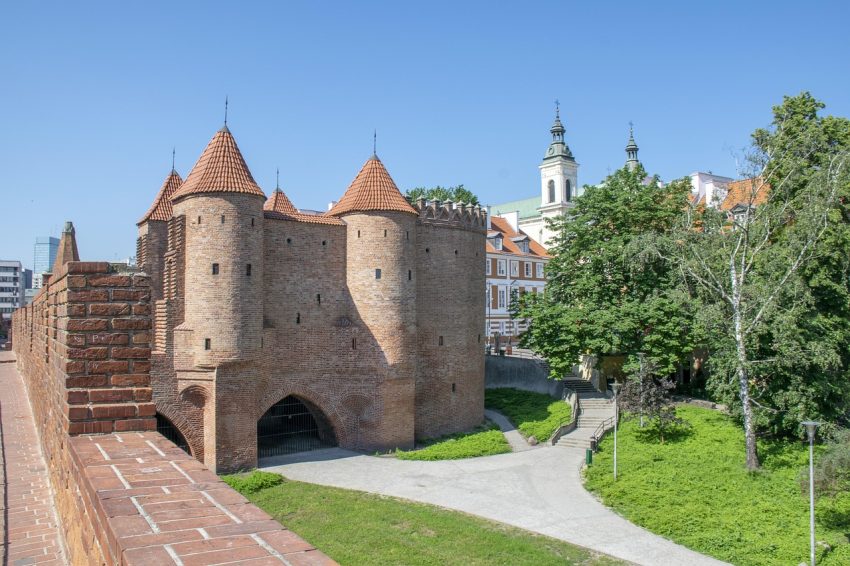
The Warsaw Barbican (Barbakan Warszawski) is the red-brick pinch point you naturally pass through when moving between Warsaw's Old Town and New Town, a rounded bastion stitched into the defensive walls just off Nowomiejska Street. It's not a “big-ticket” attraction in the usual sense, but it's one of those places where Warsaw's history feels physical: thick masonry, narrow openings, and the sense of a city that once had to protect its northern edge.
Today, it's one of the top sights in Warsaw for an easy, atmospheric stop that costs nothing to enjoy from the outside, and it slots neatly into a walking tour of Warsaw because it's exactly where your feet want to go anyway. Come for the photos and the texture, linger for the small details, then continue into the lanes and squares on either side.
Table of Contents
- History and Significance of the Warsaw Barbican
- Things to See and Do in the Warsaw Barbican
- How to Get to the Warsaw Barbican
- Practical Tips on Visiting the Warsaw Barbican
- Where to Stay Close to the Warsaw Barbican
- Is the Warsaw Barbican Worth Visiting?
- For Different Travelers
- FAQs for Visiting Warsaw Barbican
- Nearby Attractions to the Warsaw Barbican
History and Significance of the Warsaw Barbican
The Barbican was added to Warsaw’s fortifications in the mid-16th century, built as a reinforced outpost to protect the northern gate and strengthen a wall system that had evolved over centuries. Its distinctive rounded form reflects Renaissance-era defensive thinking, designed to handle threats more effectively than older, flatter wall lines.
As warfare changed and artillery improved, structures like this quickly became less decisive in military terms, and Warsaw’s walls gradually lost their strategic role. Over time, the fortifications were altered, built over, and partially dismantled as the city expanded and priorities shifted from defence to development.
What gives the Barbican its modern significance is its post-war story. After the devastation of the Second World War, Warsaw’s historic core was painstakingly reconstructed, and the Barbican became one of the most recognisable symbols of that wider effort to restore the city’s identity, not simply rebuild its streets.
Things to See and Do in the Warsaw Barbican
Walk the full curve of the structure and look back toward the Old Town to appreciate how the Barbican frames the passage between districts. The best views often come from slightly below and to the side, where you can see the rounded silhouette and the layered brickwork rather than just the archway.
Take your time with the small defensive details: the narrow slits, the thickness of the walls, and the way the space funnels movement. In warmer months you’ll often find artists, performers, and small stalls nearby, which adds a lively, local feel without turning the place into a theme-park stop.
If you visit in summer, check whether the interior exhibition is open and decide whether you want the extra context. Even if you skip the inside, the most rewarding part is still the simple act of walking the walls and letting the Old Town’s scale and street patterns make sense around you.
How to Get to the Warsaw Barbican
Warsaw is served by Warsaw Chopin Airport (WAW) and Warsaw Modlin Airport (WMI), both with straightforward onward connections into the city. For the best deals and a seamless booking experience, check out these flights to Warsaw on Booking.com.
From elsewhere in Poland and neighbouring countries, arriving by train is convenient, with Warszawa Centralna and Warszawa Gdańska offering easy onward links by metro, tram, or a short taxi ride. You can easily check schedules and book tickets through the PKP Intercity website. However, for a smoother experience, we recommend using Omio, which simplifies the booking process and lets you compare prices and schedules all in one place.
If you are already in Warsaw, the simplest approach is on foot from the Old Town Market Square or along Nowomiejska Street, and public transport stops around the Old Town edge make the final walk short and intuitive.
Driving is rarely worth it for this specific stop because the Old Town area has restricted access and parking can be time-consuming, so it’s best treated as a walk-in sight. If you are looking to rent a car in Poland I recommend having a look at Discover Cars, first, as they compare prices and review multiple car rental agencies for you.
Practical Tips on Visiting the Warsaw Barbican
- Entrance fee: Free for the outdoor passage; 12 PLN (regular) / 8 PLN (reduced) for the summer exhibition inside the Barbican.
- Opening hours: (Summer) 21 May – 30 September: Wednesday & Saturday: 13:00–17:00. Closed on Monday, Tuesday, Thursday, Friday & Sunday. (Winter) 01 October – 20 May: Closed. Outdoor passage through the gate and along the defensive walls is free and accessible year-round (weather permitting).
- Official website: https://barbakan.muzeumwarszawy.pl/en/
- Best time to visit: Aim for early morning for quieter photos and a calmer feel, or late afternoon when the brick tones warm up and the streets feel more atmospheric.
- How long to spend: 20-40 minutes is plenty for a relaxed look and photos, or up to an hour if you’re pairing it with a slow loop along the defensive walls.
- Accessibility: The area involves cobbles, uneven paving, and occasional steps, so wear stable shoes and expect a few small surfaces that can be tricky for wheels.
- Facilities: There are no dedicated facilities at the structure itself, but cafés, restrooms, and indoor breaks are easy to find in the Old Town and New Town within a few minutes’ walk.
Where to Stay Close to the Warsaw Barbican
If you want a culture-heavy itinerary, base yourself in the Old Town or the northern edge of Śródmieście so you can walk to major sights; if your trip prioritises nightlife, dining, and late evenings, choose around Nowy Świat and the City Centre for the widest choice and easiest transport links.
For a classic Old Town base a short walk from the Barbican, Mamaison Hotel Le Regina Warsaw is ideal for a quiet, historic feel right by the New Town edge. If you want to stay in the heart of the Old Town streets with an elegant, central location, Hotel Bellotto puts you close to the Royal Castle and makes morning walks feel effortless. For a smaller, characterful option with a true Old Town address, Castle Inn is a practical choice when you want to step outside straight into the historic lanes.
Is the Warsaw Barbican Worth Visiting?
Yes, because it’s a low-effort, high-impact slice of Warsaw’s story that you can enjoy in minutes while moving through the Old Town. Even a brief stop makes the city’s historic layout feel more legible, especially when you notice how the walls and streets funnel you between districts.
It’s also worth it for the symbolism: a medieval-style landmark that carries the weight of Warsaw’s reconstruction and resilience. If you like places where the atmosphere does the work, the Barbican delivers without requiring a long visit.
What Other Travellers Say...

Warsaw Barbican on Nowomiejska Street is a large 16th-century defensive wall with towers that was partly reconstructed in the mid-20th century; visitors note its faithful restoration, enjoy strolling along it, and appreciate its proximity to the Old Central Market Square.


For Different Travelers
Families with Kids
The Barbican works well for families because it’s outdoors, visual, and easy to understand without reading panels. Kids tend to enjoy the “castle wall” feeling and the sense of passing through a gateway into a different part of the city.
Keep it simple by making it a short stop with a clear next reward, like a snack break in the Old Town or a quick wander to a nearby monument. The cobbles can be tiring for little legs, so plan a gentler pace and a few pauses.
Couples & Romantic Getaways
For couples, the Barbican is a great “in-between” stop that feels cinematic without being crowded by an itinerary. The brickwork, arches, and lantern-lit lanes nearby make it especially atmospheric if you visit later in the day.
Pair it with a slow Old Town wander rather than treating it as a standalone destination. A short loop through the New Town streets afterwards often feels calmer than the busiest Old Town squares, which can be a nice contrast.
Budget Travelers
This is a budget-friendly highlight because the best part of the experience is simply walking through and along the walls. It’s one of those places where you get strong photos and a sense of history without needing to pay for a ticket.
Use it as a connector between free Old Town viewpoints, monuments, and river-facing walks. If you’re watching costs, it’s an easy way to build a full, satisfying route with minimal spend.
FAQs for Visiting Warsaw Barbican
Getting There
Tickets & Entry
Visiting Experience
Tours, Context & Itineraries
Photography
Accessibility & Facilities
Food & Breaks Nearby
Safety & Timing
Nearby Attractions to the Warsaw Barbican
- Old Town Market Square: Warsaw's postcard centre, surrounded by colourful façades and lively cafés, perfect for soaking up the Old Town atmosphere.
- Royal Castle in Warsaw: A richly restored landmark that anchors the historic core and adds depth to any Old Town walk.
- New Town Market Square: A calmer counterpart to the Old Town, with a more local feel and plenty of space to slow down.
- Monument to the Warsaw Uprising: A powerful, sculptural memorial that gives essential context to the city's 20th-century history.
- POLIN Museum of the History of Polish Jews: One of Warsaw's most important museums, offering a wide, thoughtfully presented historical narrative beyond the Old Town.
The Warsaw Barbican appears in our Complete Guide to Visiting Warsaw!

Moira & Andy
Hey! We're Moira & Andy. From hiking the Camino to trips around Europe in Bert our campervan — we've been traveling together since retirement in 2020!
This website uses affiliate links which may earn a commission at no additional cost to you!
Planning Your Visit
(Summer) 21 May - 30 September: Wednesday & Saturday: 13:00-17:00.
Closed on Monday, Tuesday, Thursday, Friday & Sunday.
(Winter) 01 October - 20 May: Closed.
Outdoor passage through the gate and along the defensive walls is free and accessible year-round (weather permitting).
Free for the outdoor passage; 12 PLN (regular) / 8 PLN (reduced) for the summer exhibition inside the Barbican.
Nearby Attractions
- Maria Skłodowska-Curie Museum (0.1) km
Museum - Mały Powstaniec, Little Insurgent Monument (0.2) km
Monument - Mermaid of Warsaw (0.2) km
Statue - Old Town Market Square (0.2) km
Square - Jan Kiliński Monument (0.3) km
Monument - Field Cathedral of the Polish Army (0.3) km
Cathedral - Old Town Wishing Bell (0.3) km
Monument and Street - New Town Market Square (0.3) km
Square - St John's Archcathedral (0.3) km
Church - Warsaw Uprising Monument (0.3) km
Monument