Wang Po Viaduct, Kanchanaburi
Railway near Kanchanaburi
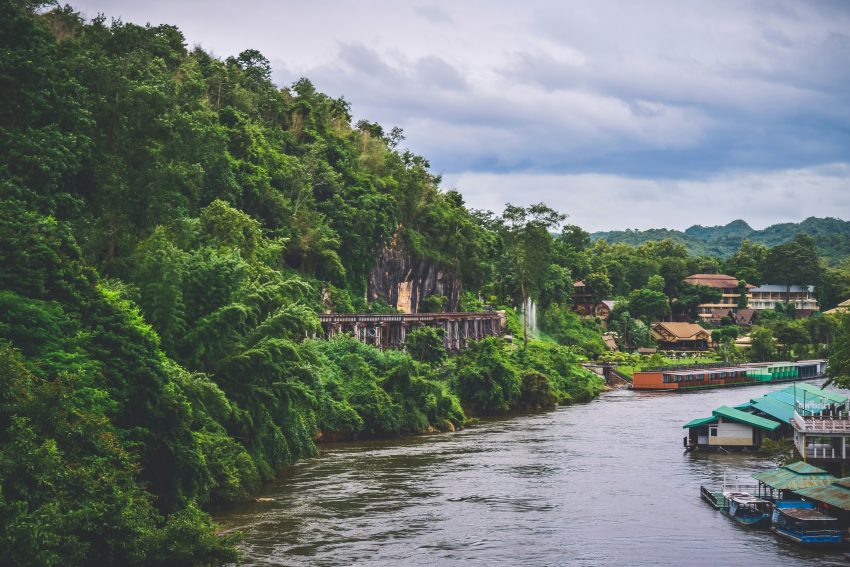
The Wang Po Viaduct, also known as the Wampo Viaduct, is one of the top attractions in Kanchanaburi for travellers seeking both dramatic scenery and meaningful wartime history. Built along a sheer cliff beside the River Kwai, this wooden trestle railway is an extraordinary feat of engineering. Trains still run across it today, offering sweeping views of the river and surrounding jungle while revealing just how challenging the landscape was for those forced to construct it during World War II.
Constructed by Allied prisoners of war and Asian labourers under brutal conditions, the viaduct stands as both a testament to resilience and a solemn memorial to the thousands who suffered or died during the building of the Thailand-Burma Railway. Riding the train across this section provides a memorable, reflective experience that connects visitors to an important historical moment.
Table of Contents
History and Significance of Wang Po Viaduct
The Wang Po Viaduct was constructed in 1943 as part of the Thailand-Burma Railway, intended by the Japanese military to support operations in Burma. Workers endured extreme heat, starvation, disease, and inhumane treatment, often labouring with only the simplest tools to carve a railway into unforgiving terrain. Countless labourers lost their lives during its construction, and the viaduct today stands as a symbol of both their sacrifice and the devastating human cost of wartime expansion.
Its location along sheer cliff walls made it one of the most technically demanding sections of the railway. The wooden trestle had to be built directly against rock faces, with workers suspended at dangerous heights. Despite these challenges, the structure remains operational, a poignant reminder of endurance amidst suffering.
Things to See and Do in Wang Po Viaduct
One of the best ways to experience the Wang Po Viaduct is by taking the train from Kanchanaburi or Nam Tok. As the train curves around the cliff edge, travellers enjoy panoramic views of the River Kwai and dense forest, making this one of the best places to see in Kanchanaburi. The slow, rattling ride across the viaduct heightens appreciation for the monumental effort it took to build the railway.
Visitors can also walk along a safe portion of the track near Wang Po Station when trains are not approaching. Information signs nearby explain the railway’s history, and the surrounding landscape provides excellent photography opportunities.
How to Get to Wang Po Viaduct
The closest major airport is Suvarnabhumi Airport in Bangkok, commonly used by travellers heading to Kanchanaburi. For the best deals and a seamless booking experience, check out these flights to Kanchanaburi on Booking.com.
You can reach the viaduct by train on the historic Death Railway, boarding at Kanchanaburi or Nam Tok and stopping at Wang Po Station. Train schedules and bookings can be found on Omio. This is the most atmospheric way to experience the site.
If travelling by car, follow Route 323 toward Sai Yok and look for clearly marked signs to Krasae Cave and Wang Po. Parking is available near the station and viewpoints.
Practical Tips on Visiting Wang Po Viaduct
- Suggested tips: Stay alert when walking near the tracks and keep a safe distance from edges.
- Best time to visit: Early morning or late afternoon for cooler temperatures and softer light.
- Entrance fee: No entrance fee; standard train fares apply.
- Opening hours: Visit anytime, though train times affect accessibility.
- Official website: Refer to Thai railway and local tourism websites.
- How long to spend: 1-2 hours depending on whether you take the train.
- Accessibility: The area near the station is accessible; walking the track requires caution.
- Facilities: Small cafés, restrooms, and vendors near the viewing points.
- Photography tip: Capture the train crossing the viaduct from the nearby cliff viewpoint.
- Guided tours: Many Kanchanaburi tours include the viaduct as a stop.
- Nearby food options: Local restaurants and stalls around Wang Po Station.
Where to Stay close to Wang Po Viaduct
Many travellers choose riverside stays near Sai Yok for easy access to the railway. Consider Home Phutoey River Kwai, known for its peaceful natural surroundings. Another option is River Kwai Jungle Rafts, an unforgettable floating hotel experience. For comfort closer to Kanchanaburi town, choose The Legacy River Kwai Resort.
Is Wang Po Viaduct Worth Visiting?
Yes. The Wang Po Viaduct is one of the must-see places in Kanchanaburi, blending powerful WWII history with breathtaking natural scenery. Riding the wooden trestle along the cliffside is an unforgettable way to appreciate both the beauty of the region and the sacrifices behind the Death Railway.
What Other Travellers Say...

River Kwai Bridge on Maenamkwai Road in Kanchanaburi is a historic railway bridge and part of the Death Railway, where visitors commonly walk across to reflect on its wartime past, watch trains cross slowly, and catch sunrise views; one side is generally quieter while the other bustles with restaurants, market stalls and cafes, and boat trips under the bridge offer a different perspective, making it an easy, free-to-visit stop for history enthusiasts and families alike.


FAQs for Visiting Wang Po Viaduct
Nearby Attractions to Wang Po Viaduct
- Krasae Cave - A small cave shrine overlooking the railway.
- Sai Yok Noi Waterfall - A popular natural stop along the route.
- Hellfire Pass - The most famous and emotional section of the Death Railway.
- Tham Krasae Station - A scenic spot with river and cliff views.
- Erawan Falls - Seven-tier turquoise waterfalls within Erawan National Park.
The Wang Po Viaduct appears in our Complete Guide to Visiting Kanchanaburi!

Moira & Andy
Hey! We're Moira & Andy. From hiking the Camino to trips around Europe in Bert our campervan — we've been traveling together since retirement in 2020!
This website uses affiliate links which may earn a commission at no additional cost to you!
Nearby Attractions
- Kanchanaburi War Cemetery (1.2) km
Cemetery - Thailand–Burma Railway Centre (1.3) km
Museum - JEATH War Museum (3.6) km
Museum - Bridge on the River Kwai (3.7) km
Bridge - Tiger Cave Temple, Wat Tham Sua (11.0) km
Buddhist Temple - Elephant’s World Sanctuary (25.8) km
Animal Sanctury - Erawan Waterfall (56.9) km
Waterfalls - Damnoen Saduak Floating Market (72.4) km
Market - The Death Railway (76.0) km
Railway - Hellfire Pass (76.0) km
Walk