Valley of the Kings, Luxor
Historic Site in Luxor
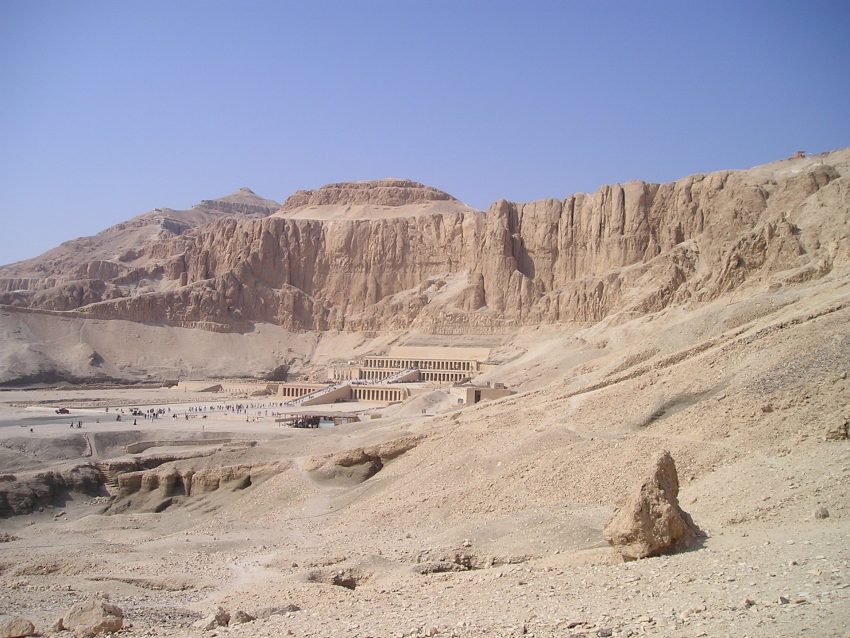
Tucked into a stark desert wadi west of the Nile, the Valley of the Kings is one of the top attractions in Luxor and the place where ancient Egypt's New Kingdom pharaohs tried to outwit tomb robbers and secure their afterlife. Instead of mighty pyramids, the kings of the 18th, 19th, and 20th dynasties chose hidden rock-cut tombs here, carving long corridors deep into the cliffs and filling them with sarcophagi, treasures, spells, and star-studded ceilings. Today, visitors walk down those same sloping passages, past walls still painted with solar boats, underworld deities, and hieroglyphic chapters from the Books of the Dead and the Underworld.
Even knowing most tombs were looted in antiquity, the Valley still feels astonishingly rich. Some chambers blaze with colour, others are half-finished and show how the rock was cut, and one small tomb - that of Tutankhamun - changed Egyptology forever when it was discovered almost intact in 1922. With its mixture of desert silence, archaeological drama, and vividly painted theology, this spot is one of the best places to see in Valley of the Kings if you want to understand how pharaohs imagined their journey through the night. Although you will reach it by road rather than on foot, the Valley of the Kings still feels like a highlight of any tour of Luxor's wider story, linking the grand temples on the East Bank to the secret world of the royal necropolis in the west.
Table of Contents
- History and Significance of the Valley of the Kings
- Things to See and Do in the Valley of the Kings
- How to Get to the Valley of the Kings
- Practical Tips on Visiting the Valley of the Kings
- Where to Stay close to the Valley of the Kings
- Is the Valley of the Kings Worth Visiting?
- FAQs for Visiting Valley of the Kings
- Nearby Attractions to the Valley of the Kings
History and Significance of the Valley of the Kings
The Valley of the Kings lies in the western hills opposite ancient Thebes (modern Luxor), tucked into a long, narrow defile in the desert just beyond Deir el-Bahri. From around 1539 to 1075 BCE, the pharaohs of the 18th, 19th, and 20th dynasties chose this remote site as their burial ground, beginning with Thutmose I and continuing through to Ramesses X. Instead of building conspicuous pyramids, they adopted a strategy of concealment: cutting tombs into the bedrock of the cliffs and hiding entrances in ravines and valley floors, hoping to keep their riches safe from robbers.
A typical royal tomb plan included a descending corridor, sometimes kinked or broken by deep shafts designed to confuse intruders, leading to pillared halls, vestibules, and finally a burial chamber housing a stone sarcophagus. Off these main spaces, smaller side rooms served as storerooms for furniture, chariots, food offerings, and ritual equipment needed for the afterlife. The walls carried more than decoration: carved and painted scenes showed the king in the presence of underworld deities, while magical texts from compositions like the Amduat and the Book of Gates mapped out the dangerous journey through the netherworld and the nightly regeneration of the sun.
Despite these precautions, most of the tombs were entered and emptied in antiquity. Some were partially robbed during the New Kingdom itself; then, in the 21st dynasty, officials systematically cleared many royal tombs, hiding the mummies in caches for protection and recycling valuables back into the treasury. Later visitors, from Greek travellers in the 1st century BCE to Coptic monks, left their own graffiti and reused some chambers as shelters. Only Tutankhamun's small tomb, partly buried under rock chippings on the valley floor, escaped major pillage. Its discovery in 1922 offered an extraordinary glimpse of the original splendour of New Kingdom burials and cemented the Valley's place in global imagination. In 1979, the Valley of the Kings became part of the UNESCO World Heritage listing for ancient Thebes, alongside Luxor, Karnak, and the Valley of the Queens.
Things to See and Do in the Valley of the Kings
Most visits begin at the modern visitor centre, where you pick up your tickets and, if you wish, hire the small electric tram that runs up into the valley. A standard ticket usually allows access to three “regular” tombs from a rotating selection of those open to the public; additional tickets can be bought for special tombs such as Tutankhamun, Seti I, or the combined tomb of Ramesses V and VI. These higher-priced tombs are often the most spectacular, with especially vivid colours or complex decoration, so it is worth deciding in advance which ones matter most to you.
As you descend into your chosen tombs, pay attention not just to the paintings but also to the architecture. Some tombs follow a straightforward sloping corridor and single burial chamber; others bend and deepen as you go, with pillared halls, side chambers, and sudden drops in floor level. You might find ceilings painted deep blue and sprinkled with golden stars, walls covered in tightly packed hieroglyphic texts, or scenes showing the king greeting gods like Osiris, Ra-Horakhty, or Anubis. In a few places you can still see sketch lines, quarry marks, or unfinished carving that reveal how tomb builders worked within the rock. Knowing that Queen Hatshepsut’s tomb runs nearly 700 metres into the hillside and drops around 100 metres vertically gives you a sense of how ambitious some of these projects were, even if not all passages are open to modern visitors.
If archaeology fascinates you, keep an eye out for information about Tomb 5 (KV5), the sprawling and still only partly explored tomb associated with many sons of Ramesses II. For a long time it was overlooked as unimportant, but investigations in the late 20th century revealed scores of chambers connected by corridors and halls, making it the largest, most complex tomb in the valley. Even if you cannot enter it, knowing such labyrinths lie beneath the surface adds a sense of mystery as you look across the gravel and cliffs. Between tomb visits, take a moment to simply stand and absorb the stark landscape: bare limestone walls, blazing sky, and a silence broken only by footsteps and the occasional call of a guide.
How to Get to the Valley of the Kings
Most international visitors reach the Valley of the Kings via Luxor, which has its own airport. Luxor International Airport (LXR) lies a few kilometres east of the city and is served by domestic flights from Cairo as well as seasonal and charter services from abroad; flying from Cairo takes roughly an hour and is often the quickest way to connect with the Nile valley sites. For the best deals and a seamless booking experience, check out these flights to Luxor on Booking.com.
If you prefer rail, Egyptian National Railways and private operators run both day and overnight trains between Cairo and Luxor, with typical journey times of around 9-10 hours depending on the service; overnight sleeper trains are a classic way to cover the distance while saving a night's accommodation.Train schedules and bookings can be found on Omio. From Luxor city, the Valley of the Kings lies on the West Bank of the Nile, about 40 minutes' drive away; most travellers either join an organised tour, hire a taxi for the day, or combine a local ferry crossing with a West Bank taxi to reach the valley and nearby sites like Deir el-Bahri and Medinet Habu.
Travelling by car, the road distance from Cairo to Luxor is roughly 630-650 kilometres, usually taking 8-10 hours depending on route and conditions; many visitors find it easier to either fly or take the train and then use a local driver or tour on the ground rather than self-driving long desert stretches. Once you are in Luxor, it is straightforward to combine the Valley of the Kings with other West Bank highlights on a full- or half-day trip, especially if you negotiate with a driver or book a small-group tour that includes multiple stops.
Practical Tips on Visiting the Valley of the Kings
- Suggested tips: Start as early as you can to beat both the heat and the tour buses; carry plenty of water, sunscreen, and a hat, and pace yourself as you climb in and out of tombs in the dry desert air.
- Best time to visit: Cooler months from roughly November to March are more comfortable than the peak summer, when temperatures can soar and the valley can feel like an oven by late morning.
- Entrance fee: Adults: around €13–€15 for a standard ticket (including three regular tombs), with separate supplements for special tombs such as Tutankhamun, Seti I, and Ramesses V/VI; prices are quoted in Egyptian pounds and can change, so always check the latest rates.
- Opening hours: Typically open daily from around 6:00 to late afternoon (often 17:00), with last entry in the later afternoon; exact hours and seasonal adjustments should be confirmed locally or on the official site.
- Official website: https://egymonuments.gov.eg
- How long to spend: Allow at least half a day to visit the visitor centre and three regular tombs without rushing; a full day gives you time to add special tombs and combine the valley with other West Bank sites.
- Accessibility: Surfaces in the valley are uneven and sloping, and many tombs involve steps and ramps; visitors with reduced mobility should choose tombs carefully and may want to enquire about the most accessible options at the ticket office.
- Facilities: There are basic facilities at the entrance area, including toilets, a café or kiosk, and small souvenir outlets, but nothing inside the valley itself, so arrive prepared with water and sun protection.
- Photography tip: Rules change periodically, but in recent years paid photography permits have allowed camera use in many tombs; check current regulations, avoid flash, and focus on details like carved figures, hieroglyph rows, and ceiling stars rather than trying to capture whole chambers in one shot.
- Guided tours: A good guide can help decode the scenes and texts on the walls and explain differences between tombs; you can either join a pre-arranged tour from Luxor or hire a licensed guide at the site.
- Nearby food options: There are small cafés and restaurants on the West Bank and plenty of dining options back in Luxor city, so most visitors snack lightly near the site and plan main meals before or after their valley visit.
Where to Stay close to the Valley of the Kings
Many visitors choose to stay on the East Bank of Luxor and visit the Valley of the Kings as a day trip. Hilton Luxor Resort & Spa offers resort-style comfort on the Nile with pools, spa facilities, and easy access by taxi or tour to both the East Bank temples and the West Bank tombs. It is a good choice if you want a calm base to retreat to after hot, dusty sightseeing.
For a Nile-side city hotel within easy reach of Luxor Temple and the corniche, Steigenberger Nile Palace makes a convenient base. From here, it is straightforward to join organised West Bank tours or arrange a taxi and ferry combination to reach the Valley of the Kings while still enjoying restaurants and evening strolls on the East Bank.
If you prefer to stay closer to the tombs themselves, Al Moudira Hotel offers a boutique, courtyard-style retreat on the West Bank. Staying here puts you nearer the Valley of the Kings, the Temple of Hatshepsut, and the workers' village at Deir el-Medina, and gives a more rural, palm-grove atmosphere compared to the busier East Bank streets.
Is the Valley of the Kings Worth Visiting?
The Valley of the Kings is unquestionably worth visiting if you have any interest in ancient history, archaeology, or the sheer scale of Egypt's pharaonic ambition. Few places bring you as close to the personal afterlife hopes of the rulers whose names you see on temple pylons and museum labels; walking down their tomb corridors, you move through spaces designed not for public spectacle but for a very private journey between this world and the next. Even stripped of most of their original treasures, the tombs still feel powerful, with colours and carvings that have survived more than three millennia.
From a practical point of view, the valley fits easily into a Luxor itinerary and pairs beautifully with the great temples of Karnak and Luxor on the East Bank. Seeing both sides - the public cult temples and the hidden royal necropolis - gives you a much more complete sense of how New Kingdom religion and kingship worked. For many travellers, a day among the tombs, heat, and cliffs of the Valley of the Kings becomes one of the most vivid memories of their time in Egypt.
What Other Travellers Say...

Valley of the Kings in Luxor is an archaeological wadi site containing 63 rock-cut tombs and burial chambers where vividly colored frescoes, carvings and sculptures survive inside; visitors describe a striking contrast between the barren desert hills and the richly decorated interiors, and many recommend going early to avoid crowds and heat. The terrain is uneven with stairs and some tombs require climbs, so it can be tiring in high temperatures—bring plenty of water and be prepared for crowds and rotating tomb access with general tickets allowing entry to a few tombs and a separate ticket for Tutankhamen's. The approach from the ticket area into the valley is memorable, there are stalls selling souvenirs nearby, toilets are available, and travelers warn to watch for persistent vendors and opportunistic helpers.


FAQs for Visiting Valley of the Kings
Nearby Attractions to the Valley of the Kings
- Temple of Hatshepsut (Deir el-Bahri) - Dramatic terraced mortuary temple built into the cliffs, dedicated to one of Egypt’s few female pharaohs.
- Valley of the Queens - Smaller but atmospheric necropolis where royal wives and children, including Nefertari, were buried.
- Deir el-Medina - The workers’ village where the craftsmen who built the royal tombs lived, with richly painted non-royal tombs of their own.
- Medinet Habu - Monumental mortuary temple of Ramesses III, famous for its military reliefs and well-preserved painted carvings.
- Ramesseum - The mortuary temple of Ramesses II, with towering columns, toppled colossi, and views across the cultivated Nile floodplain.
The Valley of the Kings appears in our Complete Guide to Visiting Luxor!

Moira & Andy
Hey! We're Moira & Andy. From hiking the Camino to trips around Europe in Bert our campervan — we've been traveling together since retirement in 2020!
This website uses affiliate links which may earn a commission at no additional cost to you!
Planning Your Visit
Typically open daily from around 6:00 to late afternoon (often 17:00), with last entry in the later afternoon; exact hours and seasonal adjustments should be confirmed locally or on the official site.
Adults: around €13-€15 for a standard ticket (including three regular tombs), with separate supplements for special tombs such as Tutankhamun, Seti I, and Ramesses V/VI; prices are quoted in Egyptian pounds and can change, so always check the latest rates.
Nearby Attractions
- Luxor Temple (5.9) km
Historic Site - Karnak Temple Complex (6.1) km
Historic Site - Philae - Temple of Isis (192.8) km
Historic Site - Abu Simbel Temples (391.1) km
Historic Site - Dahshūr (470.7) km
Historic Site - Memphis (475.7) km
Historic Site - Saqqara (478.8) km
Historic Site - Pyramids of Giza (492.9) km
Historic Site - Cairo Tower (497.5) km
Tower - The Egyptian Museum (497.5) km
Museum