Tonle Bati
Buddhist Temple
About 30 kilometres south of Phnom Penh, Tonle Bati offers a refreshing change of pace from the capital's traffic and noise. Here, an ancient Angkorian temple, a peaceful lakeshore lined with bamboo picnic huts and a scattering of small villages create a destination that feels both historic and very much alive. With its mix of ruins, worship sites and simple lakeside pleasures, Tonle Bati is one of the best places to visit in Phnom Penh if you are looking for a laid-back yet culturally rich day out.
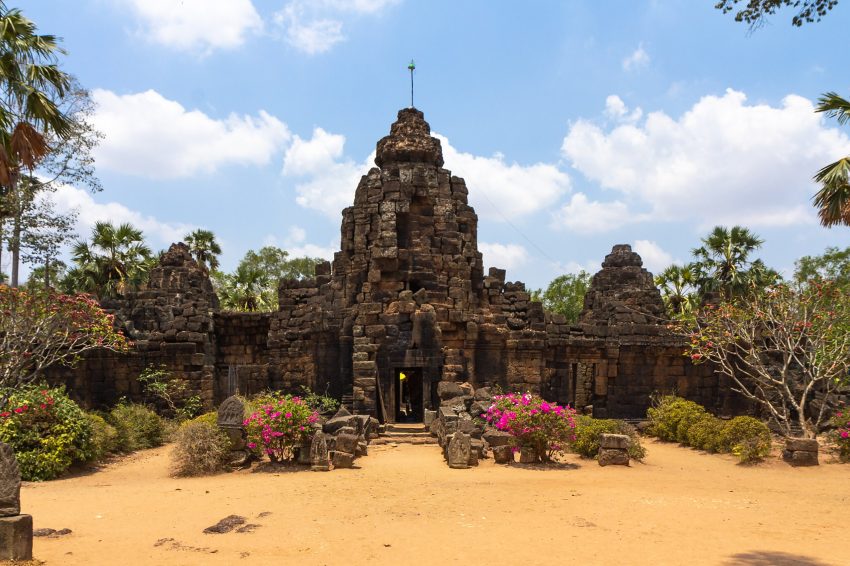
The star of the site is Ta Prohm of Tonle Bati, a late 12th century temple from the reign of King Jayavarman VII. Built in the Bayon style during a Mahayana Buddhist period, it also preserves older Hindu layers that date back to the Funan civilisation in the 6th century. Just a short walk away, the ruins of Yeay Peau and the later Wat Tonle Bati add further layers of meaning, while the lake's bamboo huts and weekend crowds remind you that this is still a beloved local retreat and a great place to visit on a tour from Phnom Penh.
History and Significance of Tonle Bati
Tonle Bati’s story begins long before the current temple walls. In pre-Angkorian times it was part of the Funan civilisation, with evidence of Hindu worship on the site as early as the sixth century. This deep history set the stage for its development under the Khmer Empire, when King Jayavarman VII built the Ta Prohm temple here in the late 12th century as part of his extensive programme of religious and civic works. Although it shares a name with the famous Ta Prohm in Siem Reap, this is a distinct site with its own character and quieter, more intimate atmosphere.
Architecturally, Ta Prohm at Tonle Bati reflects the Bayon style associated with Jayavarman VII's reign. The temple combines brick and laterite, with an inner enclosure measuring roughly 42 by 36 metres and walls once richly decorated with bas-reliefs. Many of these carvings, depicting Hindu myths and deities, now lie scattered on the ground around the temple, giving visitors a sense of exploring a half-opened archaeological box. Inside, five rooms each contain a Lingam, signalling a strong thread of Shiva worship running through the site even as Buddhist imagery became more prominent.
Over time, new layers of devotion were added. The main sanctuary's 13th century Buddha statue faces east, welcoming worshippers, and above the sanctum entrance a sandstone carving of a reclining Buddha adds a gentle, contemplative note. Just 200 metres to the north, the modest ruins of Yeay Peau - named either for the king's mother or a protective female spirit - hint at local legends. Nearby, the Theravada Buddhist Wat Tonle Bati, founded in 1576, shows how the site remained a spiritual focal point long after the Angkorian era, weaving together Hindu, Mahayana and Theravada traditions in one compact area.
Things to See and Do in Tonle Bati
Begin at Ta Prohm, entering through the outer gate and pausing to take in the tranquil setting. The mix of laterite and brick, softened by moss and lichen, makes the temple feel almost at one with the surrounding greenery. As you explore the inner enclosure, look for bas-relief fragments on the ground and along surviving walls - many depict scenes from Hindu mythology, with gods, guardians and floral motifs emerging from the stone. The contrast between the still-standing towers and scattered carvings adds a pleasing sense of discovery.
Inside the temple, move through the sequence of five rooms, each housing a Lingam. Candles, incense and offerings often indicate that worship here is ongoing rather than purely historical. In the main sanctuary, take time to study the 13th century Buddha statue facing east and the sandstone carving of a reclining Buddha above the entrance. These details highlight how the site bridged an earlier Hindu foundation and a later Buddhist identity, reflecting the fluid religious landscape of the Khmer Empire and beyond.
After soaking in the atmosphere at Ta Prohm, follow the short path north to Yeay Peau temple. Although its ruins are sparse, the sense of age and the connection to maternal or protective spirits add an evocative layer to your visit. Then continue to Wat Tonle Bati, the 16th century Theravada temple nearby. Its more recent structures, statues and murals provide a vivid contrast to the Angkorian ruins, showing how local communities have kept the area spiritually active for centuries. Once you have explored the religious sites, head down to the lakeshore, where bamboo huts, food stalls and gentle breezes invite you to slow down and simply enjoy being by the water.
How to Get to Tonle Bati
Tonle Bati lies around 30 kilometres south of Phnom Penh, making it an easy day trip from the capital. Most visitors arrive in Cambodia via Phnom Penh International Airport or Siem Reap International Airport, with Phnom Penh's airport the most convenient base for reaching the lake and temples. For the best deals and a seamless booking experience, check out these flights to on Booking.com.
From Phnom Penh, there is limited rail infrastructure for tourists, so most people rely on road transport, even though Cambodia does operate some train services between major cities.Train schedules and bookings can be found on Omio. The most common way to get to Tonle Bati is by taxi, tuk-tuk or hired car from Phnom Penh, following National Highway 2 south and then local roads to the lake and temple complex.
If you are travelling by car, expect a journey of about an hour each way depending on traffic, with simple roadside stalls and villages along the route; many visitors negotiate a round-trip fare with a driver, including waiting time while they explore the temples and lake.
Practical Tips on Visiting the Tonle Bati
- Suggested tips: Combine temple time and lake time - explore Ta Prohm and nearby sites in the cooler morning, then retreat to a lakeside hut for lunch and relaxation.
- Best time to visit: Dry season (roughly November to March) offers more comfortable temperatures and clearer views; weekdays are quieter, while weekends bring a lively local crowd.
- Entrance fee: Adults: $35
- Opening hours: The temple and lake area are generally accessible during daylight hours.
- Official website: Website
- How long to spend: Allow half a day to see Ta Prohm, Yeay Peau and Wat Tonle Bati and enjoy some time by the lake; a full day works well if you add nearby sites like Phnom Chisor.
- Accessibility: Paths around the temple can be uneven, with steps and rough ground; lakeside huts often require stepping up onto bamboo platforms, so visitors with mobility issues should take extra care.
- Facilities: Around the lake you will find basic restaurants, drink stands, shops and rentable huts; restroom facilities are available but can be simple, so bring tissues and hand sanitiser.
- Photography tip: Capture the temple in softer early or late light to bring out the texture of the laterite and bas-reliefs, then head to the lake for wide shots of stilted huts, reflections and local life.
- Guided tours: Hiring a guide in Phnom Penh or at the site can add valuable context about the temple’s Angkorian history, Funan roots and local legends associated with Yeay Peau and the modern wat.
- Nearby food options: Try local dishes at the lakeside huts, including frog specialities and simple Khmer meals; you can order from nearby restaurants and have food delivered to your hut while you relax over the water.
Where to Stay close to the Tonle Bati
Most travellers choose to base themselves in Phnom Penh and visit Tonle Bati as a half-day or full-day excursion. A comfortable central option with good access to National Highway 2 is Anik Palace Hotel, which offers modern rooms and easy arrangements for day trips with a private driver or taxi. For a resort-style stay with a pool to cool off after your excursion, Aquarius Hotel and Urban Resort combines relaxed vibes with convenient access to both the riverside and main outbound roads. Travellers looking for a quieter boutique base might opt for Pasteur 51 Hotel and Residences, well placed for exploring Phnom Penh's restaurants and cafés while still being within straightforward driving distance of Tonle Bati.
Is the Tonle Bati Worth Visiting
Tonle Bati is well worth visiting if you are looking for a blend of Angkorian history and everyday Cambodian life without travelling all the way to Siem Reap. Ta Prohm's compact ruins, scattered bas-reliefs and layered Hindu-Buddhist heritage give you a genuine taste of Khmer temple architecture, while the lakeside huts and weekend crowds show how locals enjoy their leisure time today. Add in the nearby ruins of Yeay Peau, the Theravada Wat Tonle Bati and the option to extend your route to Phnom Chisor or other sites, and you have a day trip that feels varied, relaxed and culturally rewarding.
What Other Travellers Say...

Tonle Bati is a modest lakeside spot in Cambodia with bamboo picnic shelters, floating cottages and boat rides that let visitors see nearby villages, lotus beds and historic temple structures; locals praise its relaxed atmosphere, nearby conveniences and affordable boat and cottage rentals, note it gets busy on Sundays and holidays with food vendors, and warn that swimming can stain clothes from algae though a quick skin dip is common.


FAQs for Visiting Tonle Bati
Nearby Attractions to Tonle Bati
- Yeay Peau Temple: Sparse but atmospheric Angkorian ruins just north of Ta Prohm, associated with local female protective figures or the king’s mother.
- Wat Tonle Bati: A Theravada Buddhist temple founded in 1576, showing the site's continued religious importance into the post-Angkorian era.
- Phnom Chisor: A hilltop Angkorian temple with sweeping views over the countryside, ideal to combine with Tonle Bati on a full-day trip.
- Prasat Neang Khmao: The 10th century “Temple of the Black Virgin,” known for its dark stone towers and intriguing legends.
- Silk-weaving village near Tonle Bati: A local community where you can see traditional silk weaving in action and learn about rural crafts and livelihoods.
The Tonle Bati appears in our Complete Guide to Visiting !

Moira & Andy
Hey! We're Moira & Andy. From hiking the Camino to trips around Europe in Bert our campervan — we've been traveling together since retirement in 2020!
This website uses affiliate links which may earn a commission at no additional cost to you!
Planning Your Visit
The temple and lake area are generally accessible during daylight hours.
Adults: $35
Nearby Attractions
- Choeung Ek, Killing Fields (17.6) km
Historic Site - Russian Market (Phsar Toul Tum Poung) (24.0) km
Market - Tuol Sleng Genocide Museum (25.0) km
Museum - Wat Langka (26.1) km
Buddhist Temple - Independence Monument (26.2) km
Monument - Royal Palace of Cambodia (27.1) km
Palace - National Museum of Cambodia (27.2) km
Museum - Central Market (Phsar Thmey) (27.3) km
Market - Wat Ounalom (27.5) km
Buddhist Temple - Sisowath Quay (27.9) km
Walk