The Tyne Bridges, Newcastle upon Tyne
Bridge in Newcastle upon Tyne
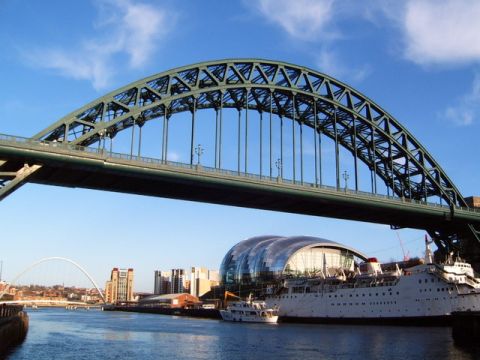
When you picture Newcastle upon Tyne, chances are it is the curve of the Tyne Bridge framed by the river and skyline that comes to mind. The Tyne Bridges are one of the best places to visit in Newcastle upon Tyne if you love cityscapes, engineering and waterside walks, with seven bridges spanning the river here: two rail bridges, three road bridges, one carrying both, and a dedicated footbridge. The star of the show is the green steel arch of the Tyne Bridge, begun in 1925 and opened by King George V in 1928, which for a time boasted the largest single span arch in the world and inspired the later Sydney Harbour Bridge.
Walk along the Quayside and you quickly realise that each bridge has its own personality and story. The High Level Bridge, opened in 1849 to plans drawn up by Robert Stephenson, was the first in the world to carry both rail and road traffic on separate levels, while the Swing Bridge, designed by Sir W. G. Armstrong and opened in 1876, still pivots open several times a week to let ships pass, standing on the site of the Roman Pons Aelius fort. The newest arrival is the Gateshead Millennium Bridge, a sleek tilting pedestrian and cycle bridge that gives you the best views back towards the other six, and it is a highlight of any walking tour of Newcastle upon Tyne, especially in the evening when the whole riverside lights up.
Table of Contents
History and Significance of the Tyne Bridges
The story of the Tyne Bridges begins long before the first steel arch went up, when the Romans built their fort and bridge, Pons Aelius, at this crucial crossing point on the River Tyne. That original bridge anchored the eastern end of Hadrian's Wall for a time and established Newcastle as a strategic gateway between north and south. Centuries later, as coal exports and shipbuilding transformed the river into a major industrial artery, the need for reliable crossings grew, leading to a succession of ever more ambitious bridges.
The High Level Bridge marked a huge leap forward when it opened in the mid 19th century, carrying rail traffic on the upper deck and road traffic below in a dramatic sweep across the river gorge. It was a bold statement of Victorian engineering confidence and cemented the Tyne’s reputation as a place where big ideas were tested at full scale. The later Swing Bridge continued that spirit of innovation, allowing larger vessels to access upriver facilities by rotating its deck to open a shipping channel.
In the 20th century, the Tyne Bridge became the city's visual shorthand, arching gracefully across the water with its steel ribs and towering granite pylons. It provided a more direct road link and quickly became an emblem of Newcastle's industrial strength and resilience. The arrival of the Gateshead Millennium Bridge at the start of the 21st century added a new, futuristic chapter, symbolising the area's shift from heavy industry to culture, design and tourism, and turning the riverfront into a must-photograph skyline.
Things to See and Do in the Tyne Bridges
The simplest way to enjoy the Tyne Bridges is to stroll along both sides of the Quayside, taking in how each bridge frames the others and how the river bends beneath them. Start near the Swing Bridge and work your way along the waterfront, stopping to look up at the underside of the Tyne Bridge and watching how its arch seems to cradle the buildings behind it. From different angles you will spot details like the giant steel rivets, pylons and stonework that you miss at first glance.
Crossing the Swing Bridge itself is a treat, especially when you remember that it still swings open several times a week to let river traffic through. From its deck you get a low, close-to-the-water view of the Tyne Bridge and High Level Bridge, and you can imagine the Roman fort that once stood here. The High Level Bridge offers a different experience again, with long, tunnel-like views along its roadway and glimpses of trains rattling along the upper deck, making it feel like a working piece of living history rather than a frozen museum piece.
Make sure you leave time to walk or cycle across the Gateshead Millennium Bridge, whose gentle curve gives you a wide, cinematic view of all the surrounding bridges. At night, when the Quayside bars and cultural venues are lit up and the bridge itself glows in changing colours, the reflections on the water are spectacular and this spot is one of the things to do in Newcastle upon Tyne that feels special in every season. If you are lucky enough to see the bridge tilt to let boats pass, it is a memorable bit of theatre and a reminder that these crossings are still working pieces of infrastructure, not just pretty landmarks.
How to Get to the Tyne Bridges
If you are travelling from further afield, your easiest gateway is Newcastle International Airport, which has regular domestic and European flights and a direct Metro line into the city centre in under half an hour. For the best deals and a seamless booking experience, check out these flights to Newcastle upon Tyne on Booking.com. From the airport, ride the Metro to Central Station or Monument and you are only a short walk downhill to the Quayside and the bridges.
By train, head for Newcastle Central Station, a major stop on the East Coast Main Line with fast connections from London, Edinburgh and many other UK cities.Train schedules and bookings can be found on Omio. From the station, simply follow signs or maps towards the Quayside; in about 10-15 minutes you will find yourself looking up at the Tyne Bridge and the cluster of crossings around it. Long-distance coaches also stop close to the centre, from where local buses or a short walk will bring you to the river.
Travelling by car, follow signs to Newcastle or Gateshead and then towards the Quayside area, bearing in mind that traffic can be busy at peak times and some routes use the bridges themselves. There are several multi-storey and surface car parks on both sides of the river; once you have parked, the best way to experience the Tyne Bridges is definitely on foot, wandering back and forth across them and along the waterfront.
Practical Tips on Visiting the Tyne Bridges
- Suggested tips: Bring a decent pair of walking shoes and plan a loop that takes in both sides of the river so you can see how the bridges look from multiple angles and in different light.
- Best time to visit: Late afternoon into evening is ideal, when you can see the bridges in daylight, enjoy sunset over the river and then watch the Quayside and Millennium Bridge lighting come to life.
- Entrance fee: Free
- Opening hours: 24 Hours
- Official website: https://www.gateshead.gov.uk/article/4594/The-Gateshead-Millennium-Bridge
- How long to spend: Allow at least 1-2 hours for a leisurely walk across a couple of bridges and along the Quayside, longer if you plan to stop for drinks, dinner or photography.
- Accessibility: The main riverside paths are largely step-free, and key bridges have pavements and approaches suitable for most visitors, though some steeper streets and older structures may be challenging for those with limited mobility.
- Facilities: You will find plenty of cafés, pubs, restaurants, toilets and seating along the Quayside and in nearby city-centre streets, so it is easy to break up your walk.
- Photography tip: For classic shots, frame the Tyne Bridge with the Swing Bridge in the foreground or head onto the Millennium Bridge to capture the full sweep of arches, especially around sunset or at night.
- Guided tours: Consider joining a walking tour focused on the Quayside and bridges to hear stories about Roman Pons Aelius, Victorian engineers and modern regeneration that you might otherwise miss.
- Nearby food options: The Quayside on both the Newcastle and Gateshead sides offers everything from casual street food and coffee spots to smarter riverside restaurants with bridge views.
Where to Stay close to the Tyne Bridges
If you want to wake up with the Tyne Bridges practically on your doorstep, staying along the Quayside is the way to go. On the Gateshead side, Hilton Newcastle Gateshead offers rooms with big-window views of the Tyne Bridge and Millennium Bridge, along with an indoor pool and easy access to both banks via the nearby crossings. On the Newcastle bank, Malmaison Newcastle is a stylish option right on the waterfront, ideal if you like to step straight out onto the promenade for sunrise or evening photos. For a contemporary feel slightly upriver but still a short stroll from the bridges, INNSiDE by Meliá Newcastle combines modern design with river views and quick access to the city centre.
Is the Tyne Bridges Worth Visiting
If you are in Newcastle upon Tyne, the Tyne Bridges are absolutely worth seeking out, even if you only have an hour or two to spare. They are not only functional crossings but also a layered open-air gallery of engineering styles, from Victorian iron and stone to 20th-century steel arches and sleek modern design. Walking among them ties together the city's Roman origins, industrial boom and cultural reinvention in a way that no single museum exhibit can match, and the constantly changing light and reflections on the water mean every visit feels a little different.
What Other Travellers Say...

Tyne Bridge in Gateshead is a well-known span over the River Tyne with a distinctive open-work arch that passes through its deck; visitors praise its iconic, photogenic views across the river and cityscape—especially at sunset—and enjoy walking across it as part of lively quayside evenings with nearby galleries, bridges, pubs, markets and seasonal events; some note the bridge is undergoing restoration to address visible rust and flaked paint, but many still find it an imposing, comforting regional landmark.


FAQs for Visiting Tyne Bridges
Nearby Attractions to the Tyne Bridges
- Newcastle Quayside: A lively waterfront promenade lined with bars, cafés, markets and public art, perfect to pair with a bridges walk.
- BALTIC Centre for Contemporary Art: A major contemporary art gallery housed in a converted flour mill on the Gateshead side of the river.
- Sage Gateshead: A striking modern performance venue overlooking the bridges, hosting concerts, events and music education programmes.
- Newcastle Castle: The medieval fortress that gave the city its name, just uphill from the river with great views back to the Tyne Bridges.
- Grey Street and Grainger Town: An elegant 19th-century city-centre district filled with shops, restaurants and some of Newcastle’s finest architecture.
The The Tyne Bridges appears in our Complete Guide to Visiting Newcastle upon Tyne!

Moira & Andy
Hey! We're Moira & Andy. From hiking the Camino to trips around Europe in Bert our campervan — we've been traveling together since retirement in 2020!
This website uses affiliate links which may earn a commission at no additional cost to you!
Planning Your Visit
24 Hours
Free
Nearby Attractions
- Bessie Surtees House (0.2) km
Historic Building - The Quayside (0.3) km
Area - Sage Gateshead (0.3) km
Arts Venue - Newcastle Castle (0.3) km
Castle - Pons Aelius (0.3) km
Roman Site - St Nicholas Cathedral (0.4) km
Cathedral - Literary and Philosophical Society of Newcastle upon Tyne (0.5) km
Historic Building - BALTIC – Centre for Contemporary Art (0.5) km
Gallery - Theatre Royal (0.6) km
Theatre - Edwardian Central Arcade (0.7) km
Historic Site