The National Museum of Photography, Shkodër
Museum in Shkodër

The Marubi National Museum of Photography sits right on Shkodër's pedestrian-friendly Kolë Idromeno Street, making it one of the easiest cultural stops to weave into a city stroll. Even if you're not a photography specialist, the museum works on a simple level: it's a visual shortcut into Albanian life, from formal studio portraits to candid street scenes that feel unexpectedly modern.
Inside, the focus is the Marubi photographic legacy-an archive spanning well over a century, with hundreds of thousands of images, negatives, and objects connected to generations of photographers. The interpretation is visitor-friendly, with bilingual text in Albanian and English, and the overall feel is curated rather than overwhelming, so you can absorb the story without needing a long museum day.
Table of Contents
- History and Significance of the Marubi National Museum of Photography
- Things to See and Do in the Marubi National Museum of Photography
- How to Get to the Marubi National Museum of Photography
- Practical Tips on Visiting the Marubi National Museum of Photography
- Where to Stay Close to the Marubi National Museum of Photography
- Is the Marubi National Museum of Photography Worth Visiting?
- For Different Travelers
- FAQs for Visiting Marubi National Museum of Photography
- Nearby Attractions to the Marubi National Museum of Photography
History and Significance of the Marubi National Museum of Photography
Shkodër has long been one of Albania's cultural centres, and the Marubi story is woven into that identity. Photography arrived here remarkably early, beginning with Pietro Marubi, an Italian who established a studio in the 19th century and helped set a visual language for a society in transition. The studio's work was continued and expanded by later generations, creating an unusually continuous record of daily life, costume, social class, and political change.
What makes the museum more than a “best-of” gallery is the depth behind the exhibits. The collection is not just prints on walls; it includes glass-plate negatives, film, and working materials that reveal how images were made, stored, and circulated. In other words, you’re seeing both the final photographs and the mechanics of how Albania was documented-before mass media, before smartphones, before images were disposable.
The archive's importance is also international, not just national. In recent years it has been recognised as a major documentary heritage collection, reinforcing that what you're looking at in Shkodër is not a niche local museum but one of the country's key cultural institutions. It's a rare place where a small footprint holds a truly outsized historical record.
Things to See and Do in the Marubi National Museum of Photography
Start with the permanent displays, which typically move you through the Marubi generations and the themes they captured-portraits, city life, ceremony, and the subtle details that reveal status and identity. Look closely at clothing, posture, and props: they often tell you as much as the captions do, especially if you’re trying to understand how Ottoman-era influence, European aesthetics, and local tradition overlapped in northern Albania.
Make time for the “process” elements-equipment, negatives, and the behind-the-scenes side of image-making. Seeing early cameras and materials helps you appreciate the craft (and difficulty) of producing a sharp portrait in an era when every exposure mattered. If you’ve only ever known photography as instant and unlimited, this part of the visit quietly resets your expectations.
Finally, check for temporary exhibitions or rotating themes if they’re running during your visit. These often broaden the story beyond the dynasty itself, connecting the archive to wider Balkan and European contexts, or zooming in on a particular period. If you like to photograph your travels, it’s also useful to know that non-commercial photography is generally permitted, so you can capture details for personal reference without turning the visit into a phone-free experience.
How to Get to the Marubi National Museum of Photography
The museum is in central Shkodër on the pedestrian stretch of Kolë Idromeno Street, so once you're in town it's typically a simple walk from the main squares, cafés, and hotels. If you're navigating by landmarks, aim for the city centre and then follow the pedestrian street atmosphere-Shkodër is compact and the museum address is well signed on mapping apps.
For most international arrivals, Tirana International Airport (TIA) is the standard entry point, with onward travel to Shkodër by bus, shuttle, or private transfer. For the best deals and a seamless booking experience, check out these flights to Shkodër on Booking.com. If you are coming from Montenegro, Podgorica Airport can be closer on paper, but border timing can vary, so it’s best when your itinerary is already focused on the Lake Skadar/Shkodër area rather than all-Albania coverage. For the best deals and a seamless booking experience, check out these flights to Shkodër on Booking.com.
Intercity buses and minibuses (furgons) are the practical default between Tirana and Shkodër, and they are frequent enough that you can usually travel the same day without overplanning. Train travel is not a realistic way to reach Shkodër for most visitors, as Albania's passenger rail network is limited and does not reliably serve this route. Driving is straightforward from Tirana, and staying mobile also makes it easy to add Rozafa Castle or a Lake Shkodra viewpoint before or after the museum. If you are looking to rent a car in Albania I recommend having a look at Discover Cars, first, as they compare prices and review multiple car rental agencies for you.
Practical Tips on Visiting the Marubi National Museum of Photography
- Entrance fee: 700 lekë.
- Opening hours: Tuesday – Saturday: 09:00–16:00. Sunday: 10:00–15:00. Closed on Mondays.
- Official website: http://www.marubi.gov.al/
- Best time to visit: Late morning is ideal for pairing the museum with lunch on the pedestrian street, while early afternoon works well if you’re using it as a cool, cultural break between outdoor stops.
- How long to spend: Plan around 45-90 minutes for an unhurried visit, longer if you like reading captions closely or you catch a temporary exhibition.
- Accessibility: Expect stairs between levels in a historic building; if mobility is a concern, it’s worth checking options with staff on arrival.
- Facilities: Lockers are available for bags and bulky items, Wi-Fi is typically available on-site, and there’s a small courtyard area that’s useful for a quick pause between galleries.
Where to Stay Close to the Marubi National Museum of Photography
For most travellers, the best base is central Shkodër around the pedestrian core (Kolë Idromeno and the main squares) so you can walk to museums, cafés, and evening strolls without relying on taxis.
If you want to be steps from the atmosphere of the pedestrian street, Hotel Colosseo & Spa puts you in the middle of the action with an easy walk back after dinner. For character and a sense of place, Hotel Tradita blends boutique comfort with a traditional feel that suits a culture-heavy itinerary. If you prefer a central, straightforward option near the main square for easy onward transport, Hotel Kaduku is well positioned for walking to the museum and catching buses the next day.
Is the Marubi National Museum of Photography Worth Visiting?
Yes-especially if you want Shkodër (and northern Albania more broadly) to feel like more than a checklist of viewpoints. The museum delivers context fast: you leave with faces, streets, and everyday details that make the rest of your trip feel more grounded, and it's compact enough to fit even into a short stay.
The honest pivot is that you can skip it if you are only in Shkodër for a quick transit stop and you know you won't engage with museums, captions, or archives. In that case, you may get more immediate “wow” from Rozafa Castle or a lakeside sunset, and you can still enjoy the pedestrian street without committing to an indoor visit.
What Other Travellers Say...
Reviews Summary
Marubi" National Museum of Photography, at Nr. 32 Rruga "Koli Idromeno", Shkodër, is a compact, well-organized museum tracing the development of photography in Albania through a strong collection of black-and-white images, displays on printing processes and a recreated darkroom; visitors praise its atmosphere and storytelling of local life and artisans, though some find it small and note that entry can feel pricey for the size, with no guides on site so you read captions as you move through the floors.
For Different Travelers
Families with Kids
This works best for families if you treat it as a short, focused visit rather than a long museum session. Pick a few themes to “hunt” for-old clothing, funny poses, unfamiliar objects-and the galleries become a story game rather than a reading exercise.
If you’re visiting with younger children, the practical win is the location: you can break up the day with snacks and open space on the pedestrian street before and after. Keep expectations realistic, do a brisk loop, and reward attention with a café stop nearby.
Couples & Romantic Getaways
For couples, the museum is a strong daytime pairing with a slow walk along Kolë Idromeno and a relaxed lunch or coffee afterward. The photography naturally invites conversation-people-watching across time-so it’s a surprisingly good “shared experience” stop even if one of you is not a museum person.
It also works as a rainy-day anchor that still feels distinctly Shkodër rather than generic indoor sightseeing. Do the museum, then linger in the pedestrian centre as the afternoon shifts into evening atmosphere.
Budget Travelers
This is a high-value cultural stop because it delivers depth without requiring a full day or an expensive guided experience. If you’re planning your time tightly, it’s one of the easiest places to add real historical context between free walking routes and outdoor viewpoints.
Budget travellers also benefit from how walkable the area is: you can cover the museum, the main pedestrian street, and several central landmarks on foot. Build it into a self-guided loop and you avoid extra transport costs altogether.
History Buffs
If you care about social history, this is one of the most efficient museums in Albania for understanding how people lived, dressed, worked, and presented themselves publicly. The portraits and street scenes offer details that written histories often skip, especially around class and local identity.
To get the most from it, slow down and read the captions where available, then look beyond the “main subject” of each image. Background signage, furniture, architecture, and even facial expressions become evidence-small clues that build a much bigger narrative of Shkodër and Albania.
FAQs for Visiting Marubi National Museum of Photography
Getting There
Tickets & Entry
Visiting Experience
Tours, Context & Itineraries
Photography
Accessibility & Facilities
Food & Breaks Nearby
Nearby Attractions to the Marubi National Museum of Photography
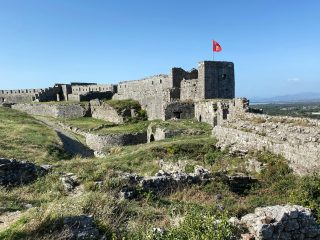
- Rozafa Castle: Shkodër's dramatic hilltop fortress with big views over the lake and rivers, ideal for a late-afternoon visit.
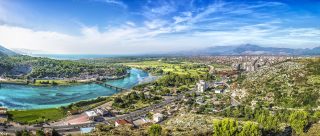
- Shkodra Lake (Lake Skadar): A scenic lakeside area for sunsets, short walks, and a calmer contrast to the city centre.
- Site of Witness and Memory: A powerful, compact museum focused on the communist-era security and prison history, best for travellers seeking deeper context.
- St Stephen's Catholic Cathedral: One of the city's key landmarks, easy to add on foot as part of a central walking loop.
- Ebu Bekr Mosque: A prominent modern mosque near the centre that adds architectural variety to a Shkodër walk.
The The National Museum of Photography appears in our Complete Guide to Visiting Shkodër!

Moira & Andy
Hey! We're Moira & Andy. From hiking the Camino to trips around Europe in Bert our campervan — we've been traveling together since retirement in 2020!
This website uses affiliate links which may earn a commission at no additional cost to you!
Planning Your Visit
Tuesday - Saturday: 09:00-16:00.
Sunday: 10:00-15:00.
Closed on Mondays.
700 lekë.
Nearby Attractions
- Marubi National Museum of Photography (0.0) km
Museum - Rruga Kolë Idromeno (0.1) km
Street - Ebu Bekr Mosque (0.2) km
Mosque - Monument to Mother Teresa (0.2) km
Statue - Englishman's Tower (0.2) km
Historic Building and Tower - Migjeni Theatre (0.4) km
Theatre - Site of Witness and Memory (0.4) km
Museum - St Stephen's Cathedral (0.5) km
Cathedral - Historical Museum (0.5) km
Museum - Shkodra Historical Museum (0.5) km
Museum