The Egyptian Museum, Cairo
Museum in Cairo
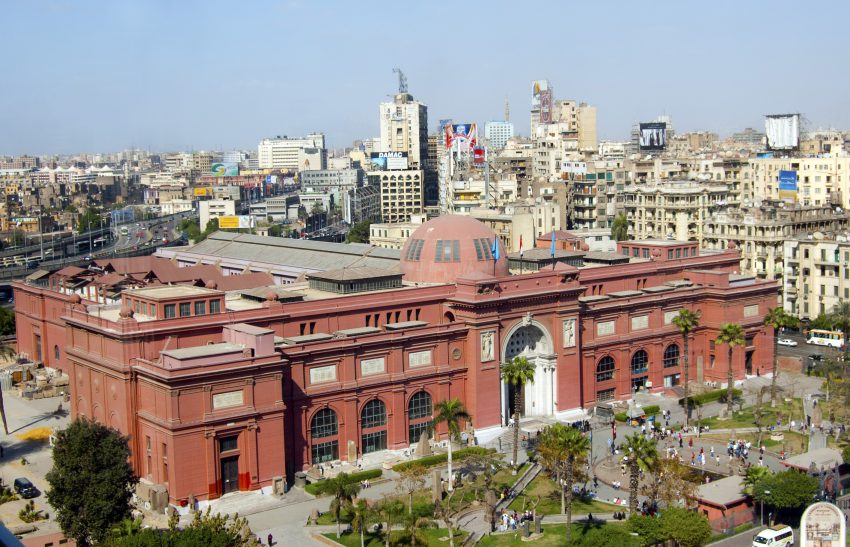
The Egyptian Museum in Cairo is the city's most iconic “old-school” museum experience: a vast, densely displayed collection of pharaonic antiquities inside a landmark building on Tahrir Square. If you want breadth-Predynastic objects through to the Greco-Roman era-this is the place where Cairo's layers of ancient history feel closest, with galleries that reward slow wandering and curiosity.
Even with newer museums reshaping Cairo's cultural map, the Tahrir museum remains one of the top attractions in Cairo because it delivers the classic, comprehensive sweep: monumental statues, painted coffins, jewelry, papyri, reliefs, and signature masterpieces like the Narmer Palette. It also fits naturally into a walking tour of Cairo that links downtown architecture, the Nile edge, and the city's major civic spaces.
Table of Contents
- History and Significance of the Egyptian Museum
- Things to See and Do in the Egyptian Museum
- How to Get to the Egyptian Museum
- Practical Tips on Visiting the Egyptian Museum
- Where to Stay Close to the Egyptian Museum
- Is the Egyptian Museum Worth Visiting?
- For Different Travelers
- FAQs for Visiting Egyptian Museum
- Nearby Attractions to the Egyptian Museum
History and Significance of the Egyptian Museum
The museum’s story is inseparable from the history of modern Egyptology. In 1895, an international design competition selected French architect Marcel Dourgnon, and the museum opened in 1902 under Khedive Abbas Helmy II-making it not only a powerhouse collection, but also one of downtown Cairo’s defining architectural landmarks.
Its significance comes from scale and continuity: this is the long-standing “main storehouse” of Pharaonic antiquities for the capital, and it shaped how generations of visitors learned to read ancient Egypt through objects. In practical terms, it is still the best single stop for a broad, chronological sense of Egyptian material culture, even as headline collections shift between institutions.
Things to See and Do in the Egyptian Museum
Go in with a light plan rather than trying to do everything. Start with the ground-floor statuary and large pieces to get your bearings-colossal kings, imposing stonework, and a strong sense of dynastic scale-then move upstairs for finer detail: jewelry, small sculpture, decorated coffins, and the kinds of objects that reveal everyday life, belief, and craft.
Make time for the museum’s “anchor” pieces that explain why this place matters: early dynastic works that shaped the idea of unified Egypt, royal burials and elite funerary finds, and rooms where the density of objects becomes a story in itself. If you’ve come specifically for Tutankhamun, set expectations first: since late 2025 the full Tutankhamun collection has been positioned at the Grand Egyptian Museum, so the Tahrir museum is best approached for its wider range and classic galleries rather than a single blockbuster suite.
How to Get to the Egyptian Museum
Most international visitors fly into Cairo International Airport (CAI), then continue to Downtown/Tahrir by taxi or ride-hailing services. For the best deals and a seamless booking experience, check out these flights to Cairo on Booking.com. The museum sits on Tahrir Square, so once you are downtown it is usually easiest to approach on foot from nearby hotels or metro stops, with short, direct street routes.
If you are arriving in Cairo from other Egyptian cities, the main rail gateway is Ramses Station (Cairo Railway Station), and from there a short taxi or metro hop gets you to the Tahrir area. Train schedules and bookings can be found on Omio. For buses, long-distance coaches typically arrive at major terminals with onward local connections, but for most visitors the simplest final leg is metro plus a short walk or a direct taxi to Tahrir Square.
Driving in central Cairo is possible but rarely the most relaxed option; traffic and parking can slow a short journey into a long one, so it's best to park once and walk.
Practical Tips on Visiting the Egyptian Museum
- Entrance fee: Foreign visitors: EGP 550 (adult), EGP 275 (student). Egyptians: EGP 30 (adult), EGP 10 (student).
- Opening hours: 09:00–17:00. Ramadan: 09:00–16:00.
- Official website: https://egymonuments.gov.eg/en/museums/egyptian-museum
- Best time to visit: Arrive close to opening for calmer galleries and a better chance to view the most famous rooms without crowd pressure.
- How long to spend: 2-4 hours for a satisfying first visit, or a full half-day if you like reading labels and moving slowly.
- Accessibility: Expect a historic building with a few pinch points; elevators exist, but some routes may feel less seamless than in newer museums.
- Facilities: Basic visitor services are available on-site, but plan your main meal breaks in downtown cafés around Tahrir rather than inside the museum.
Where to Stay Close to the Egyptian Museum
For a culture-heavy itinerary, base yourself in Downtown Cairo around Tahrir Square for walkable access to museums and civic landmarks; for a quieter, more residential feel with easy evening dining, Zamalek is often the better fit.
Right by the museum, Steigenberger Hotel El Tahrir Cairo is one of the most convenient bases for early entry and easy returns between sights. For a more classic, upscale stay with a Nile-facing feel while staying close to downtown, Kempinski Nile Hotel Cairo is a strong choice. If you want a polished international-hotel setup on the river with straightforward taxi access to Tahrir, Sofitel Cairo Nile El Gezirah works well.
Is the Egyptian Museum Worth Visiting?
Yes-particularly if you want the “big picture” of ancient Egypt in one place. The displays are dense and sometimes old-fashioned, but that density is also the point: you’re seeing a century-old museum model that still delivers extraordinary range and proximity to original works.
If your priority is a sleek, modern presentation focused on a single blockbuster narrative, you may prefer to allocate more time to newer museums. But for depth, breadth, and the unmistakable feeling of being surrounded by history, the Egyptian Museum remains a high-value stop.
What Other Travellers Say...

The National Museum of Egyptian Civilization in Old Cairo presents a calm, spacious, and well‑organized journey through Egypt's past with curated sculpture, pottery and metalware collections spanning millennia, plus an atmospheric Royal Mummies Hall where photography and video are not allowed; visitors praise the efficient security and entry, the impressive displays and architecture, and note the on-site restaurant can be slow and relatively pricey while some language/audio guide options are limited.


For Different Travelers
Families with Kids
This museum can work well for families if you keep the plan tight and story-led: pick a small number of “wow” objects (giant statues, glittering jewelry, striking animal forms) and make it a scavenger hunt rather than a marathon. Build in breaks, because the density of displays can be tiring for younger visitors without pauses.
A practical approach is to visit early, do one strong loop, then leave while energy is still good and shift to an outdoor reset nearby. The museum is most enjoyable for kids when it feels like discovery, not homework.
Couples & Romantic Getaways
For couples, the museum is best as a shared deep-dive followed by a slower downtown afternoon-coffee, a Nile-side walk, and an easy dinner without rushing to the next “must.” The building itself adds atmosphere, and the quieter corners can feel surprisingly intimate when you move away from the busiest rooms.
If you want the visit to feel special, agree on a few themes before you enter-royal power, daily life, or funerary beliefs-then compare what you notice. It turns a large museum into a more personal experience.
Budget Travelers
The Egyptian Museum is a strong budget choice because it delivers a huge amount of content for a single ticket, and it sits in a part of Cairo where you can walk between multiple sights without paying for constant transport. Go early, bring water, and plan a simple lunch in a local downtown spot to keep the day cost-controlled.
If you’re choosing between museums, treat this as the “breadth” museum and decide whether you want to add a second, more specialized site later. That keeps your spending deliberate while still giving you a full historical arc.
History Buffs
For history buffs, the key is to embrace the museum’s density and treat it as a research library in object form. The pleasure is in comparison: how styles change across periods, how royal imagery evolves, and how materials-stone, gold, faience, wood-carry different meanings in different contexts.
If you want to go deeper, focus on a single period (Early Dynastic, Old Kingdom, or Third Intermediate) and let that guide your room choices. You’ll leave with a clearer mental timeline than if you try to “see it all.”
FAQs for Visiting Egyptian Museum
Getting There
Tickets & Entry
Visiting Experience
Tours, Context & Itineraries
Photography
Accessibility & Facilities
Food & Breaks Nearby
Safety & Timing
Nearby Attractions to the Egyptian Museum
- Tahrir Square: Cairo’s central civic space and a useful anchor for navigating downtown on foot.
- Qasr El Nil Bridge: A classic Nile crossing with city views, especially good at golden hour.
- Cairo Tower: A skyline viewpoint across the river that's ideal for a big-picture look at the city.
- Khan el-Khalili: The most famous historic bazaar area, excellent for atmosphere and souvenirs after museum time.
- Al-Azhar Park: A landscaped green escape with elevated views, useful for recovering from Cairo’s intensity.
The The Egyptian Museum appears in our Complete Guide to Visiting Cairo!

Moira & Andy
Hey! We're Moira & Andy. From hiking the Camino to trips around Europe in Bert our campervan — we've been traveling together since retirement in 2020!
This website uses affiliate links which may earn a commission at no additional cost to you!
Planning Your Visit
09:00-17:00. Ramadan: 09:00-16:00.
Foreign visitors: EGP 550 (adult), EGP 275 (student). Egyptians: EGP 30 (adult), EGP 10 (student).
Nearby Attractions
- Cairo Tower (0.9) km
Tower - Pyramids of Giza (12.3) km
Historic Site - Saqqara (20.1) km
Historic Site - Memphis (22.2) km
Historic Site - Dahshūr (28.8) km
Historic Site - Valley of the Kings (497.5) km
Historic Site - Karnak Temple Complex (501.3) km
Historic Site - Luxor Temple (502.9) km
Historic Site