Terme della Rotonda, Catania
in Catania
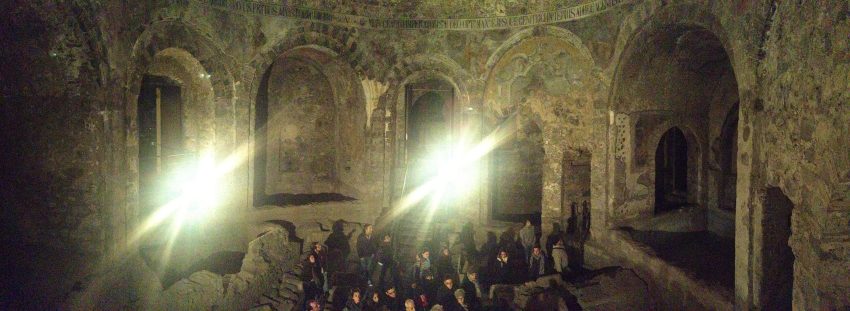
Terme della Rotonda is one of those small-in-size, big-in-impact sites that makes Catania's “layers” feel immediate. Tucked into the historic centre near the Roman theatre zone, it preserves the remains of an ancient bath complex, with later religious architecture built directly over it-so you're not choosing between Roman or medieval Catania, you're seeing how one era literally reused the other.
It's an ideal stop on a walking route focused on Catania's Roman footprint: pair it with the Roman Theatre and Odeon, then come here to understand the everyday infrastructure (water, heat, routine) that sat behind the city's grander performance spaces. The visit is quick, but the contrast between bathing rooms and the domed church space gives you a rare “I get it instantly” moment.
Table of Contents
- History and Significance of the Terme della Rotonda
- Things to See and Do in the Terme della Rotonda
- Practical Tips on Visiting the Terme della Rotonda
- Where to Stay Close to the Terme della Rotonda
- Is the Terme della Rotonda Worth Visiting?
- For Different Travelers
- FAQs for Visiting Terme della Rotonda
- Nearby Attractions to the Terme della Rotonda
History and Significance of the Terme della Rotonda
The site began as a Roman public bath complex, built to serve the dense urban neighbourhood around Catania’s civic and entertainment core. Over time, expansions and alterations followed typical Roman patterns-adjusting room layouts, improving heating, and refining circulation-before the complex eventually fell out of use.
What makes Terme della Rotonda significant is not only what survives, but how it was reused. Rather than demolish the structure, later builders repurposed it in the Byzantine period by establishing the church of Santa Maria della Rotonda above and within the earlier fabric. That continuity of place-changing function while keeping the bones-turns a simple ruin into a clear lesson in how cities adapt.
The “stacked” character is the story: Roman engineering below, sacred space above, and later interventions that subtly reshape the plan. In a city where rebuilding after earthquakes and eruptions is part of the wider narrative, Terme della Rotonda is a compact, legible snapshot of Catania's long habit of reinvention.
Things to See and Do in the Terme della Rotonda
Start by reading the bath geometry: look for the way rooms connect and narrow, and how the plan suggests different temperature zones (cooler spaces leading toward warmer, more enclosed areas). Even without full walls, the logic of movement-entering, warming up, then moving through the complex-still comes through.
Focus on the engineering clues. The most rewarding details are the remnants of the hypocaust system: the small supporting stacks that once held raised floors, creating channels for hot air to circulate. These fragments are easy to miss if you rush, but they’re the difference between “old walls” and a vivid picture of how the baths actually worked.
Then shift your attention upward to the later church architecture. The domed, circular character of the Rotonda is the hinge point where the site's identity changes, and standing at the threshold between the sacred space and the bath remains makes the conversion feel obvious. It's also one of the best places in central Catania to reflect on reuse: not as a modern idea, but as an old urban habit.
Practical Tips on Visiting the Terme della Rotonda
- Entrance fee: Free.
- Opening hours: Tuesday – Saturday: 09:00–17:00. Sunday: 09:00–13:00. Closed on Monday.
- Official website: https://parchiarcheologici.regione.sicilia.it/catania-valle-aci/biglietti/terme-della-rotonda-catania/
- Best time to visit: Go early in the day for a calmer look at the details, especially the hypocaust remains, and to avoid building your schedule around limited access windows.
- How long to spend: Plan 20-40 minutes on site, or up to an hour if you like slow-looking and photographing structural details.
- Accessibility: Expect uneven surfaces and steps typical of compact archaeological interiors; if mobility is a concern, check access arrangements in advance.
- Facilities: Facilities are limited; treat this as a short stop and plan cafés and restrooms around nearby Piazza Duomo or Via Etnea.
Where to Stay Close to the Terme della Rotonda
For a culture-heavy itinerary, base yourself in the Duomo/Old Town area so you can walk to Terme della Rotonda, the Roman Theatre, and the main baroque sights without relying on transport.
Staying central also makes evenings easier for food and atmosphere around Piazza del Duomo and the lower stretch of Via Etnea. Consider Asmundo di Gisira for an atmospheric Old Town base, Duomo Suites & Spa for a comfortable, walkable location near the historic core, or Palace Catania | UNA Esperienze if you want a more full-service stay on Catania’s main boulevard with easy access to the centre.
Is the Terme della Rotonda Worth Visiting?
Yes-because it delivers something rare in a short visit: a clear, physical overlap of Roman daily life and later sacred architecture that you can understand at a glance. It's especially worthwhile if you're already doing the Roman Theatre and Odeon, since it rounds out the story with the “infrastructure side” of the ancient city.
Honest pivot: if you dislike compact sites with limited access windows, or you're hoping for a large-scale ruin with extensive walkways and signage, you may find it underwhelming. In that case, prioritise the Roman Theatre and Odeon (more expansive and immediately theatrical), and treat Terme della Rotonda as an optional add-on only if timing aligns.
What Other Travellers Say...

Reviewers describe a small but historically rich site where later structures (including a church) were built over Roman baths, making it a worthwhile, quick stop near other nearby ruins. Admission is free and staff are often noted as helpful, with occasional performances and ongoing restoration mentioned. The main drawbacks are limited or unreliable opening hours (including a midday closure and incorrect hours online), occasional temporary closure, and some stray cats on site.


For Different Travelers
Families with Kids
This works best with kids who like “spot the clues” visits: you can turn it into a quick challenge to find the underfloor-heating supports and identify which rooms might have been hotter or cooler. Keeping it brief is key-plan it as a 20-30 minute stop between bigger, more open-air sights.
If you’re visiting with a stroller or very young children, be ready for tight spaces and uneven surfaces. Pair it with a nearby piazza stop afterward so everyone can reset, snack, and avoid fatigue from too many small indoor sites in a row.
Couples & Romantic Getaways
As a couple, the appeal is the quiet, contemplative feel-especially if you go early-plus the sense of discovering something hidden in plain sight. It’s a good contrast to Catania’s busier baroque streets: a short pause that feels intimate and specific to the city.
Build it into a simple mini-route: Roman Theatre and Odeon first, then Terme della Rotonda, then drift toward Piazza del Duomo for a drink or gelato. The sequence makes the day feel curated without needing a formal tour.
Budget Travelers
This is a strong value stop because it’s typically free, and it sits in the walkable centre where you can link multiple highlights without paying for transport. It fits nicely into a low-cost day plan alongside the cathedral area, markets, and street-level baroque architecture.
The practical budget trick is timing: plan your route so you’re nearby when it’s open, rather than crossing the city just for this. If access is restricted, you can pivot easily to other free or low-cost sights within minutes.
History Buffs
For history-focused travelers, the site’s significance is the reuse narrative: Roman public infrastructure transformed into a Byzantine-era church, with the dome acting as a visual “signature” of the later phase. It’s the kind of place where you can read continuity and change without needing a guide.
To deepen the context, combine it with the Roman Theatre and Odeon to compare “spectacle” architecture with “everyday” urban systems. Then look for other examples of architectural recycling in the centre-Catania repurposes its past constantly, and Terme della Rotonda is one of the clearest, most compact examples.
FAQs for Visiting Terme della Rotonda
Getting There
Tickets & Entry
Visiting Experience
Tours, Context & Itineraries
Photography
Accessibility & Facilities
Food & Breaks Nearby
Safety & Timing
Nearby Attractions to the Terme della Rotonda
- Roman Theatre and Odeon of Catania - A remarkably atmospheric ancient complex where you can read the city's Roman entertainment culture up close.
- Piazza del Duomo and Catania Cathedral - The baroque heart of the city, ideal for architecture, people-watching, and an easy reset between sights.
- Castello Ursino - A formidable medieval fortress with museum collections and a strong sense of Catania's later defensive history.
- Monastero dei Benedettini - One of Sicily's most impressive monastic complexes, packed with layered architecture and guided-visit potential.
- Via Etnea - Catania's main street for strolling, shopping, and constant Etna views that frame the city's daily rhythm.
The Terme della Rotonda appears in our Complete Guide to Visiting Catania!

Moira & Andy
Hey! We're Moira & Andy. From hiking the Camino to trips around Europe in Bert our campervan — we've been traveling together since retirement in 2020!
This website uses affiliate links which may earn a commission at no additional cost to you!
Planning Your Visit
Tuesday - Saturday: 09:00-17:00.
Sunday: 09:00-13:00.
Closed on Monday.
Free.
Nearby Attractions
- Roman Odeon (0.1) km
Historic Site, Roman Site and Theatre - Benedictine Monastery of San Nicolò l'Arena (0.2) km
Historic Building, Historic Site and Monastery - Church of Saint Julian (0.2) km
Church, Religious Building and Viewing Point - Roman Theater of Catania (0.2) km
Historic Site, Roman Site and Theatre - Chiesa di San Francesco Borgia (0.2) km
Church and Religious Building - Church of Saint Benedict (0.2) km
Church, Historic Building and Religious Building - Museo Vincenzo Bellini (0.2) km
Historic Building, Historic Site and Museum - Museum of Contemporary Art in Sicily (0.2) km
Arts Venue, Gallery and Museum - Church of St. Camillus (0.3) km
Attraction, Church and Religious Building - Casa di Giovanni Verga (0.3) km
Historic Building, Library and Museum