Teatre Grec, Barcelona
Theatre in Barcelona
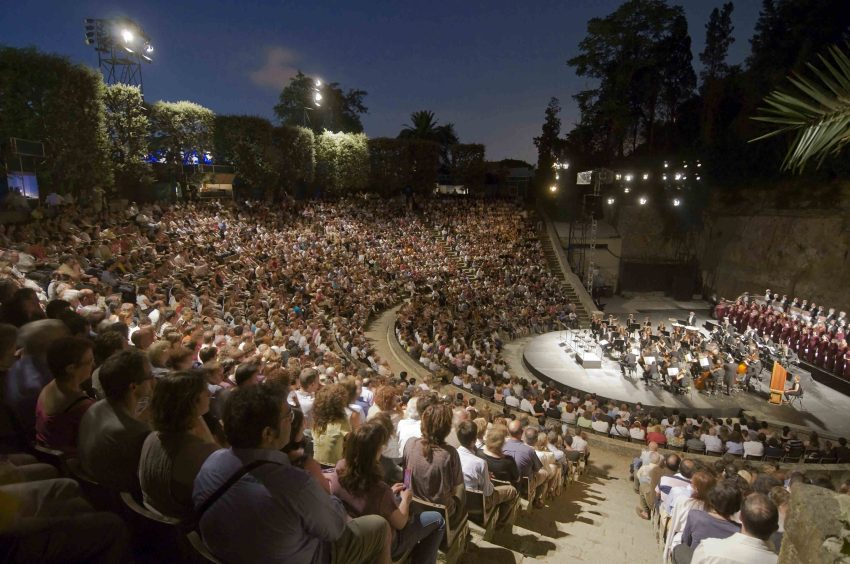
Teatre Grec is one of those Barcelona places that feels like a discovery, even though it's hiding in plain sight on Montjuïc. It's an open-air amphitheatre built into an old quarry, with stone seating curving around a stage that looks out into greenery, making it feel half theatre, half garden room carved into the hill.
It's also an easy win on a Montjuïc walking tour day: pair it with the nearby gardens, viewpoints, and museums, then drift down toward Poble-sec for tapas, or time your visit to match an evening performance in summer. Even if you don't see a show, the setting alone is worth the small detour.
Table of Contents
- History and Significance of the Teatre Grec
- Things to See and Do in the Teatre Grec
- How to Get to the Teatre Grec
- Practical Tips on Visiting the Teatre Grec
- Where to Stay Close to the Teatre Grec
- Is the Teatre Grec Worth Visiting?
- For Different Travelers
- FAQs for Visiting Teatre Grec
- Nearby Attractions to the Teatre Grec
History and Significance of the Teatre Grec
Teatre Grec was created for the 1929 Barcelona International Exposition, designed to evoke the form and acoustics of classical Greek amphitheatres while still feeling rooted in Montjuïc's terrain. Rather than being built as a freestanding monument, it was shaped into the slope using a disused quarry, which is why it has that natural, cradled feel when you step inside.
The theatre's cultural role expanded in the late 20th century, when Barcelona's summer Grec Festival helped bring the venue back to life as a flagship stage for theatre, music, and dance. In practice, Teatre Grec “sleeps” outside the main season and then becomes a focal point of the city's performing-arts calendar when summer arrives.
Just as important as the theatre itself are the surrounding gardens, originally conceived as part of the 1929 Exposition landscape plan. They turn a visit into something slower and more layered: you’re not only looking at a structure, you’re moving through a designed sequence of terraces, plantings, and viewpoints that make Montjuïc feel like a curated walk rather than a single sight.
Things to See and Do in the Teatre Grec
The main experience is stepping into the amphitheatre bowl and letting your eyes adjust to the scale: stone seating, a clean stage line, and greenery that softens what could have been a hard, monumental space. Walk down toward the stage and look back up; it’s the best way to appreciate how the curve of the seating and the quarry walls shape the atmosphere.
Next, give yourself time for the gardens immediately around the theatre. The best moments here are simple: a shaded pergola, a viewpoint pause, and the feeling that you've slipped into a quieter Barcelona that many visitors miss because they rush straight to the big museum stops.
If you’re visiting in summer, check whether the venue is set for performances. Even without going inside, you can often feel the “seasonal heartbeat” of the place: signage, staging, and the sense that this isn’t just a historical relic but a working cultural space that changes character through the year.
How to Get to the Teatre Grec
Barcelona-El Prat Airport (BCN) is the nearest major airport, and the simplest plan is to get into the city centre and then head toward Plaça d'Espanya and Montjuïc via metro or bus before walking up through the gardens. For the best deals and a seamless booking experience, check out these flights to Barcelona on Booking.com.
If you're arriving by train at Barcelona Sants, you can connect into the metro network and reach the Montjuïc side quickly, then continue on foot via the Plaça d'Espanya approach or the Parallel/funicular route depending on what else you're visiting. Train schedules and bookings can be found on Omio.
Driving up to Montjuïc is possible, but it’s usually more hassle than it’s worth for this stop because parking can be limited and you’ll still do a fair amount of walking once you arrive. If you are looking to rent a car in Spain I recommend having a look at Discover Cars, first, as they compare prices and review multiple car rental agencies for you.
Practical Tips on Visiting the Teatre Grec
- Entrance fee: Free to visit when open; access may be restricted during rehearsals and ticketed performances.
- Opening hours: (Winter) 1 November – 31 March: 08:00–19:00. (Summer) 1 April – 31 October: 08:00–21:00.
- Official website: https://www.barcelona.cat/grec/es
- Best time to visit: Late morning is ideal for a calm look around before Montjuïc gets busy; in summer, visit earlier in the day if there’s a show that night, as access and atmosphere can shift with event prep.
- How long to spend: 30-45 minutes for the amphitheatre and a few photos; 60-90 minutes if you want a relaxed wander through the gardens and nearby viewpoints.
- Accessibility: The site is on a hill, and the amphitheatre seating involves steps; approach routes can be steep in places, so plan a simpler path and allow extra time if mobility is a concern.
- Facilities: Treat it as a gardens-and-walking stop rather than a full visitor complex; bring water, wear grippy shoes for stone steps, and plan café or restroom breaks in Poble-sec or around the Plaça d’Espanya/Montjuïc museum area.
Where to Stay Close to the Teatre Grec
For the easiest access to Montjuïc and the option to return for an evening performance, base yourself in Poble-sec; for a first-time, sight-heavy itinerary with straightforward transport, stay near Plaça d’Espanya/Eixample and commute up for this stop.
For a stylish, walking-friendly base right by Poble-sec and Montjuïc, consider Hotel Brummell. If you want a full-service option near the Plaça d’Espanya side of Montjuïc with easy links to big sights, InterContinental Barcelona is well placed. For a more secluded, special-occasion stay on the hill with sweeping views, Hotel Miramar Barcelona leans into the Montjuïc setting.
Is the Teatre Grec Worth Visiting?
Yes, especially if you like places that feel quietly distinctive rather than “tick-box famous.” The amphitheatre is genuinely atmospheric, and it adds texture to a Montjuïc day because it blends architecture, landscape design, and culture in one compact stop.
Honest pivot: if you’re not already planning Montjuïc and you’re tight on time, it can be skipped in favour of Barcelona’s core Gaudí-and-Gothic highlights. It shines most when you treat it as part of a broader Montjuïc loop rather than a standalone mission.
What Other Travellers Say...

Teatre Grec is a Greek-inspired open-air amphitheatre tucked into the greenery of Montjuïc, best known for seasonal theatre, dance, concerts, and occasional wellness events like yoga. Reviews emphasise how peaceful it feels compared with central Barcelona, with attractive architecture, leafy surroundings, and excellent sightlines and acoustics when performances are on. Even outside event times it's a worthwhile stop for a quiet break—pair it with the nearby gardens, bring something small for a picnic, and allow extra walking time because Montjuïc is spread out.


For Different Travelers
Families with Kids
Kids often respond well to Teatre Grec because it's an easy “imagination place”: an outdoor stage where they can picture performances without needing to sit still in a museum. Keep it short and pair it with open green space nearby so it stays playful rather than feeling like another architectural stop.
Plan the route so you’re not tackling too many steep climbs in one go, and build in a snack break. Montjuïc works best for families when you treat it as a series of small wins rather than one long uphill march.
Couples & Romantic Getaways
For couples, Teatre Grec works as a calm, cinematic detour-especially if you arrive when the gardens are quiet and the light is soft. It's a good place for a slow stroll and a few photos that feel different from the usual Barcelona backdrops.
If you can align your trip with a summer performance, it becomes a very “Barcelona night” kind of experience. Even without tickets, pairing the visit with a sunset drink in Poble-sec makes the day feel deliberately paced.
Budget Travelers
This is a strong budget stop because it’s memorable without being a paid attraction on a normal day. Use it as a free highlight in a Montjuïc itinerary that also includes viewpoints and gardens, then spend your money where it counts for you later.
The key is efficiency: combine it with nearby sights so you’re not paying extra transport for a single quick look. A simple loop that starts around Plaça d’Espanya and ends in Poble-sec keeps costs and effort down.
History Buffs
History-minded visitors get more out of Teatre Grec by placing it in the 1929 Exposition story, when Barcelona was reshaping Montjuïc into a showcase landscape. The quarry-to-amphitheatre transformation is the detail to focus on: it's a practical reuse of terrain turned into a symbolic cultural stage.
It’s also a neat example of how a venue can carry multiple “lives,” shifting from exposition-era showpiece to modern festival cornerstone. If you like reading a city through its layers, this stop is quietly rewarding.
FAQs for Visiting Teatre Grec
Getting There
Tickets & Entry
Visiting Experience
Tours, Context & Itineraries
Photography
Accessibility & Facilities
Nearby Attractions to the Teatre Grec
- MNAC (Museu Nacional d'Art de Catalunya): A landmark museum with one of the best viewpoints over Plaça d'Espanya.
- Magic Fountain of Montjuïc: A classic evening stop for light-and-water atmosphere near the main Montjuïc approach.
- Fundació Joan Miró: A standout modern art museum that fits naturally into a Montjuïc culture loop.
- Jardins de Laribal: Shady, terraced gardens nearby that make the walk feel like part of the experience.
- Poble-sec: A lively neighborhood at the foot of Montjuïc, ideal for tapas and an easy post-walk reset.
The Teatre Grec appears in our Complete Guide to Visiting Barcelona!

Moira & Andy
Hey! We're Moira & Andy. From hiking the Camino to trips around Europe in Bert our campervan — we've been traveling together since retirement in 2020!
This website uses affiliate links which may earn a commission at no additional cost to you!
Planning Your Visit
(Winter) 1 November - 31 March: 08:00-19:00.
(Summer) 1 April - 31 October: 08:00-21:00.
Free to visit when open; access may be restricted during rehearsals and ticketed performances.
Nearby Attractions
- Fundació Joan Miró (0.2) km
Arts Venue, Gallery and Museum - Catalan Museum of Archaeology (0.2) km
Museum - Consorci Mercat de les Flors - Centre de les Arts en Moviment (0.3) km
Arts Venue and Theatre - Museu Etnològic de Barcelona (0.3) km
Attraction and Museum - Museu Olímpic i de l'Esport Joan Antoni Samaranch (0.4) km
Museum - Palauet Albéniz (0.5) km
Palace - Lluís Companys Olympic Stadium (0.5) km
Attraction, Historic Site and Notable Building - Museu Nacional d'Art de Catalunya (0.5) km
Historic Building, Museum and Viewing Point - Palau de Congressos de Barcelona (0.7) km
Attraction, Historic Building and Notable Building - Mies van der Rohe Pavilion (0.8) km
Historic Building