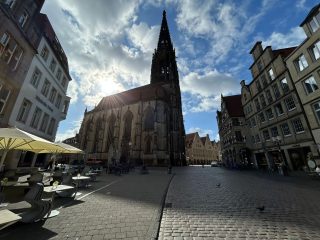
St. Marien-Kirche, Lübeck
Church in Lübeck

St. Marien-Kirche (St. Mary's Church) is one of the top attractions in Lübeck and a landmark that defines the city's skyline. Rising above the gabled houses of the old town with twin towers reaching around 125 metres, it was built between 1250 and 1350 as a bold statement of wealth, faith, and ambition. Even without natural stone, Lübeck's builders proved that brick could rival the great cathedrals of France, creating a church whose vast nave, lofty vaults, and powerful presence still impress visitors centuries later.
Inside, the church feels both grand and deeply human. The soaring nave, delicate vaulting, medieval frescoes, altars, and astronomical clock all tell stories of a city at the heart of Baltic trade and religious change. At the same time, the shattered bells left where they fell during the 1942 bombing raid transform the floor into a quiet memorial, turning St. Mary's into a place where beauty and remembrance live side by side. It's a great place to visit on a walking tour of Lübeck, tying together architecture, music, and wartime history in one moving stop.
Table of Contents
- History and Significance of St. Marien-Kirche
- Things to See and Do in St. Marien-Kirche
- How to Get to St. Marien-Kirche
- Practical Tips on Visiting St. Marien-Kirche
- Where to Stay close to St. Marien-Kirche
- Is St. Marien-Kirche Worth Visiting?
- FAQs for Visiting St. Marien-Kirche
- Nearby Attractions to St. Marien-Kirche
History and Significance of St. Marien-Kirche
St. Marien-Kirche was built as Lübeck's answer to the great cathedrals further south, a way for this Hanseatic trading city to show that it could match the spiritual and architectural ambitions of any European centre. Constructed between 1250 and 1350, it stands at the heart of the old town, just behind the Markt and Town Hall, and quickly became the main parish church for Lübeck's powerful merchant class. With its nearly 40-metre-high nave and soaring twin towers, it set the standard for Brick Gothic churches across the Baltic region.
The church's architecture reflects both practicality and pride. Brick was the primary building material available in northern Germany, and St. Mary's demonstrates just how far medieval builders could push it-huge pillars, intricate vaulting, and a vast interior space that feels light and airy despite the weight of the structure. Many other churches around the Baltic took St. Marien-Kirche as their model, making it a prototype for an entire regional style rather than just a single impressive building.
Over the centuries, St. Mary's has also been a stage for major cultural and religious changes. It was central to Lübeck's life as a Hanseatic city, then played a key role in the Protestant Reformation as the city shifted from Catholicism to Lutheranism. The association with composer and organist Dieterich Buxtehude, who worked here in the late 17th century and influenced Johann Sebastian Bach, adds another layer of significance. All of this makes the church not only one of the must-see places in Lübeck, but also a cornerstone of northern European cultural history and a highlight of any walking tour of Lübeck.
Things to See and Do in St. Marien-Kirche
Step inside St. Marien-Kirche and you're immediately struck by the sheer height and openness of the nave. The brick pillars rise like tree trunks, supporting ribbed vaults far overhead, while light filters in through tall windows to give the interior a surprisingly gentle atmosphere. Take a slow walk down the central aisle to get a sense of the scale and the precision needed to build such a structure in the 13th and 14th centuries.
Look for the church’s artistic and historical treasures as you explore. The medieval astronomical clock is a standout, with its intricate mechanism and richly decorated face that once helped mark time, feasts, and celestial events. Frescoes and altars throughout the building reflect layers of religious devotion and changing artistic styles, from medieval to later restorations. The church’s associations with Buxtehude also mean that the organ and musical heritage are especially important; if you can, time your visit with a concert or organ recital.
Perhaps the most moving part of a visit is the site of the shattered bells, left on the floor where they fell during the Allied bombing raid of 1942. Rather than being melted down or rebuilt, they remain as they are-a powerful reminder of war's destruction and a quiet call to peace. Spend a moment here to reflect before returning to the wider space of the church. Combined with the views of the towers from outside and the surrounding streets of the old town, St. Marien-Kirche offers an experience that is architectural, historical, and emotional all at once.
How to Get to St. Marien-Kirche
Most visitors arrive via Hamburg Airport, which offers numerous European and some long-haul connections; from there, regular trains and regional services run to Lübeck, making it easy to reach the old town where St. Marien-Kirche stands just behind the main market square. For the best deals and a seamless booking experience, check out these flights to Lübeck on Booking.com.
If you're travelling by train, you'll arrive at Lübeck Hauptbahnhof; from the station, it's about a 15-20 minute walk into the old town, or you can take a local bus towards the city centre and then follow signs to the Markt and St. Marien-Kirche, which rises clearly above the surrounding buildings. Train schedules and bookings can be found on Omio.
For those coming by car, Lübeck is conveniently accessed via the A1 motorway; once you reach the city, park in one of the car parks around the edge of the old town and then stroll into the centre, where the church's twin towers make navigation easy. If you are looking to rent a car in Germany I recommend having a look at Discover Cars, first, as they compare prices and review multiple car rental agencies for you.
Practical Tips on Visiting St. Marien-Kirche
- Suggested tips: Take a few minutes to walk around the outside as well as the inside-views of the towers and roofline from nearby streets really show off the scale of the building.
- Best time to visit: Aim for mid-morning or late afternoon, when the light is softer inside and there’s usually a calmer atmosphere for quiet exploration.
- Entrance fee: €4
- Opening hours: Generally open daily, with longer hours in summer and slightly reduced times in winter; check local listings for exact schedules.
- Official website: https://www.st-marien-luebeck.de
- How long to spend: Plan 45-60 minutes to explore the interior, appreciate the artworks, and spend time at the memorial bells, longer if you stay for a service or concert.
- Accessibility: The main entrance and nave are relatively accessible, though some side chapels and areas may involve steps or uneven floors typical of a historic church.
- Facilities: Basic visitor information is available on site; cafés, toilets, and shops are close by around the Markt and adjoining streets.
- Photography tip: Capture the towers from the Markt or from slightly further back in nearby lanes; inside, look for symmetrical shots of the nave and close-ups of the clock and bells.
- Guided tours: Consider joining a guided tour or using an audio guide if available to understand the church’s architectural details, Reformation history, and musical connections.
- Nearby food options: After your visit, head to the Markt or adjoining streets for bakeries, cafés, and restaurants where you can sit with a view of the church’s towers.
Where to Stay close to St. Marien-Kirche
To stay right in the heart of Lübeck’s old town, ATLANTIC Hotel Lübeck offers modern comfort just a short stroll from St. Marien-Kirche, the Markt, and the main shopping streets.
For river views and easy walking access to the church and other major sights, Radisson Blu Senator Hotel is a great option, located just across the Trave from the old town island.
If you’re arriving by car or train and want a convenient base close to both the station and the historic centre, Park Inn by Radisson Lübeck offers practical comfort within an easy walk of St. Marien-Kirche and Lübeck's main landmarks.
Is St. Marien-Kirche Worth Visiting?
St. Marien-Kirche is absolutely worth visiting, whether you're drawn to Gothic architecture, Hanseatic history, or places that carry a powerful sense of memory. Its vast brick nave and towering twin spires make it an architectural icon, while the interior layers together medieval art, Reformation heritage, musical tradition, and wartime remembrance. As one of the best places to visit in Lübeck's UNESCO-listed old town, it offers both visual splendour and moments of quiet reflection that stay with you long after you leave.
What Other Travellers Say...

Marienkirche, at Marienkirchhof 1 in Lübeck, is an elegant Gothic church rebuilt after near destruction in WWII; visitors praise its impressive architecture, colourful interior and dramatic organ music, and say the building is striking both inside and out. Many recommend paying the modest admission (typically around 4–5 euros) as worthwhile, note occasional renovations and that donations are requested, and mention there may be no public toilets inside; entry during church services is reported to be free.


FAQs for Visiting St. Marien-Kirche
Nearby Attractions to St. Marien-Kirche
- Lübeck Town Hall (Lübecker Rathaus) - A magnificent mix of Gothic, Renaissance, and Baroque architecture on the Markt, just steps from the church.
- Holstentor - The iconic Brick Gothic city gate guarding the western entrance to the old town and symbolising Lübeck's Hanseatic strength.
- Salzspeicher - Historic salt warehouses along the Trave River that once stored Lüneburg salt destined for Baltic trade.
- Lübeck Old Town (Altstadt) - The UNESCO-listed island of medieval streets, gabled houses, and churches that surround St. Marien-Kirche.
- European Hansemuseum - A modern, immersive museum exploring the history of the Hanseatic League and Lübeck's leading role in northern European commerce.
The St. Marien-Kirche appears in our Complete Guide to Visiting Lübeck!

Moira & Andy
Hey! We're Moira & Andy. From hiking the Camino to trips around Europe in Bert our campervan — we've been traveling together since retirement in 2020!
This website uses affiliate links which may earn a commission at no additional cost to you!
Planning Your Visit
Generally open daily, with longer hours in summer and slightly reduced times in winter; check local listings for exact schedules.
€4
Nearby Attractions
- Devil Statue at St. Marien-Kirche (0.0) km
Sculpture - Lübeck Town Hall (0.1) km
Town Hall - Lübeck’s Old Market Square (Marktplatz) (0.1) km
Market - Café Niederegger (0.1) km
Historic Building - St. Peter’s Church (St. Petri-Kirche) (0.2) km
Church - Salzspeicher (0.4) km
Historic Building - Holstentor (0.4) km
City Gate - Schiffergesellschaft (0.4) km
Historic Building - Heiligen-Geist-Hospital (0.5) km
Historic Building - Crane Convent (Kranen-Konvent) (0.6) km
Historic Building